

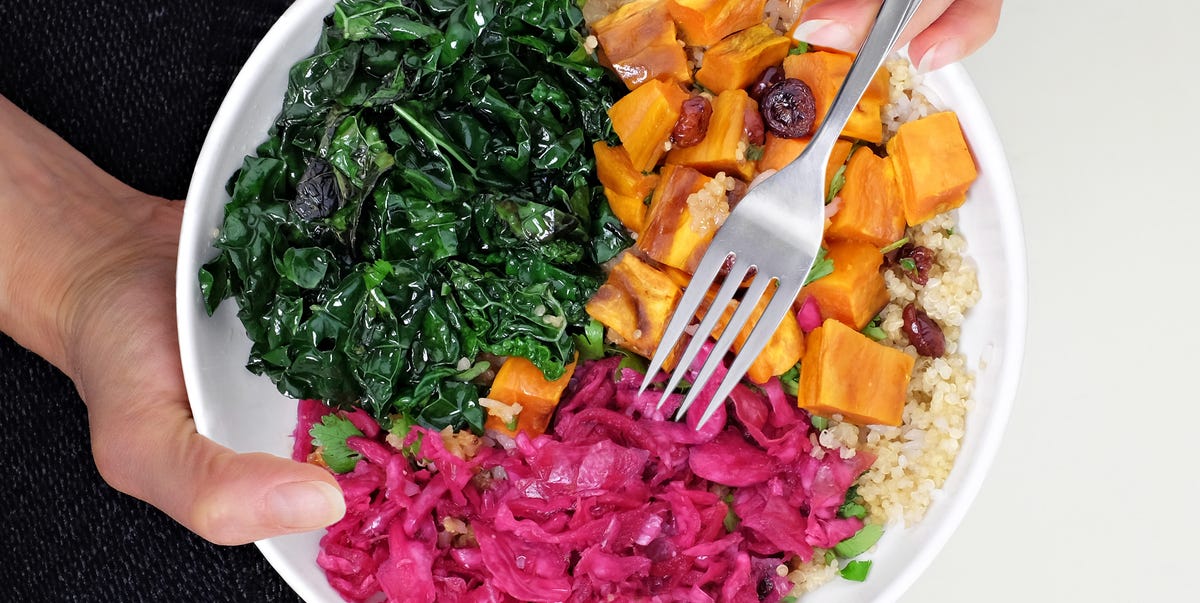
As a dietitian, I spend a lot of my time talking about the power of nutrient-dense foods. I share my love of leafy greens and encourage clients to find creative ways to add more vegetables to their plates. So, when my editor challenged me to eat kale every single day for a week, my professional self said, “No problem.” My honest, real-world self, however, thought, “Ugh, really?”
Let’s be clear: I don’t hate kale. But when it comes to kale vs. spinach, the latter has been a winner in my book. Basically, I’m not exactly the biggest fan of the superfood. I love the nutrients it offers, but I find it a bit tough and fibrous, and I honestly resent that it requires a little extra prep work to be palatable. My go-to green is usually spinach; it’s tender, versatile, and doesn’t need a deep-tissue massage before joining a salad. But a challenge is a challenge, and I was curious to see what would happen. Would I suddenly feel like I could take on the world? Would my skin start to glow? Or would I just be really, really tired of chewing?
I incorporated this powerful green into my diet for seven consecutive days, from adding it to soups to embracing a surprisingly delicious fast-food favorite. Here’s what happened.
What happened when I ate kale every day
The week started with a curveball that actually turned into a win. On the very first day of the challenge, my daughter asked to go to Chick-fil-A. Usually, fast food presents some healthy eating challenges, but I remembered they had a kale side dish. It’s called the Kale Crunch Side, and honestly? They kind of nail it. It’s a blend of curly kale and green cabbage tossed in an apple cider and Dijon mustard vinaigrette, topped with salted, roasted almonds. The acid in the dressing softens the leaves perfectly, and the flavor combo is genuinely delicious. I have always loved that salad, so I was glad to have an “excuse” to hit up the drive-thru.
The rest of the week required a bit more elbow grease in the kitchen. Since I find raw kale tough, I spent one evening literally massaging a salad with olive oil and lemon juice to break down those fibrous cell walls. It was fine, but it was kind of annoying putting that much physical effort into my dinner prep. Also, I think I was jealous of the kale, because I wanted a massage too. While I managed to eat it daily, I realized by day four that I missed the ease and the softness of spinach. I am definitely still a “spinach gal” at heart.
So, how did I feel? Physically, I felt good. I didn’t experience any miraculous transformation: My energy levels were stable, and I didn’t suddenly wake up with perfect skin. But I felt a sense of accomplishment. Knowing I was closer to meeting my veggie intake needs gave me a mental boost, and my digestion felt regular and comfortable. There were no negative side effects, no bloating, and I didn’t get sick of the taste as much as I feared. It was a solid week of nutrition, even if the prep work was a bit annoying and I didn’t genuinely love every bite.
Benefits of eating kale
While my one-week experiment didn’t result in monumental physical changes, the science behind why we should eat kale is undeniable. Here is why dietitians like me are always pushing this leafy green.
It is a nutritional powerhouse
When we talk about “nutrient density,” kale is practically the poster child. This term refers to foods that pack a massive amount of vitamins and minerals into a very low-calorie package. For me, knowing that a single cup of kale provides well over 100% of my daily requirement for vitamins A, K, and C makes the chewing worth it. It’s efficient eating.
Vitamin K is particularly abundant in kale. This nutrient is critical for blood clotting and bone metabolism. Vitamin A is essential for vision and immune function, while Vitamin C is a powerful antioxidant that supports skin health and immune defense. Getting all of this from a handful of leaves that costs pennies per serving is a nutritional bargain that is hard to beat.
Pro tip: Many of kale’s nutrients are fat-soluble, meaning they’re best absorbed when eaten with a source of fat. That’s why I had to snag one of my daughter’s chicken nuggets at Chick-fil-A (kidding—they’re just delicious). But hey, I ate it in the name of science, ensuring my body could fully absorb the nutrients in that kale salad.
It supports liver health
Kale belongs to the cruciferous vegetable family, which has been studied for its potential to support liver function. Cruciferous vegetables, like kale, contain compounds called glucosinolates. When chopped or chewed, these can be converted in the body into biologically active compounds, one of which is sulforaphane. Research suggests that sulforaphane plays a role in activating liver enzymes involved in detoxification processes, helping the body manage potentially harmful substances more efficiently.
While kale may not be the highest dietary source of sulforaphane precursors (broccoli often takes that crown), including it regularly as part of a varied diet can contribute to your overall intake of these beneficial plant compounds. During my week of daily kale, I appreciated knowing I was supporting my liver’s natural detoxification pathways, even if the effects weren’t something I could “feel” on a day-to-day basis. This is one of those long-term investments in health that makes adding kale to your plate worthwhile.
It’s a source of antioxidants
Kale isn’t just packed with vitamins and minerals; it’s also rich in powerful antioxidants that help protect your cells from damage. Antioxidants like quercetin and kaempferol are known for their ability to neutralize free radicals, the unstable molecules that contribute to oxidative stress, aging, and chronic diseases, including cancer. These compounds have also been studied for anti-inflammatory and anti-viral benefits, and may even play a role in supporting heart health.
It may support eye health
Kale is a great food to eat for eye health, as it’s a natural source of lutein and zeaxanthin, two antioxidants especially important for eyes. They help safeguard the retina from harmful light and lower the risk of chronic eye conditions such as macular degeneration and cataracts. While I didn’t “feel” these antioxidants at work during my challenge, it’s reassuring to know they were helping protect my body behind the scenes.
Kale nutrition information
According to the United States Department of Agriculture (USDA), one cup of raw kale (about 21g) provides approximately:
- Calories: 7
- Carbohydrates: 1 g
- Fiber: 1 g
- Protein: 0.6 g
- Vitamin K: 68% of the Daily Value (DV)
- Vitamin C: 22% of the DV
- Vitamin A: 6% of the DV
- Manganese: 8% of the DV
- Calcium: 4% of the DV
Who should avoid kale?
Despite its superfood status, kale isn’t for everyone. Because it is so high in Vitamin K, people who take blood thinners like Warfarin (Coumadin) need to be cautious. Vitamin K promotes blood clotting, which may interfere with the medication’s effectiveness. The key here is usually consistency; you don’t necessarily have to avoid it, but you shouldn’t suddenly start eating a bushel a week if you usually eat none. Always talk to your doctor first.
Additionally, raw kale contains goitrogens, which are compounds that may interfere with thyroid function by blocking iodine uptake. However, for most healthy people, this is only a concern if you are eating massive amounts of raw kale every single day. Cooking kale significantly reduces these goitrogenic compounds. Lastly, kale contains oxalates, which may be an issue for individuals prone to certain types of kidney stones.
The bottom line
So, after seven days of kale salads, soups, and sides, will I continue to eat it every day? Probably not. While I felt great and loved knowing I was flooding my body with nutrients, I am a firm believer in variety. Spinach, chard, arugula, and romaine all have their own unique benefits, and rotating your greens ensures you get a wider spectrum of nutrients (and prevents boredom).
However, this challenge did remind me that kale doesn’t have to be a chore. Whether it’s the surprisingly tasty side at a fast food restaurant or wilted into a hearty winter soup, it’s worth the effort to keep it in my rotation. It’s tough, yes, but it’s also undeniably good for you. I may not eat it daily, but I’m definitely keeping it on the grocery list.
Read the full article here