

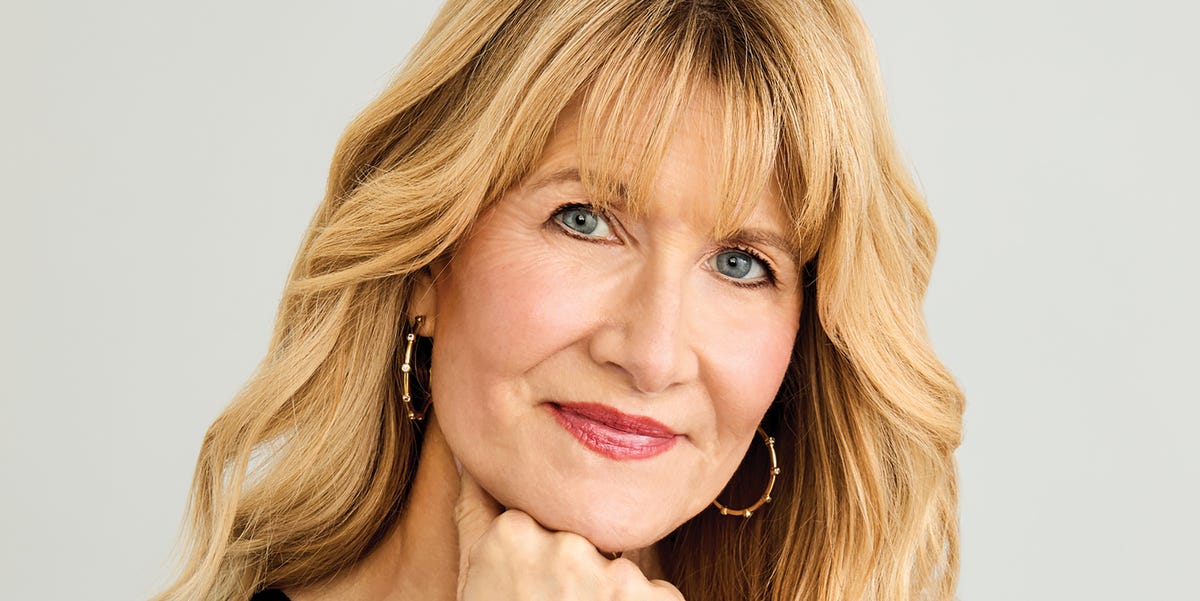
I don’t want Laura Dern to think I’m creepy, but I was eager to talk to her for this story because—except for the fact that she’s a fabulous blonde Oscar winner who maintains good personal boundaries and has probably planned for her retirement, and I am none of those things—we’re practically the same person.
OK, there may be other minor disparities, but she is exactly my age (59), and her parents were born close to the time mine were, just before World War II. We were both raised by strong single moms. And Dern, who has no siblings, knew she’d be the only child around to support her elderly parents when they needed it; I am also in that position. While my parents are basically healthy (God bless, kinehora, mashallah, just in case), as usual, I am worried in advance.
Many Prevention readers either are or will be caregivers, or else are parents whose adult children have become more involved in their lives. I’m hoping to learn from Dern, a recent veteran of this intense experience, about what we all need to know, whether we’re the carer or the care-ee: how to show up in the best possible way,
given how stressful and emotionally complicated this phase of life often is.
Totally Unscripted
Taking care of an ailing parent may lead to caregiver burnout—even if, like Dern and me, you are privileged to have access to good medical care and resources that make it somewhat easier.
“It’s never what we expect, is it?” says Dern, having come to our offices for a photo shoot and a sit-down. We agree that caregiving is akin to wedding planning or new parenthood in that most people go through it at some point, yet until you’re deep into it yourself, you really have no clue what it’s like. “You think you know exactly what you are going to need to know, and it’s nothing like that,” Dern says. “And many of us are raising our babies while we become a caregiver to a parent or another elder loved one. I felt ill-prepared in all the categories.”
Dern was with her mom, actress Diane Ladd, in 2018 when Ladd received a dire diagnosis, idiopathic pulmonary fibrosis (IPF), and was told she would live just a few more months. With pulmonary fibrosis, a person’s lung tissue becomes severely damaged, making it harder for them to breathe. The type Ladd had is irreversible and usually gets worse. Still, thanks to Dern’s low-key relentless campaign to get her mother to take daily walks with her to improve her lung function, Ladd’s insistence on pursuing all her options, and the right care, Ladd lived seven additional years before she died at 89 last November.
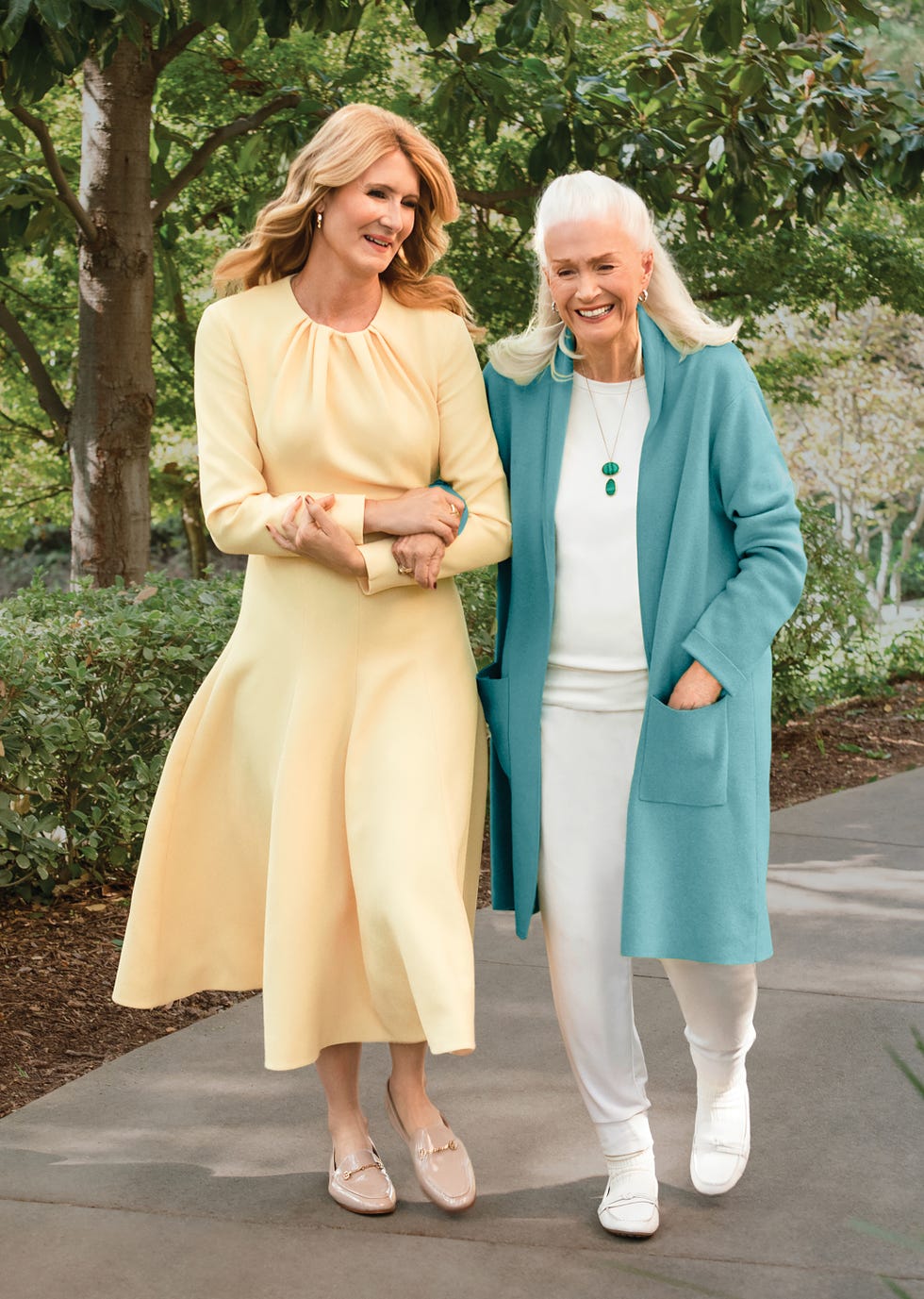
Dern and her mom, the actress Diane Ladd in 2023. Walking helped Ladd build her lung capacity so she could breathe easier.
A New Role
Dern was thrust into caregiving when things seemed bleak for her mom. She knew nothing about IPF and had an obscene amount to learn—everything from how to help without pushing too hard to the best ways to talk to doctors, some of whom can be subpar communicators even if they are brilliant physicians. “I remember when my mom was diagnosed, they just said, ‘Ooh, see the spiderwebs on her lungs? That’s IPF.’ They didn’t even take the time to tell us what the acronym meant!” Dern recalls.
Ladd’s diagnosis came after several years of inadvertent misdirection. That was partly because most of the IPF signs a person notices can mimic everyday annoyances. “There were a couple of years of her being aware of symptoms but mentioning them dismissively, like ‘I can’t get rid of this cough’ or ‘I have shortness of breath—I think I just have allergies’ or ‘I’m dealing with acid reflux,’” Dern says. Ladd would then visit her doctor and get pointed in 10 different directions. It wasn’t until a severe case of pneumonia landed her in the hospital that she had the imaging that showed the lattice of scarring on her lungs. IPF explained all her symptoms.
Naturally, Dern was devastated. “When that diagnosis came in 2018, I was so afraid,” she says. Her inclination was to follow the experts’ advice as closely as she could—she knew nothing, and they seemed to know everything: “The doctor told me to be gentle with her, and I took that to heart.”
But accepting her fate and conserving her energy was the opposite of what Ladd herself needed or wanted. “She was just like, ‘I’m not listening to that!’ ” says Dern in her mom’s Mississippi lilt. Ladd craved more opinions, said she wanted to consult a great pulmonologist, and intended to learn everything she could about IPF. Though Ladd and Dern were in the same room when the doctor dropped the boom, “what I heard was ‘irreversible disease,’ and what she heard was ‘It’s time to combat this,’ ” Dern says.
This episode led to Dern’s first and most important lesson about being a caregiver: “I had to learn to listen, really listen, to the patient,” she says. That makes perfect sense, but I can see myself being too worried to do that, at least at first. Lesson number one: Listen to the patient. Roger that.
Push-Pull
Perhaps Ladd’s best-known film role was that of Flo, the take-no-crap hash slinger in 1974’s Alice Doesn’t Live Here Anymore. As Dern describes Ladd, she was equally badass in real life. As the pair absorbed the diagnosis, “she was teaching me how to take care of her,” says Dern. That took a while. “It was an incredible and valuable journey, and I think I needed all seven years” to get the hang of it, she says. “It was in the final months that I felt like I had really become a caregiver—where I knew when she needed me to back off, when she needed to be pushed, when I needed to fight her because she was tired but I knew she wanted to do something,” she adds. “It’s a real balancing act.”
Example: In the weeks after Ladd’s diagnosis, Dern was determined to get her mom to walk a little each day, in hopes of building up to 15 minutes. “It was to support her lung capacity,” she says. Ladd, who was reliant on external oxygen at that point, wasn’t having it. (I know this because I listened to an audiobook version of the book they wrote together, Honey, Baby, Mine—it’s a series of their conversations recorded by Dern after Ladd’s diagnosis.) Before their first walk, though Ladd was in no condition to argue, she sounded formidable. “It was hard for her to walk even a couple of steps,” Dern says.
The doctor had told Dern to go easy on her mom; her mom wanted to sit on a bench. But that day Dern decided to hew to Ladd’s bigger-picture goals: “She kept saying she wanted to be less reliant on oxygen, so I kept pushing.” They took a short walk.
Every day thereafter was a judgment call. Some days, Dern says, walking simply wasn’t possible, and other days it was, but only with breaks. And some days they bickered until they landed on the best course of action. “You as the caregiver have to be the champion and the cheerleader, to know when to hold off and when to push,” Dern says.
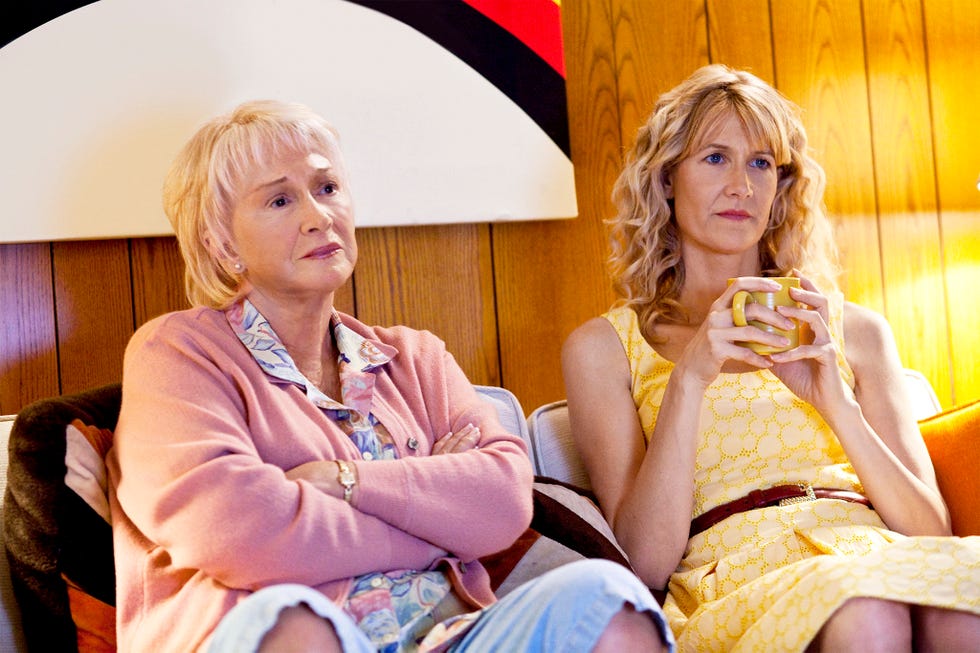
Diane Ladd and her daughter Laura Dern starred and mother and daughter in HBO’s Enlightened in 2011
Get Wise, Then Fight
Lesson number two is a biggie: Be an advocate for your loved one—chase down information they need, and make sure they’re being heard. The day Ladd and Dern learned that Ladd had IPF, they were together in the physician’s office. Nevertheless, he spoke only to Dern—some providers are prone to such lapses when treating elderly people. “He was not even looking at her, and then he walked out of the room,” Dern recalls.
The issue here is not merely poor manners: Lots of research shows that experiencing the effects of ageism is associated with poorer health, and in a medical setting, ageism can lead to an older person’s receiving lower-quality care. Given that age bias is prevalent and health care providers are humans like the rest of us, things like this happen.
Ladd showed Dern how she expected to be treated: “She demanded that he come back into the room, and when he did, she said, ‘Do you know why they call me your patient?’” Dern recalls with admiration. “And he said, ‘No.’ She goes, ‘Because I’m here to teach you patience! You need to sit down and explain to me what my diagnosis is.’ ”
Dern also had to brush up on a practice that professional nurses can make look easy: “You have to learn deeeep patience”—she stretches the word to twice its usual length—“and not be in your own way.”
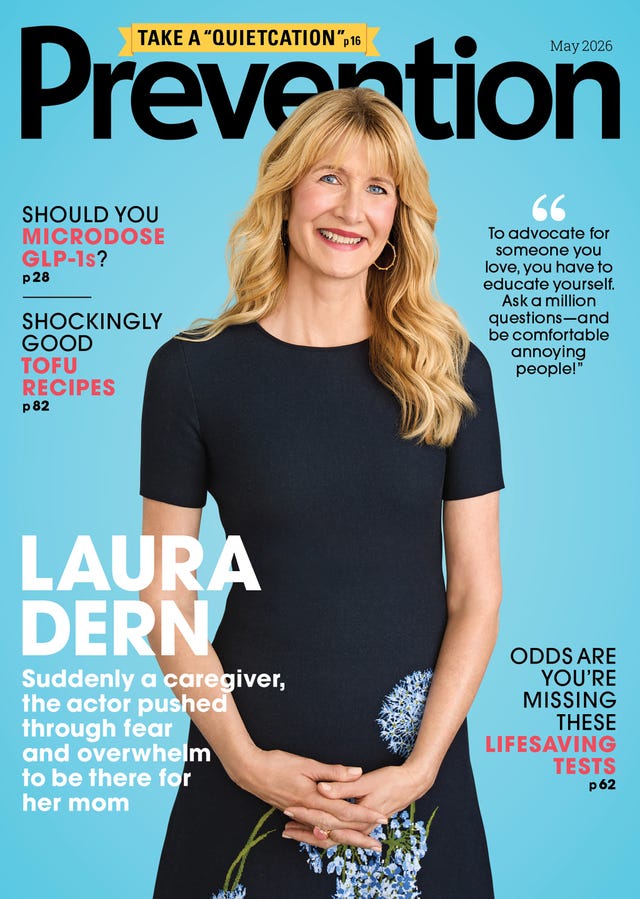
I may need a tutor for that third lesson, but I think I’ll rock number four: Educate yourself about your loved one’s condition. Ideally you’ll have help from their medical team. “If they’re not helping educate you as a caregiver,” advises Dern, “find somebody else to talk to, and learn everything you can.” Dern says she was raised not to pester people with questions, but there’s no place for reticence in caregiving. “Ask a million questions—and be comfortable annoying people!” Dern urges. “My mother was like, ‘Get comfortable with them not liking you. Because you’re here to advocate for me.’ ”
They Went There
An unusual aspect of Dern’s time as a caregiver was that despite Ladd’s terrible prognosis she lived for years, thanks in part to pulmonary rehab and structured physical activity, which slowed the disease’s progression and enabled her to stay active.
But because the two believed time was limited, the period after Ladd’s diagnosis had a liminal feel, and the women’s priorities quickly reorganized themselves. “I became palpably aware of the good fortune of each day with her,” Dern says. They decided to use that time, especially their daily walks, to dig deep: They talked about all the stuff—positive, negative, and neutral—that they had been reluctant (or simply had never had a chance) to discuss before.
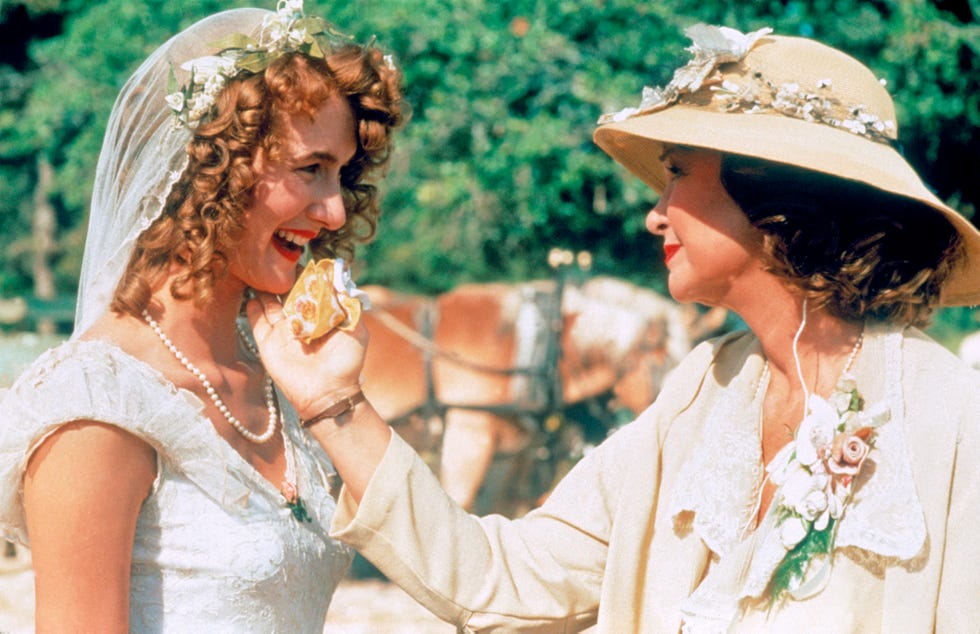
Many of their conversations were about family history, working together (in Wild at Heart and Rambling Rose in the early 1990s and more recently in HBO Max’s Enlightened), and other lovely memories.
But it wasn’t all happy talk. One day, as the two walked, Ladd “wanted to talk about her deepest grief in life, which was the loss of a child,” Dern says. Until then, she’d never shared the full story: Before Dern was born, her mom and Dern’s father, actor Bruce Dern, had had a daughter, Diane Elizabeth, who died at 18 months.
“I was like, ‘Mom, maybe we shouldn’t go there,’ ” Dern says. But Ladd was determined. “She said, ‘Why do you think they say “Get it off your chest?” I have this scarring—maybe it’ll be good for me,’ ” Dern recalls, smiling as she remembers her mom’s wordplay. Being honest with her daughter about the pain she carried “gave her strength and purpose and even emotional healing,” says Dern. “I was really impressed by that, because it would have been easier for her to say, ‘Let’s just be light and talk about sweet and easy things.’ ”
As much as I admire this impulse, when I’m a caregiver I won’t be having any deep, painful conversations with my parents if I can help it. I’m planning on sticking to the “sweet and easy things” so as not to upset them—or myself! Life is hard enough!
But Dern too brought up several ancient, unresolved hurts, including having missed her mother terribly as a child when Ladd had been away filming. Ladd was initially defensive, arguing that they had needed the money and she’d had to model being an independent woman for her daughter. Dern didn’t back down, though, making sure her mother really heard her when she said both perspectives could be true.
My conflict-averse self was blown away by that, and I said so. “That might be ego, and going, ‘You want to get some things off your chest? I want to get a couple of things off my chest!’” she laughs. “I’m still mad about my son’s haircut!” This refers to another beef in the book. “Yeah, no, you don’t have the right to give your grandson a haircut without asking me when he’s 4! That is not OK!” (Dern’s son is now 24; she also has a daughter who is now 21.)
My future-caregiver takeaway from Dern’s willingness to get into it with her mom (call it lesson number five) is that you don’t need to completely shelve your own feelings just because your loved one is ill. That’s good—holding emotions in only adds to the weight of caregiving, and it’s critical to take care of yourself too. It’s the whole “Put on your own oxygen mask first” thing writ enormous.
As Dern tells it, she and her mom were able to care for both themselves and one another, which seems to me to be the best possible outcome during a hard time of life. “My mother was a deep empath. If empathy is a gene, she was blessed to have something we see less and less in the world today,” Dern says. “But if you cultivate it, it’s the gift you give back to yourself at the end of your life.”
I took that to mean Ladd had inspired her daughter to step up for her. But Dern means that through speaking up for others her whole life, Ladd learned to speak up for herself: “She ultimately became the person who went, ‘Wait a minute, how do you know I only have months to live?’ She taught me to be an advocate for her by advocating for herself.”
To learn more about interstitial lung disease (of which Ladd’s IPF is a common type), how to catch it early, and how it’s treated, visit BeyondTheScars.com.

Sonya Maynard is the Research Director for Prevention Magazine. She has more than 15 years of experience in fact-checking, with a specialty in health and wellness content.
Read the full article here