




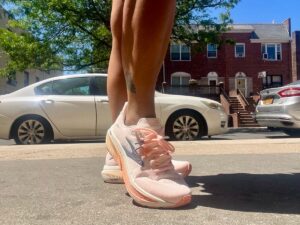



- Short “micro-walks” may prove to be more beneficial for your health compared to longer ones, a study finds.
- Researchers found when people walked in stints of 10 to 30 seconds, they burned more calories than continuously walking the same distance.
- Experts explain the findings.
While data is clear that regular activity is important for your health, actually putting that into practice can be tough. But instead of trying to jam in all of your steps at once, science has a more approachable solution: “micro-walks.”
“Micro-walks” are short walks sprinkled throughout your day—and they may be even better for your health than trying to block out long periods of time for lengthier walks.
Research published in Proceedings of the Royal Society B in 2024 followed 10 people who walked for various lengths of time, from short, speedy bursts with breaks that lasted for a few minutes to walking at a slower pace for periods of up to four minutes.
The researchers found that when people walked for 10 to 30 seconds with breaks between, they used more energy and burned more calories than if they continuously walked. The scientists also found that the “micro-walks” used up to 60% more energy than walking for longer periods of time, even though they ultimately covered the same distance. Essentially, they were more likely to burn more calories by walking in short bursts with breaks in between than if they were to keep walking at a more leisurely pace.
If you’ve been struggling to fit a formal exercise routine into your day, these “micro-walks” are worth considering. Here’s how to make them work for you.
Meet the experts: Kelly Sturm, D.P.T., of Cancer Rehab PT; Nichele Cihlar, strength and conditioning coach at MNT Condition; Albert Matheny, R.D., C.S.C.S., a co-founder of SoHo Strength Lab
What is a “micro-walk”?
There’s no universally accepted definition of a “micro-walk.” In this study, the researchers defined it as walking in bursts of 10 to 30 seconds at a time and taking a break before the next walk.
The idea is to break up long periods of sitting or inactivity by getting up and moving, even if it’s just for a short distance, says Kelly Sturm, D.P.T., of Cancer Rehab PT. “These walks can be as simple as a quick stroll around your office, walking to grab a coffee, or stepping outside for some fresh air.”
Benefits of micro-walks
“Micro-walks” may increase metabolism and result in burning more calories by covering the same distance as a longer cruise around the neighborhood, says Nichele Cihlar, strength and conditioning coach at MNT Condition.
The main benefit of micro-walks is that they help reduce the negative effects of prolonged sitting, which we know can have serious consequences for our health, says Strum. “Studies suggest that sitting for long stretches, even if you’re otherwise active, can slow down your metabolism, affect circulation, and increase the risk of heart disease, diabetes, and even some cancers,” Strum says. By incorporating regular movement into your day with micro-walks, you’re giving your body the chance to reset, improve circulation, and keep your muscles engaged, Sturm explains.
Plus, micro-walks may help with mental health too, says Sturm: “Frequent movement breaks are great for clearing your head, boosting creativity, and reducing stress .” In comparison, fewer, longer walks can be beneficial for cardio and endurance, but they don’t do as much to counteract the negative effects of sitting for long periods throughout the day, Sturm points out.
How to make your “micro-walks” more challenging
Just because you’re walking in short bursts doesn’t mean you can’t push yourself. Challenging yourself to go a little faster each time can go a long way toward reaping even more benefits of “micro-walks,” says Albert Matheny, R.D., C.S.C.S., a co-founder of SoHo Strength Lab. You can also try to go a little farther every time you do a series of “micro-walks,” Matheny says.
If you have a weighted vest handy or even a heavy backpack, Matheny suggests putting that on. “If you add weight, you can really work on building muscle in your lower body,” he says.
How many steps do you need to get the perks of “micro-walks?”
Any movement in your day is better than none, Matheny says. While 10,000 steps per day has been considered the go-to number for years, Matheny points out that there’s nothing magic about it. In fact, some data suggest that logging 8,000 steps twice a week can extend your life
Ultimately, Matheny recommends setting a smaller goal for yourself and building up from there. Sturm agrees. “If you aim to take a few five or 10-minute walks every hour or two, those steps really add up and keep your body moving,” she says.
The bottom line
The study was small, and the data didn’t compare long walks to short walks— just “micro-walks” to four-minute walks. Still, it suggests that regular movement throughout the day is just as, if not more, important than logging one long walk or workout.
“The results of this study emphasize how much breaking up sedentary time can positively impact your health,” Sturm says. Incorporating “micro-walks” into your daily routine is an easy, approachable way to maintain your health, even if you’re busy or don’t have time for a dedicated long walk or workout, Sturm points out.
Matheny suggests just doing what you can to get up and moving as much as possible. “Do what you can—but more movement is better,” he says.
Read the full article here


