







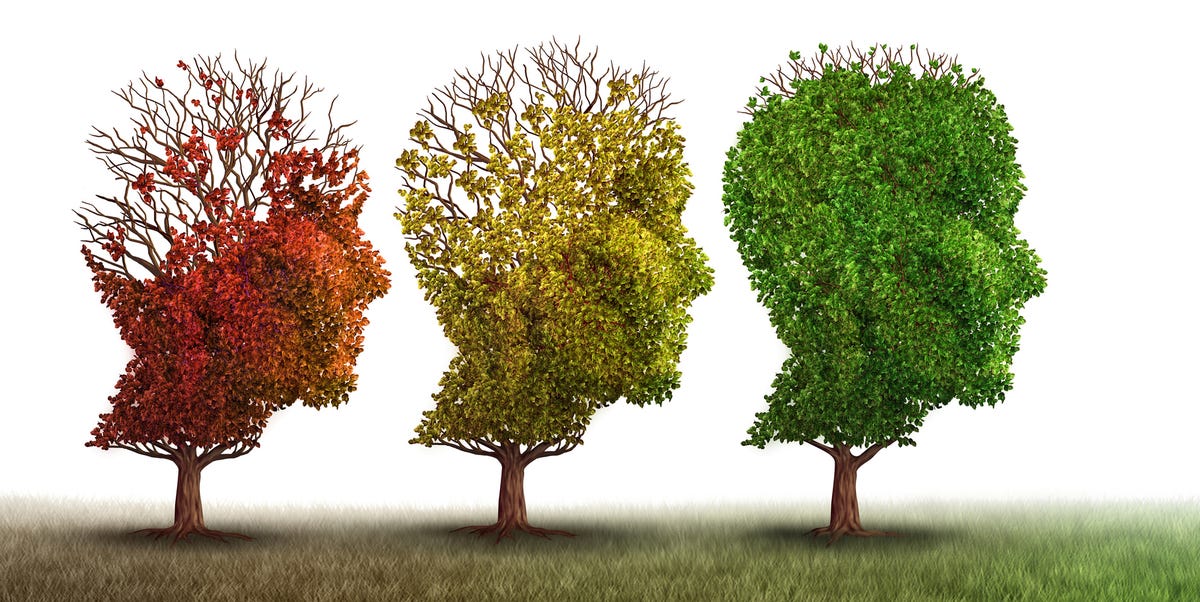
Think about someone you know, maybe a neighbor or an elderly aunt, who is north of age 90 yet sharp as a tack, reads voraciously, and can still beat you at Scrabble. Meanwhile, you can’t remember where you put your keys or even make it through reading one Facebook post. When it comes to the brain, age can truly be a relative number.
Science shows that our brains can essentially age at a different rate than our chronological years. Many factors play into this: What you eat, how active you are, your good and bad lifestyle habits, and even how you relate to other people.
To see if your brain and body are in sync when it comes to age, check out these signs that help you determine your true brain age. Then, if you’re worried your brain is ready for the retirement home while you’ve still got plenty of good years left in you, read on for healthy changes you can make right now to keep your brain sharp.
3 Signs Your Brain Is Young


You Feel It
Do you ever have that moment when you look in the mirror and are surprised to see a middle-aged person staring back, because inside you feel like you’re only 28? The age you feel, as opposed to the number of years you’ve been alive, is known as your “subjective age,” and when that number is lower than what’s on your driver’s license, that’s a very good thing!
A large research review found that people who had a younger subjective age, on average, had better health outcomes and lived longer than those who felt older. One theory behind this connection is that the more youthful you think you are, the more likely you are to go out and do physical activities and participate in mentally challenging activities, both of which help keep your brain and body in good shape.
So go ahead and do things that make you feel young: Listen to the rock music of your youth, go out dancing with your friends, kick around a soccer ball in the park with some of the little ones in your life.
You Speak Multiple Languages
Recent research shows that people who are bilingual maintain more gray matter volume in their brain as they age than those who speak a single language. (Gray matter is the part of your brain that helps you think, remember, and make decisions.)
Also, bilingual people don’t use as much of their brains’ frontal regions as those who speak only one language—this saves wear and tear, essentially, and makes you less likely to develop cognitive aging and dementia.
If you grew up in a single-language household and can’t remember much more than “bonjour” from your high school days, that’s okay. With apps like Duolingo, you can choose any language you like and learn a few new words each day to work your cognitive muscles.
You Live in the Moment
Mindfulness practices that help you focus on the present have many proven benefits, and they may help preserve the brain’s gray matter, according to a study from UCLA and Australian National University.
Meditation, in particular, has many physical and mental health benefits; it reduces stress, which can harm your mind by damaging your immune response. It may also stimulate where neurons form new dendritic branches and create new synapses, helping cells communicate with each other.
Try meditating as soon as you get out of bed for at least 10 minutes to give your brain a peaceful, productive daily start.
4 Signs Your Brain Is Aging on the Fast Track

You’re Really Tired During the Day
If you’re constantly conking out during the daytime, your brain is not getting the proper restorative “clean-out” rest it needs at night, and it can cause physical brain changes tied to aging.
Frequent exhaustion during the day may also be a sign of obstructive sleep apnea, a condition in which you stop breathing multiple times each night, which is a risk factor for many serious health conditions. Research has shown that sleep apnea can actually make the hippocampus (which is a key part of your brain for learning and memory) smaller.
“Sleep is a really important protector of the brain,” says Neil Graff-Radford, M.D., professor of neurology at the Mayo Clinic in Jacksonville, Florida.
If you are exhausted during the day or your bed partner says you snore, ask your doctor about getting evaluated for sleep apnea. There are several ways to treat the condition, which can give you the restive night’s sleep you need.

Add Prevention as a preferred source in your Google search results.
Use your Google account to add this to your settings.


You’re Very Cynical
If you roll your eyes at everything and find it difficult to trust that other people are trying to be good or helpful, it could be affecting brain health. Finnish researchers published an intriguing study in which they found that older men who had a very cynical worldview had a higher rate of cognitive decline, and also tended to die at a younger age.
They suggest that cynical people may have higher levels of the stress hormone cortisol, which can be harmful to the brain over time, and stop you from thinking clearly.
Working with a therapist to explore issues of trust may help, as well as writing in a gratitude journal so you can focus more on the positive things in your life.
Your Attention Wanders
Sure, we all might find our mind wandering during a really long movie, or when your neighbor starts an epic monologue about her tomato garden again, but if you find it difficult to focus on a regular basis, it’s worth talking to your doctor.
A research team from USC found that easy distractibility is a sign of cognitive aging. This happens most often in older people, but if you tend to have trouble focusing when under stress, cognitive testing could help you find out if you have any predisposition to cognitive decline.
Brain training, like doing puzzles or games, may be helpful in building concentration skills, too.
Your Friends Mention You’re Forgetful
Blanking on dinner with your friends once can be chalked up to having a lot on your plate. Standing them up multiple times without meaning to can signal a problem. If your friends mention your behavior seems different, take their feedback seriously.
“The patients I see who have a memory problem usually don’t recognize that they have one,” says Thomas R. Vidic, M.D., a fellow of the American Academy of Neurology who practices at the Elkhart Clinic in Elkhart, Indiana. “They’re convinced there’s nothing wrong with them when there is. So I would say a very important sign to pay attention to is what your friends and family are telling you. Have they noticed you are having memory problems? If so, pay attention to them—it’s time to get a professional opinion.”
Easy Ways to Turn Back the Clock on Your Brain
Here, four simple and straightforward ways you can energize your mind.
1. Try the Mediterranean Diet
You’ve likely heard plenty about how the Mediterranean diet, full of fish and other healthy proteins, leafy greens, nuts, berries, and olive oil, is good for your heart, but studies have found it is also good for the brain, and can reduce the risk of cognitive impairment.
2. Take a Walk
In a major study published last year in JAMA, researchers found that walking 7,000 steps a day (not 10,000 as previously believed) reduces the risk of cognitive decline.
Take a half-hour walk in the morning and then another later in the day, and you’ll get there easily. “You should do the exercise you enjoy doing,” says Dr. Vidic. “This will make the pleasure centers in your brain release dopamine.” That happy hormone will help you stick with your workout—so put on your headphones, grab a friend, and get walking.
3. Talk Out Your Feelings
A fascinating study led at New York’s Grossman School of Medicine found that having social connections with good listeners you can trust means you release your problems and stress easily, and that slows brain aging.
When you feel stressed, call your mom, Zoom with your sister, text with your best friend—get everything out, and make sure you’re available to lend an ear whenever those close to you need it.
4. Stay Hopeful
“A positive attitude is important to protect cognitive aging,” Dr. Graff-Radford says. “I have met a number of Holocaust survivors, and they light up the room when they enter it. I met a wonderful woman who was a survivor, and she died at over 100 years old—she was older, but she would speak to you with such interest, and had such an extraordinarily positive view on the world.”
Take this inspirational example to heart—looking on the bright side is a great way to stay happy and curious, no matter what age you happen to be!
Read the full article here


