

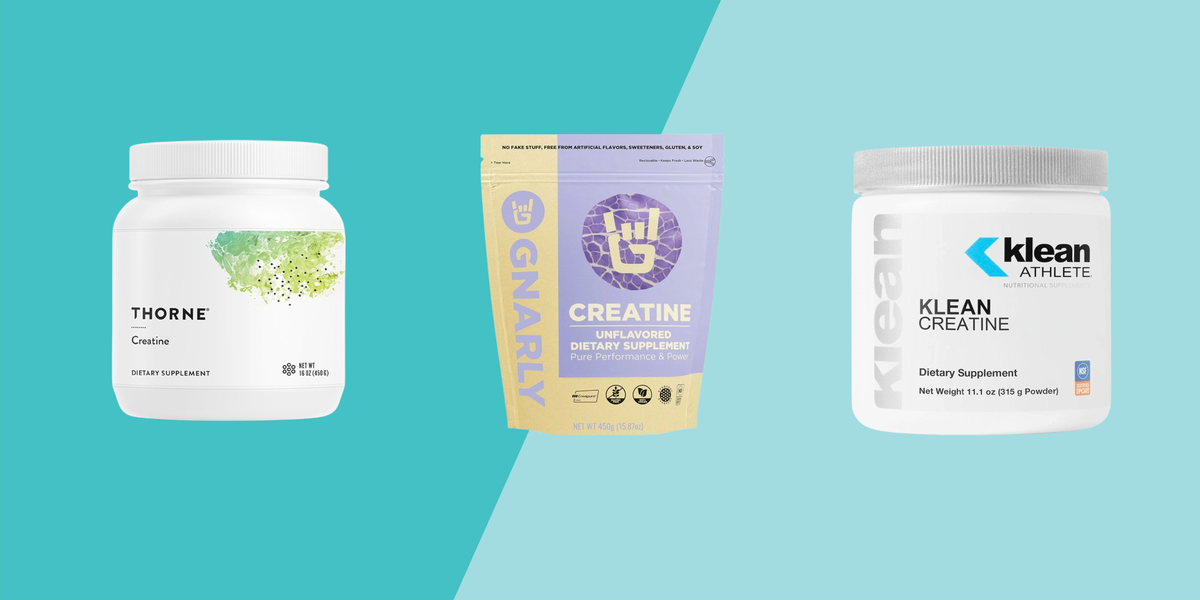
✔️ Look for third-party testing. “Dietary supplements are not regulated by the FDA,” White previously explained. “To ensure that a supplement is safe, it is important to see if a supplement has a third-party certification,” such as Informed Choice certified, NSF certified, or GMP quality assured, among others.
✔️ Decide which form to take. “Creatine monohydrate is the most effective form of supplementation to produce more endurance during exercise,” Vetter explains. It consists of just a creatine molecule and a water molecule. However, you can also opt for creatine hydrochloride (HCL), which is made with a hydrochloride molecule and “allows for faster absorption and the risk for side effects are smaller,” White adds.
✔️ Go flavored or unflavored. White recommends considering the flavor profile before deciding on a creatine supplement. “Most prefer unflavored so it can be mixed with a variety of drinks,” like pre-workout, he explains. However, there are certainly great flavored formulas if you plan to drink it alone.
✔️ Consider supplementing with food. If you’d like to add creatine to your diet, you can also try incorporating food sources high in creatine, which include red meat, wild game, and fish, particularly salmon, tuna, and herring, according to Vetter.
Read the full article here