

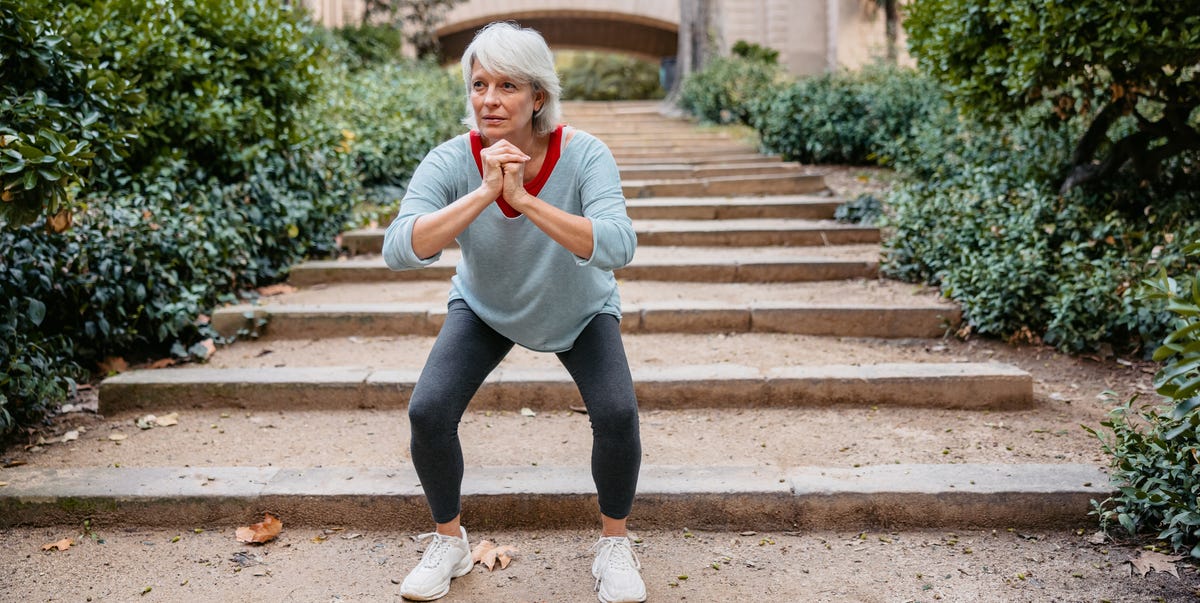
If you’re looking to reap the many benefits of strength training, especially for women over 50, there are different ways to go about it. Yes, you could lift heavy weights or incorporate high-intensity moves, but you don’t have to. Building your strength workouts around the best low-impact exercises for women over 50 can help you increase muscle mass, maintain metabolism, and support your joints and mobility just as effectively as those more intense moves.
“A low-impact strength move minimizes stress on your joints. It avoids sharp, jarring motions that can cause strain,” explains Denise Chakoian, a certified fitness trainer and owner of Core Cycle Fitness LaGree in Providence, RI. “Movements are more controlled and smooth rather than bouncing or explosive. They are still good for your muscles, meaning they still build strength, it’s just much easier on your body and joints. Low-impact exercises also improve balance and stability.”
Meet the experts: Denise Chakoian, a certified fitness trainer and owner of Core Cycle Fitness LaGree in Providence, RI; Tina Tang, C.P.T., a personal trainer in Jersey City, NJ.
In fact, most traditional strength-training moves are inherently low-impact, says Tina Tang, C.P.T., a personal trainer in Jersey City, NJ. “A low-impact exercise is one where at least one foot (or another point of contact) stays connected to the ground, and there’s no jumping, hopping, or rapid airborne phase,” she explains. “Low-impact moves are highly effective for building muscle, supporting joints, and maintaining bone density.”
Ahead, find low-impact exercises and how to incorporate them into your strength-training routine.
Low-impact exercises for people over 50
Tang and Chakoian recommend the following low-impact exercises to build total-body strength, enhance balance, and improve bone health while being gentle on the joints.
Squats
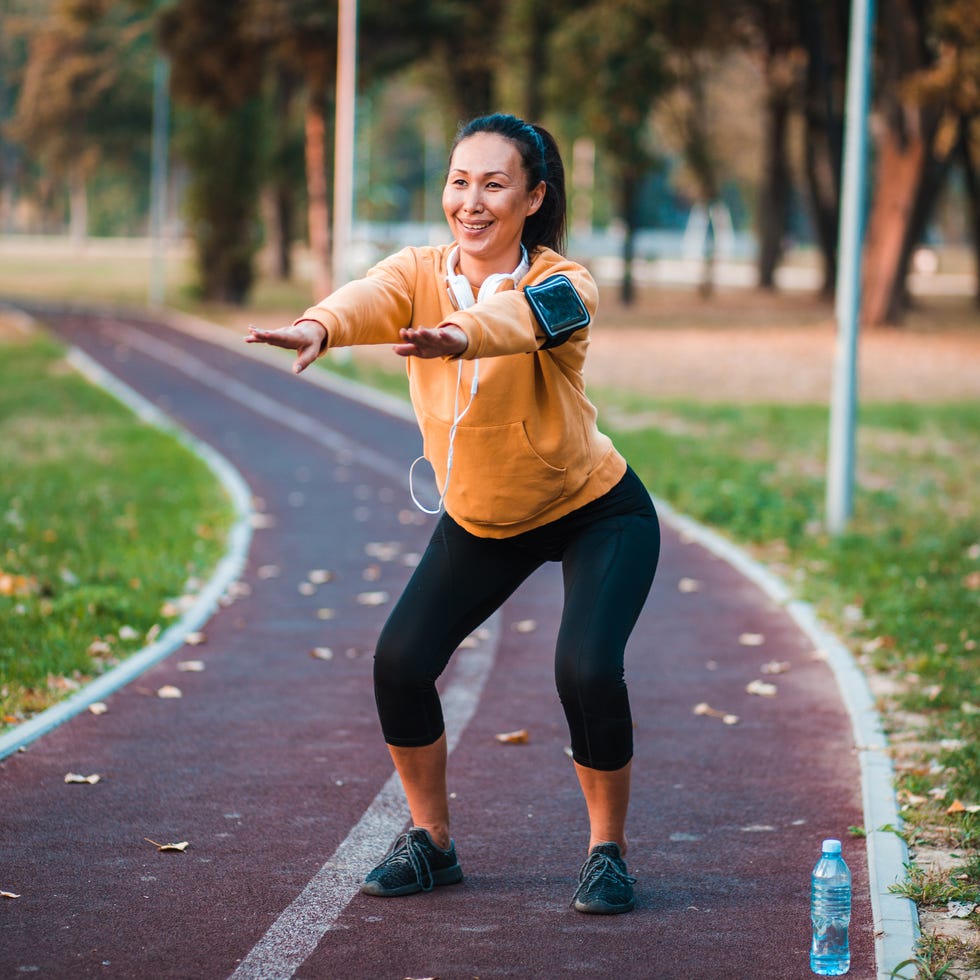
“Squats strengthen the legs and hips and support everyday movements like sitting and standing,” says Tang.
To do: Stand with your feet shoulder-width apart, toes pointed out slightly. If desired, hold one medium weight at your chest. Press your butt back as you bend your knees, keeping your knees over your ankles, then return to standing. If you’d like, you could also squat to a bench or chair for even less pressure on your knees.
Glute bridges
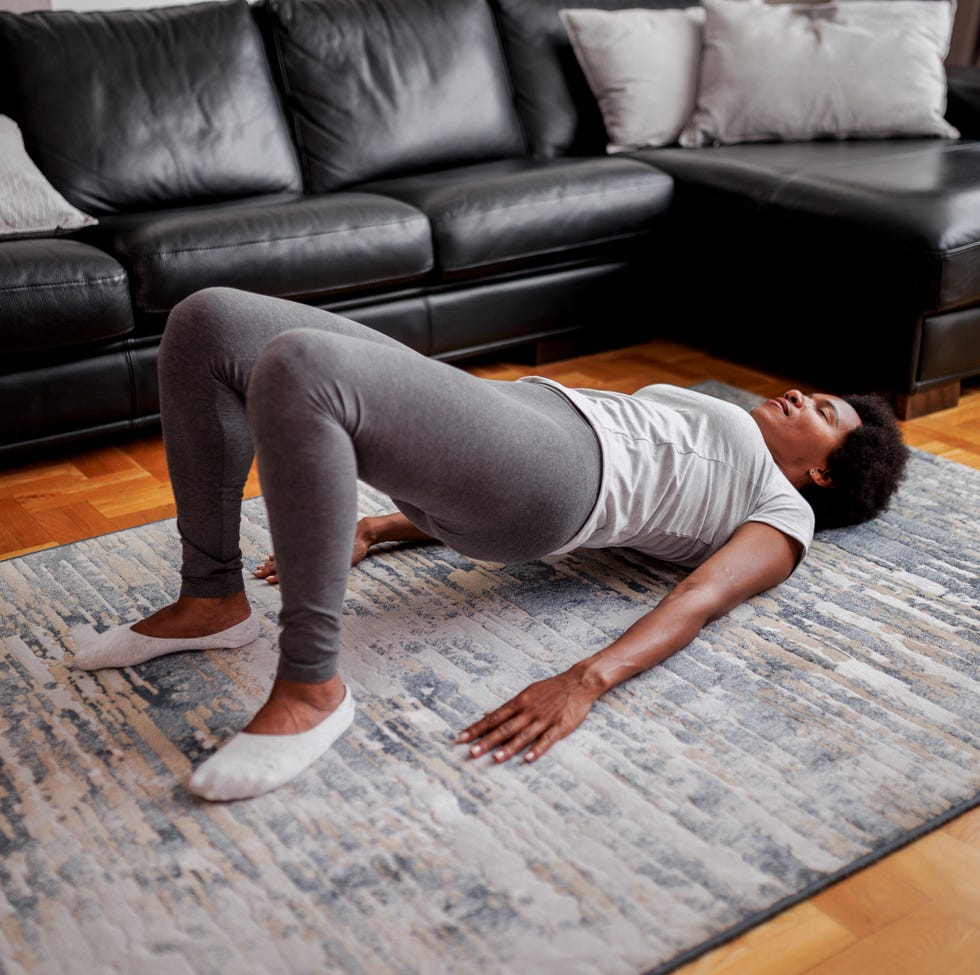
This low-impact exercise strengthens the glutes, hamstrings, and lower back, says Chakoian.
To do: Lie on your back with your knees bent and feet flat on the floor. Press through your heels and squeeze your glutes to lift your hips, keeping your upper back on the floor, then lower back down.
Wall or inclined push-ups
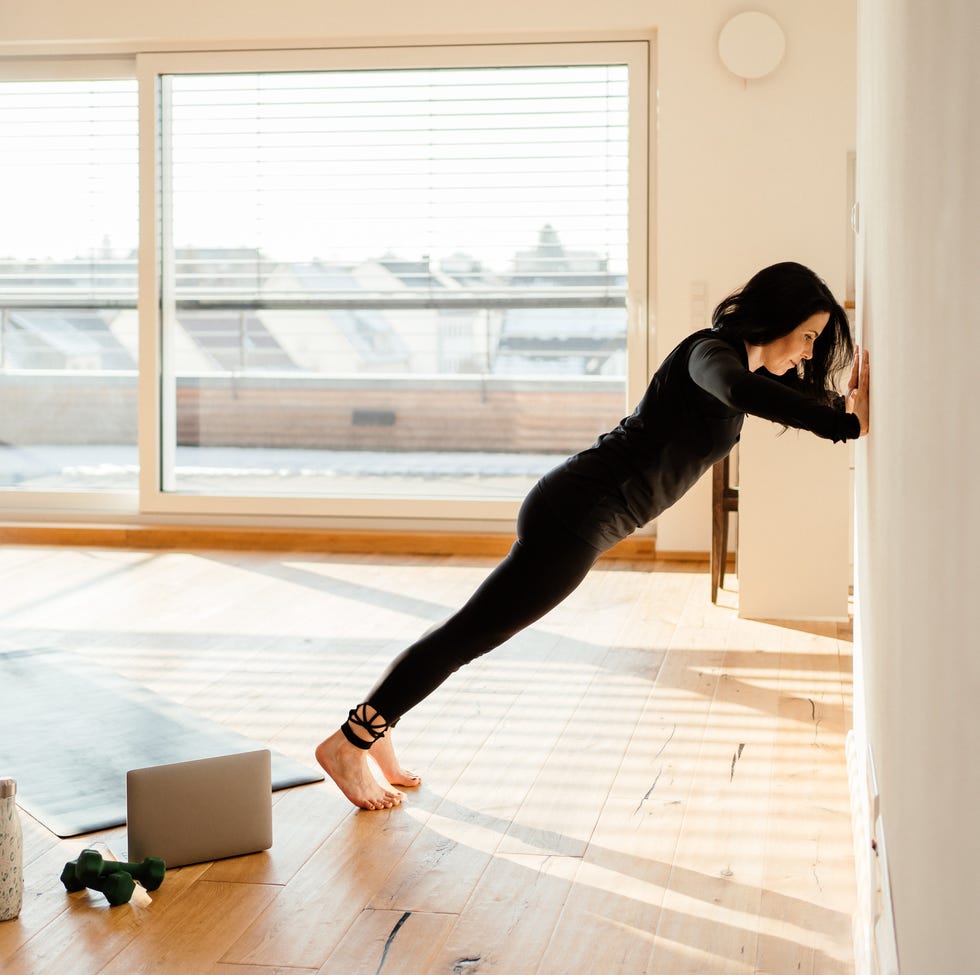
“These target the chest, shoulders, and triceps with less stress on the wrists [than a traditional push-up],” Chakoian explains.
To do: Place your hands on a wall, bench, or chair, then walk your feet back until your body forms a straight line from your head to your heel. Bend your elbows to lower your chest, keeping your back flat, then press back up to return to start.
Wall sits
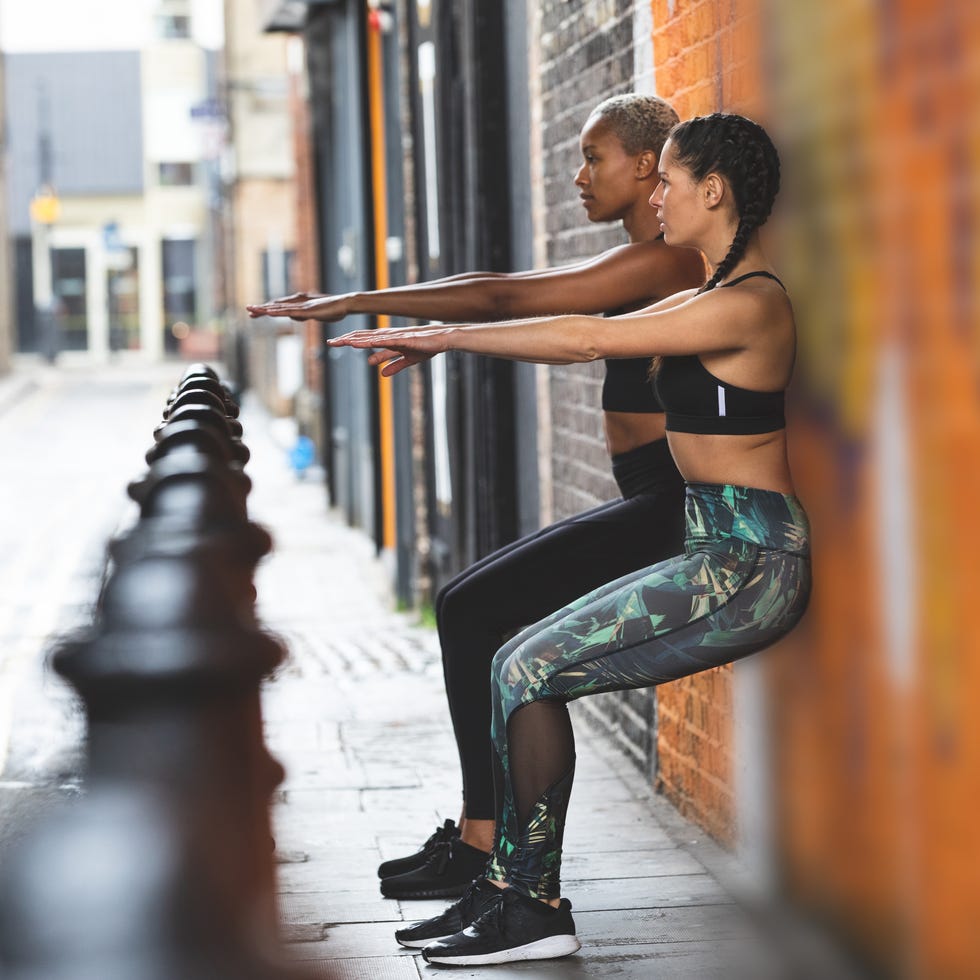
“Wall sits strengthen the legs and knees without joint movement, which can be helpful for sensitive knees,” says Tang.
To do: Stand with your back flat against a wall. Slowly walk your feet out, bending your knees and letting your back slide down the wall, until you feel the muscles of your legs engage, then hold.
Rows
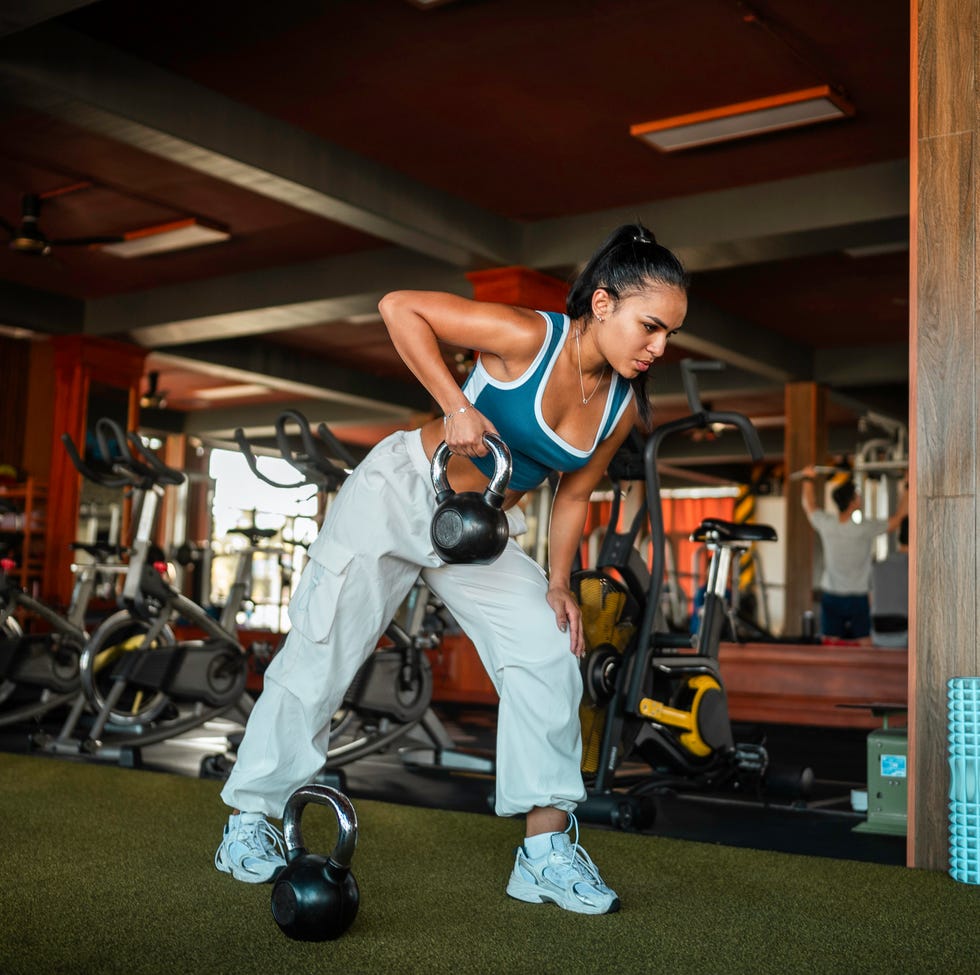
“This exercise supports your shoulder health and posture by strengthening the upper back,” Tang says. There are many different low-impact variations of rows to try, such as seated cable rows at the gym. But if you’re at home, Tang suggests using dumbbells, while Chakoian prefers a resistance band.
To do: Stand with your feet hip-width apart, knees slightly bent and hinged slightly at the hips. If using weights, hold medium dumbbells in each hand with your arms extended down, palms facing each other. If using a resistance band, stand on the center with both feet and hold the ends in each hand. Press your shoulders down your back as you pull your hands up to the sides of your ribcage, letting your elbows float straight up, then slowly lower back down.
Bird dogs
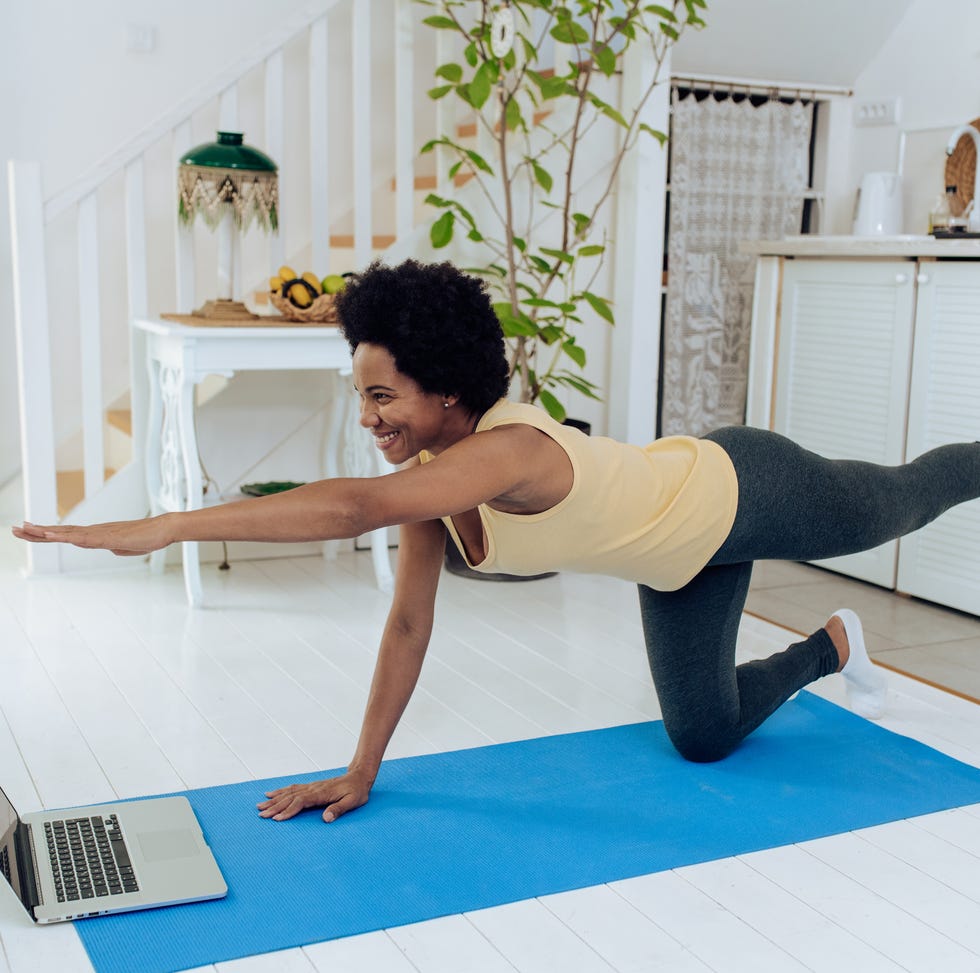
This simple yet powerful exercise strengthens the core, lower back, and shoulders, says Chakoian.
To do: Come onto all fours with your hands directly under your shoulders. Pull your belly button into your back and lift one arm straight out in front of you as you do the same with the opposite leg, creating a straight line from your fingers all the way to your heel. Hold for a moment, then lower back down. Repeat on the other side.
Step-ups
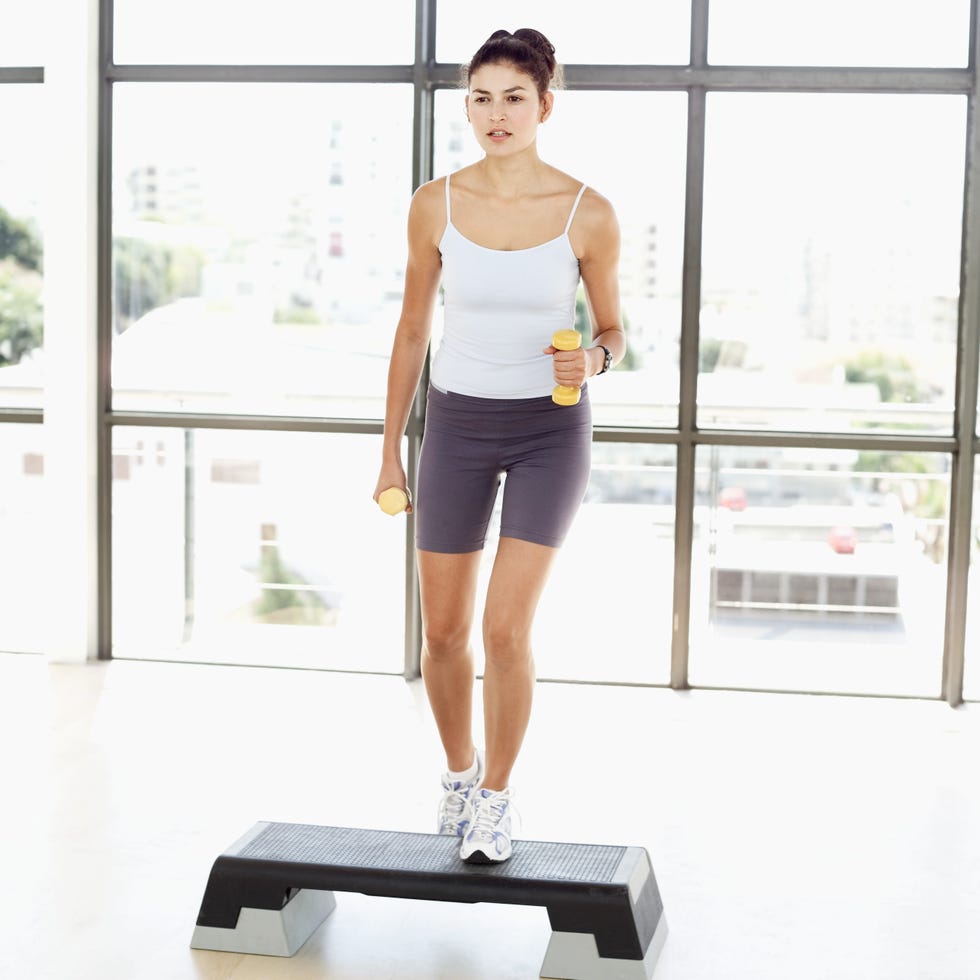
Both Tang and Chakoian recommend step-ups to strengthen the hips, quads, glutes, and calves while also improving balance and coordination.
To do: Stand behind a low step. Step up onto the step, pause for a moment, then step back down with the same foot. Repeat on the other side.
Farmer’s carries
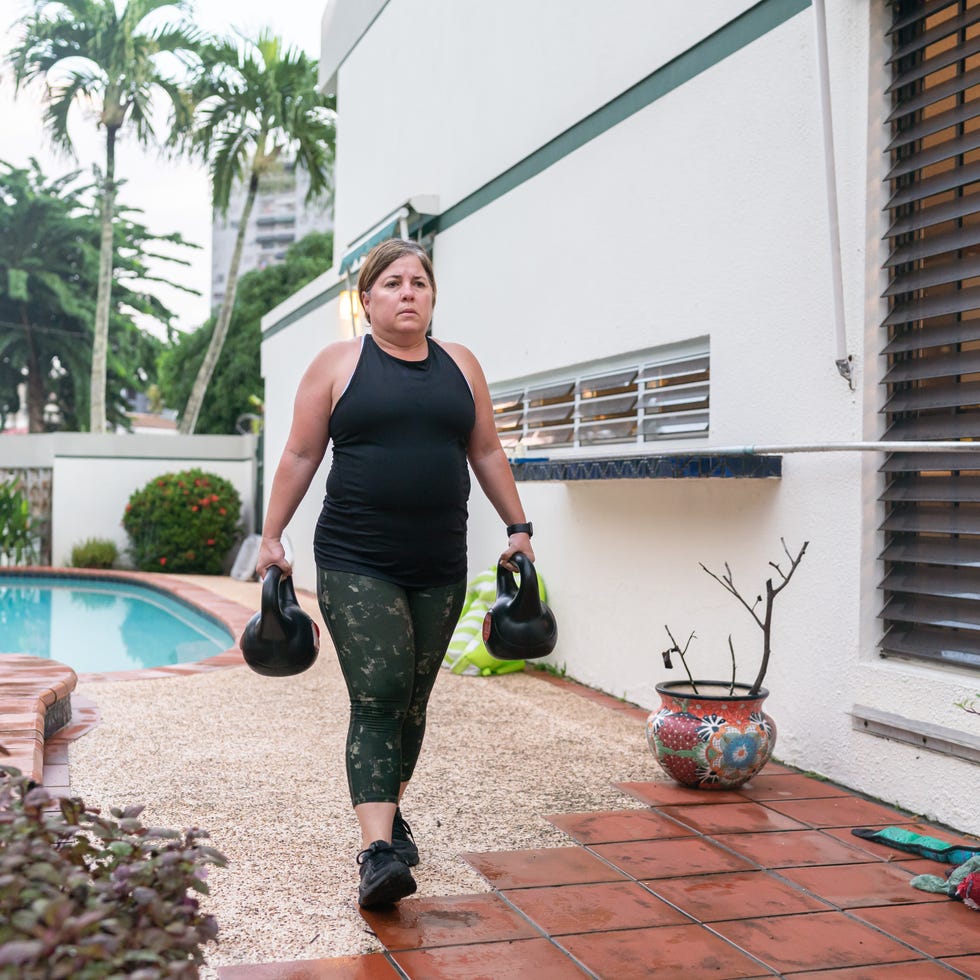
“These train core stability, grip strength, and posture in a very functional way,” says Tang. You can also hold just one weight at a time to further challenge your stability.
To do: Hold a medium to heavy weight in each hand at your sides, letting them hang heavy. Keeping your back tall and your core engaged, walk around your space for 30 seconds.
Banded side steps
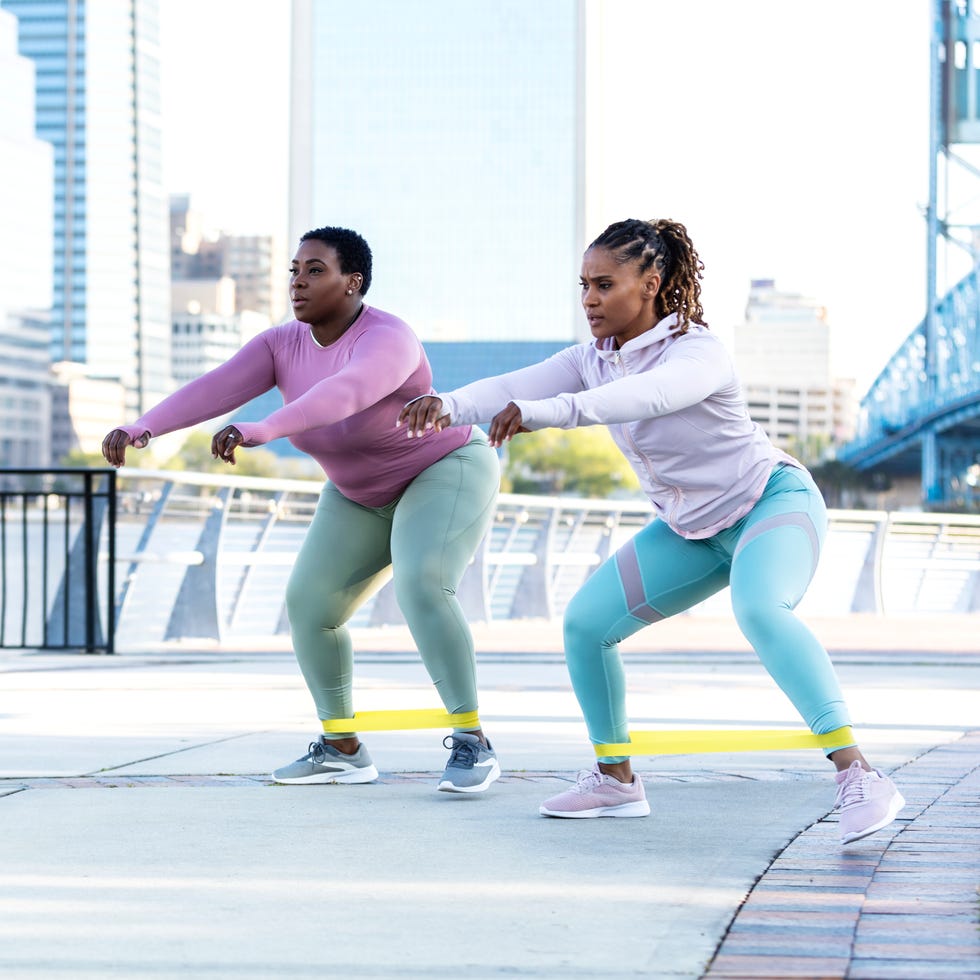
These hit your glutes and hip abductors, says Chakoian, and are a great way to work on your lateral movement.
To do: Place a loop band around your ankles and bend your knees, lowering further into a squat for more of a challenge. Step out to one side, creating tension on the band, then bring the other foot in. Take a few steps in one direction, then go back the other way.
Chest presses
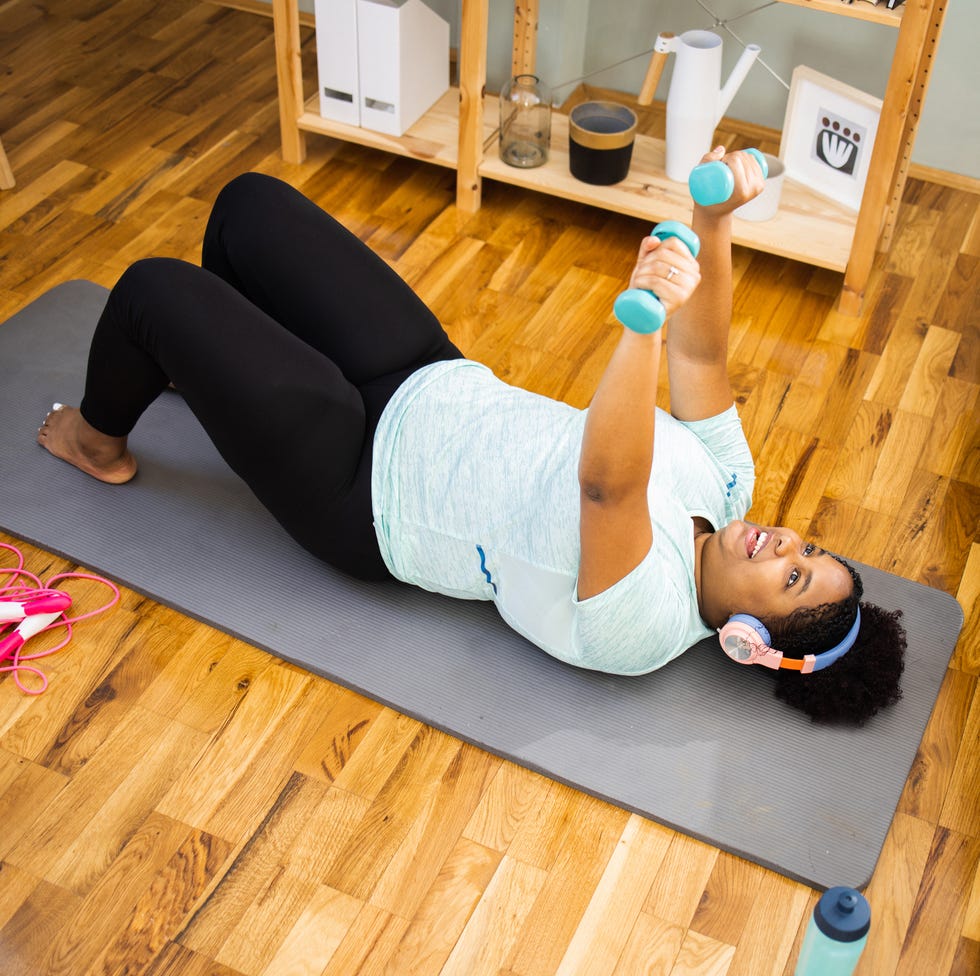
Lifting weights overhead may create unnecessary strain, says Tang. Chest presses help build upper-body strength without it.
To do: Lie on your back on the floor or on a bench with your feet flat on the floor. Hold medium weights at your shoulders, palms facing away. Press the weights up to meet directly over your chest, then slowly lower them back down.
Who may benefit from low-impact exercises?
In short, anyone and everyone can see results from low-impact work. But the experts we spoke to say that favoring low-impact exercises can be especially helpful for the following folks:
- Older adults looking to protect their joints and reduce injury risk
- People with joint pain or arthritis who have a limited tolerance for high-impact exercise
- Beginner exercisers trying to build baseline strength and coordination
- People recovering from injury or surgery
- Pregnant people who want to minimize strain on the body and pelvis
Read the full article here