







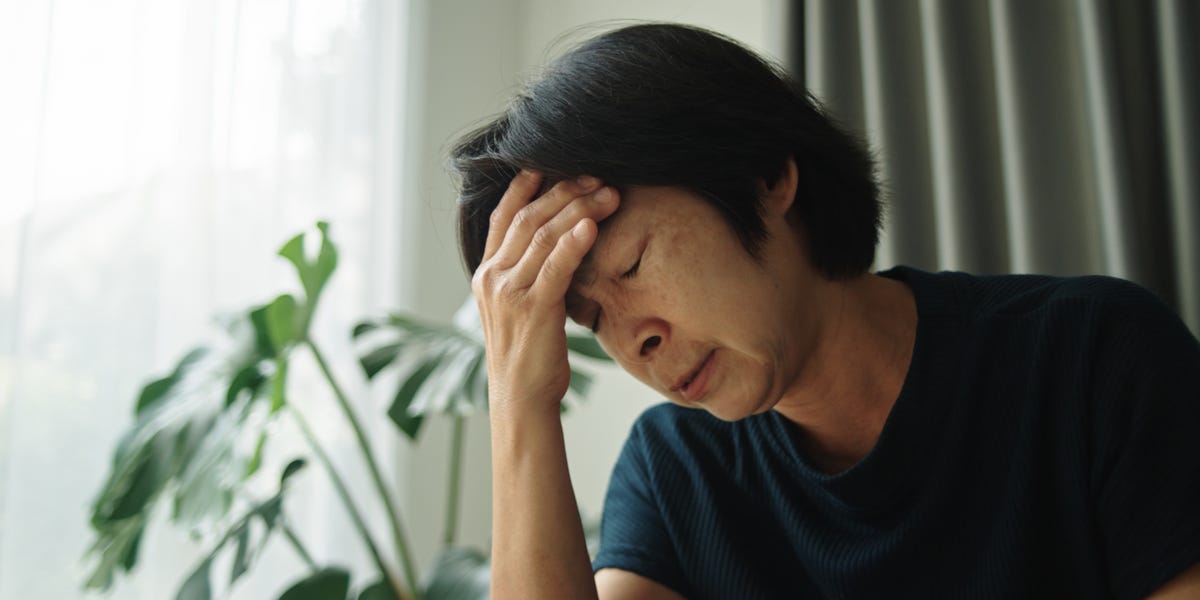
Finally, we’re talking about it: All of the strange symptoms that can start happening to women around age 40 and beyond. This is the time when most women start dealing with perimenopause symptoms caused by changing hormones—and as you ride this hormonal roller coaster toward peak menopause, these symptoms can linger and you can experience plenty of new ones that you may not realize are connected to your hormones.
Things like hot flashes and night sweats are talked about all the time when it comes to menopause, but lots of other changes occur during this time, and they might feel random or even confusing since they’re not talked about as often.
Meet the experts: Sherry Ross, M.D., is an ob/gyn and women’s health expert at Providence Saint John’s Health Center in Santa Monica, Calif.; Lauren Streicher, M.D., an ob/gyn and a clinical professor of obstetrics and gynecology at Northwestern University Feinberg School of Medicine; Ife J. Rodney, M.D., a board-certified dermatologist in Baltimore and the founding director of Eternal Dermatology + Aesthetics.
In need of relief from your menopause symptoms? Experts share some lesser-known, surprising menopause symptoms, plus what you can do to feel better.
What Is Menopause?
First, we have to talk about perimenopause—this is the phase leading up to menopause, and many women start to experience symptoms caused by hormones starting to change, such as a plummet in estrogen, explains Sherry Ross, M.D., an ob/gyn and women’s health expert at Providence Saint John’s Health Center in Santa Monica, CA. Menopause is when you naturally stop having periods, cause hormonal changes like an even steeper drop in estrogen production.
Surprising Symptoms of Menopause
Understanding what’s happening in your body during menopause is one key to healthy aging and feeling your best during this time. If your symptoms are interfering with your day-to-day or you’re just uncomfortable, it’s important to talk to your healthcare provider. Whether or not they’re related to menopause, there may be treatment options available to help, and it’s ideal to get personalized advice.
Dry Skin
That drop in estrogen can impact your skin’s ability to retain moisture and produce collagen and elastin (two factors that help give skin a youthful appearance) causing dry skin, explains Ife J. Rodney, M.D., a board-certified dermatologist in Baltimore and the founding director of Eternal Dermatology + Aesthetics. “Your skin also produces less sebum (or oil), which can also lead to dryness,” she says.
Washing with a mild cleanser, applying moisturizer with hyaluronic acid or glycerin after you take a bath or shower and throughout the day can be helpful, according to the American Academy of Dermatology (AAD).
Sleep Issues
A decline in the hormone progesterone in menopause, as well as hot flashes, can disrupt sleep, says Lauren Streicher, M.D., an ob/gyn and clinical professor of obstetrics and gynecology at Northwestern University Feinberg School of Medicine. Following a set bedtime routine, keeping your bedroom at a comfortable temperature, and getting regular exercise may help, too, according to the National Institute on Aging (NIA).
Muscle and Joint Pain
Because estrogen helps support joint and muscle health and can help control inflammation, you may notice that your muscles and joints hurt when estrogen declines, says Dr. Streicher. While Dr. Streicher says that hormone therapy can help, she also suggests doing your best to maintain a healthy weight, as this takes some load off your joints—low-impact exercises can help with both weight maintenance and joint issues.
Breast Changes
There are estrogen receptors in your breast tissue, which means a drop in estrogen can lead to breast changes, Dr. Streicher says. “Some people get increased breast tenderness and fullness during perimenopause,” she says. While there’s not much you can do about this symptom, hormone therapy may counteract some of it.
Dry Mouth
Many women may have a drop in saliva flow in menopause, causing dry mouth, says Dr. Streicher. What’s behind this? The mouth and salivary glands contain estrogen receptors, and those can be impacted by the drop in estrogen that naturally comes with menopause, Dr. Streicher says. Doing your best to stay well hydrated may help, she says.
Changing Taste Buds
Fluctuating hormone levels can mess with your taste buds, and so can dry mouth, Dr. Streicher says. One small study even found that a “significantly higher” percentage of women who had been through menopause couldn’t identify the taste of the artificial sweetener sucralose as well as some bitter tastes compared to women who hadn’t been through menopause. This is another symptom that hormone therapy may be able to mitigate.

Add Prevention as a preferred source in your Google search results.
Use your Google account to add this to your settings.


Body Odor
If you notice a change in the way you smell, new body odor may tell you something about your health—in this case, that you could be in menopause. “We have estrogen receptors in the skin, including in sweat glands,” Dr. Streicher says. That means your natural scent may change as your levels of estrogen drop. “You also have people who are sweating more due to hot flashes—and that can lead to body odor,” Dr. Streicher says. Outside of hormone therapy, wearing layers that can be removed when you’re hot may help, although that’s not a perfect solution.
Brittle Nails
Dropping estrogen levels can impact the production of keratin and collagen, proteins responsible for nail strength, Dr. Rodney says. Thyroid issues are also common in menopause, and those can impact the strength of your nails, Dr. Streicher says. Internal and external hydration (e.g., lathering up with a good hand lotion) is just one tip that can help strengthen nails. Dr. Rodney adds that you may also want to make sure you’re loading up on foods for strong nails. Talk to your doctor for personalized advice on this.
Dizziness
Dizziness can be a sign of a lot of different health issues, making it important not to dismiss this as “just” being due to menopause, Dr. Streicher says. But it can also be a symptom of the life phase thanks to changes in estrogen levels and insomnia, she says. “If you have severe dizziness, I would make sure that nothing else is going on,” Dr. Streicher underscores. In other words, call or visit your doctor.
Numbness or Tingling
Also known as paresthesia, hormonal changes in menopause like the drop in estrogen can lead to a numb, tingling feeling in some areas of the skin, Dr. Streicher says. Estrogen supports healthy nerve function and, when levels drop, you can become vulnerable to nerve issues. Like dizziness, this symptom is also one of many that could be attributed to other causes and is best discussed with your doctor if it persists.
Vaginal Dryness
Your vagina is full of hormone receptors, and they’re under-stimulated when you go through menopause, Dr. Streicher says, which can trigger vaginal dryness. That can lead to symptoms like pain during sex, and burning or irritation. In addition to hormone therapy, using hormonal and non-hormonal vulvar and vaginal creams may help, she says. Just keep this in mind, per Dr. Streicher: “A lot of women do require a prescription product.” So, talk to your doctor if this one is an issue for you.
Brain Fog
This is more common in perimenopause and early menopause, Dr. Streicher says. “You have estrogen receptors throughout the brain,” she says. Going through the hormonal changes linked with perimenopause and menopause can impact your ability to think clearly as a result, she says, resulting in frustrating brain fog. “This can be treated with hormone therapy, and is a huge reason why many women take hormone therapy,” Dr. Streicher says.
Changes in Bowel Habits
There are a few reasons why you may notice a change in your bowel habits. For one, “there are estrogen receptors throughout the gut,” Dr. Streicher says, so as a result, changes in estrogen levels in your body may impact your bowel habits. But there also may be changes to your gut microbiome over time, she says. The best way to try to combat this is to focus on eating a healthy, varied diet that contains plenty of high-fiber foods, Dr. Streicher says.
Treatments for Menopause Symptoms
While there are individual things you can do for each symptom, doctors stress that hormone therapy, also known as hormone replacement therapy, can help with many of them. “Hormone replacement therapy is most effective in treating disruptive hot flashes, insomnia, or any menopausal symptoms negatively affecting a woman’s quality of life,” Dr. Ross says. Hormone therapy helps to raise the levels of estrogen or estrogen and progesterone in your body.
Dr. Streicher agrees. There are different forms of hormone therapy, including oral and topical formulas, Dr. Streicher points out. If you’re interested in trying hormone therapy, it’s best to talk to your doctor about next steps.
Read the full article here


