





- Food recalls appear to be on the rise, with several foodborne illness outbreaks ongoing this summer.
- Food safety experts say several factors are at play.
- Here’s how you can protect yourself.
The summer of 2026 has been defined by foodborne illness outbreaks. From news of cyclosporiasis in lettuce to salmonella in jalapeños to listeria in cheese, it feels like there’s a new food recall every day. But food safety experts say it isn’t that simple. Ahead, experts explain why it feels like there are more recalls than ever, if you should be concerned, and what to do to keep yourself safe.
Meet the experts: Darin Detwiler, Ph.D., author of the book Food Safety: Past, Present, and Predictions and a professor at Northeastern University; Ellen Shumaker, Ph.D., food safety expert and director of outreach for the Safe Plates program at North Carolina State University; Wade Syers, D.Soc.Sci., food safety specialist at Michigan State University
Have there actually been more recalls recently?
It’s still too early to say if there have been more recalls in 2026 than 2025, but there does seem to be an upward trend over the last few years.
“Looking at the available complete year data, we did see an increase in food recalls in 2025 compared with 2024,” explains Darin Detwiler, Ph.D., author of the book Food Safety: Past, Present, and Predictions and a professor at Northeastern University. “FDA-regulated food recalls were up by roughly 14% through the first nine months of 2025, and the amount of food affected increased even more dramatically.”
But while it’s still unclear whether the total number of recalls this year will exceed that of last year, Detwiler says the fact that 2026 recall activity appears elevated is worth noting.
What’s more, some of the most recent FDA recalls—many of which are linked to mass foodborne illness outbreaks—have affected huge amounts of food, meaning there’s the potential to affect lots of people. Take, for instance, the Taylor Farms iceberg lettuce recall in July, which is linked to a cyclosporiasis outbreak that has sickened over 17,000 people in the United States.
“That distinction matters. A handful of very large recalls can expose far more consumers than dozens of smaller ones,” Detwiler says. “I would pay attention not just to how many recalls we’re seeing, but to their scale, severity, the hazards involved, whether people are becoming sick, and (perhaps most importantly) whether these were failures that could and should have been prevented.”
Finally, it’s not just the number of recalls that makes them seem like they’re constant, either—it’s the wider media attention that comes with it, says Detwiler. “In recent years, FDA-regulated food recalls have been occurring at a rate of more than one recall event per day on average,” Detwiler says. “This helps explain why consumers increasingly feel as though food recalls have become part of the daily news cycle.”
The news is also available through lots of different platforms, too. “Recall notices now reach consumers through news alerts, social media, retailers, government agencies, and their phones with such frequency that they can begin to feel routine,” Detwiler says.
What changed?
If recalls—or at least awareness of them—are on an upward trend, it’s fair to wonder what may be responsible for the change. News of staff cuts at the FDA and other health agencies like the CDC and USDA has garnered attention as a potential culprit, but experts say it isn’t that simple.
“This reduction certainly comes with impacts, but not really to the recall process,” explains Ellen Shumaker, Ph.D., food safety expert and director of outreach for the Safe Plates program at North Carolina State University.
Furthermore, the FDA isn’t the only player in the process of initiating a recall. “The recall process involves food manufacturers, federal and state regulators, public health agencies, healthcare providers, and testing laboratories,” adds Wade Syers, D.Soc.Sci., food safety specialist at Michigan State University. “Most recalls are initiated when a potential problem is identified through company testing, consumer complaints, product testing, outbreak investigations, or regulatory activities.”
Another notable change came in June 2025, when the FDA announced that a remote inspection policy—originally intended as a temporary response to the COVID-19 pandemic—would be made permanent. That means many surprise, physical FDA inspections at food manufacturers were instead replaced by self-reported paperwork and scheduled, remote inspections. But again, “while staffing levels and inspection approaches are important components of the food safety system, it is difficult to attribute recall trends to any single factor,” Syers says. “Recalls can be triggered in multiple ways, and a variety of factors contribute to how quickly potential issues are identified and addressed.”

Add Prevention as a preferred source in your Google search results.
Use your Google account to add this to your settings.


That doesn’t mean the lack of physical inspections isn’t worth noting as a potential contributing factor. “Physical inspections remain an essential part of the system,” Detwiler says. “Records and remote assessments can provide valuable information, and technology can make oversight more efficient. But there is a fundamental difference between reviewing what a facility shows you and observing what is actually happening on the production floor. Verification matters.”
Still, Detwiler says that ascribing blame exclusively to structural changes at the FDA is missing the bigger picture. “The primary responsibility for producing safe food belongs to the company producing it,” he says. “Companies should not need an FDA inspector standing in the doorway before they do the right thing. Compliance with regulations is the minimum expectation; prevention should be embedded into operations every day.”
Regardless, agencies like the FDA still play a major role in keeping us safe as consumers, and that continues to be true even with staffing and process changes. “There are extraordinary people working at FDA and throughout our public health system who work tirelessly every day to make our food as safe as possible,” Detwiler says. “Inspectors, investigators, scientists, epidemiologists, laboratory personnel, compliance officers, recall coordinators, and many others are doing enormously consequential work, often outside public view.”
Is the U.S. food supply safe?
“People may feel like recalls are becoming more common because several recent recalls and outbreaks have received a lot of media attention,” Syers says. “But more recalls don’t necessarily mean the food supply is becoming less safe. Sometimes it means we’re doing a better job finding problems through testing, surveillance, and outbreak investigations.”
Detwiler agrees. “A recall can be evidence that part of the food safety system worked. Someone found a dangerous product and acted to remove it,” he says. “The more important question is whether we are identifying and controlling hazards before contaminated products reach consumers and certainly before people become sick, are hospitalized, or die.”
Again, Detwiler says this comes down to the food safety practices of the companies producing our food. “When the same kinds of problems occur again and again (Listeria, Salmonella, undeclared allergens, foreign materials, sanitation failures), the conversation has to move beyond how effectively a company managed its latest recall,” he says. “We should be asking why the underlying failure was allowed to happen again. A company should not get better only at recalling unsafe food; it should get better at preventing unsafe food from being produced in the first place.”
Ultimately, Shumaker maintains that the U.S. food supply “continues to be one of the safest in the world. That being said, this relies on the systems that we have in place continuing to function.”
Should you be concerned?
When you’re constantly seeing new, widespread recalls, it’s easy to feel like no food is safe. But experts stress that recalls alone aren’t a cause for panic, but rather a tool. “The goal is to identify potentially unsafe products and get them out of commerce before more people get sick,” Syers says. “While no one wants to see a recall, it’s often evidence that the system is working and that a problem was identified before it became even larger.”
Detwiler says paying attention to the trends in the number of recalls is important, but warns not to let it take over your life. “I want people to be informed, not afraid. Food is essential, and most of the time we eat without incident,” he says. “But food is never entirely without risk, and that risk is much greater for our most vulnerable consumers: very young children, older adults, pregnant people, and people with compromised immune systems or certain underlying medical conditions.”
That said, Detwiler also cautions people against accepting widespread recalls and outbreaks as the new normal. “My larger concern is what I would call recall fatigue,” he explains. “Greater awareness of recalls is valuable: we want consumers to receive these warnings and act on them. But when warnings become this familiar, there is also a danger that people stop paying attention or, even more troubling, that recalls and outbreaks begin to feel normal. They shouldn’t… If companies, regulators, and consumers begin to accept recurring recalls and outbreaks as simply the cost of doing business in a complex food system, then we have lowered the standard.”
The bottom line
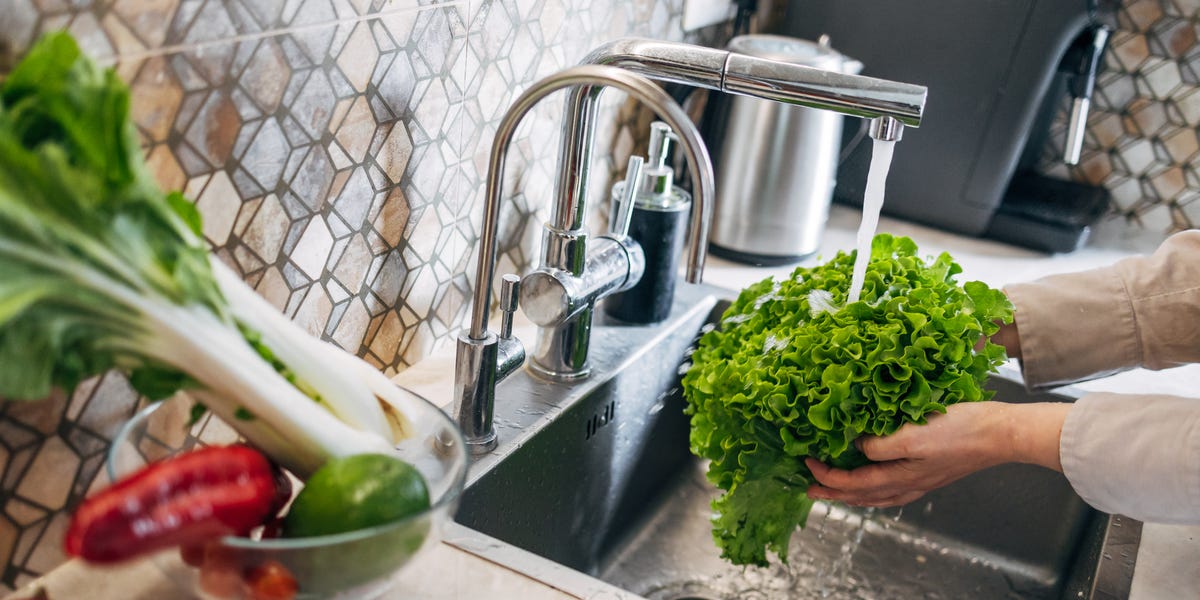
Experts agree: Amid widespread recalls, the best course of action is to keep yourself informed, but not alarmed. The best thing you can do as a consumer is pay attention to recall announcements, check if you have any of the affected products, and follow the guidance for disposing of them. “More broadly, good food safety habits such as proper handwashing, refrigeration, and preventing cross-contamination can help reduce risk,” Syers says.
Detwiler agrees that prevention is the best solution. “Ultimately, food safety should work like every other mature safety culture: Prevention becomes so embedded in our behavior and our institutions that we don’t wait for tragedy to remind us why the rules matter.”
Read the full article here


