

Knee pain is a common condition, affecting about 25% of adults, according to American Family Physician. While many people assume that it’s just an inevitable part of aging, experts say that in many cases, doing targeted exercises that strengthen the joint and muscles around it can keep you pain-free and moving freely.
“While you can’t completely stop some of the natural effects of aging or medical conditions (such as arthritis, which can affect the knee joint by wearing away the cartilage in the knee), weak knees are often the result of mechanical issues, such as improper form during exercise or injuries that have affected the way you move day-to-day,” says Thavun Srisaneha, I.S.S.A. C.P.T., N.A.S.M. B.C.E., a certified personal trainer and group fitness instructor at Thavun S Fitness.
“Neglecting proper knee care can lead to more imbalances that may cause other parts of your body to hurt due to overcompensation,” says Srisaneha.
Meet the Experts: Joseph Burns, M.D., chief musculoskeletal officer and sports medicine specialist at Wellstar Health System; Thavun Srisaneha, I.S.S.A. C.P.T., N.A.S.M. B.C.E., a certified personal trainer and group fitness instructor at Thavun S Fitness; Dean Seda, N.A.S.M., a certified personal trainer who specializes in corrective exercise
Keeping your knees healthy and pain-free involves targeting the muscles that support the knee, according to Joseph Burns, M.D., chief musculoskeletal officer and sports medicine specialist at Wellstar Health System. “I generally encourage patients to focus on strengthening the quadriceps in the front of the thigh, specifically the vastus medialis oblique muscle (VMO) on the inner thigh, the hamstrings in the back of the thigh, the gluteal muscles around the hip, and the calf muscles,” he explains.
He suggests focusing on low-impact strengthening exercises that build support around the knee without excessively loading the joint. “The key is to progress gradually and avoid exercises that significantly increase pain or swelling,” he says.
Experts say it’s best to consult a physician or physical therapist if you’re currently experiencing knee pain, as they can identify underlying issues and develop an exercise plan that targets the correct muscles and prevents further injury.
Below, read up on the knee-strengthening exercises that pros recommend.
1. Butt kickers
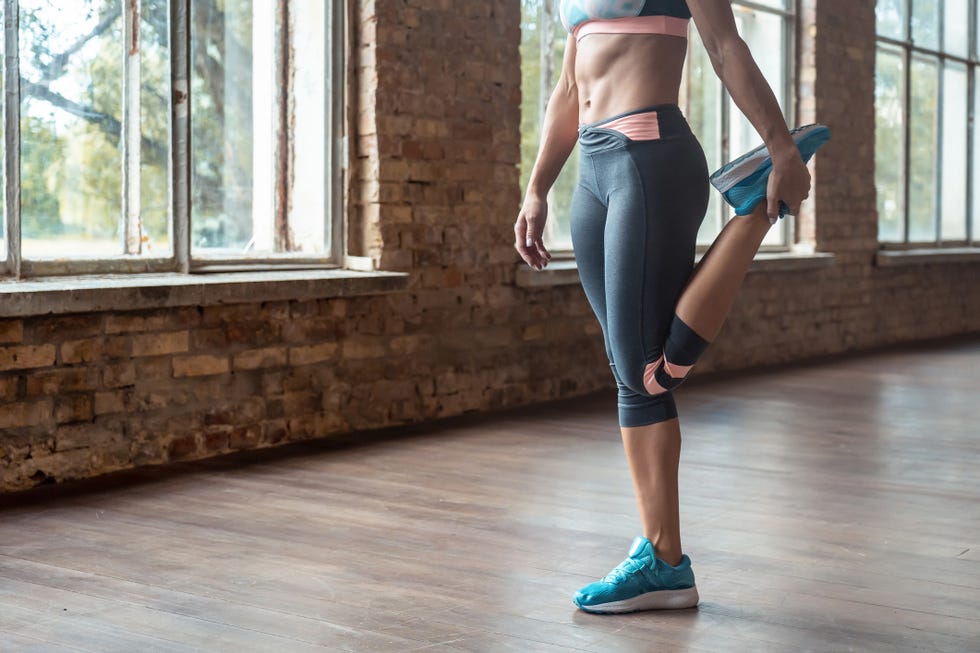
Why it works: This exercise can be a good warm-up for any of the exercises listed below because it gets the knee joint moving and loosened up before you perform exercises and could help prevent injuries.
How to do it: Stand next to a wall if you need something to hold on to for balance, stand up straight, and try to kick your butt with your heel. Do 20 kicks on each side alternating for two rounds, take a 30 to 45s rest in between sets.
2. Sitting down and standing up
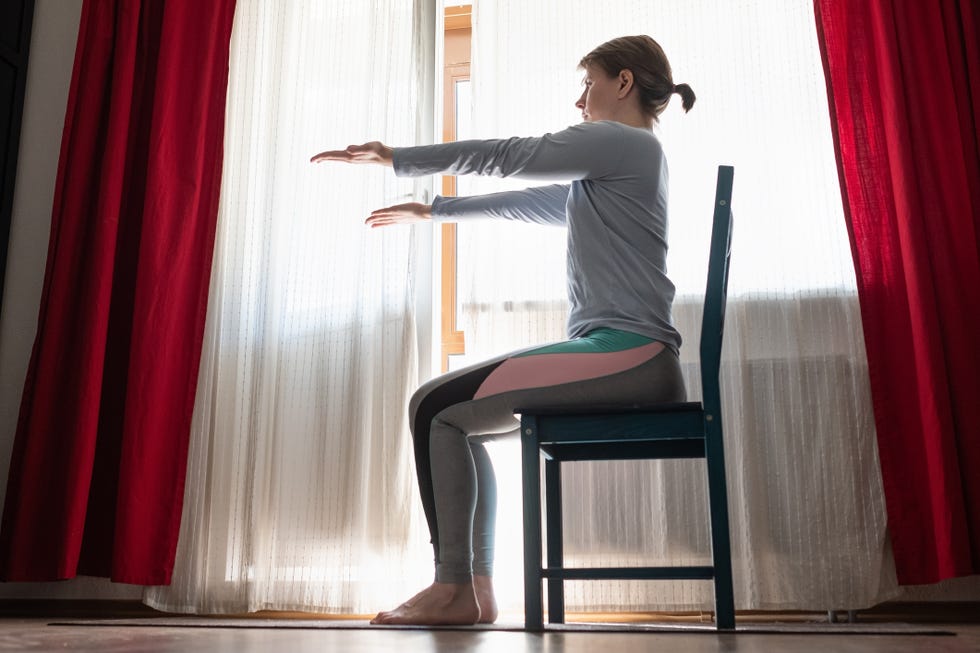
Why it works: This exercise can be done anywhere, where you have a bench or chair. This exercise is one I love because its something we do every day from sitting up from a work desk or even a couch, this exercise works a combination of muscle groups like your quadriceps, hamstrings, and glutes when you’re sitting down, and even your core comes in to play to stabilize your body.
How to do it: Using a bench or chair, slowly come down to sitting position with your arms to your side and raising up as you sit for stability. Then, slowly stand up, squeezing your glutes when you reach the top. While coming down, it’s very important to focus on sitting down slowly because it allows you to focus more on the muscles being worked. You can also increase your risk of injury by speeding to the bottom of the movement. Modify the movement by finding a slightly higher bench or chair so that you don’t have to go down as low. Perform 3 sets of 15 reps of this exercise.
3. Glute bridges
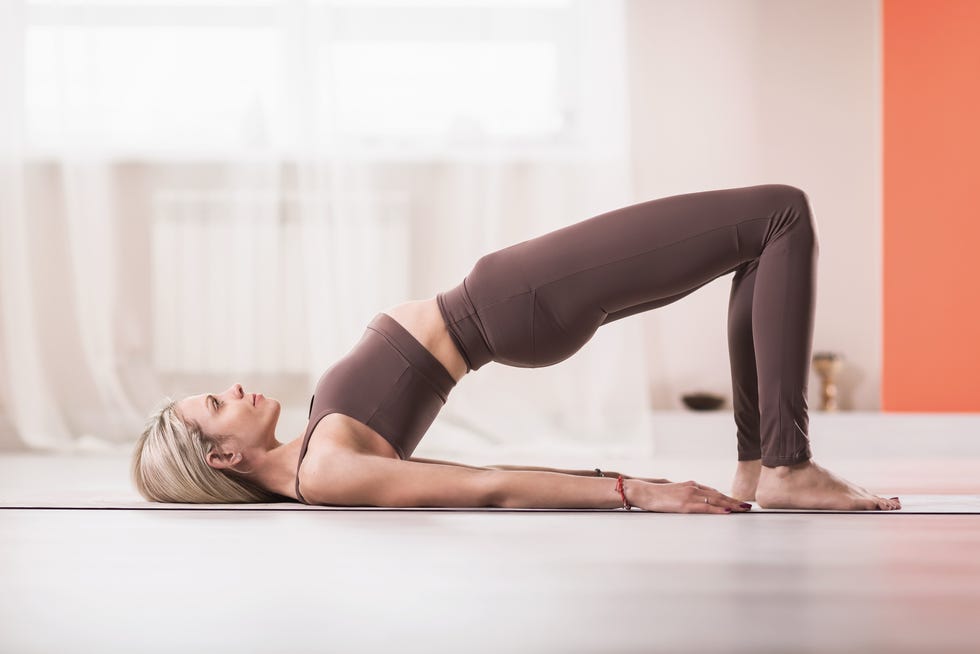
Why it works: Glute bridges are helpful because it strengthens the glutes, which is important for good knee health. Strong glutes help take the stress off the knee by taking on some of the load and preventing your knees from moving in a direction they aren’t supposed to go in, such as caving in or twisting out.
How to do it: Lay on your back with your knees comfortably bent and the bottoms of your feet against the ground, right inside shoulder width. From there, lift your glutes off the ground and squeeze them at the top, in a slow and controlled manner, focusing on contracting the glutes at the top. Perform 3 sets of 15 reps of this exercise.
4. Hamstring stretch
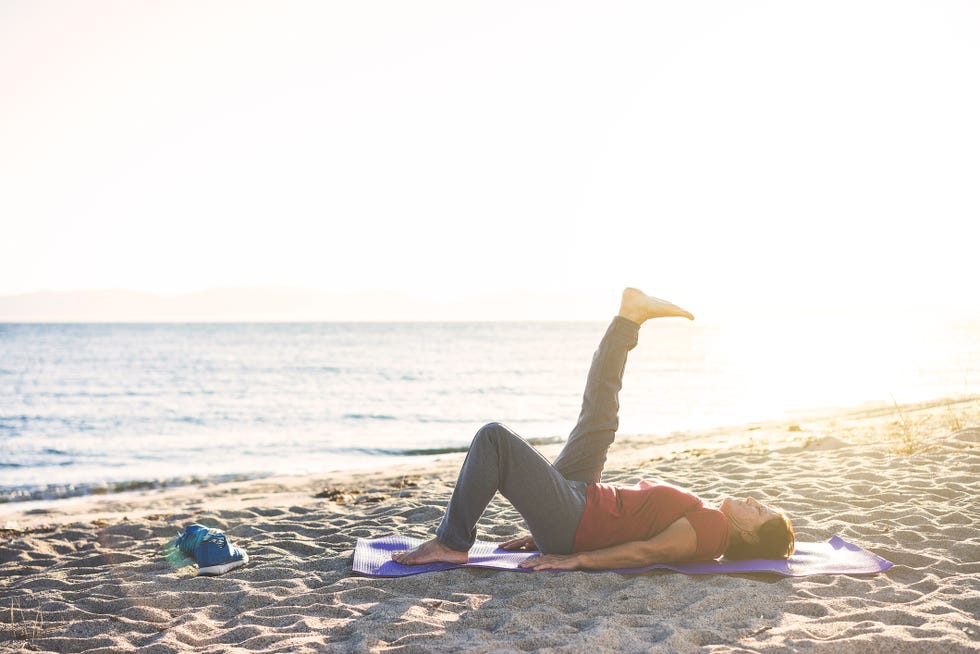
Why it works: This exercise works your core and hip flexors. Strengthening your core and hip flexors can help your posture as well as stabilize your spine so that you can move in the way your body was meant to move.
How to do it: Lay on your back with one knee bent and one leg straight. Your arms can be rested at your side. Then, raise your straight leg up to 90 degrees, and slowly back down. Perform 3 sets of 15 reps of this exercise for each leg.
5. Wall sit
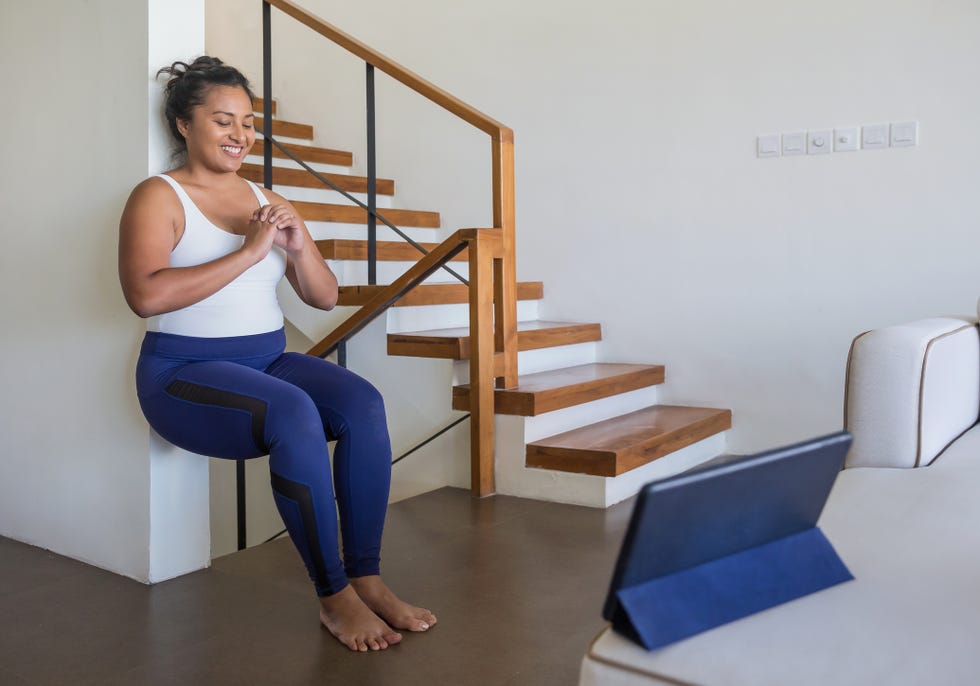
Why it works: Wall sits are a great exercise to strengthen your quadriceps, which play an important role in absorbing shock from daily activities such as running, jumping, or even walking.
How to do it: Find a wall and put your back flush to the wall with your arms at your side. Slide down, bending your knees no more than 90 degrees. The closer to 90 degrees you go, the more challenging it will be. Find your sweet spot based on your current level of strength and hold a sitting position for 30 seconds to 1 minute. It is important to note that your knees should never go over your toes, and your shins should be as perpendicular to the ground as possible. Perform 3 sets of this exercise.
6. Donkey kicks
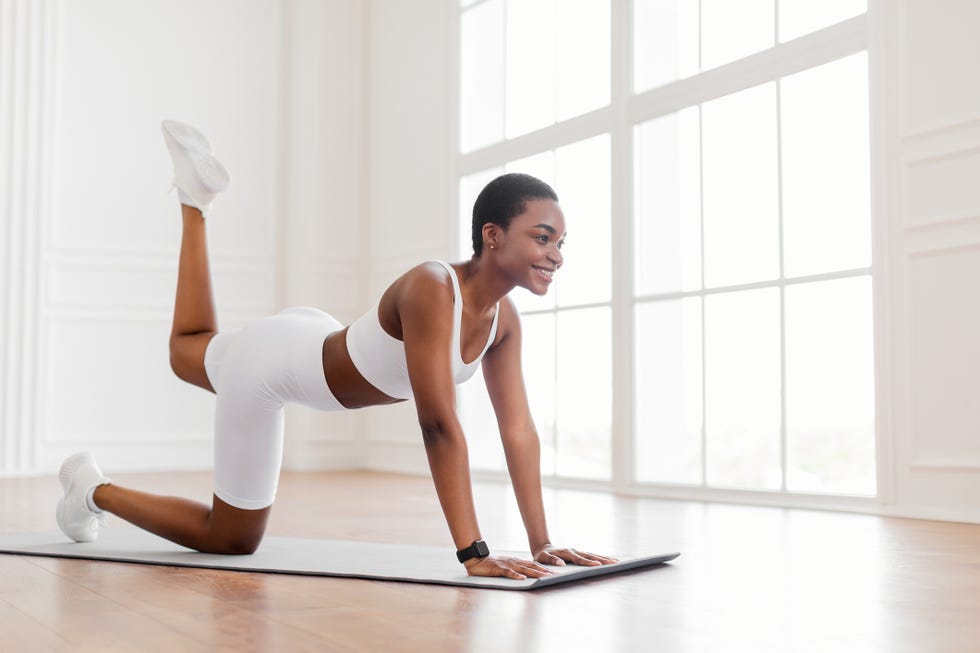
Why it works: Like glute bridges, this exercise helps strengthen your glutes and is a very low-impact movement.
How to do it: Grab a mat or find a soft surface, like a cushioned carpet, and get on your hands and knees. From there, you want a 90-degree angle at your hip and knee joints. Kick one leg back while keeping the 90-degree bend in the knee. Your belly button should be pointing to the floor so you don’t twist at all. You should feel a squeeze in your glute. Return to your starting position and repeat this for 3 sets of 10 to 15 reps each leg with 30 to 45 seconds of rest in between each set.
7. Squat
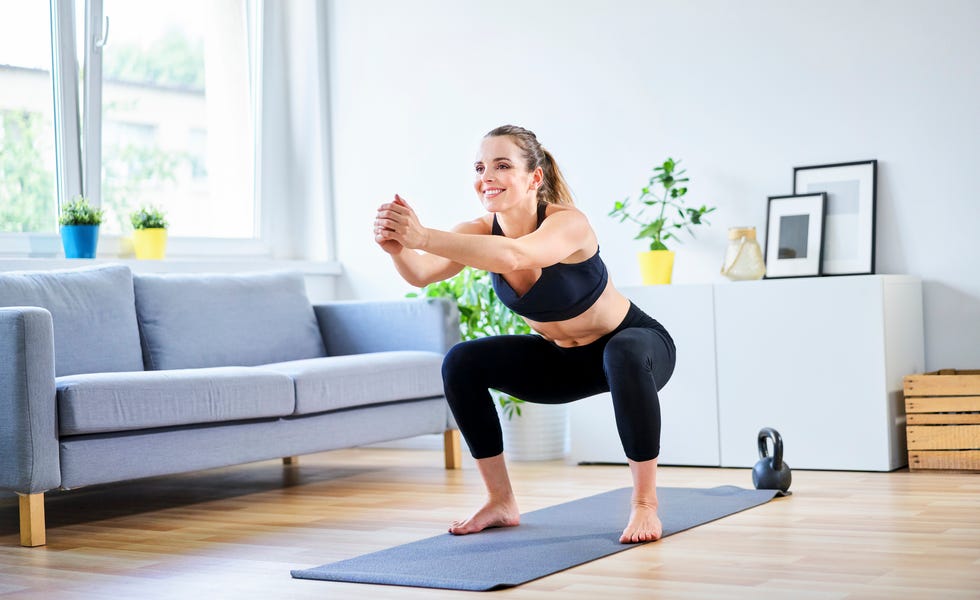
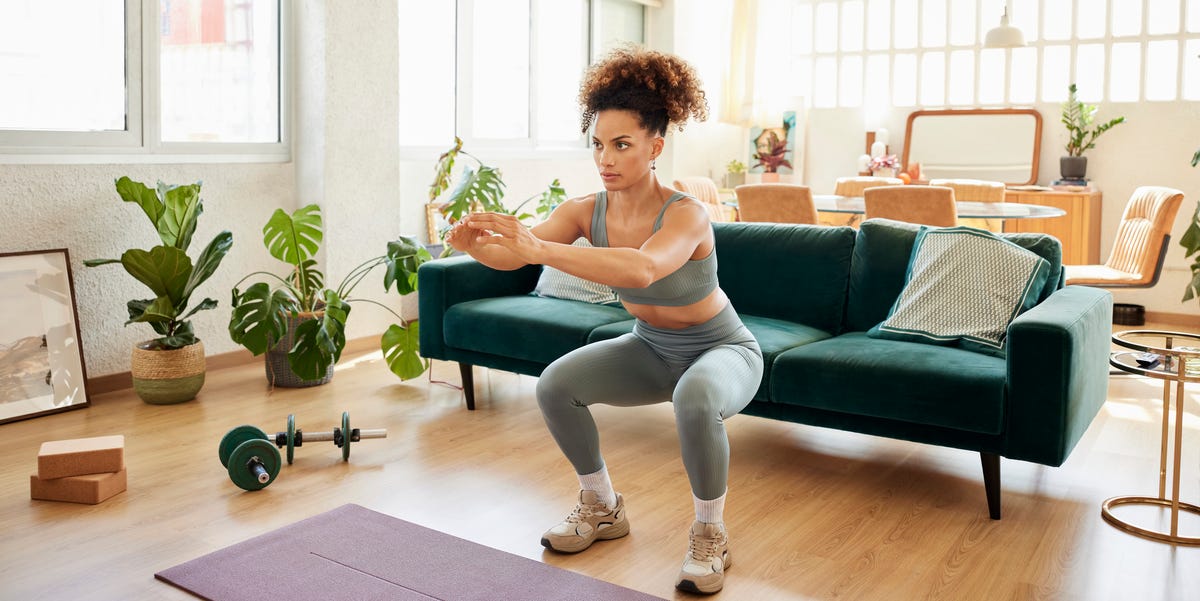
Why it works: “Squats strengthen the quadriceps muscles which directly connect to the knee,” says Dean Seda, N.A.S.M., a certified personal trainer who specializes in corrective exercise. Quadriceps strength helps provide the knee with more stability, thus reducing and preventing injury.
How to do it: Stand with your feet about hip-width apart. Keep your spine straight and look straight ahead. Lower your hips until you get to about 90 degrees (legs at right angles). Press through your heels and return to a standing position.
8. Leg extension
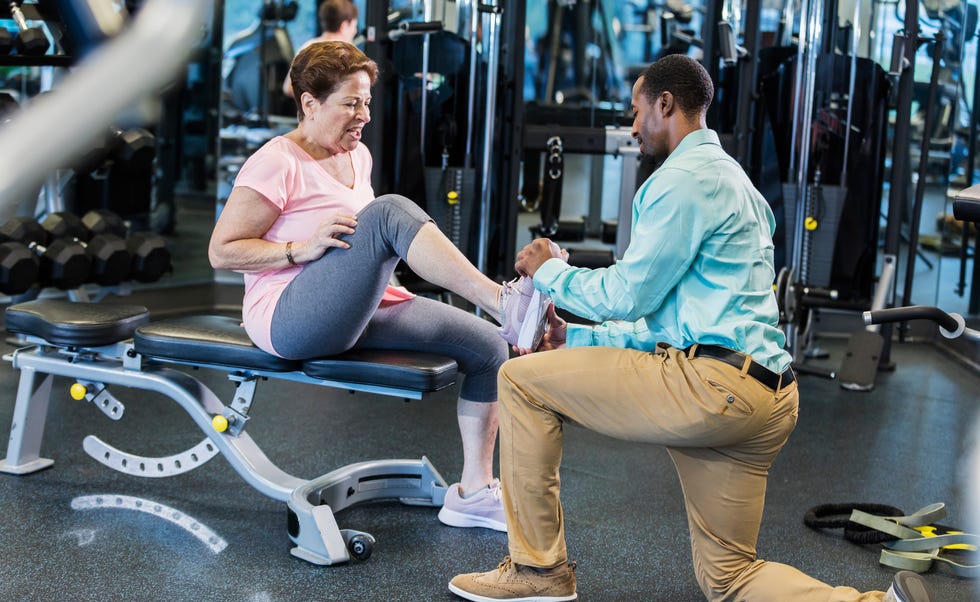
Why it works: Like squats, this exercise also strengthens the quadriceps muscles which attach to the knee. “The hamstring muscles along the back of your legs will experience a nice stretch as the quadriceps contract,” says Seda. “This promotes flexibility in the hamstrings which helps to reduce or prevent knee injury.”
How to do it: This can be done with or without weight. Sit in a chair or on the edge of a table that allows your calves and feet to dangle over the floor (legs in a 90-degree, flexed position). From here, raise your legs with flexed feet until your legs are straight, and then lower them back to the starting position.
Read the full article here