

If you’re trying to limit your carbohydrate intake or you’re watching your blood sugar, it can be tempting to avoid the bread aisle altogether. However, knowing the types of healthiest sandwich breads not only makes this packed aisle less overwhelming, but it can also support your efforts to make your diet healthier overall.
Meet the experts: Lauren Harris-Pincus, M.S., R.D.N., author of The Protein-Packed Breakfast Club; Stefani Sassos, M.S., R.D.N., the Nutrition & Fitness Lab Director at the Good Housekeeping Institute; Jen McDaniel, R.D.N., the founder of McDaniel Nutrition Therapy in St. Louis; Frances Largeman-Roth, R.D.N., the author of Eating In Color; Vanessa Rissetto, M.S., R.D., C.D.N., the co-founder of Culina Health.
“It’s so easy to get lost in the supermarket,” said Lauren Harris-Pincus, M.S., R.D.N., author of The Protein-Packed Breakfast Club. That’s why we asked dietitians for the types of bread they recommend the most, along with their best tips for how to find the healthiest picks. Read on to discover what they said and what may be the best bread option for you.
The healthiest types of sandwich bread
Healthy bread is absolutely a thing and can be a nutrient-dense and delicious addition to a healthy diet. Here are the types that dietitians recommend the most.
100% whole grain bread
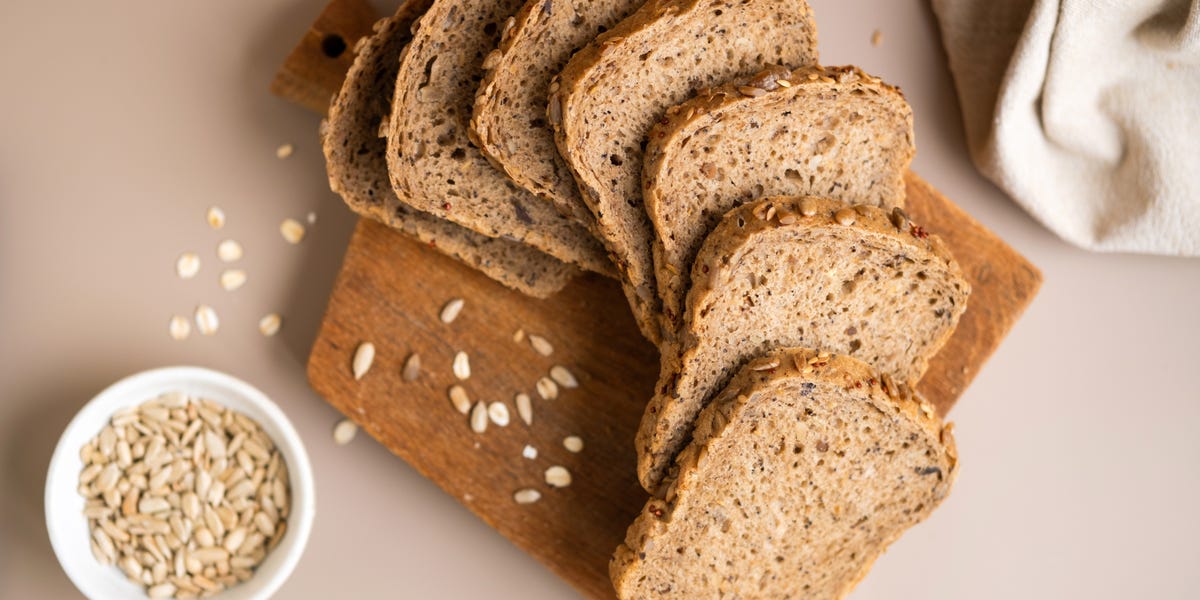
Stefani Sassos, M.S., R.D.N., the Nutrition & Fitness Lab Director at the Good Housekeeping Institute, recommended looking for 100% whole grain bread. Since whole grains contain all three parts of the grain, whole grain bread is significantly more nutrient-dense than white bread. In fact, research has found that mineral levels in breads made with whole wheat flour can be up to 72% higher than bread made with refined flour. Plus, whole grain bread is also one of the best breads to keep your blood sugar stable, thanks to the high protein and fiber content. Finally, whole grain breads often contain seeds such as flax, sunflower, and pumpkin seeds, which can contribute additional fiber and omega-3 fatty acids.
Sprouted grain bread
“Sprouted grain bread is typically higher in protein, fiber, and beneficial vitamins and minerals than other breads,” said Sassos. “It’s an easy swap on sandwiches, but be mindful that it can spoil quickly. I like to keep my sprouted grain bread in the freezer to preserve it’s freshness.”
Plus, if you’re mildly gluten sensitive or have difficulty digesting regular whole-wheat bread, sprouted grain bread might be a little easier on your stomach. The process of sprouting grains before they’re ground into flour seems to minimize the presence of phytic acid, which may make it a bit easier to absorb minerals like iron and calcium from your bread, said Jen McDaniel, R.D.N., the founder of McDaniel Nutrition Therapy in St. Louis.
Whole rye bread
Most conventionally sold rye bread is a bit of a nutritional dud, containing refined wheat flour and only around a gram of fiber, said McDaniel. However, if you can get your hands on a quality rye with “whole rye” near the top of the ingredient list, it may be worth it—rye contains resistant starch, a type of carb that acts like fiber, filling you up and helping you feel satisfied longer, said Frances Largeman-Roth, R.D.N., the author of Eating In Color. Rye also contains good-for-you micronutrients like magnesium, potassium, iron, and B vitamins, plus has a dense texture that makes it more satisfying and filling.
Sourdough
Unlike breads that use commercial yeast to rise, sourdough is naturally leavened through fermentation. This gives the bread a pleasant, tangy taste. “Sourdough bread has similar amounts of calories and fiber to white bread, but it is lower in sugar and also higher in protein,” said Sassos. “Sourdough is typically made with very minimal ingredients, just a combination of water and flour that create a sourdough starter, whereas other breads may have added fillers, oils, and more.”
Sourdough can be a less-processed alternative to white bread, though it may not pack in as many nutrients as whole grain or sprouted bread. If you can find whole wheat sourdough, though, you can get the benefits of whole grain and fermentation all in one slice.
How to choose the healthiest bread
Even if you head to the grocery store with the above dietitian-approved picks in mind, you still need to make sure the bread you’re choosing is the healthiest it can be. To do so, keep the following tips in mind.
- Read the labels: If you’re looking for nutritious ingredients, the first ingredient should be “whole wheat flour” or “whole grain flour,” said McDaniel and Largeman-Roth. They suggested avoiding “wheat flour,” which is often simply another name for white flour. “For labels that say made with whole grains or multigrain, pay extra close attention to those ingredient lists,” noted Sassos. “They may have hidden refined flours, fillers and even added molasses or caramel color to make the loaves look darker and hearty.”
- Cap the sugar: Seeing high fructose corn syrup, honey, sugar, and other sweeteners at the top of the ingredients list is a red flag, McDaniel and Largeman-Roth said. Harris-Pincus added to avoid fake sugars (like aspartame or sucralose) and look for non-artificial sweeteners like stevia or monk fruit; or dried fruit, like raisins. Eight grams of sugar should be the maximum you see when choosing a healthy bread, said Vanessa Rissetto, M.S., R.D., C.D.N., the co-founder of Culina Health.
- Look at the fiber: Seek breads that have at least two to three grams of fiber and three to five grams of protein per slice, McDaniel and Largeman-Roth said—it’s a great way to eat more fiber every day. Higher-fiber and high-protein breads can help you feel fuller longer by slowing digestion and easing sugar spikes.
- Eye your calories: If you’re looking for a low-calorie option, 30-50 calories per slice is a good sweet spot, said Harris-Pincus. But if you can fit more calories into your daily diet and are looking for more wholesome, hearty ingredients, Rissetto said 120 calories per slice is a good cap.
Additional reporting by Samantha Macavoy, Arielle Weg, and the Prevention Test Kitchen writers.
Read the full article here