

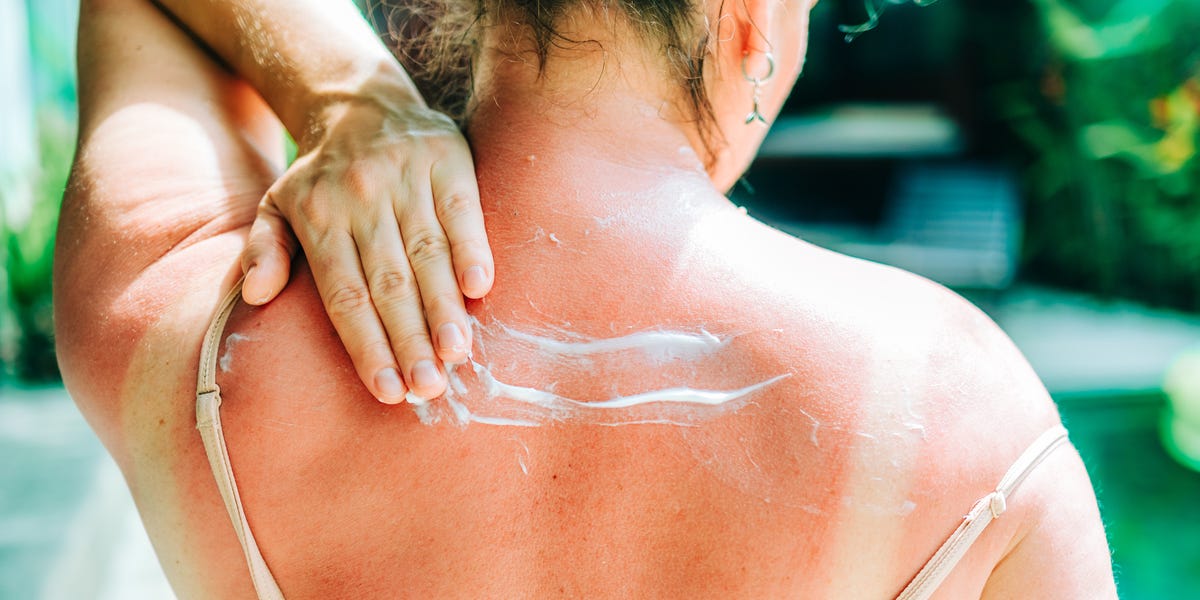
We’ve all been there. You forgot to apply sunscreen—or didn’t reapply it often enough—and only realized the error in your ways after a day out in the sun. The consequence? A red, flaky, and potentially painful sunburn. But while you can’t turn back the clock, you can take advantage of the many natural sunburn cures dermatologists recommend for quick relief.
Of course, we should always strive to avoid getting sunburned to begin with. A nasty burn isn’t just uncomfortable and irritating—it can also lead to some types of skin cancer if you aren’t careful. Still, life happens, which is why knowing how to treat and soothe the occasional sunburn is key to helping your skin heal properly (and fast).
Meet the experts: Frederic Haberman, M.D., of Haberman Dermatology & Cosmetic Center; Thomas Gossel, Ph.D., R.Ph., a professor of pharmacology and toxicology; Rodney Basler, M.D., dermatologist; Susan Massick, M.D., a board-certified dermatologist; Karan Lal, D.O., M.S., F.A.A.D., double board-certified dermatologist.
Ahead, find the effective natural sunburn cures dermatologists recommend to help you find relief, from skincare tips to over-the-counter solutions. Plus, how to prevent future burns from happening and when to see a doctor for one.
Natural sunburn cures
While prevention is key, treating sunburn with certain home remedies can help you feel better fast. You’ll encourage your skin to heal, tamp down the redness and pain, and learn the ultimate lesson: Don’t forget your sunscreen!
1. Take a soothing bath.
After a long day in the sun, the first thing you want to do is rinse off—but you should think twice before sudsing up. Soaking in a bubble bath and using soap or water that’s too warm can dry out and irritate sunburned skin. A cool bath (sans bubbles) is a better option.
If you must use soap while you wash, reach for something mild and unscented and carefully rinse it all off—leftover soap residue can be extremely drying, which will only make your sunburn feel worse.
You can also try adding oatmeal to your bath for an even more soothing solution. Research shows colloidal oatmeal helps tamp down inflammation and reduces itching, says board-certified dermatologist Michael Schreiber, M.D., and you can find the ingredient in many drugstore skincare products, or you can simply grind up plain oats in your food processor and add to your tub. Mix it with cool bath water and soak for 15 to 20 minutes. Afterward, gently pat your skin dry with a clean towel. Rubbing your skin to dry off will only irritate it further.
2. Try a cool compress.
Follow your urge to reach for something cold, but make sure to do it right. Wrap an ice pack in a damp cloth and hold it over the burn. This will absorb some of the heat from your skin, constrict blood vessels, and reduce swelling, according to Karan Lal, D.O., M.S., F.A.A.D., a double board-certified dermatologist.
Ice-cold water is also an option, though we don’t recommend submerging sunburned skin in it. Instead, pour water and ice into a bowl, soak a cloth in the liquid, and place it over the burn. Repeat this process every few minutes as the cloth warms up. Apply the compress several times a day for 10 to 15 minutes for quick relief.
Improvise, if necessary, says board-certified dermatologist Frederic Haberman, M.D., of Haberman Dermatology & Cosmetic Center in NY and NJ. “You could even take a bag of frozen peas, for instance, and use that. But make sure to wrap it first so that you’re not placing the icy package directly against your skin,” which will help avoid frostbite or ice burns.
3. Tame it with tea.
The tannic acid in black and green tea may help pull heat from a sunburn, while catechins (an antioxidant compound) repair skin damage, research from 2011 shows. This can be particularly beneficial if you’re burned around the sensitive eye area. Simply soak two tea bags in cool water and place them on top of closed eyes to decrease swelling and help relieve pain.
4. Use a rash-relieving powder.
If your burn becomes itchy, add a rash-relieving powder packet to your ice water compress, suggests Thomas Gossel, Ph.D., R.Ph., a professor of pharmacology and toxicology at Ohio Northern University. The aluminum acetate in the powder keeps skin from getting too dry or itchy.
5. Apply hydrocortisone cream.
Minimize itching, soothe skin irritation, and reduce inflammation with a topical lotion, spray, or ointment containing 1% hydrocortisone. Hydrocortisone has anti-inflammatory properties, which means it will reduce redness and ease the pain of mild sunburns, according to Dr. Lal.
6. Stay hydrated.
Gossel warns to drink plenty of water to help counteract the drying effects of a sunburn. But if you can’t guzzle fast enough, snack on hydration-boosting foods, like watermelon, cucumber, strawberries, tomatoes, grapefruit, and cantaloupe—all of which are more than 90% water.
7. Moisturize strategically.
After you’ve rinsed off with a cool shower, smooth on a moisturizing cream or lotion to lock in hydration. This is an important step, according to dermatologist Rodney Basler, M.D., or you may find that your skin feels drier than before. For added relief, chill your moisturizer in the fridge before applying. Just be sure to avoid products that contain petroleum (like Vaseline) as they can trap heat.
You can also try applying aloe vera gel—it’s a classic, go-to sunburn cure for a reason. “We’re starting to see evidence in medical literature that aloe vera may really help wound healing,” says Dr. Basler. If you have an aloe plant, simply break off a leaf and apply the juice. Pure, organic aloe vera gel is the next best thing—especially if you chill it. Look for one that does not contain alcohol, colors, or fragrance that could further irritate the skin.
Coconut oil is another popular sunburn remedy, but dermatologists recommend exercising caution by avoiding application on a fresh burn. Only use cold-pressed, organic coconut oil after any blistering has subsided and your burn has reached the end of its healing process (otherwise, you may trap in heat, which prolongs the healing process and discomfort). Always test a patch of your skin first to ensure you don’t have any unwanted reactions. Avoid using coconut oil on your face if you are acne-prone, as it may clog pores and lead to breakouts.
8. Concoct the perfect sleep solution.
Sleeping with a nasty sunburn can be challenging, but you need to rest for your body to recover. Try sprinkling talcum powder on your sheets to minimize chafing and friction, Dr. Haberman suggests. An air mattress might also help you sleep more easily since it retains less heat. Pro tip: If your legs or feet are burned, elevate your legs above heart level to help reduce swelling, Dr. Basler says.
9. Pop an aspirin.
This old standby may help relieve the pain, itching, and swelling of a mild-to-moderate burn. “Take two tablets every four hours,” says Dr. Basler. Acetaminophen and ibuprofen will work just as well; follow the label instructions for dosages.
10. Avoid irritants.
If your burn is mild, an OTC anesthetic might seem like a good idea, but you should avoid products that contain benzocaine or lidocaine, since they may irritate your skin, according to the American Academy of Dermatology (AAD). Dr. Lal urges you to read the labels on any topical creams or gels you might use to soothe your burn, as many contain drying alcohols or fragrances that can be irritating to your skin and delay healing.
11. Wear lightweight fabrics.
Wear soft, comfortable fabrics like cotton while your burn heals to minimize any painful rubbing that could further irritate your skin.
12. Resist the urge to peel skin.
You can develop blisters from a bad sunburn. And, while it’s tempting to want to pop them, it’s really best to leave them alone, says Dr. Massick. “Your skin can still act like a natural Band-Aid, so don’t try to remove or disturb the blisters,” she says. “If the blisters are really large and fluid-filled, they can be drained, but leave the blister skin in place.” That way you’ll have less discomfort and a lower risk of infection if air does not come in contact with sensitive nerve endings.
To drain the fluid in a blister, first sterilize a needle by holding it over a flame. Then, puncture the edge of the blister and press gently on the top to let the fluid come out. Dr. Basler recommends doing this three times in the first 24 hours, and then leaving the blisters alone. When in doubt, see your dermatologist if you think your sunburn peeling may have signs of infection, like excessive swelling or pus.
14. Stay out of the sun and be patient.
If you have a sunburn, it’s really best to try to stay indoors until your skin heals—that can be anywhere from a few days to a week, depending on the severity of the burn, Dr. Massick says.
But if you need to be outside, there are a few things you can do to try to protect your skin from additional damage. “I tell patients that you should always stay in the shade and wear a hat, as well as proper SPF, whether or not you are healing from a sunburn,” says Kate Foster, D.O., dermatologist at Spectrum Health Helen DeVos Children’s Hospital.
Tightly woven fabrics work best here, so when you hold your shirt up to a bright light, you shouldn’t see it shining through, according to the AAD.
“Be patient—the skin will heal with time,” Dr. Massick says.
Common sunburn symptoms
According to Dr. Lal, the following symptoms are key signs that you have a sunburn:
- Visible redness
- Warm or hot sensation
- Pain to the touch
- Burning and/or throbbing
- Swelling
- Blistering
However, it’s important to note that symptoms of a sunburn often vary depending on skin tone. “It’s pretty obvious on fair skin tones,” Dr. Lal says. “But with darker skin tones, you may not get those acute changes like visible redness and swelling.” He adds that oftentimes those with darker skin will have delayed onset symptoms, such as a stinging sensation or peeling, depending on the severity of the burn.
What does sunburn do to your skin?
A sunburn is a reaction to the UV rays on your skin, explains Susan Massick, M.D., a board-certified dermatologist at The Ohio State University Wexner Medical Center. “Too much sun can damage your skin cells beyond what your body can naturally repair, causing those cells to die,” she says. After those cells die, it “kicks off an inflammatory reaction, where the blood vessels dilate and inflammatory cells come in to help,” turning your skin pink and red. Those new cells help heal your sunburn (by replacing the dead cells).
“This inflammatory cascade can take up to four to six hours to rev up or appear noticeable, which is how you can get sunburned and not realize it,” Dr. Massick says. So unfortunately, you usually don’t notice your dry, red, uncomfortable, and maybe even painful skin until the damage is done. You can’t go back in time, but you can take steps to get relief right now.
How do sunburns cause skin cancer?
“Every time you get a sunburn, you’re accumulating DNA damage—and every time this happens, your skin cells become dysfunctional, and their ability to repair themselves diminishes,” Dr. Lal explains. “Then, you have one cell that becomes dysfunctional, that cell starts to multiply and produce other dysfunctional and mutated cells, and that’s how you get the development of various skin cancers.”
How to treat sunburn peeling and blisters
Blistering and peeling are signs of a more severe sunburn—which will not only stick around longer but requires special care.
For blisters from sunburn, Dr. Lal recommends using oral anti-inflammatories (like Motrin, Advil, or Aleve) to reduce pain and inflammation. If the blisters open up or pop on their own, he recommends applying Vaseline or another healing ointment and treating it like a wound. “Do not pop any blisters,” says Dr. Lal. “Let the body do its own thing.” According to Dr. Lal, popping blisters can cause a dangerous amount of fluid loss and increase the risk of infection.
“If you have peeling, you really want to stick to moisturizing the skin,” Dr. Lal adds. “So you want to use things like calamine lotion, Vaseline, hydrocortisone ointment, or aloe vera” to hydrate, nourish, and soothe the skin. As with blisters, it’s best to leave peeling skin alone. Avoid exfoliating the skin physically or chemically, and do not pick at or peel it. If you do, Dr. Lal says you could put yourself at risk of infection, scarring, and hyperpigmentation.
How to prevent sunburn
While these sunburn cures can help, don’t make the same mistake twice. After your burn, it takes three to six months for your skin to return to normal, Dr. Lal says. When you get a sunburn, your skin is more sensitive than ever, making you more prone to future sunburns.
Be aware of your sun exposure and protect yourself by applying sunscreen. Look for a broad-spectrum formula with a minimum of SPF 30, ideally with a strong physical blocker like zinc oxide or titanium dioxide, says Norman Levine, M.D., a dermatologist in Tucson, AZ.
Apply sunblock liberally about 30 minutes before heading outside, even when it’s overcast, and don’t forget to protect your lips, hands, ears, and the back of your neck. Reapply every two hours. Wearing protective clothing like hats, lightweight long-sleeved tees, and cover-ups can also help keep skin protected.
When to see a doctor about sunburn
Some burns are simply too severe to be treated at home, warns Dr. Basler. Consult a doctor if you experience nausea, chills, fever, faintness, extensive blistering, general weakness, patches of purple discoloration, or intense itching. Be aware that if the burn seems to be spreading, you could have an infection compounding the problem.
You should also contact your physician if you’re taking prescription medications. Certain drugs, like antibiotics, tranquilizers, and antifungal medications, can increase your sensitivity to the sun and cause reactions, says Dr. Basler. Oral contraceptives, diuretics, drugs for some types of diabetes, and even PABA-containing sunscreens may also increase your risk of sunburn.
Additional reporting by Alisa Hrustic
Read the full article here