

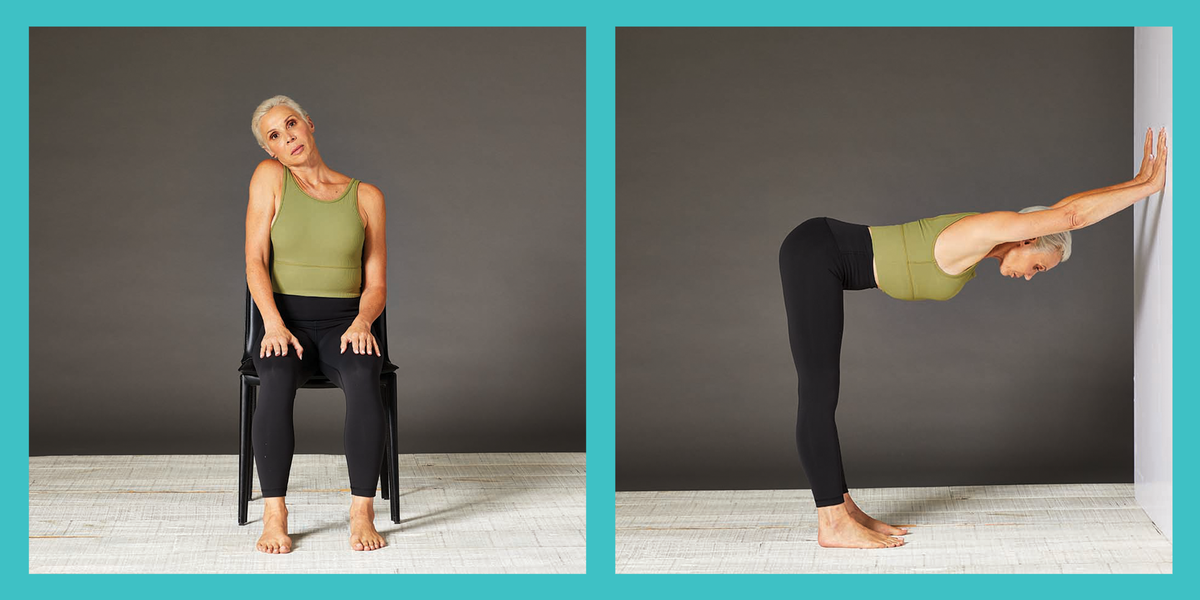
When it comes to dealing with the everyday aches and pains that pop up (who hasn’t groaned while getting out of bed or bending down to tie their shoes), stretching is one of your simplest and most powerful feel-better tools.
If you already have a morning stretching ritual, good on you and keep it up! But if you’re in the market for a solid set of stretches that you can do a few times a week—or better yet, every day—we asked a certified Pilates instructor for her go-to moves to target all of your major muscle groups.
Health Benefits of Stretching
Daily stretching increases blood flow, which delivers more oxygen and nutrients to joints and muscles. It also helps improve flexibility and mobility, helping you move with ease and less stiffness and pain. In short, stretching helps your body function at its best, explains Kathryn Ross-Nash, a Pilates instructor and author of the Prevention book Stretch Away Pain.
Stretching is a key part of any fitness routine, as it promotes muscle recovery so you can stay consistent and see progress. “You can’t expect your body to rebound, recover, and be ready for the next workout without taking care of it,” says Laura Quinn, an Alo Moves Pilates instructor. “Stretching is the most important part of the workout.”
A research meta-analysis published in 2023 in Sports Medicine backs up these benefits, including improving strength, particularly in sedentary individuals and older adults.
How to Stretch
Keep these best practices in mind to avoid injury and get the most from your stretch session.
- Listen to your body: Stretching should feel a little uncomfortable because you’re working your muscles, but you shouldn’t be in extreme pain. “Normal” pain feels like tightness or stiffness as you begin a stretch. But sharp or burning pain is a warning that something is wrong—stop to avoid hurting yourself.
Breathe: Slowly inhale and exhale in a controlled manner. On exhale, try sinking deeper into a stretch if you can (never push yourself if you feel pain). - Move gently: Don’t bounce in an attempt to reach further or stretch deeper. Jerky movements like this can cause more pain or injury.
Equipment needed: mat, chair, resistance band or stretching strap, and yoga or tennis ball
Ear and Shoulder Tap
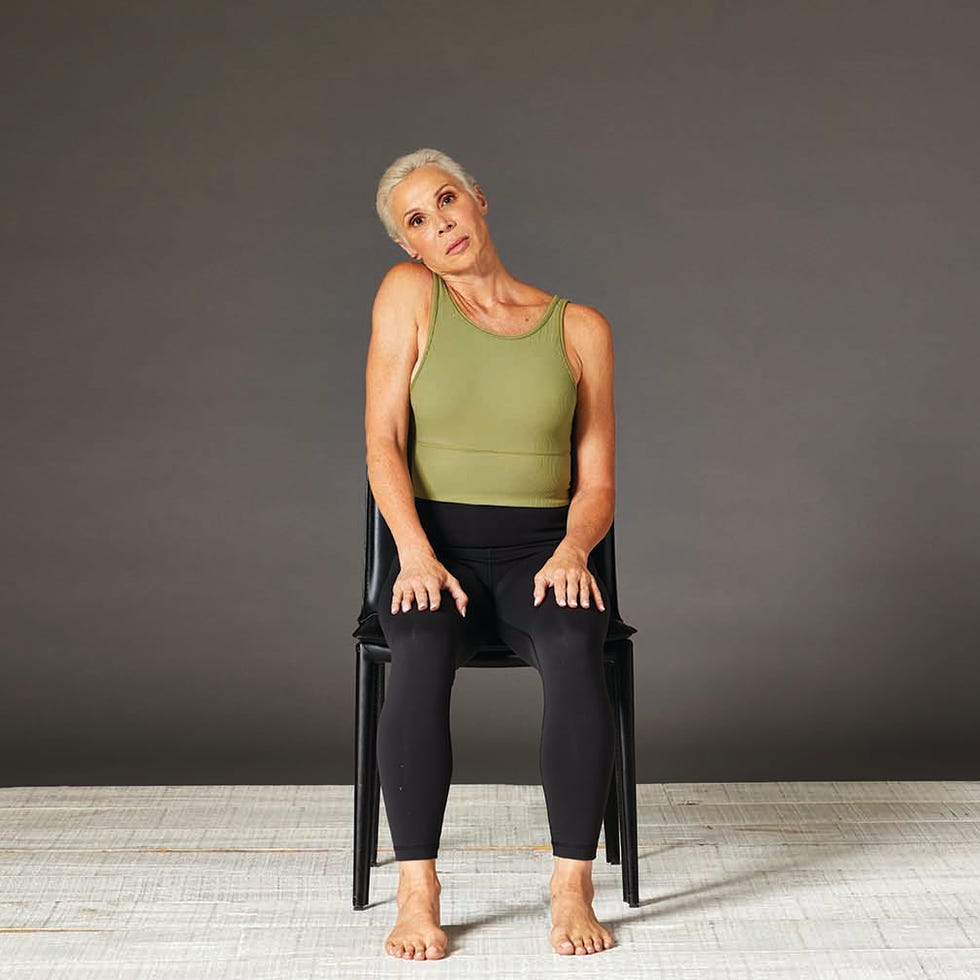
What it stretches
Neck and shoulders
How to do it
- Start in a seated position.
- Without straining, tip right ear toward right shoulder. Keep head tilted, and raise and lift right shoulder toward ear 3 times.
- Lift head so it’s upright, and relax shoulders.
- Tip left ear toward left shoulder. Keep head tilted and raise and lift left shoulder toward ear 3 times.
- Return head upright.
Passive Shoulder Stretch
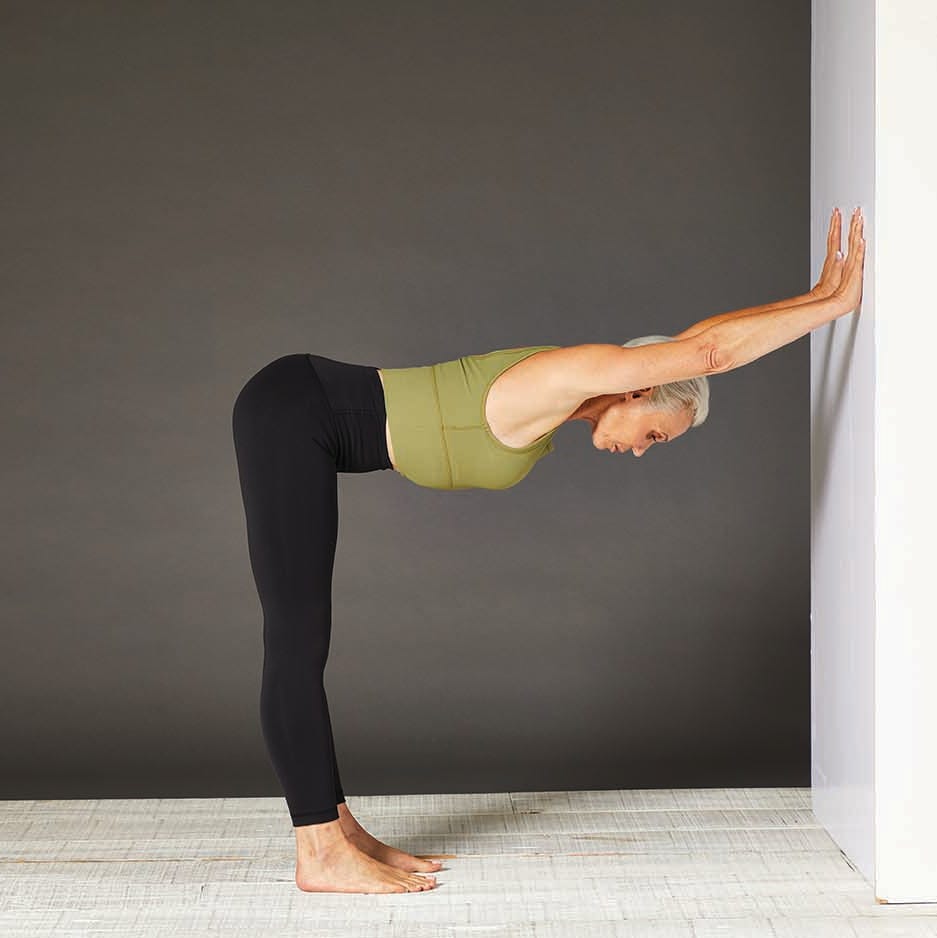
What it stretches
Shoulders, core, back
How to do it
- Start in a standing position. Place hands on the wall in front of you at shoulder height, palms flat and fingers pointing up, with elbows touching sides, soft and pointing down. Pull in stomach to protect back, and keep back straight. This is the starting position.
- Walk feet back carefully as far as possible, leaving hands in place. Make an inverted “L” position with arms, but don’t pass head through ears. Hold for 3 breaths.
- Walk back to the starting position and repeat 3 times.
- Walk feet back toward the wall and lower arms to sides.
Wall Push-Up With Elbow by Ribs
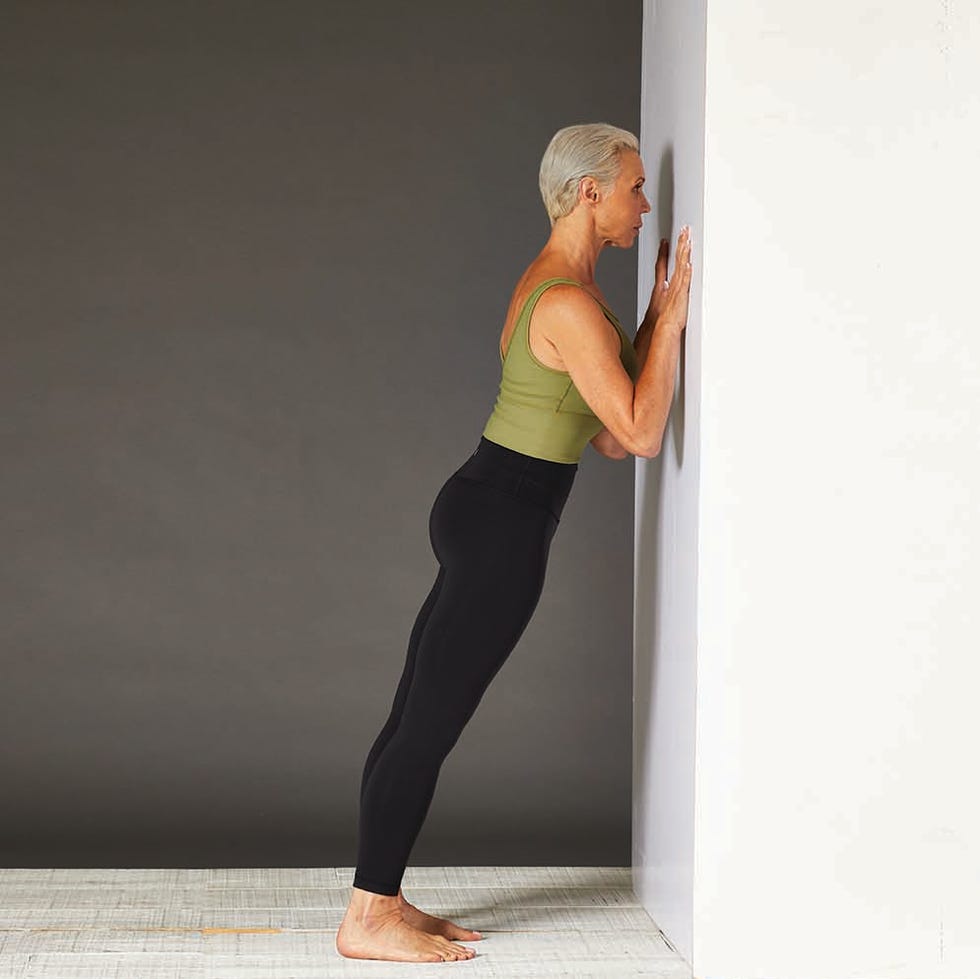
What it stretches
Chest, shoulders, arms
How to do it
- Start standing. Face the wall, legs as close together as possible. Place hands on the wall in front of you at shoulder height, palms flat and fingers pointing up, with elbows touching sides, soft and pointing down. Pull in stomach to protect back, and keep back straight.
- Take two small steps away from the wall, ending with legs together and parallel. Lift heels.
- Bend elbows, allowing them to brush ribs. Keep body straight, like a plank. Hold this bent position for 3 counts.
- Pull stomach in to protect spine and press into hands to straighten arms.
- Repeat 3 times.
- Walk feet back toward the wall and lower arms to sides.
Finger Pull Push
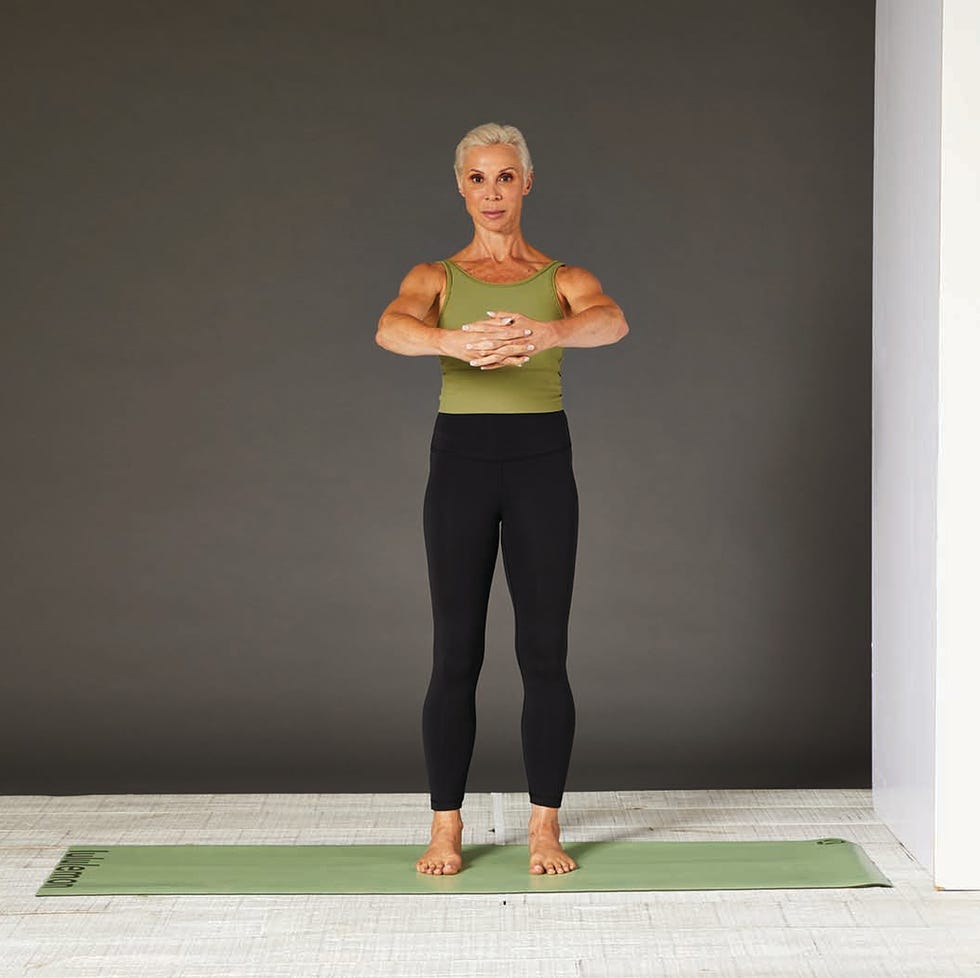
What it stretches
Fingers, wrists, hands, chest
How to do it
- Start standing, feet hip-width apart.
- Interlace fingers using dominant grip (the way that feels most natural), with palms facing you, at chest height. Bend elbows to create a circle with arms, as if hugging a tree.
- Press fingers together for 3 counts. Fingers should grasp hands and hold on for dear life.
- Release the pressure on hands, but not the grip, and pause. Without allowing the fingers to separate, try to pull hands apart.
- Grasp fingers and hold on tight, again, for 3-5 counts. Release the pressure and pause.
- Repeat the stretches twice, then repeat steps 1-4 with non-dominant grip.
Roll Down
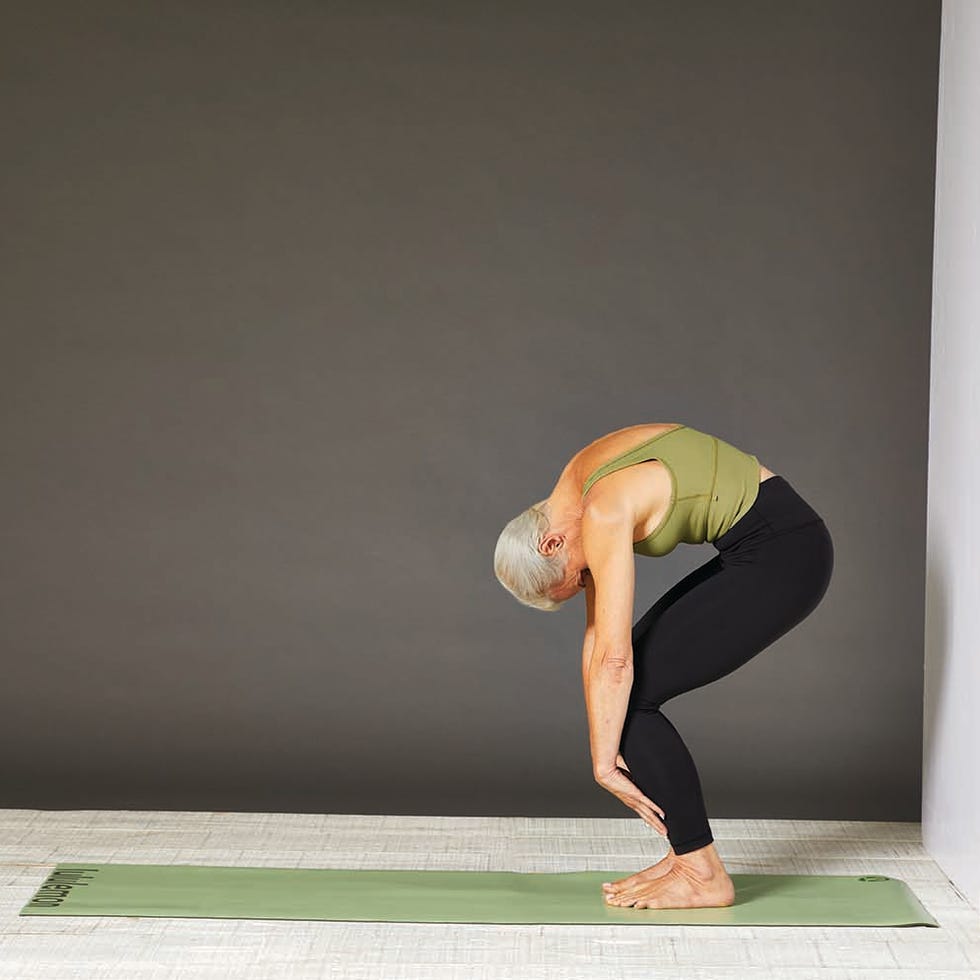
What it stretches
Back, neck, core
How to do it
- Start in a standing position.
- Bend knees softly and place hands on thighs. Pull stomach in. Inhale and lower head to bring gaze to hands.
- Exhale and gradually roll spine down, hands sliding down legs as the upper and lower back stretch. Pause to pull stomach in at the bottom.
- Reverse the action and roll up.
- Repeat for 3 reps.
Figure 4 Stretch
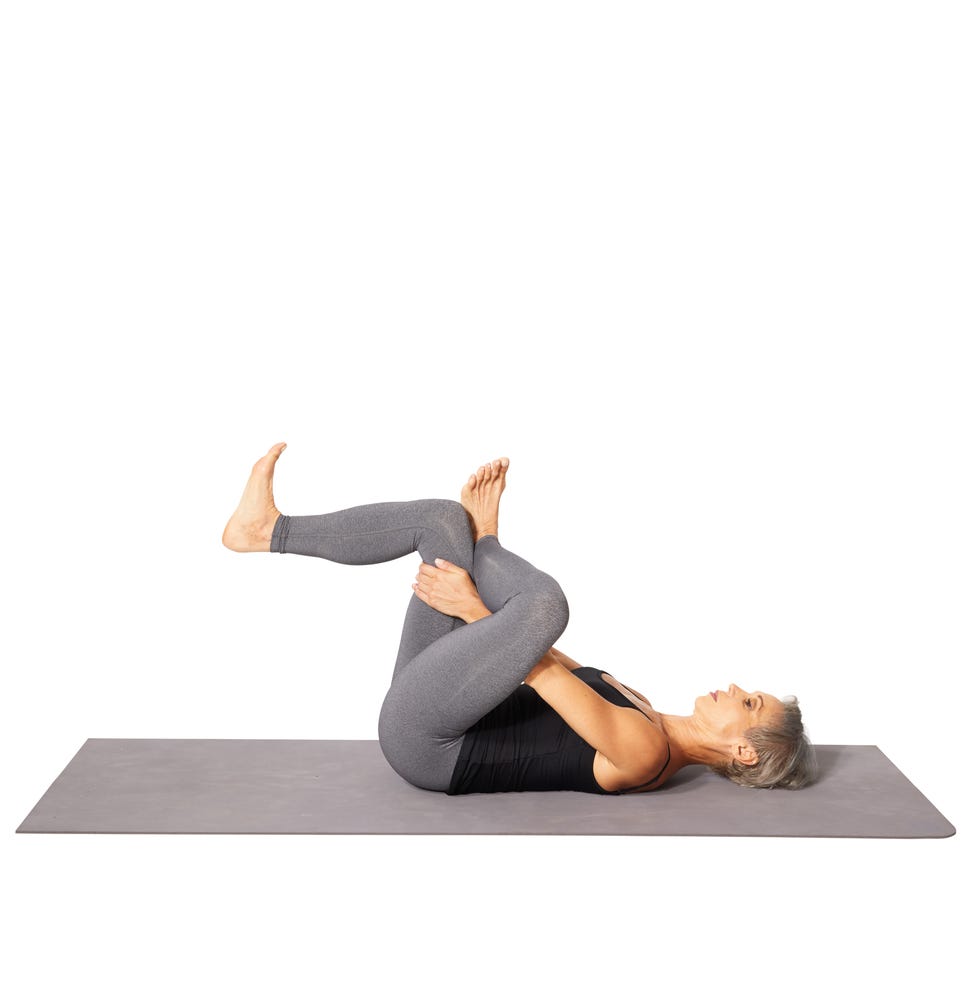
What it stretches
Hips, glutes
How to do it
- Lie on back with both knees bent.
- Cross right ankle over left knee so ankle rests on top of knee. Grab behind left thigh and pull that knee in toward chest until you feel a pull or stretch in right hip.
- Hold for 20-30 seconds, then lower leg back down.
- Repeat 2-3 times on each side.
IT Band Stretch
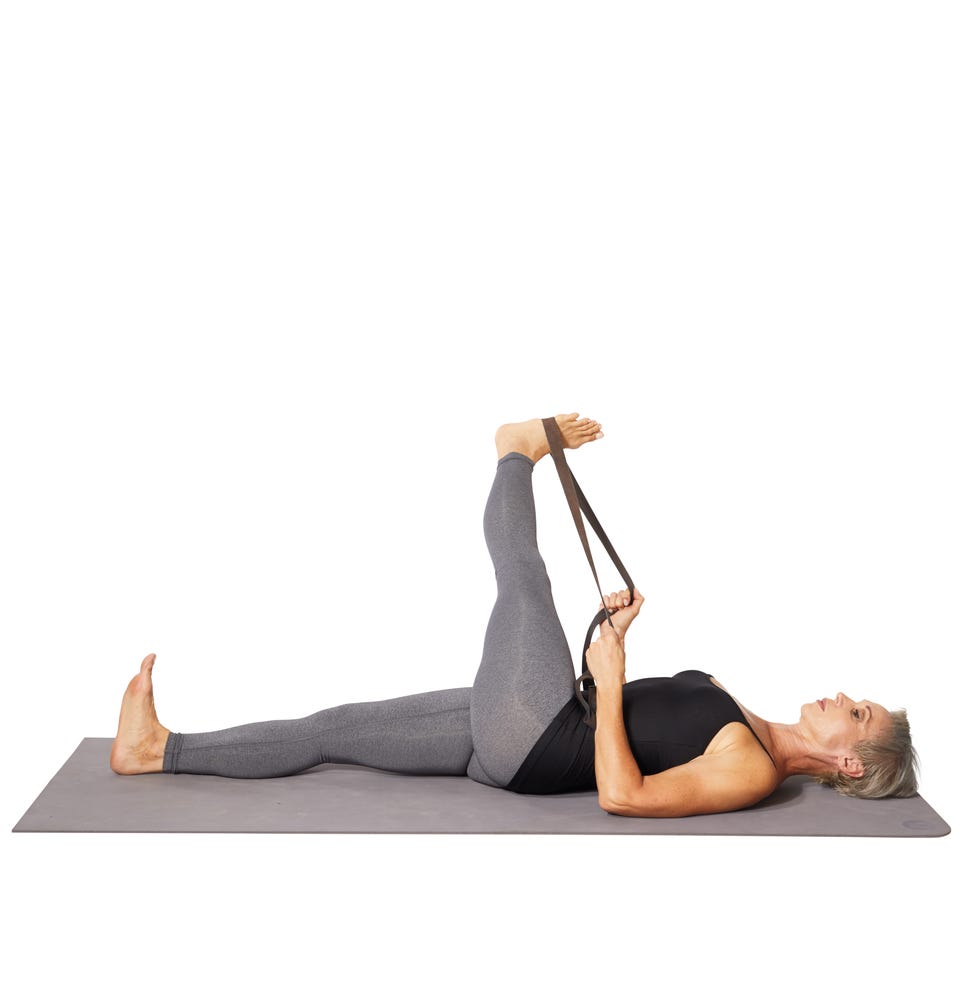
What it stretches
Iliotibial band, a band of tissue that runs on the outside of your legs, stretching from hip to top of shin
How to do it
- Lie faceup with right leg in a hamstring stretch with a strap.
- Draw right leg diagonally across body while it is elevated to increase the stretch along the outer hip and thigh.
- Hold it there for 20-30 seconds, then lower leg and release the strap so you are lying flat on the ground.
- Repeat 2-3 times on each side.
Plantar Fascia Rollout
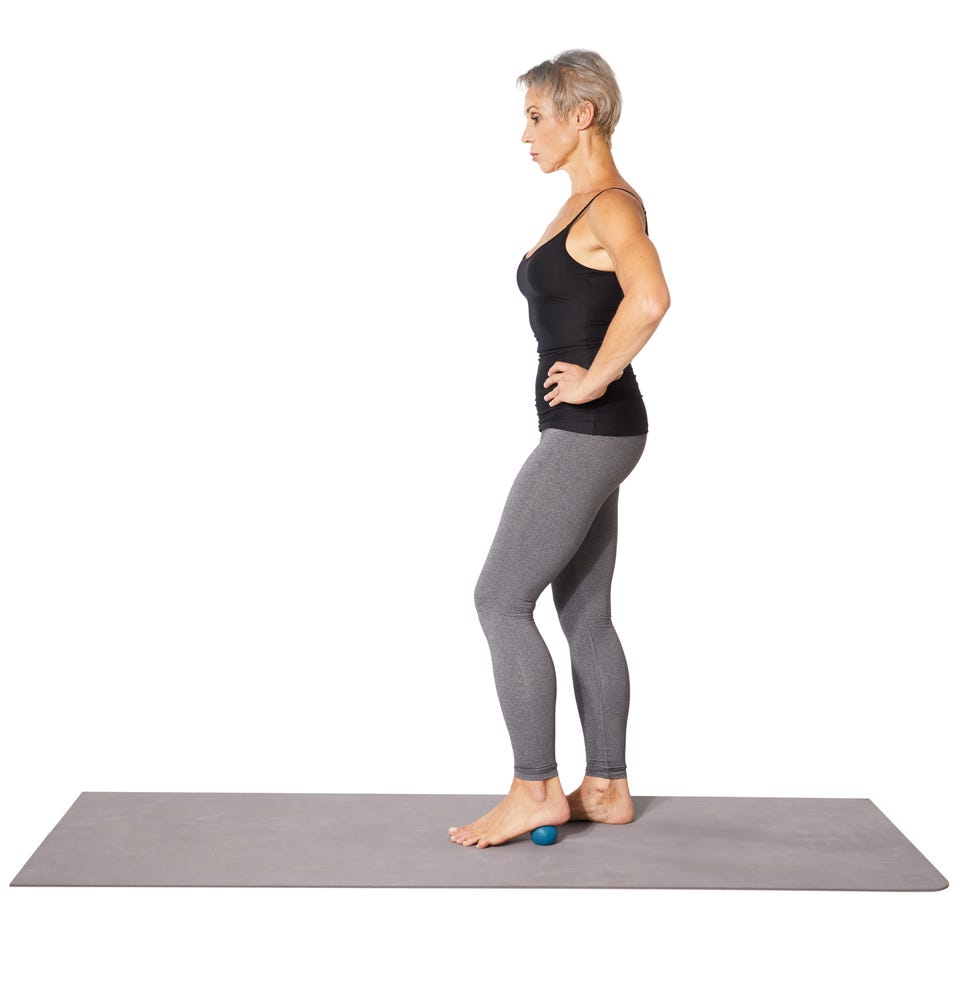
What it stretches
The plantar fascia, a band of tissue running across the bottom of the foot
How to do it
- Start in a standing or seated position.
- Place a lacrosse or tennis ball under foot and simply roll foot over the ball, first longitudinally (heel to toes), then in horizontal sections beginning at the base of the heel and moving little by little up toward the toes.
- Repeat for a few minutes, then switch sides.
Child’s Pose
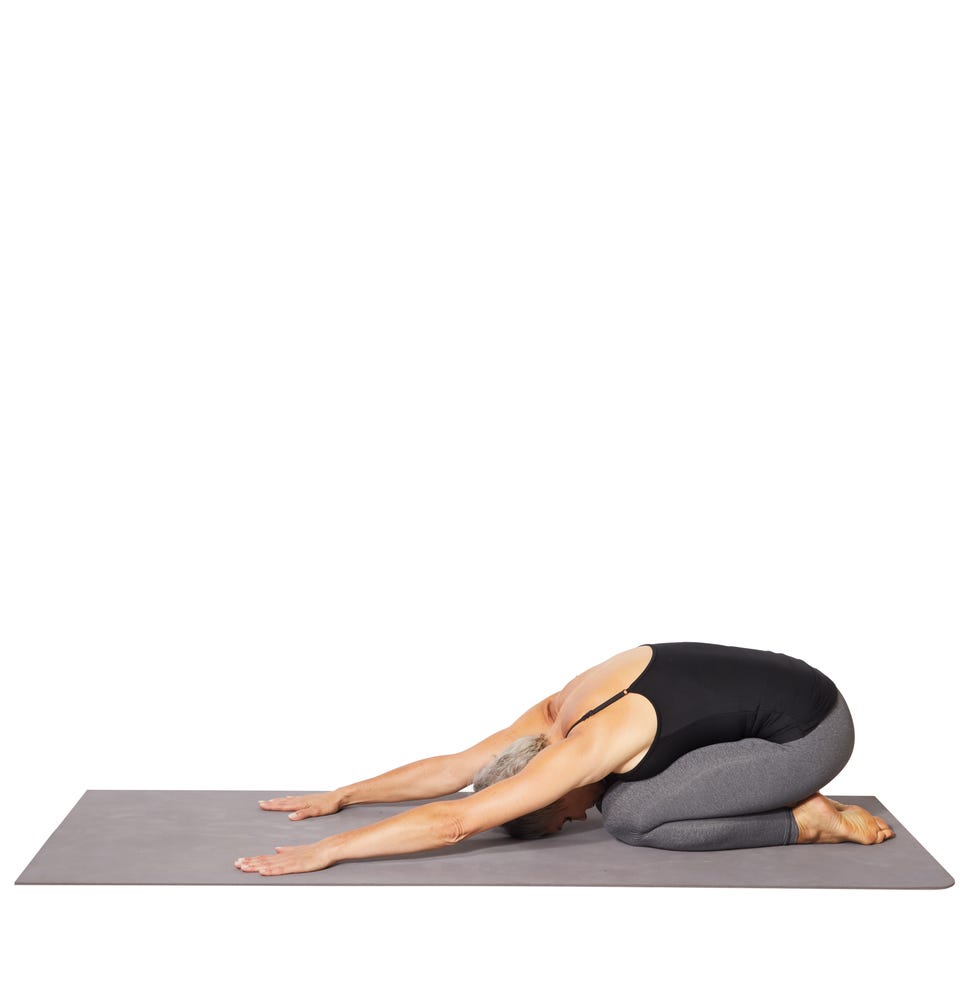
What it stretches
Hips, legs, core, lower back, and ankles
How to do it
- Begin on hands and knees, with hands directly under shoulders and knees under hips.
- Walk arms out in front of you, placing palms flat on the floor. Slowly sit hips back toward heels, dropping head and chest downward as arms extend farther in front of you. (If this stretch is too much, place a pillow under belly to prop yourself up a bit and lessen the stretch of the lower back muscles.)
- Hold for 20-30 seconds.
Read the full article here