


Tickborne diseases are on the rise all across the United States. And because we don’t yet have vaccines and treatments are limited for these illnesses, taking steps to avoid being bitten is crucial. Also smart: Knowing what to look for. That’s why we asked experts to break down deer ticks vs. wood ticks.
Meet the experts: Mike Merchant, Ph.D., a professor emeritus of entomology at Texas A&M University; Joellen Lampman, the tick and school IPM coordinator at Cornell University College of Agriculture and Life Sciences; Jim Fredericks, Ph.D., a board-certified entomologist and senior vice president of Public Affairs at the National Pest Management Association (NPMA); Thomas Russo, M.D., a professor and chief of infectious disease at the University at Buffalo in New York.
Here, discover the key differences between these two common species of ticks, including what they look like, where they live, the potential diseases they carry, and what to do if you have been bitten by one.
What do deer ticks look like?
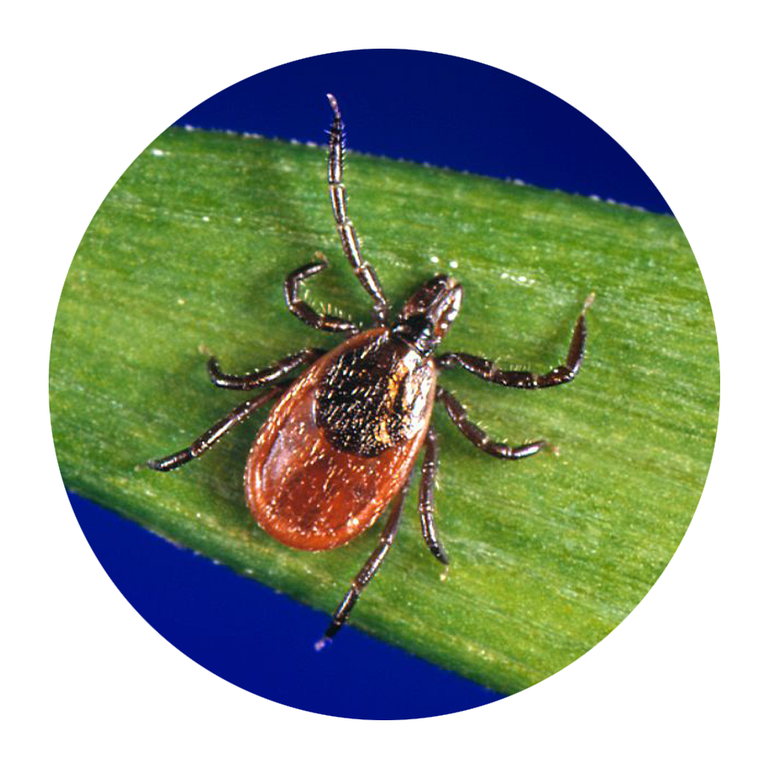
Deer ticks, also known as blacklegged ticks, are hard ticks identifiable by their red-orange body, and black scutum, which looks like a dot on the upper half of its shield. “The blacklegged tick, also known as the deer tick, is named for its dark legs,” said Jim Fredericks, Ph.D., a board-certified entomologist and senior vice president of Public Affairs at the National Pest Management Association (NPMA).
Another important feature: “They’re very small, maybe half or two-thirds the size of a normal tick,” noted Mike Merchant, Ph.D., a professor emeritus of entomology at Texas A&M University. “They’re easy to overlook. They could be attached to your skin and you don’t notice it because of the small size.”
Just how tiny are they? “Unless you have a magnifying glass, it is hard to make out their features,” said Joellen Lampman, the tick and school IPM coordinator at Cornell University College of Agriculture and Life Sciences, adding that they’re the size of a poppy seed in the spring, when they’re the most active.
“Their small size combined with the spring activity—when many people think of ticks as a summer pest—leads to many people never knowing they were bitten by a tick,” Lampman added.
Where do deer ticks live?
“There are deer ticks in most parts of the U.S.,” Merchant said. According to the Centers for Disease Control and Prevention (CDC), they’re widely distributed in the eastern United States, from Maine to Florida, and into parts of Texas, Colorado, and the Dakotas.
You can be bitten by a deer tick any time during any season, but they have unique timing. “One of the clues [is] that it’s a tick that you’d typically pick up earlier in the season, like early spring or winter,” Merchant said.
But Lampman stressed that you can still be bitten by a deer tick year-round, if the weather conditions are right. “If it is above 37 degrees, adults that did not find a host in the fall will still be out there questing,” she said. “If we have a dry spring, nymphs will hunker down and wait for humidity levels to rise before climbing out of the leaf litter to hunt.”
What diseases can you catch from a deer tick?
Deer ticks are perhaps the most feared species because they are known to carry the bacteria that can cause Lyme disease, Borrelia burgdorferi and B. mayonii. “The deer tick is what we think is the primary vector of Lyme disease across the whole U.S.,” Merchant said.
Deer ticks spread Lyme disease by feeding on infected hosts, including mice and deer. Most ticks feed three times in their lives, once at each life stage. Tick larvae and nymphs are more likely to feed on smaller animals, while adults often seek out larger hosts, including humans, Merchant said. In other words, adult ticks have already had two previous chances to pick up Lyme, making them more likely to spread it to human hosts.
Deer ticks also carry other unpleasant diseases, like relapsing fever, anaplasmosis, ehrlichiosis, babesiosis, and Powassan virus, per the CDC.
What to do if you’re bitten by a deer tick
If you suspect you’ve been bitten by a deer tick, you should attempt to remove it as quickly as possible. Merchant recommended simply using a pair of tweezers. “Grab the tick as close to the skin as possible,” he said. “Gently pull it straight out. It’s going to stick at first, but if you’re steady, keep up the pressure, and do it very slowly, it will pull the mouthparts out of the skin.”
When it’s out, put the tick in a sealable plastic bag and set it in the freezer. Merchant recommended that you monitor the bite and watch for the development of a bullseye-shaped rash. If you notice a rash or start to experience flu-like symptoms, contact your doctor. The frozen tick will be a great resource for determining if you’ve been exposed to Lyme.
What do wood ticks look like?
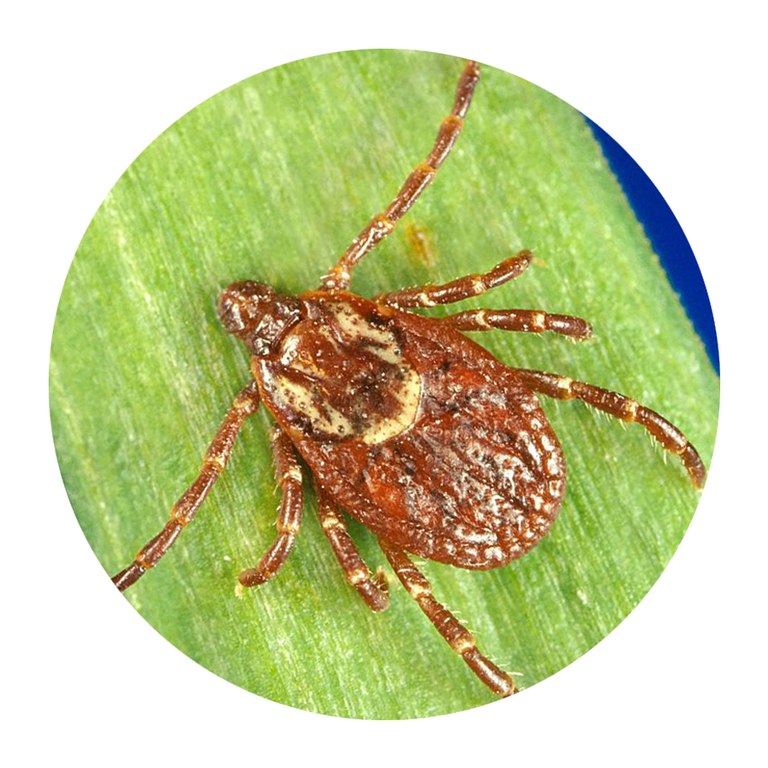
“Wood tick” is actually a generic name that could apply to a number of species of ticks, Merchant said, but it’s most commonly used to describe American dog ticks, which have dark brown bodies. Male American dog ticks present a mottled gray pattern, while females have an off-white scutum. Wood ticks are larger than deer ticks, making them a bit easier to spot. “Wood ticks are brown in color and become grayish when engorged,” Fredericks said.

Add Prevention as a preferred source in your Google search results.
Use your Google account to add this to your settings.

Wood ticks “remind me of a decorated watermelon seed with legs,” Lampman said, adding, “their mouthparts are about the same size as their head.”
Where do wood ticks live?
American dog ticks are commonly found east of the Rocky Mountains and parts of the Pacific Coast, including most of California, according to the CDC.
These ticks like to hang out in tall grass, Lampman said. “Those areas are often too dry for the blacklegged tick who prefer wooded areas or areas with humidity levels at least 85%,” she added.
What diseases can you catch from a wood tick?
American dog ticks can transmit pathogens that cause tularemia and Rocky Mountain spotted fever. (Other species of ticks also dubbed “wood ticks” can spread different diseases, so make sure you know which type of tick you’re dealing with.) They are not known to carry Lyme disease.
Just like deer ticks, American dog ticks are three-host ticks, meaning adults have already fed twice before they seek out humans. Not all tick bites are caused by adults, but it’s most likely that a human would be a tick’s third host, Merchant explained. “Our risk is going to be higher for getting a disease because those ticks have fed on other animals,” he said.
What to do if you’re bitten by a wood tick
Unlike a deer tick bite, a wood tick bite won’t cause the classic bullseye rash. If you find a wood tick on your body, use the same method Merchant recommended above: Gently pull the tick out using tweezers. “You don’t want to twist and bend,” Merchant warned. “If you break the head off, it can continue to expose you to whatever pathogens might have been in its mouthparts.”
And like before, save the tick in a sealable plastic bag and store it in the freezer. If you start to notice any unusual symptoms associated with the diseases above—including a fever, chills, headaches, stomach or muscle pain, and a dotted rash on the skin—the insect will be available for testing.
What to do if you develop symptoms after being bitten
Tick-borne illnesses can cause a range of symptoms, and the signs you develop ultimately depend on the type of illness you get. However, you’ll want to be on the lookout for a rash, flu-like symptoms, chills, fever, headache, stomach aches, and muscle pain.
“The tick has to be attached for a certain amount of time” for you to get sick, said Thomas Russo, M.D., a professor and chief of infectious diseases at the University at Buffalo in New York. However, that amount of time varies depending on what disease the tick may have been carrying. For example, a tick can transmit Lyme disease in 24 hours, but may spread Powassan virus in just 15 minutes, Dr. Russo explained.
“Keep in mind that, even if you found a tick after you were out hiking, it’s possible you had an earlier exposure and you missed it,” he added.
While every illness is different, Dr. Russo said you may develop symptoms within five to seven days after being bitten by a tick, if you’re going to get sick. However, there is some variation: Lyme disease can take up to 30 days for symptoms to show, for example.
If you develop symptoms, it’s time to see a doctor. “Have a zero threshold to see a healthcare provider to initiate treatment,” Dr. Russo said. “Some of these illnesses can be very serious and have a lot of consequences.”
How tick bites are treated
If you visit your doctor and tell them you’ve been bitten by a tick, Dr. Russo said it’s likely they’ll order blood testing to see if you have a tickborne infection and, if so, what you have. “But sometimes it’s a PCR test like we have for COVID,” he noted.
Treatment for these conditions can vary and it’s possible to have more than one tickborne illness at once, Dr. Russo said. If you have Lyme disease, you’ll likely be treated with doxycycline, amoxicillin, or cefuroxime axetil, according to the CDC, while doxycycline is the approved treatment for Rocky Mountain spotted fever.
“If you’re treated for one illness and are not getting better, talk to your doctor again,” Dr. Russo said. They will likely want to test you for another tickborne illness.
Overall, Dr. Russo recommended doing your best to practice tick safety by doing things like covering your legs and arms when you go in areas where ticks are common, checking your clothes for ticks when you come home, doing a tick check on yourself and loved ones, and showering when you get home after being outdoors. “An ounce of prevention goes a long way,” he said.
Read the full article here