







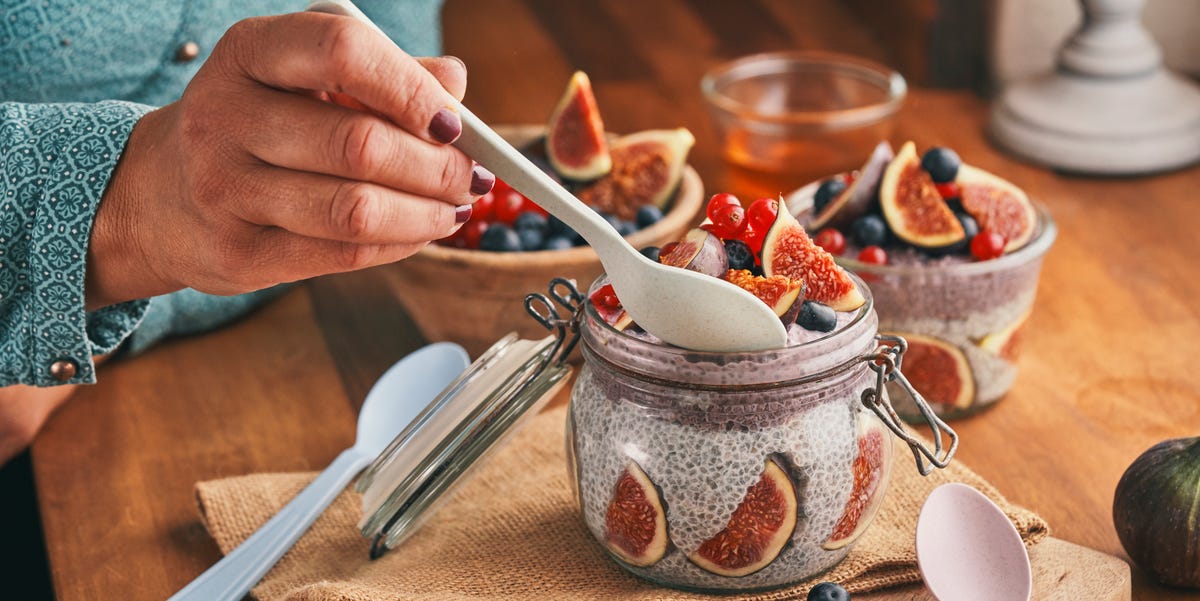
There are plenty of so-called superfoods and trendy concoctions that, upon close examination, may not deserve the hype they are getting. But one that definitely does? Chia seeds. The benefits of chia seeds have been confirmed by research and approved by nutrition experts, making them a food that deserves a place in your healthy diet.
Meet the experts: Keri Gans, M.S., R.D., a registered dietitian and author of The Small Change Diet; Jackie Newgent, R.D.N., C.D.N., a chef, nutritionist, and author of The Plant-Based Diabetes Cookbook; Melissa Mroz-Planells, D.C.N., R.D.N., national media spokesperson for the Academy of Nutrition and Dietetics and member of the Prevention Medical Review Board.
Here, dietitians share the nourishing benefits of chia seeds, including how their nutrients support your overall health and some simple ways to incorporate more of them into your diet.
Health benefits of chia seeds
They are a plant-based complete protein source
If you’re looking for a great plant-based source of protein, chia seeds are an excellent pick. They are a complete protein, which means they contain all nine essential amino acids that cannot be made by the body. You need these amino acids for energy production and immune function within your body. Other examples of complete proteins are animal-based foods like dairy, eggs, fish, meat, and poultry, while plant-based protein sources include buckwheat, edamame, and quinoa. With 4 grams of protein per serving, chia seeds can boost the protein count in almost any recipe.
They’re loaded with fiber
For roughage that’s beyond a bucket of greens, turn to chia seeds. They contain a whopping 10 grams of fiber per serving, which may help lower cholesterol levels, improve digestive health, and maintain blood glucose levels, said Keri Gans, M.S., R.D., a registered dietitian and author of The Small Change Diet. When combined with water, chia seeds can help you feel full for longer and reduce constipation, added Melissa Mroz-Planells, D.C.N., R.D.N., national media spokesperson for the Academy of Nutrition and Dietetics and member of the Prevention Medical Review Board. “The high fiber content is also beneficial to gut health by fueling our healthy gut microbes.”
Per Harvard Health, the fiber in chia seeds is mainly soluble fiber and mucilage, the substance responsible for the gel-like texture of soaked chia seeds. These fibers may help to lower LDL cholesterol (bad cholesterol) and slow down digestion, which can prevent blood sugar spikes after eating a meal and promote a feeling of fullness.
Antioxidants and polyphenols are plentiful
Another surprising health benefit of chia seeds? They are an excellent source of antioxidants and polyphenols such as caffeic acid, myricetin, quercetin, rosmarinic acid, and others, per research in the journal Antioxidants. Antioxidants are substances that protect your cells against free radicals, which may play a role in cancer, heart disease, and other diseases, while polyphenols are beneficial plant compounds with antioxidant properties that may help keep you healthy and protect against various diseases.
Chia seeds deliver omega-3 fatty acids
Chia seeds are packed with omega-3 fatty acids. Gans explained that omega-3s have anti-inflammatory properties which may help lower blood pressure and triglyceride levels, plus reduce the risk for a heart attack or stroke. Per the National Institutes of Health (NIH), omega-3 fatty acids may also help control illnesses like lupus and rheumatoid arthritis and may even play protective roles against cancer and other conditions.

Add Prevention as a preferred source in your Google search results.
Use your Google account to add this to your settings.


They are packed with essential minerals
According to the U.S. Department of Agriculture (USDA), chia seeds also contain minerals including calcium, iron, magnesium, phosphorus, and zinc. Calcium and magnesium help maintain healthy bones while zinc is essential for cell division and growth. It is also an essential element needed to support the body’s immune system. And according to research in Biomolecules, the combination of calcium, magnesium, and phosphorus helps maintain bone density and bone strength.
They may support healthy aging
Chia seeds may play a key protective role in chronic diseases like cardiovascular disease, diabetes, and certain types of cancer, said Jackie Newgent, R.D.N., C.D.N., a chef, nutritionist, and author of The Plant-Based Diabetes Cookbook. Their high fiber content plays a big part here, as the Mayo Clinic notes that eating a diet rich in fiber has been shown to protect against colorectal cancer. A review and meta-analysis from 2024 also found that chia seeds may help lower triglycerides, LDL (bad) cholesterol, and blood pressure, potentially reducing heart disease risk.
How to eat more chia seeds
Generally, enjoying around 2 tablespoons a day of chia seeds in meals and snacks is a healthy amount for most adults, said Newgent. The best way to eat them is by adding them to liquids, such as a smoothie (like this Tropical Chia Smoothie or this Berry, Chia, and Mint Smoothie), yogurt, or oatmeal, she added. You can also pre-soak them in water or your liquid of choice for at least 10 minutes, transforming them into chia “gel.” Chia seeds are super versatile because they have a mild flavor, said Mroz-Planells, “so you can mix them with many different foods.”
One of the most popular ways to enjoy this superfood is in chia seed pudding, which makes an easy, low-lift breakfast or dessert that you can meal prep in a big batch. But you can think beyond pudding and add chia seeds to overnight oats, jams, and even coleslaw, said Mroz-Planells, for a thicker consistency and an added health boost. Try it in our recipe for Lemon Cottage Cheese Oatcakes With Raspberry Chia Smash. If you’re a baker, chia seeds also pair particularly well with baked goods, like bread and muffins.
Other easy ways to enjoy chia seeds are to simply toss them into any cereal, yogurt, or oatmeal. Whisk them into salad dressings or even sprinkle them into rice dishes for texture. There are so many ways to sneak the seeds into foods you eat every day.
Whatever you choose, know that there are some risks to consuming too many dry chia seeds. “Since chia seeds can absorb moisture from your digestive system, they can potentially form a gel-like mass in your GI tract,” Newgent explained. “So, eating too many chia seeds without consuming enough liquid may lead to them expanding in your GI tract, which may cause severe constipation or, in extreme situations, a blockage.” To prevent bloating and digestive discomfort, she recommended against consuming too many chia seeds all at once and sticking to the suggested 2 tablespoons a day, ideally mixed with a liquid.
Read the full article here


