

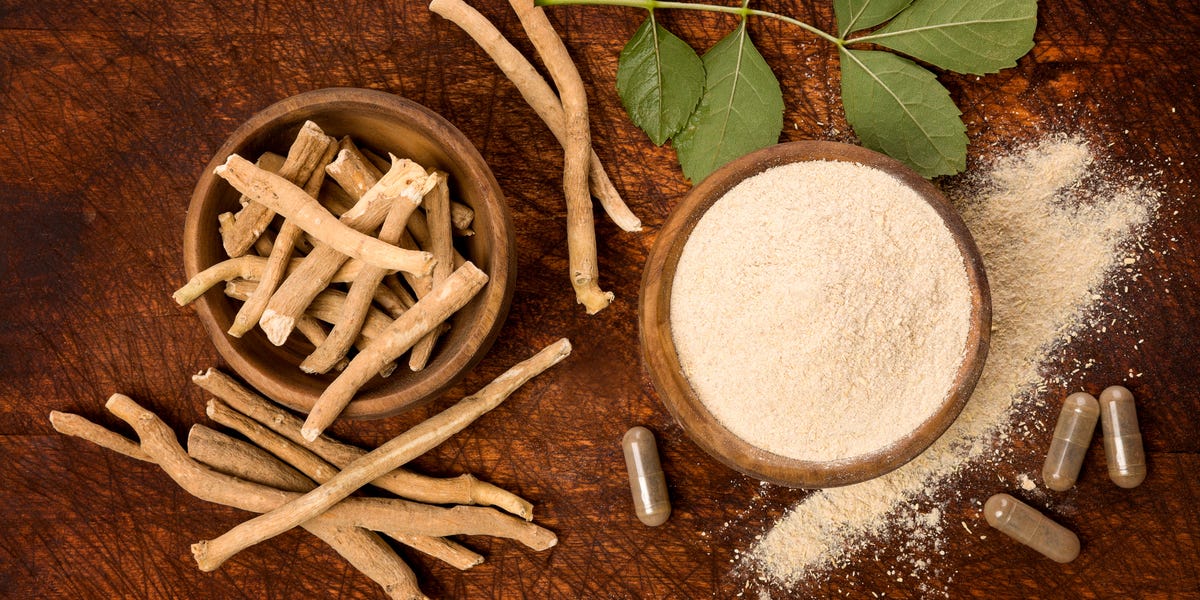
Ashwagandha may seem like a buzzy new supplement, but this herb has been used in traditional Indian medicine for nearly 3,000 years. Today, many people are interested in its potential ability to relieve stress and provide other health benefits.
“It is one of the most well-known and well-studied adaptogens, currently used as a complementary or alternative remedy for everything from stress relief to increasing strength and vitality,” says Erica Zellner, M.S., C.N.S., L.D.N., senior health coach at Parsley Health. (Adaptogens, in case you’re not familiar with the term, are plants and mushrooms that can help your body respond to stress, anxiety, fatigue, and overall well-being, according to the Cleveland Clinic.)
Meet the Experts: Erica Zellner, M.S., C.N.S., L.D.N., senior health coach at Parsley Health and Beth Warren, R.D., founder of NOURISHED by Beth.
Studies have linked ashwagandha with plenty of health benefits: decreased anxiety levels, lower blood sugar, improved muscle strength, and improved sexual function, for starters. That said, experts also note that further research is needed to confirm many of the theorized benefits of this herb.
Below, experts explain more about what ashwagandha is, what the research says about potential benefits, the side effects to be aware of, and who should avoid taking ashwagandha.
What is ashwagandha?
Ashwagandha, aka Indian ginseng or winter cherry, is an herb with the literal meaning of the word “smell of horse.”
Ashwagandha is important in Ayurvedic medicine, where it’s considered a “royal herb” because of its rejuvenating effects on the body. Ashwagandha acts on different systems in the body—the neurological system, immune system, endocrine system, and reproductive system.
“It is generally considered safe short-term, with long-term effects unknown,” says Beth Warren, R.D., founder of NOURISHED by Beth. Ashwagandha is typically taken in supplement form, either via a tincture, capsule, or powder. According to the Mayo Clinic, doses up to 1,000 mg per day are believed to be safe for at least three months.
What are the benefits of ashwagandha?
Ashwagandha is an herb that is still being studied, but there is some research to suggest it has certain benefits. Here are some of the biggies.
It may help with stress and anxiety.
This is a big reason ashwagandha is currently used, Warren says. Severalstudies have found people who took ashwagandha had lower stress and anxiety levels than those who took a placebo.
Ashwagandha “helps control different mediators of stress in our body, such as cortisol release and specific stress-activated chemicals,” Zellner says.
It could help lower blood sugar.
The data to support the use of ashwagandha for blood sugar management is “limited but promising,” Zellner says. “As of now, researchers believe that a compound called withaferin A found in ashwagandha can help stimulate your cells to take in glucose from your bloodstream,” she explains. “This could make ashwagandha a promising tool to support healthy insulin sensitivity levels.” (Insulin is a hormone in your body that helps regulate blood sugar, per the American Diabetes Association.)
But, Zellner says, “more research is needed to confirm this hypothesis.”
It may improve muscle strength.
Data suggest that taking ashwagandha alongside strength training may make people stronger. “There are a number of studies that show positive effects of ashwagandha in addition to a strength regimen,” Zellner says.
One randomized, double blind, placebo-controlled study had 57 healthy men either take 300 milligrams of ashwagandha or a placebo twice a day for eight weeks while doing resistance training. The ashwagandha group significantly outperformed the placebo group in every marker. The ashwagandha group also had less muscle damage and experienced a larger decrease in body fat percentage at the end of the eight weeks.
It could improve sexual function.
The data on this is “limited,” Zellner says, but there is some to support ashwagandha’s use for sexual function. “For men, we have a handful of small, but promising studies that support sexual function in a few key areas, including an increase in DHEA-S and testosterone which are key sex hormones related to fertility,” Zellner says. “Ashwagandha has also been shown to increase sperm concentration, semen volume, and sperm motility.”
One study of ashwagandha use in women found that those who took the herb reported better arousal, lubrication, and ability to reach orgasm.
Still, “more robust research is needed to confirm these findings,” Zellner says.
It might improve focus and memory.
Certain compounds found in ashwagandha may have antioxidant properties for the brain—and that can help with your overall cognitive function, Zellner says.
One clinical review, for example, found that there is some evidence that ashwagandha can support cognitive functions like memory, executive function, attention, and reaction time.
One small study of 50 people with mild cognitive impairment found that those who took ashwagandha for eight weeks had better improvement in their short-term and long-term memory than those who took a placebo.
It may support your heart health.
“We do have some promising evidence that ashwagandha can be used to support healthy cholesterol levels, including lowering LDL—bad—cholesterol levels and blood pressure, improving your overall cardiovascular health,” Zellner says.
Just know this: Ashwagandha can impact blood pressure, and it’s important to speak with your doctor if you’re on blood pressure-lowering medication, Zellner says.
Overall, ashwagandha has potential benefits for a slew of people, Warren says. Just check in with your doctor before trying it out, to be safe. “Certain conditions such as pregnancy, some cancers, taking specific medications, and thyroid conditions should take caution or avoid ashwagandha,” Warren says.
Potential ashwagandha side effects
As Warren noted above, ashwagandha is generally considered safe short-term, though long-term effects are not known. However, if you happen to have large doses of ashwagandha, you could face side effects like an upset stomach, diarrhea, and vomiting, she says.
Who should not take ashwagandha?
According to the Cleveland Clinic, you should not take ashwagandha if you:
- Are pregnant or breastfeeding
- Take certain medications, including medications for diabetes, high blood pressure, sleep, anxiety, seizures or autoimmune conditions
- Have an autoimmune disease
- Have prostate cancer
- Will soon have surgery
- Have a thyroid condition, like hyperthyroidism (overactive thyroid), hypothyroidism (underactive thyroid) or borderline thyroid
Dietary supplements are products intended to supplement the diet. They are not medicines and are not intended to treat, diagnose, mitigate, prevent, or cure diseases.
Read the full article here