







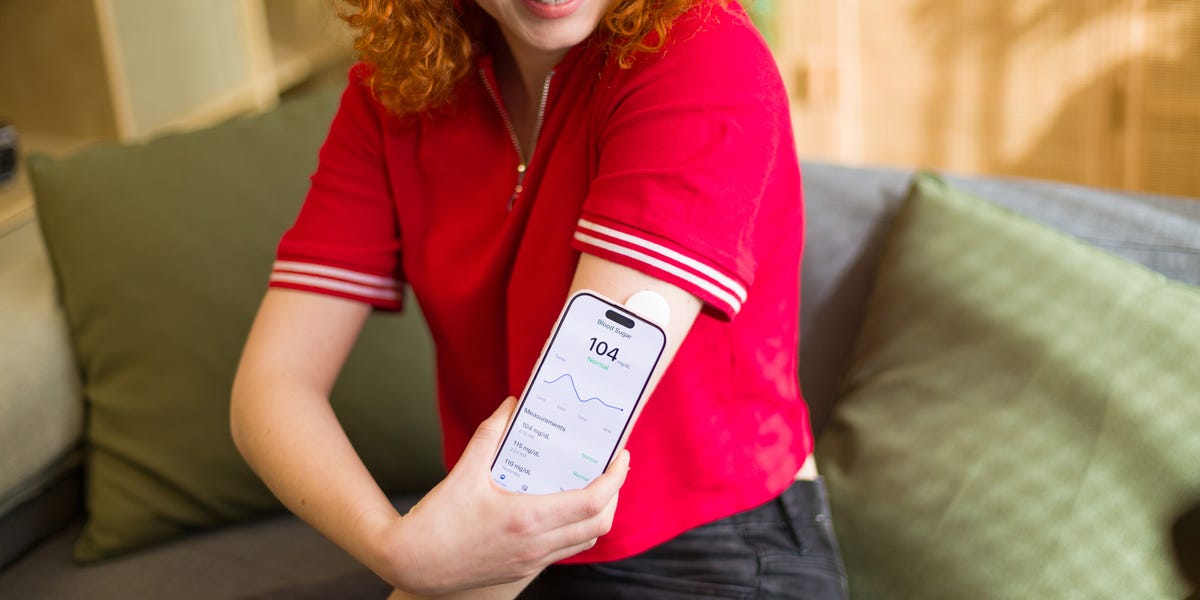
I’ve spent my entire adult life managing type 1 diabetes (I wasn’t diagnosed until I was in college, and it took months of begging my doctor for answers—you can read my diagnosis story here). While there is no possible way to make my pancreas produce insulin on its own, over the past 12 years I’ve figured out the best methods to get my blood sugar levels back within range when my supplemental insulin isn’t quite doing the trick. This is key to living well with diabetes, since the symptoms of high blood sugar aren’t just uncomfortable—over a long period of time, highly elevated numbers can do serious damage to your body.
So what is my go-to method to bring my blood sugar down quickly? It’s not a life hack you’ll find on social media; it’s backed by science and doesn’t require you to spend any money on special pills or supplements.
Meet the expert: Florence Comite, M.D., endocrinologist, clinician scientist, and founder of the Comite Center for Precision Medicine & Healthy Longevity, and author of Invincible: The New Science of Healthy Longevity, Defy Your Genetic Destiny to Live Longer, Better.
My trick is going for a brisk walk. Sounds simple, but sometimes the easiest solutions are the most effective: I realized that whenever I see my numbers inching up or staying at a level that I’m not comfortable with, putting on my sneakers and taking a 15-minute walk brings down my readings by at least 20 to 100 points (depending on the level of insulin resistance I’m experiencing). To put this in context, my goal is to maintain blood sugar levels between 70 and 180. But we all know that reality has a way of interfering with the best of plans (as well as all of the other common reasons for high blood sugar, like stress, illness, shifting hormones, and miscalculating carbohydrates).

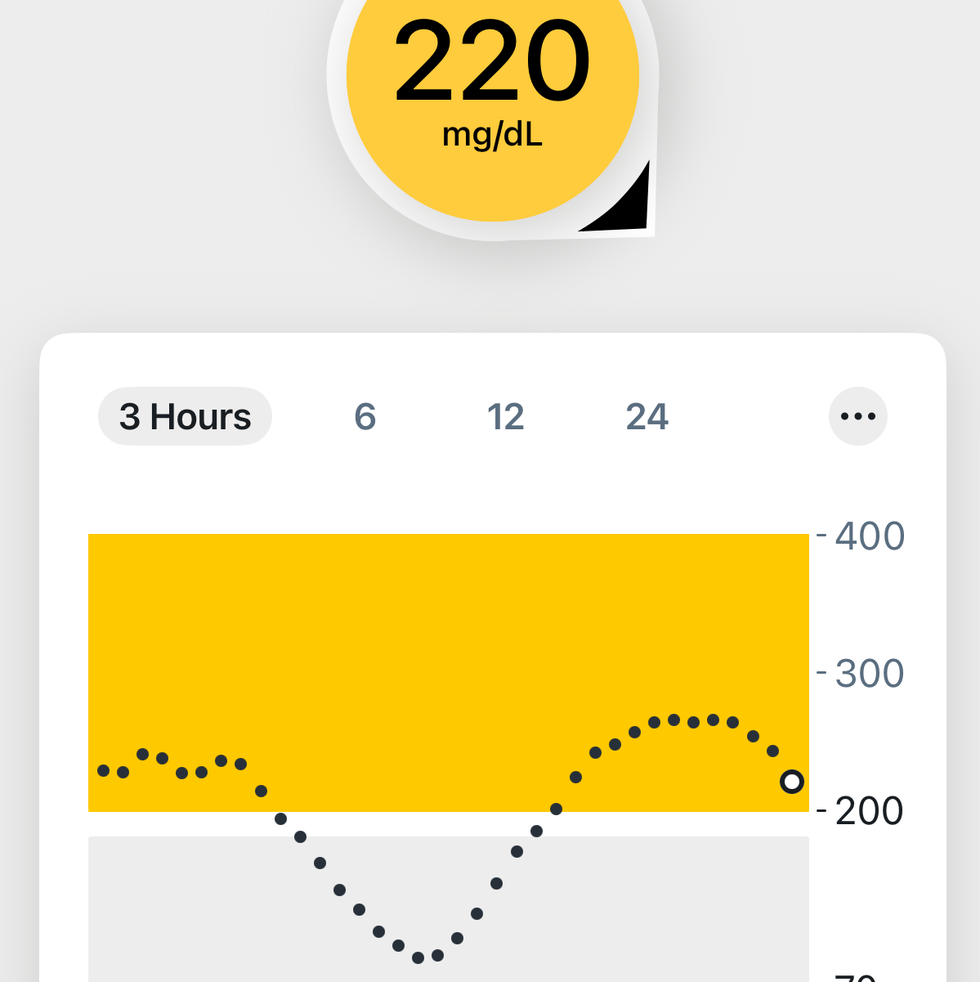
After 10 minutes of walking.

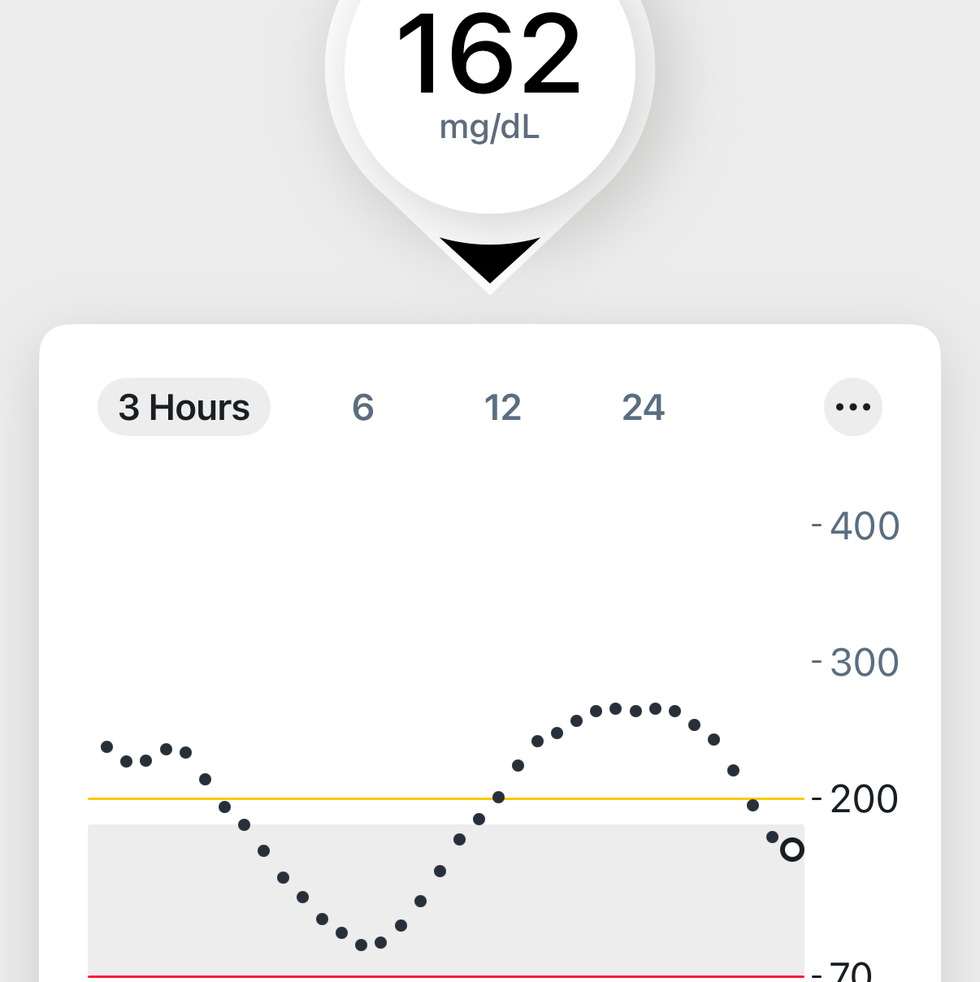
After 20 minutes of walking.
This trick has worked so well for me over the years that I have come to believe that getting my blood pumping as I walk down the sidewalk or through the park helps the insulin in my body become more potent, or rather, access my cells more quickly. But I’m an editor, not a doctor, and I only had my blood glucose graphs (from my continuous glucose monitor, a disposable device I wear that measures the glucose between the layers of my skin every five minutes and sends the readings to a phone app) as evidence. So, to help out other people with diabetes like me, I decided to dig into the science and talk to an expert to figure out why such a simple strategy can have such a big impact. Here’s how walking can help lower blood sugar fast, plus who shouldn’t try it.
How Does Walking Help Lower Blood Sugar?
I decided to check in with Florence Comite, M.D., an endocrinologist, founder of the Comite Center for Precision Medicine & Healthy Longevity, and author of the bestselling book Invincible: The New Science of Healthy Longevity, Defy Your Genetic Destiny to Live Longer, Better. “When you contract your muscles during exercise, your body relies on reserves of sugar stored in your muscles and liver to fuel your activity,” she explains. “At the same time, your muscle cells become more sensitive to insulin and use insulin to take up glucose from your blood, which lowers the level of sugar in your blood.”
But, it’s important to note that this method of lowering my blood sugar levels only works when I have insulin in my system. “Your muscles are your body’s largest repository of carbohydrate energy,” Dr. Comite says. “The more muscle you have, the more effective your body will be at extracting sugar from your bloodstream and into storage, reducing the danger from too-high blood sugar.”
Does Timing Matter?
I suspected this was the case, and Dr. Comite confirmed my theory. “A walk after a meal can help everyone improve their sugar management,” she says. “I have yet to encounter a patient with optimal sugar metabolism. Even those who are not diabetic or pre-diabetic currently are at risk for developing the chronic disease in the future due to our genetically inherited ability to store sugars.”

Add Prevention as a preferred source in your Google search results.
Use your Google account to add this to your settings.


So it’s best to go out for that walk after a meal, and even with this, timing matters, Dr. Comite says. “It should be soon after a meal, but not too soon,” she explains. She points to a study in the journal Nutrients, in which researchers measured participants’ post-meal blood sugar at 15 and 45 minutes after they ate white bread, followed by 10 minutes of stationary cycling. Compared with a control group of sedentary participants, only those who exercised 45 minutes after eating experienced a decrease in blood glucose, Dr. Comite notes. “The researchers concluded that waiting 30 minutes following a meal to take a walk or do similar physical activity may be optimal for lowering the glycemic response,” she says. In other words, exercising too soon after eating may not give your body time to metabolize carbohydrates.
When Not to Walk to Lower Blood Sugar
This method isn’t always perfect: On a few occasions, I’ve actually experienced an increase in my numbers after going for a walk. When this happens, I usually discover that I need to change my insulin pump or insulin vial because something has gone awry. “If you exercise when you have extremely high sugars, it’s possible that you also have high levels of ketones,” says Dr. Comite. “That happens when insulin isn’t doing its job to get glucose into your muscles for energy, so your body breaks down fat for energy, producing acidic ketones.”
This can be dangerous, because when you have high levels of ketones, you can develop a condition called ketoacidosis. “While ketoacidosis can occur in anyone with diabetes, it’s more prevalent in people with type 1 diabetes—this condition requires insulin therapy, unlike most other [kinds of diabetes]. It’s recommended that people with type 1 or those with very high sugars test their urine for ketones before exercising,” says Dr. Comite.
It’s unlikely that a casual stroll will lead to higher glucose, though Dr. Comite says it is possible, especially if you’re doing strength training or other intense exercise. So be sure to do a finger-prick test if you’re monitoring your levels closely.
And it’s also important to keep in mind that if you are experiencing low blood sugar, you should not exercise: Even an easy walk can be dangerous, as you may experience dizziness and weakness, and may even pass out. This is especially risky for type 1 diabetics. “Wearing a continuous glucose monitor (CGM) will warn you when your sugars are very low,” Dr. Comite explains.
The Bottom Line
When the dreaded cotton-ball mouth (and brain) pops up along with higher blood sugar readings, going for a walk typically works for me to get my blood sugars back in range. And the science shows that anyone—not just people with diabetes—can benefit from a brisk walk. So get up and go.
Read the full article here


