

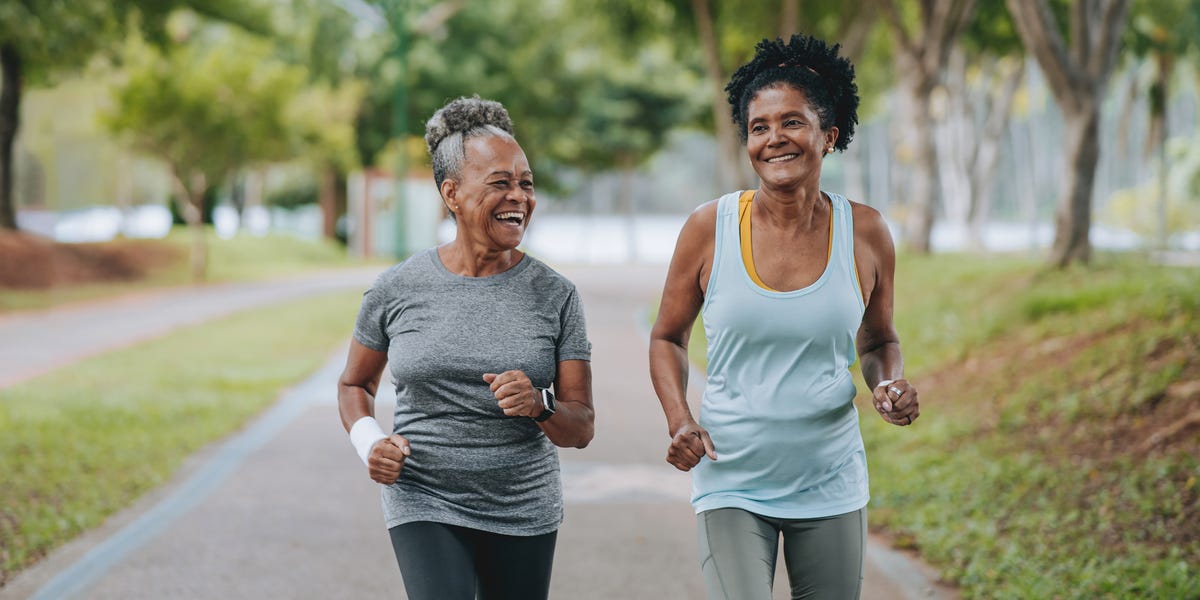
You’ve decided to become a runner—exciting! The first step is easy (whether you’re picking up a new midlife hobby, need a fresh fitness goal to stay motivated with, or you’ve just always wanted to be able to jog for a mile or more): Just lace up, and get out there.
Everything after that is pretty simple too—being consistent with your jogs, eating and hydrating enough to stay energized and fueled, getting plenty of sleep. But there’s one other factor that makes a big difference when it comes to running and being active and strong overall, and that’s to make strength-training part of your weekly routine.
Meet the experts: Winnie Yu, P.T., D.P.T., C.S.C.S., a New York-based physical therapist and personal trainer; Claudette Sariya, NASM-CPT, a runner, personal trainer, and co-founder of AAPI running club AWSTARS (Asian Women Stay Running) in New York City.
“Lifting weights is a must for runners. It helps improve your body’s ability to absorb shock, which is what happens when your foot strikes the ground during a run, and it can also help reduce the risk of developing an overuse injury such as tendonitis (chronic pain or discomfort) of the foot or knee,” explains Winnie Yu, P.T., D.P.T., C.S.C.S., a New York-based physical therapist and personal trainer who specializes in runners (and is an experienced one herself!).
Here are some of the best strength-training moves for preventing injury and getting stronger overall.
Strength-Training Moves for Runners
We asked Claudette Sariya, NASM-CPT, a runner, personal trainer, and co-founder of AAPI running club AWSTARS (Asian Women Stay Running) in New York City, for the best strength-training moves for runners. “When I work with runners, I focus on unilateral movements that strengthen key muscles for stability, power, and injury prevention,” she says. Try some of her favorites, plus learn how they helped her become a better runner, too. Aim to do the whole circuit two to three times for a complete workout.
Single-Leg Romanian Deadlift
What it works: hamstrings, glutes, ankles
How it helps: “I love this move because running is a series of single-leg movements, so this helps with balance and strength, which translates to better form and less risk of tripping or rolling an ankle,” says Sariya
How to do it: Grab a dumbbell (at least 10 pounds) and stand tall with feet hip-width apart and knees slightly bent. Shift your weight onto the leg opposite the arm you’re holding the weight in (so if you’re holding a dumbbell in your right hand, shift your weight onto your left leg). Keep your back flat and core tight. Push your hips back like you are closing a car door. Let your other leg lift straight behind you as your chest tips forward. Lower only as far as you can while keeping your back flat and hips square. Press your standing foot into the floor. Squeeze your glute to stand back up. Do 10 reps.
Step Ups
What it works: quads, glutes, calves
How it helps: “If you’ve ever walked or run uphill and felt your legs on fire, this is the move to help with that, as it builds the power you need to push off the ground efficiently,” Sariya says.
How to do it: Stand tall in front of a sturdy step or box. Hold a dumbbell in one or both hands, arms straight down at your sides (only use one dumbbell if you need to hold on to a wall or railing for balance support). Place one whole foot on the step. Brace your core and keep your chest up. Push through the foot on the step to stand up, bringing your other foot onto the step. Step back down slowly with control. Repeat 10 times on the same leg, then switch sides.
Calf Raises
What it works: calves, feet, ankles
How it helps: “I used to deal with tight calves after long runs. Strengthening them has helped with endurance and prevented issues like shin splints (pain in the front of your shin),” says Sariya.
How to do it: Stand tall with your feet hip-width apart. Keep your core tight and shoulders relaxed. Slowly lift your heels off the floor and rise onto your toes. Pause briefly at the top. Lower your heels back to the floor with control.
Lateral Band Walks
What it works: hips, glutes
How it helps: “This one is a game-changer for happy knees, as strengthening your stabilizing muscles (hips and glutes) takes some of the load off your knees,” Sariya says.
How to do it: Place a mini loop resistance band just above your knees. Stand with feet hip-width apart and toes forward. Bend your knees slightly, keeping your chest up and core tight. Step sideways with control, bringing the other foot in, keeping tension on the band. Repeat for three steps, then pause and repeat going three steps in the other direction. Do this 10 times.
Planks
What it works: core, shoulders, hips
How it helps: “Your core is what keeps you upright during a run, and a strong core means less energy wasted and better form, which helps you progress,” says Sariya.
How to do it: Start in tabletop position on all fours. Lift your body up until it forms a straight, diagonal line. Your palms should be firmly pressed against the ground, arms straight and shoulder-width apart. Keep your core braced as you hold the position for 30 seconds to a minute. (If you have wrist pain, try holding the plank resting on your forearms instead of propped up.)
Single-Leg Glute Bridge
What it works: glutes, core, lower back
How it helps: “Weak glutes can lead to knee pain (I learned this the hard way), but strong glutes help stabilize the hips and keep your running stride strong,” says Sariya.
How to do it: Lie on your back with knees bent, feet flat on the floor and about shoulder-width apart, and arms next to your sides. Engage your core, pull the belly button into your spine and recruit your glutes as you lift your hips up until they have created a “bridge,” which is a flat surface from chest to knees. From this position, lift one leg straight up into the air. Squeeze the glutes for a second before lowering back down. Do 10 reps on that same leg, then switch and repeat 10 times with the other leg.
Read the full article here