







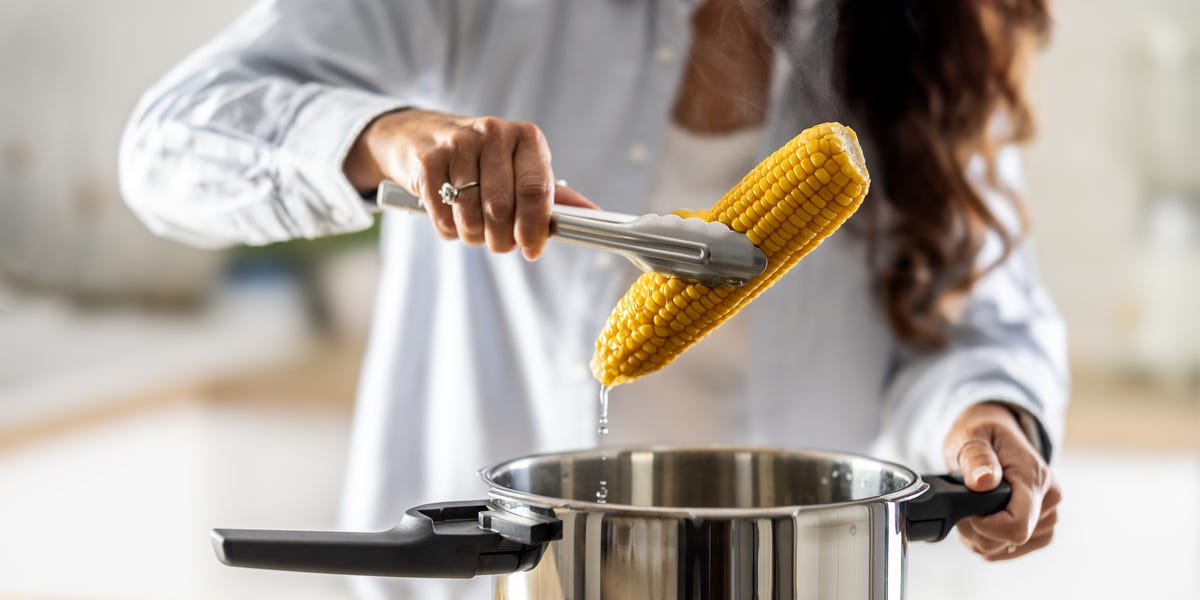
Potatoes and corn: two of the most popular starches on the American plate, and two of the first foods people give up when their doctor mentions blood sugar. As a registered dietitian, I see it happen all the time. And most of the time, it’s an overcorrection. Both foods can actually work in your favor depending on the type you choose, how you cook them, and what you put on the plate beside them. The science is more reassuring than the reputation.
So which is actually better when it comes to blood sugar: potatoes or corn? Here’s what the research says about both.
How potatoes affect blood sugar
Potatoes bring potassium, vitamin C, vitamin B6, and—if you keep the skin on—a decent hit of fiber. Most of a potato’s dry weight is starch. But that starch doesn’t behave the same way every time you cook it!
Not all potatoes are the same
A food’s glycemic index (GI) ranks how fast it pushes blood glucose up. A score of 70 or higher is considered high; 55 or lower is low. Potatoes get lumped into the “high GI” category and left there, but that’s a serious oversimplification.
A boiled red potato eaten hot has a GI of about 89. That same potato served cold? Around 56. Same potato. Completely different blood sugar story.
Variety matters too. Some types naturally land in a much lower range than others. Nicola and Marfona, for example, tend to test in the lower-to-intermediate zone. Familiar names like Russet and Yukon Gold, on the other hand, can test higher depending on how they’re prepared. The idea that potatoes are automatically a problem for blood sugar doesn’t hold up when you take a closer look.
Preparation is key
Here’s a piece of kitchen science that most people have never heard: when you cook a potato and let it cool in the fridge, its starch physically changes. It forms what’s called resistant starch through a process called retrogradation. Resistant starch doesn’t get fully digested in the small intestine, so it hits your blood sugar much more gently.
Research supports this. In a study of women with elevated fasting glucose and insulin, baked-then-chilled potatoes produced significantly lower blood glucose and insulin at 15 and 30 minutes compared with hot boiled potatoes, and the overall insulin response was lower too. This was a small study in one specific group, so it’s not a universal guarantee, but it lines up with what we know about resistant starch broadly. The practical upshot: make a big batch of potatoes, let them cool overnight, and eat them the next day. You can even gently reheat them and keep most of that benefit. Think potato salad, grain bowls, or a quick pan-warm the next morning.
Processing matters
Potato chips and French fries tend to have a higher blood sugar impact than less processed potato dishes and snacks. Keep that in mind as you are choosing which potato preparation method you include in your diet.
How corn affects blood sugar
Corn gets lumped in with potatoes as a “starchy food to avoid,” but it actually has a different nutritional profile worth paying attention to.
Eaten as whole kernels, corn is technically a whole grain. It delivers fiber, B vitamins, and antioxidants like lutein and zeaxanthin, which are nutrients that support eye health and overall cellular function. That fiber is where corn earns its blood sugar credibility.
One cup of cooked sweet corn delivers around 3.5 grams of fiber. Fiber slows digestion, which means glucose enters the bloodstream more gradually, helping you avoid the sharp spikes that stress your insulin response. Research on dietary fiber consistently shows that higher intake is linked with lower post-meal glucose and insulin responses, and whole corn fits that pattern. Eaten as part of a balanced meal, sweet corn tends to land in a moderate glycemic range.
Whole corn vs. processed corn
This is the distinction that matters most. Whole-kernel corn, which can be enjoyed fresh off the cob, frozen, or canned, holds onto its fiber and behaves like the whole grain it is. If you buy canned corn, rinse it to cut back on sodium and check the label for added sugar.

Add Prevention as a preferred source in your Google search results.
Use your Google account to add this to your settings.


Processed corn products can tell a different story. Corn chips, corn syrup, and refined cornmeal snacks lose most of their fiber during processing, which means the starch digests quickly and can promote high blood sugar.
If you’re eating corn as kernels, such as on the cob, tossed into a salad, or even as popcorn, you’re eating a food that works with your body.
How to eat for better blood sugar
If you take one thing from this article, make it this: blood sugar response is rarely about a single food. It’s about the full picture.
Consider the cooking method
For potatoes, cooking and cooling is the most powerful lever you have. For corn, sticking with boiled, steamed, or grilled whole kernels keeps it in its best form.
Create a balanced meal
This might matter more than the starch itself. Protein, healthy fat, and non-starchy vegetables all slow digestion and blunt glucose spikes. A potato eaten plain hits differently than one eaten with grilled salmon, olive oil, and roasted broccoli. Build your plate around balance, not restriction.
A few easy rules of thumb:
- Put a protein on every plate that includes a starch.
- Add a healthy fat—olive oil, avocado, a small handful of nuts.
- Make half your plate non-starchy vegetables.
- Let the starch be a side, not the whole meal.
The bottom line
So, are potatoes or corn better for blood sugar? Honestly, it’s a tie, with a few caveats.
Whole sweet corn is the more straightforward pick. Its fiber gives it a naturally moderate blood sugar effect, and it doesn’t require much strategy. Just choose whole forms over heavily processed ones, and you’re mostly good.
Potatoes are more variable, but they’re also more redeemable than people think. Hot and plain, they can spike blood sugar fast. Cooled, paired well, and eaten with the skin on, they become a genuinely blood-sugar-friendly food. The difference between “potatoes are bad for me” and “potatoes work for me” is mostly preparation.
Neither food belongs on a banned list. Both can absolutely fit into a blood-sugar-conscious diet when you know how to work with them.
Read the full article here


