

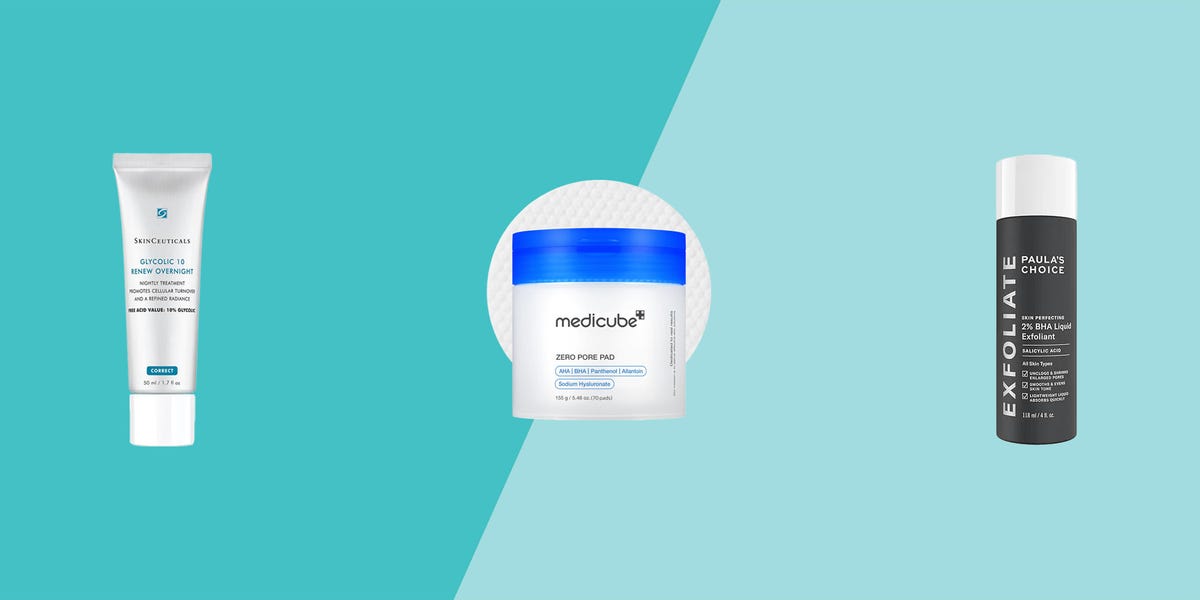
Opt for chemical exfoliators over physical ones. “Chemical exfoliants also contain ingredients that may provide additional benefits like treating discoloration, such as lactic acid, glycolic acid and mandelic acid or helping to prevent breakouts as with salicylic acid,” says Dr. Garshick. She warns also that physical exfoliators can be too abrasive and create microtears in mature skin, so if you prefer a scrub, look for finely milled ingredients like rice starch or powder.
Look for AHAs. To avoid irritation, “gentle chemical exfoliation with AHAs (like lactic acid or glycolic acid) or enzymes is often best for mature skin,” Dr. Spearman says. These water-soluble acids help remove dead skin cells and promote cell turnover, which leads to more collagen production and smoother, more even skin.
Add in moisturizing ingredients. Even the most gentle chemical exfoliants can be drying on mature skin, so formulas with moisturizing or soothing ingredients is what Dr. Wood recommends. “Niacinamide helps prevent redness and irritation while squalene moisturizes,” she says. “Hyaluronic acid and ceramides really help to prevent the drying effects chemical exfoliators often produce,” she adds.
Know your skin’s needs. Overall, exfoliating can help brighten your complexion, even out texture, and help your skincare penetrate. If you are looking for more than that, specific ingredients can help. Those looking to reduce the appearance of fine lines and wrinkles should opt for a formula with a retinoid. Those who are looking to reduce discoloration or hyperpigmentation might choose one featuring kojic acid.
Read the full article here