

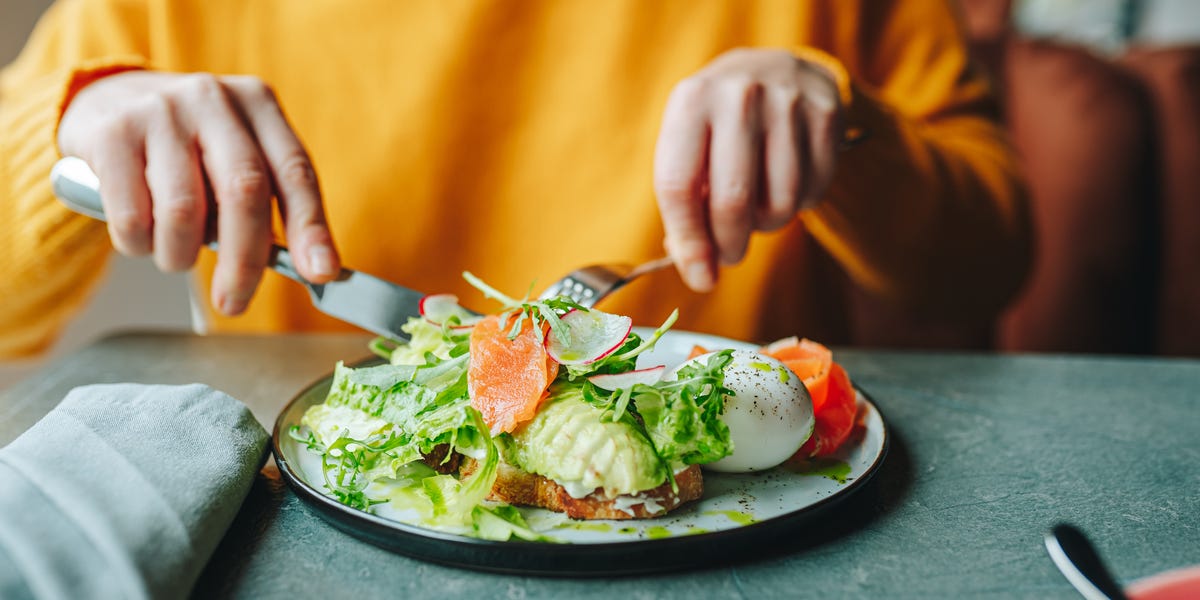
For many, stress is a constant companion, ebbing and flowing depending on your schedule, responsibilities, or mental health. It’s important to have strategies on hand that can help you deal with stress when you feel your levels starting to creep up—and filling your plate with foods that reduce cortisol is one such smart strategy.
Cortisol is a hormone produced by the adrenal glands, which are a pair of triangle-shaped glands on top of each kidney, said Stephani Johnson, D.C.N., R.D.N., an adjunct professor in the Department of Clinical and Preventive Nutrition Sciences at Rutgers University. “Cortisol plays a central role in the body’s stress response,” she explained. “It interacts with receptors in the brain, influencing mood, motivation, and the perception of fear.”
Per the Cleveland Clinic, cortisol is produced to help your body respond to stress, as well as reduce inflammation and control blood sugar, metabolism, and blood pressure. But when cortisol levels are chronically high, it can lead to symptoms like weight gain, muscle weakness, high blood sugar, and high blood pressure, not to mention constant feelings of stress and anxiety. (If you notice any of these symptoms, make an appointment with or call your healthcare provider.)
Making changes to your diet can be a powerful tool for maintaining healthy cortisol levels. There are certain foods that reduce cortisol production—and some that will ramp up levels of the hormone, said Johnson. “Dietary intake and stress are closely interconnected,” she explained. “Consuming too much of certain foods—and not enough of others—can contribute to fluctuations in cortisol levels.”
Meet the experts: Stephani Johnson, D.C.N., R.D.N., an adjunct professor in the Department of Clinical and Preventive Nutrition Sciences at Rutgers University; Jessica Cording, R.D., the author of The Little Book of Game-Changers; Mir Ali, M.D., medical director of MemorialCare Surgical Weight Loss Center at Orange Coast Medical Center in Fountain Valley, CA.
While eating the right foods likely won’t eliminate stress, it may certainly help. “Emotional and environmental stress remain the most significant triggers of cortisol production,” Johnson said. “However, understanding how diet affects this hormone can help individuals make choices that support both mental and physical health.”
Read on for the foods that may help lower cortisol, along with other smart stress-reducing strategies and the cortisol-boosting foods you should avoid.
Foods that may help reduce cortisol
Some nutrients, like omega-3s and magnesium, may help tamp down on cortisol production or even help to calm the body, said Jessica Cording, R.D., the author of The Little Book of Game-Changers. Here are foods that are top sources of these nutrients to incorporate into your healthy diet.
Salmon
The primary cortisol-reducing power of salmon is its omega-3 fatty acid content, Johnson said. “Foods rich in omega-3 fatty acids have well-documented anti-inflammatory properties that may help lower cortisol.” (If fish isn’t your thing, she recommended having flaxseed and chia seeds instead.)
Avocado
This fruit is full of magnesium, a nutrient that, in supplement form, has been found to help lower levels of cortisol in the body. “There is evidence that magnesium supports cortisol regulation and may improve symptoms of anxiety,” Johnson said. Avocado also contains omega-3 fatty acids.
Eggs
Eggs contain tryptophan, which acts as a precursor to serotonin, a neurotransmitter linked with better mood and reduced stress, Johnson pointed out. (Other protein-rich foods like poultry, lean beef, and dairy can also support this.) “Additionally, high-protein diets contribute to better blood sugar stability, reducing the need for cortisol-driven glucose regulation,” Johnson said. Not only that, animal-based proteins like eggs also provide vitamin B12, which may help reduce fatigue-related psychological stress, she added.
Fermented foods
The gut–brain axis plays a key role in the regulation of cortisol in the body, Johnson said. Elevated cortisol can cause issues with the gut microbiome, while an imbalance of the gut microbiome can increase cortisol production, “creating a feedback loop,” she explained. “Supporting gut health through the consumption of prebiotic and probiotic foods, such as yogurt, kefir, kimchi, sauerkraut, and fiber-rich plant foods, can promote a more balanced microbiome and help regulate stress responses.”
Bananas
Bananas offer 32 milligrams of magnesium, according to the U.S. Department of Agriculture (USDA), putting them on our list of the top foods high in magnesium. Many Americans get less than the recommended amount of this cortisol-lowering mineral, according to the National Institutes of Health (NIH), so eating a banana every day can definitely make a difference.
Spinach
Spinach has a few cortisol-lowering perks going for it. This veggie is high in fiber, which helps to feed the good bacteria in your gut, Johnson explained. It also has a solid dose of magnesium—one cup of raw spinach has 24 mg, while one cup of cooked has 131 mg, per the USDA.
Other ways to lower cortisol
While different strategies are going to work for different people, the following tips for how to stress less may help your body keep cortisol levels low.
- Exercise regularly. Aim to get at least 150 minutes of moderate-intensity exercise a week, Cording suggested. This can help to combat high cortisol, as well as how stressed you feel, she said.
- Strive for 7+ hours of sleep. Getting the recommended amount of sleep or more can help to lower cortisol levels, according to the Centers for Disease Control and Prevention (CDC).
- Make time to unwind. It’s easier said than done, but making a point to take deep breaths, do relaxing activities, and spend time outside can all help you relax and lower cortisol levels, per the CDC.
- Take breaks from the news. Being well-informed is important, but constantly monitoring the news and social media can be upsetting, per the CDC. Try not to check the headlines multiple times a day.
Foods to avoid that may spike cortisol
If you’re trying to lower cortisol, there are certain foods you may want to avoid or consume in moderation. “Some foods can temporarily increase cortisol levels,” said Mir Ali, M.D., medical director of MemorialCare Surgical Weight Loss Center at Orange Coast Medical Center in Fountain Valley, CA. Try to limit your intake of the following foods.
Sugary, processed foods
These foods can increase your blood sugar, causing cortisol levels to rise along with it, Dr. Ali said. They can also increase levels of inflammation. “Blood sugar levels and cortisol are very interconnected,” Cording added. “If someone has unregulated blood sugar, that can contribute to higher cortisol.”
Caffeinated drinks
“Caffeine is a stimulant that can temporarily increase cortisol levels,” Dr. Ali said. If you have a daily cup of coffee and don’t go overboard with caffeine, this is unlikely to make a huge difference in your mood or cortisol production, he said. But if you’re regularly tossing back highly caffeinated drinks, you could be unknowingly spiking your cortisol levels.
Alcohol
Like caffeine, alcohol can cause your body to produce more cortisol than usual, Johnson said. “Over time, chronically high cortisol can disrupt mood regulation and increase feelings of stress and anxiety,” she explained.
Trans fats
These include things like ultra-processed snacks, fried foods, and some baked goods, and they can raise levels of inflammation, Cording said. High-fat diets in particular have been linked to a higher risk of anxiety and depression in animal studies.
Bottom line
Cortisol production in your body is caused by a range of factors. But what you eat may cause cortisol production to increase or decrease. While eating certain foods is unlikely to completely change cortisol production, making small dietary tweaks could help support your goals of lowering your cortisol levels.
Dietary supplements are products intended to supplement the diet. They are not medicines and are not intended to treat, diagnose, mitigate, prevent, or cure diseases. Be cautious about taking dietary supplements if you are pregnant or nursing. Also, be careful about giving supplements to a child, unless recommended by their healthcare provider.
Read the full article here