

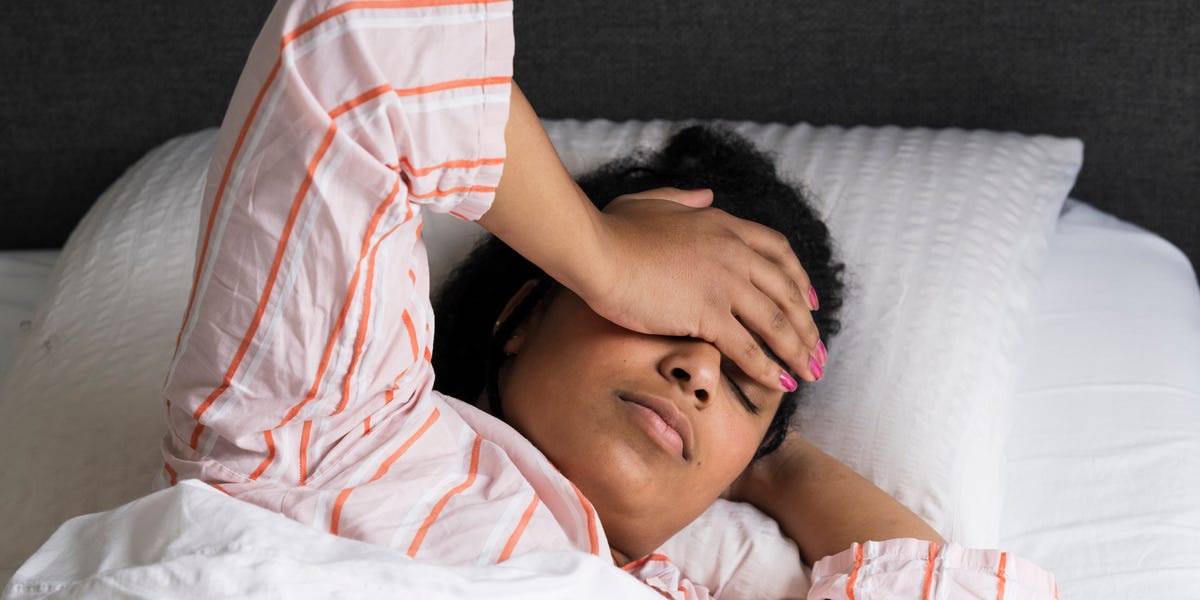
Our bodies and brains rely on good sleep to function. But for one reason or another, many of us aren’t getting our recommended nine hours each night. The occasional all-nighter might not be cause for concern, but regularly depriving yourself of much-needed shut-eye can result in several surprising sleep deprivation health problems.
Meet the experts: W. Christopher Winter, M.D., board-certified sleep medicine researcher and author of The Sleep Solution: Why Your Sleep Is Broken and How to Fix It; Michael Awad, M.D., chief of sleep surgery at Northwestern Medicine and chief medical officer of Peak Sleep.
What happens to your body when you’re sleep deprived goes well beyond just feeling tired the next day. “Most of the systems in our body are predicated on some process of renewal or need for sleep,” explains board-certified sleep medicine researcher W. Christopher Winter, M.D., the author of The Sleep Solution: Why Your Sleep Is Broken and How to Fix It. “Sleep is a fundamental aspect of our thinking, our ability to function, and our immune system. It impacts pretty much everything we need to survive.”
So if you’re reading this while doomscrolling in bed, you may want to take it as your sign to call it a night. But first, read on for the unexpected health problems that arise when you don’t get enough sleep, according to sleep experts. Plus, what you can do to set yourself up for better rest each night.
Sleep deprivation health problems
1. Weakened immune system
“There’s a very strong link between sleep and the immune system in general,” says Michael Awad, M.D., chief of sleep surgery at Northwestern Medicine and chief medical officer of Peak Sleep. “The body repairs just about every cell in the body when it comes to sleep. Sleep deprivation lowers the body’s ability to mount an immune response.”
Sleep loss is linked to a higher risk of infection, according to the Centers for Disease Control and Prevention (CDC). One study published in JAMA found that restricting a person’s sleep for four hours a night for six days, followed by sleeping 12 hours a night for seven days, can lead to a greater than 50% decrease in the production of antibodies to a flu vaccine. Basically, your body just can’t mount the usual immune response when you’re wiped out.
Lack of sleep can also lower your immune system’s ability to fight tumor cells and lead to the generation of inflammatory cytokines. These proteins are secreted by the immune system and can cause the development of metabolic and cardiovascular disorders.
2. Higher risk of heart disease
One study of nearly 117,000 people published in the European Heart Journal found that people who slept less than six hours a night were at a greater risk of developing heart disease than their well-rested counterparts. And getting irregular sleep—that is, having no consistent bedtime and wake time—can raise your risk of having some kind of cardiovascular event, including stroke, congestive heart failure, and coronary heart disease, according to a study published in the Journal of the American College of Cardiology.
There are a “tremendous number of mechanisms” at play here, Dr. Winter says. “When you are sleep deprived or have fragmented sleep, your blood vessels lose, to some extent, the ability to expand and contract to regulate things,” he says. People also tend to be at a higher risk of developing high blood pressure when they don’t get enough sleep, Winter says, which can be tough on your heart.
Sleep deprivation can also increase cholesterol levels and general inflammation throughout your body, leading to the formation of plaque in the blood vessels, Dr. Awad says. “When blood vessels start to form plaque, the heart has to work harder,” he explains.
3. Lower sex drive
There are a lot of reasons for this, Dr. Winter says. “When you’re fatigued, your brain prioritizes getting sleep over other things,” he says. But Dr. Winters says other chemicals that are important for sexual performance and arousal, such as oxytocin, can be lowered by sleep deprivation.
One study in JAMA restricted 10 men’s sleep for a week and found that the levels of the sex hormone testosterone in their bodies decreased by up to 15%. (Testosterone is a hormone that can fuel a person’s sex drive.) The reverse is also true: Another study published in JAMA found that people who got more sleep than usual were more likely to have sex the next day. Meaning, if you hit the hay earlier, you just might be up for a little something extra.
4. Higher risk of weight gain
There are a few reasons for this. One is that people “tend to make bad eating decisions when they’re tired,” Dr. Winter says. People are also typically more sedentary and less likely to work out when they’re tired, which also can lead to weight gain, he says.
Research published in the journal Sleep found that people with restricted sleep had altered levels of endocannabinoids, one of the chemical signals that affect appetite and the brain’s reward system. The researchers also discovered that when people were sleep-deprived, they ate more and unhealthier snacks between meals, at the same time that endocannabinoid levels were at their highest.
Older research has also found that women who get less sleep tend to weigh more than their better-rested counterparts, likely for the reasons above, Dr. Winter says.
5. Higher risk of developing diabetes
There’s a direct correlation between lack of sleep and diabetes, Dr. Awad says. It’s due to your body’s ability to regulate insulin, a hormone produced in the pancreas that controls your blood sugar, he says. “Lack of sleep reduces the production of insulin from the pancreas and decreases gluten tolerance,” Dr. Awad says. “Cells are then less effective at using insulin, and that can lead to the development of diabetes.”
To be clear: Sleep deprivation isn’t cited by the National Institute of Diabetes and Digestive and Kidney Diseases (NIDDK) as a potential cause of diabetes, but insulin resistance—which can be caused by lack of sleep—is.
6. Weakened cognitive health
Your brain relies on sleep to function just as much as your body does. According to the Cleveland Clinic, there’s preliminary evidence to suggest that sleep deprivation could increase your risk of developing Alzheimer’s disease.
The amount of sleep you get each night may also cause or worsen symptoms of certain mental health disorders. According to a systematic review published by the National Library of Medicine, multiple studies have linked sleep deprivation to increased levels of anxiety, aggression, and depression, along with a lower mood. Not getting enough sleep was also found to negatively impact our ability to regulate our emotions.
What’s the difference between sleep deprivation and insomnia?
While both sleep deprivation and insomnia involve not getting enough sleep, they’re not exactly the same thing. Per the Cleveland Clinic, sleep deprivation can occur either when you don’t allow yourself enough time for shut-eye, or when the sleep you do get isn’t high-quality, deep sleep. Insomnia, on the other hand, occurs when you’re unable to fall asleep at all, even when you try. If you think you may have insomnia, be sure to talk to your doctor about your symptoms to find the best solution for you.
How to get better sleep
If you’re struggling with sleep, Dr. Winter recommends first trying to prioritize rest and practicing good sleep hygiene. That includes the following, per the CDC:
- Go to bed at the same time each night and get up at the same time each morning, including on weekends.
- Make sure your bedroom is quiet, dark, relaxing, and at a comfortable temperature.
- Remove electronic devices, such as TVs, computers, and smartphones, from your bedroom.
- Avoid large meals, caffeine, and alcohol before bed.
- Exercise regularly. Being physically active during the day can help you fall asleep more easily at night.
If these tried-and-tested tips don’t help, Dr. Awad says it’s a good idea to talk to your doctor about what else you can do to get the rest your body needs.
Read the full article here