







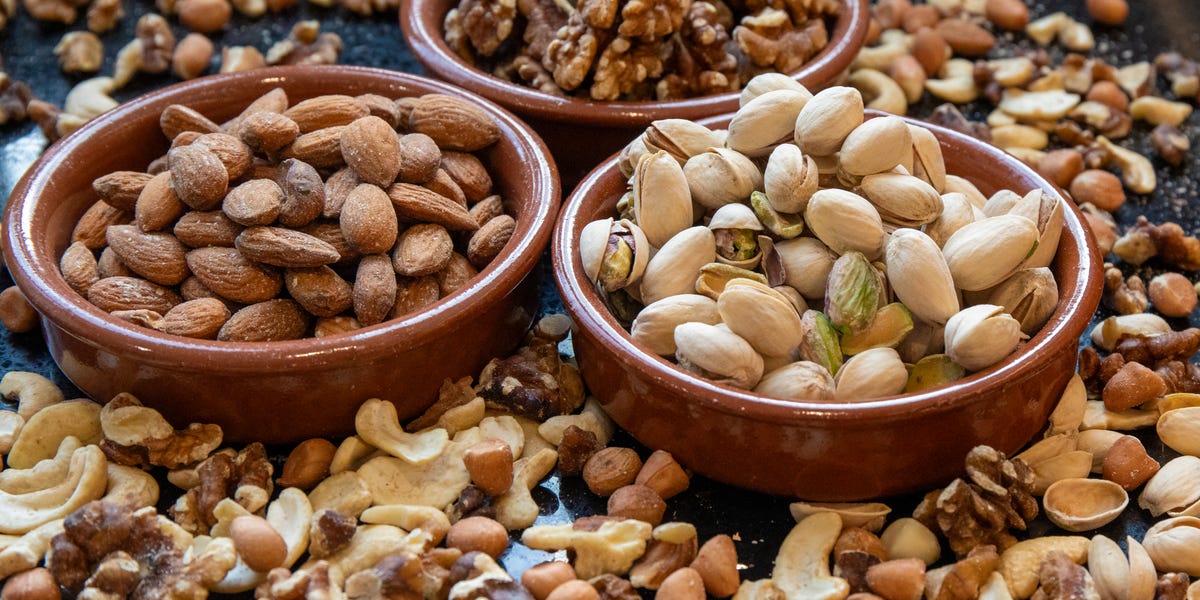
Two little bowls sit in my kitchen most afternoons: one filled with almonds, the other with pistachios. Both are crunchy, satisfying, and genuinely nutritious. But as a dietitian, I get asked one question all the time by people who are trying to make smarter choices with their snacks. Almonds vs. pistachios: which is better for heart health?
As a registered dietitian, I love this question, because the answer isn’t as simple as picking a “superfood” winner. Both healthy nuts have earned their heart-healthy reputation, and the research backing them is strong. But when you line them up across the categories that matter most for cardiovascular health, some interesting differences show up. Let’s walk through it together to see what the science actually says.
First, are nuts a heart-healthy snack?
Before we pit these two against each other, it’s worth appreciating what they have in common. Studies have linked eating nuts a few times a week to a meaningfully lower risk of cardiovascular disease and coronary heart disease. In fact, the FDA allows certain nuts to carry a qualified claim that eating about one ounce daily, as part of a healthy diet, may reduce heart disease risk.
So really, you’re choosing between two winners. You already know nuts are good for you. But the question is: if you’re standing in the snack aisle weighing a bag of almonds against a bag of pistachios, which one is actually doing more for your heart?
Benefits of almonds for heart health
Almonds have a well-earned reputation as a heart-healthy snack, and a lot of it comes down to a few specific nutrients.
Vitamin E
Almonds are one of the richest food sources of vitamin E you’ll find. One ounce delivers around 7.3 milligrams, which is nearly half the recommended daily intake for adults. Vitamin E is a fat-soluble antioxidant that helps protect cells from oxidative damage, which is a process that plays a role in the development of cardiovascular disease.
Pistachios contain vitamin E too, but in much smaller amounts. If antioxidant protection via vitamin E is your priority, almonds are the clear choice.
Fiber
Almonds also edge ahead on fiber. A one-ounce serving provides about 3.5 grams, compared to roughly 3 grams for pistachios. It’s not a dramatic gap, but dietary fiber matters for heart health: it helps lower LDL cholesterol and supports healthy blood sugar levels. Every gram adds up.
Healthy fats
A one-ounce serving of dry-roasted almonds has about 15 grams of total fat, mostly monounsaturated. These are the fats that research links to lower LDL cholesterol consistently. Almonds are also slightly higher in calories, clocking in at around 170 per ounce, which is worth keeping in mind if you tend to eat them by the handful.
Benefits of pistachios for heart health
Pistachios bring their own genuinely impressive game, and in a few areas they actually pull ahead.
Protein
Ounce for ounce, pistachios have more protein than almonds: about 6 grams per serving compared to roughly 4 to 5 grams for almonds. More protein per serving means more staying power and a better shot at keeping you full between meals, which indirectly supports heart-healthy eating patterns.
Antioxidants
While almonds dominate on vitamin E, pistachios bring a different set of antioxidants to the table. They contain lutein and zeaxanthin, which are plant pigments that give them their distinctive green and purple hues. Research has linked these compounds to reduced oxidative stress and lower levels of oxidized LDL cholesterol, which is the form of “bad” cholesterol most associated with plaque buildup in arteries.

Add Prevention as a preferred source in your Google search results.
Use your Google account to add this to your settings.


Potassium
Pistachios are a notably good source of potassium, with roughly 285 milligrams per ounce. Potassium plays a direct role in blood pressure regulation; it helps counteract the effects of sodium, which makes pistachios especially impressive from a cardiovascular standpoint.
Fewer calories
At around 162 calories per ounce, pistachios are slightly lower in calories than almonds. Again, not a dramatic difference, but relevant if you’re portioning thoughtfully.
What about sodium?
Neither nut has a built-in sodium problem. In their natural state, both are very low in sodium. The issue is what happens when they’re heavily salted, which is common with both.
Too much sodium raises blood pressure, one of the main risk factors for heart disease and stroke. So, regardless of which nut you choose, the smartest move is going unsalted or lightly salted. Both are easy to find that way.
Other factors to consider
Pistachios come with a built-in pacing tool: the shell. Shelling them one at a time naturally slows you down, and the pile of empty shells gives you a visual reminder of how much you’ve eaten. For people who tend to snack mindlessly, this is actually a meaningful advantage.
Almonds, by contrast, are easy to toss back by the handful. They’re also incredibly versatile! Slivered over oatmeal, blended into nut butter, added to salads, or eaten straight are all fantastic options. Both nuts are portable and shelf-stable, which helps when you’re trying to have a reliable, heart-smart snack on hand.
Almonds vs. pistachios: The verdict
So, are pistachios or almonds better for heart health? Honestly, it depends on what you’re optimizing for.
- Choose almonds if your main priorities are vitamin E, fiber, and total healthy fat content. They have a longer track record in research on LDL reduction and are often the nut highlighted in heart health studies.
- Choose pistachios if you want more protein, a broader antioxidant profile, more potassium for blood pressure support, and slightly fewer calories per serving.
Neither one is the wrong answer. If anything, the smartest move is to keep both in rotation; they genuinely complement each other nutritionally. But if you have to pick one bag off the shelf today, think about what your diet is already missing and let that guide you.
Read the full article here


