

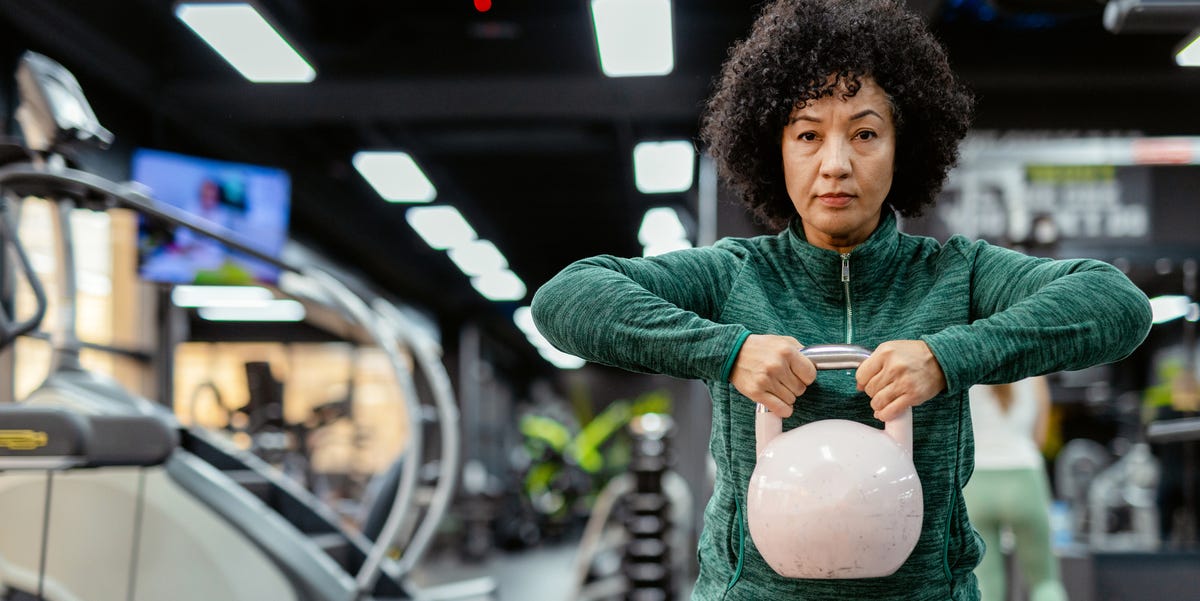
Being able to squat heavy weights or ride your bike for miles is definitely a brag-worthy accomplishment—your muscles are really strong! But don’t forget to give your joints a little love, too.
“Movement and mobility are essential for good joint health,” says Nicholas A. DiNubile, M.D., an orthopedic surgeon in Pennsylvania and author of FrameWork: Your 7-Step Program for Healthy Muscles, Bones, and Joints.
You don’t have much control over the fact that your musculoskeletal system will change as you get older: muscle mass and bone density take a dip, while joints can become stiffer. But you do have authority over what you do to help them get stronger, which is key to staying mobile, active, and independent as you navigate healthy aging.
You can stretch for healthy joints and include joint-friendly foods in your usual meals—and you can also add these three simple actions to your routine to cater to your joint health.
Try these three expert-backed strategies to help strengthen joints and support good overall joint and musculoskeletal health.
Meet the expert: Nicholas A. DiNubile, M.D., an orthopedic surgeon in Pennsylvania and author of FrameWork: Your 7-Step Program for Healthy Muscles, Bones, and Joints.
How to Strengthen Your Joints
Whether you feel a little creakier than usual, or you just want to get ahead of stiff joints, adding the healthy habits below to your regular routine can help your muscles, bones, joints, and more stay healthy and strong.

Add Prevention as a preferred source in your Google search results.
Use your Google account to add this to your settings.

Warm Up Before Exercise
Your tendons and ligaments are made of collagen, which doesn’t get a lot of blood flow; without blood flow, those tissues, which Dr. DiNubile likens to rubber bands, get stiff and crackly like dried-out elastic. But warming up before exercise can help. A warm-up walk, bike ride, or dynamic stretching can help boost circulation, sending more blood flow and oxygen to your joints.
Strength Train
Lifting weights helps you build strong muscles and bones, and your joints also benefit from a bit of weight-bearing stress, says Dr. DiNubile. “Wolff’s law—that a bone will adapt to the loads under which it’s placed—also applies to your tendons and ligaments,” he says. The easiest way to do that is basic strength training, such as squats, step-ups, and leg presses.
For optimum joint strengthening, slow down your repetitions as you lower the weight—this engages fewer muscles, meaning your joints carry more of the effort, and in turn, get stronger.
Move Side-to-Side
Your muscles and joints benefit from moving in different ways. You probably move up and down a lot (say, when doing squats or lunges), so try adding lateral movements (where you move side-to-side) to your workouts for maximum joint strengthening and stability. “It’s a good idea to train the neural pathways that you don’t get in straight-line activity, because it also improves your proprioception and balance,” says DiNubile. Try doing lateral resistance band exercises, such as side steps, and add a few lateral exercises like side lunges and side step-ups to your strength training routine.
Read the full article here