

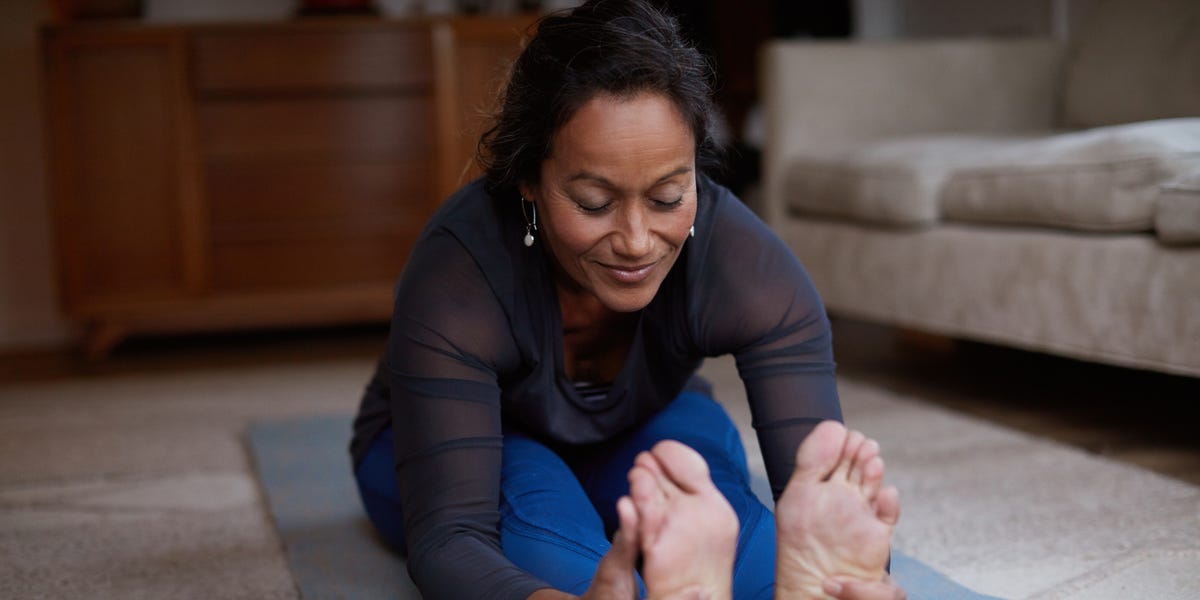
Stretching can feel like an entire workout in and of itself—there are lower back stretches, psoas stretches, arm stretches, and hip stretches to help address the aches, pains, and stiffness that naturally arise as a part of getting older. And since stretching helps you stay flexible and mobile, here’s one more stretching workout to add to your list if you’re experiencing hip or knee pain: iliotibial (IT) band stretches.
The IT band plays an essential role in helping you move, but it can also cause you discomfort in certain areas if it becomes tight.
Meet the Experts: Albert Matheny, R.D., C.S.C.S., co-founder of SoHo Strength Lab and Brian Gurney, D.P.T., C.S.C.S., a physical therapist and board-certified sports clinical specialist at BeFit Therapy in New York City.
Below, experts explain how to prevent hip and knee pain from a tight IT band, plus learn IT band stretches that can help relieve pain and tightness to support healthy aging.
What Is the IT Band?
It’s a thick cord of connective tissue that runs down the outside of your thighs from your hip to your knee. “When you have issues, you can feel it in your hip, your knee, or along the IT band itself,” explains Albert Matheny, R.D., C.S.C.S., co-founder of SoHo Strength Lab. The IT band serves an important role in helping you move around, helping to stabilize the hips and knees, especially during high-impact exercises like running or jumping. If it gets tight and irritated, you’ll know it very quickly.
What Causes IT Band Pain?
Feeling pain in the hips and knees, or along your IT band, can be triggered by a tight IT band itself. “You can think of the IT band like a rubber band,” Matheny says. “If there’s a lot of tension or a lack of movement on either end of the band, you’re going to get more pull on the band. That’s where people get issues.”
You’ll often feel aches during lateral movements or when you’re putting more weight on the affected leg, during running, or other high-impact activities. For that reason, the tightness is common among runners, cyclists, and people who walk for long distances.
It could also be something called IT band syndrome (ITBS), which is when connective tissue rubs against the thighbone, which can cause pain along the IT band or the hips and knees. This can arise due to overuse (like, say, marathon walks or bike rides) or conditions that result in a lack of hip extension (such as knee arthritis, or having bowed legs or one leg that’s shorter than the other), according to Cleveland Clinic.
“When you lack hip extension, it’s harder for your glutes to engage. You start to push more weight to the outside of your leg to compensate. The IT band and calves get tight, and your whole leg mechanics change,” says Brian Gurney, D.P.T., C.S.C.S., a physical therapist and board-certified sports clinical specialist at BeFit Therapy in New York City.
The Best IT Band Stretches
You’ll actually be stretching the muscles surrounding your IT band in order to relieve pain and improve flexibility and mobility.
Hold each stretch for at least 10 seconds; aim to do these stretches at least once a week.
Glute Stretch

How to do it
1. Lie on back with knees bent and feet flat.
2. Raise left foot to the ceiling and grasp just below the knee to hold it up. Pull left foot toward chest (as if you’re crossing it over right knee, without touching knee).
3. Hold for at least 10 seconds, then return to starting position and repeat on opposite side.
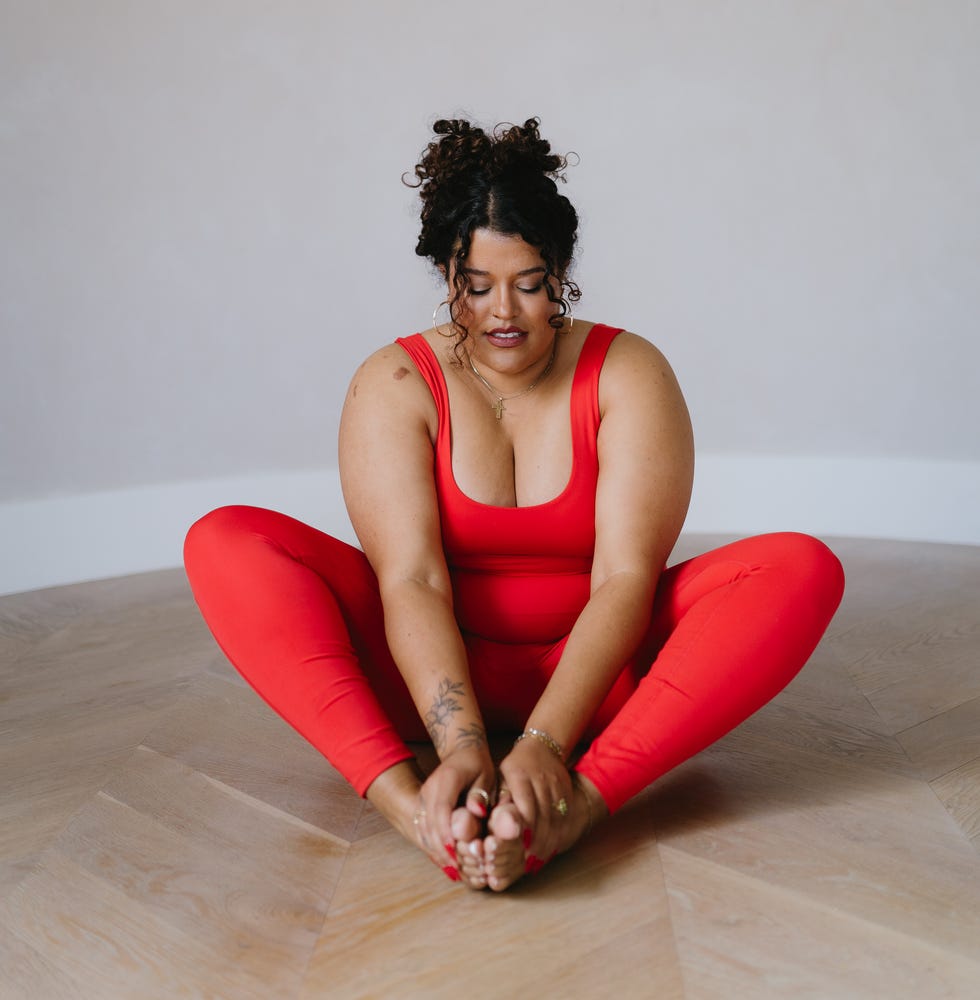
Abductor Stretch
How to do it
1. Sit up straight on the ground.
2. Bend knees and bring soles of feet together (as if you’re about to sit cross-legged, but without crossing ankles). Tilt forward at hips to deepen stretch, letting knees sink toward floor.
3. Hold for at least 10 seconds.
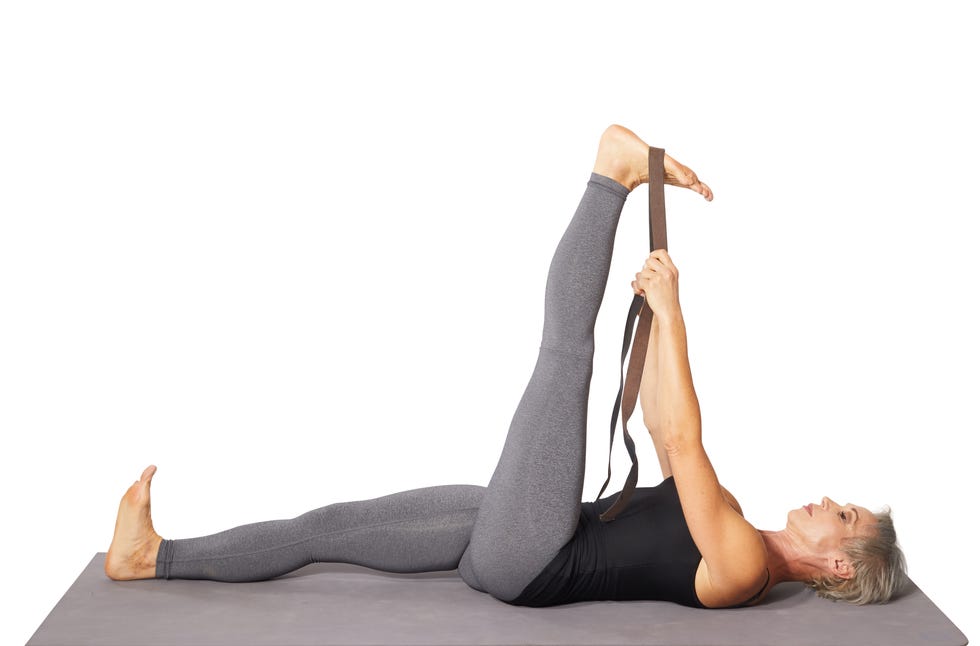
Deep Lumbar Rotation
How to do it

Add Prevention as a preferred source in your Google search results.
Use your Google account to add this to your settings.

1. Lie on back and loop a resistance band or yoga strap around left foot.
2. Holding both ends of the band, pull up to raise left leg so foot points toward ceiling. Keeping leg straight, pull band to the right to extend left leg across body, keeping left hip on floor.
3. Hold for at least 10 seconds, then return to starting position and repeat on opposite side.
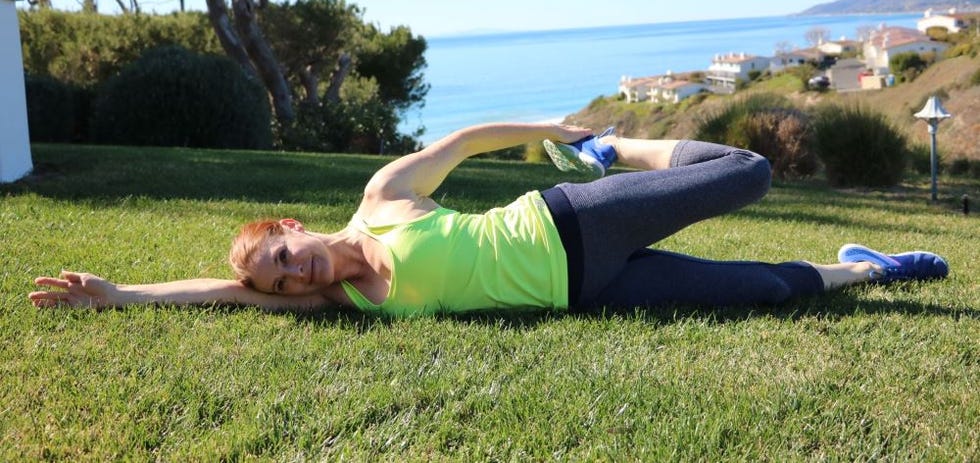
Quad Stretch
How to do it
1. Lie on back. Roll so you’re lying on left side, left arm outstretched.
2. Curl into fetal position, then grasp left ankle and pull leg back so knee is bent and heel points toward butt.
3. Hold for at least 10 seconds, then return to starting position and repeat on opposite side.
Spinal Rotation
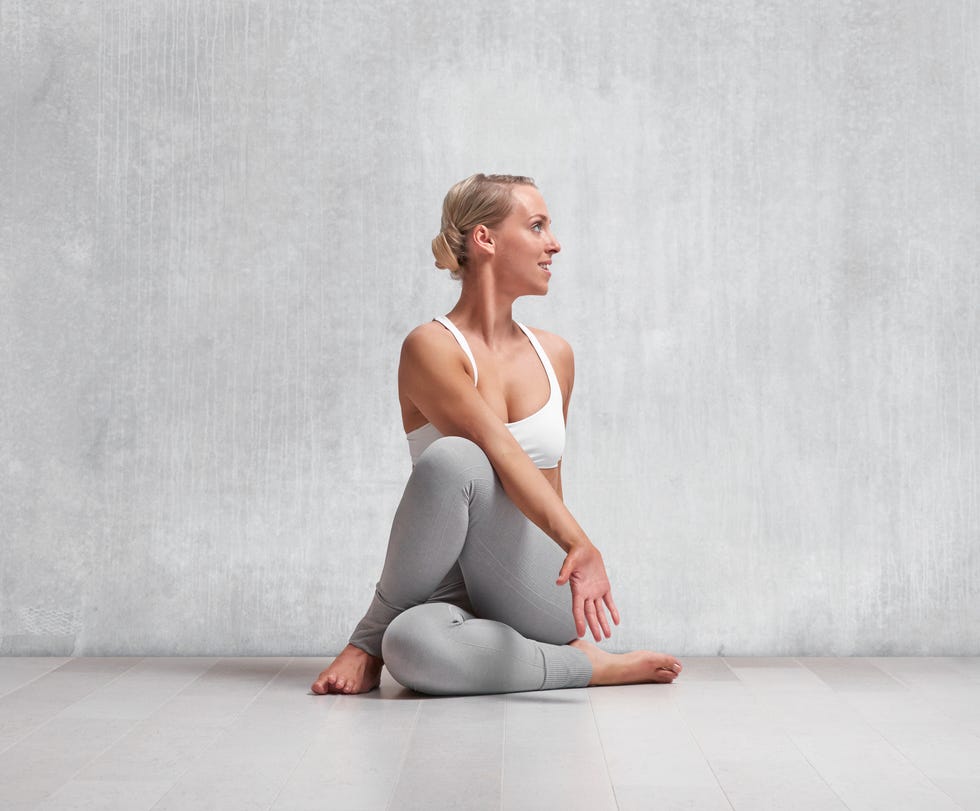
How to do it
1. Sit on floor with both legs extended.
2. Bend right knee and cross right foot over left thigh, placing right foot flat on floor. Bend left knee and bring left foot back toward right hip (if this feels uncomfortable, keep left leg outstretched) near right hip.
3. Sit tall and rotate torso toward the right. Place left elbow outside right knee.
4. Hold for 10 seconds, then return to starting position and repeat on opposite side.
Crossover Stretch
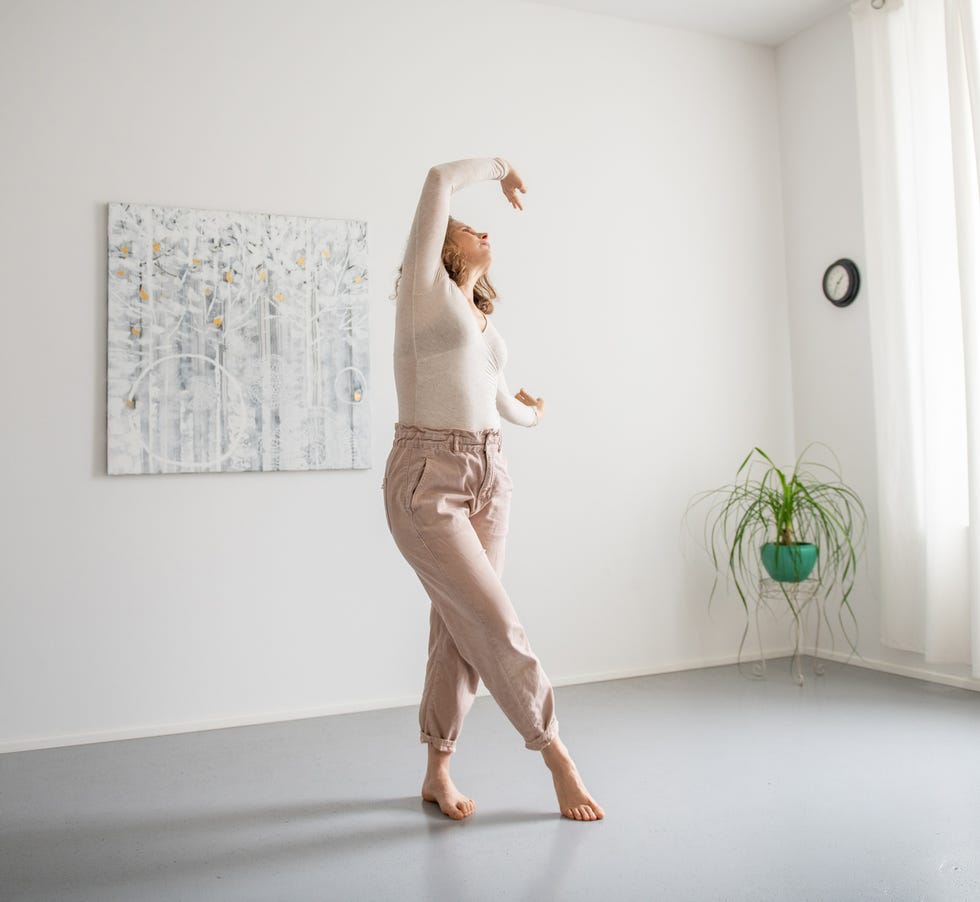
How to do it
1. Stand with feet hip-width apart. Cross right leg over left (hold onto a wall or table if you need balance support).
2. Keep most of your weight on left foot and push left glute slightly back until you feel a stretch along the IT band. Raise right arm overhead and toward left side for a deeper stretch.
3. Hold for at least 10 seconds, then return to starting position and repeat on opposite side.
Pigeon Pose
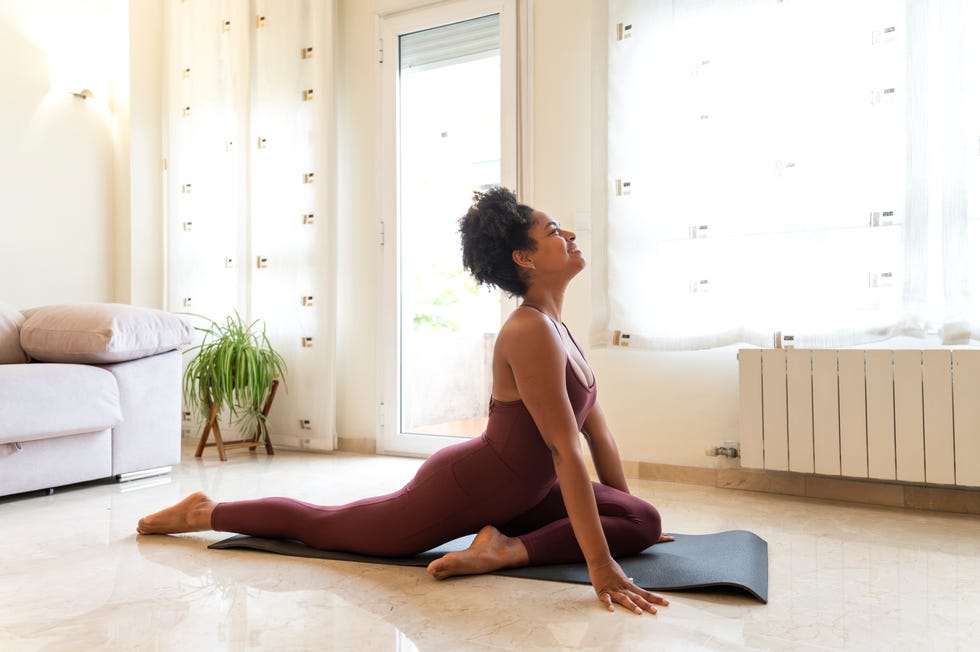
How to do it
1. Start on all fours.
2. Bring right knee forward and place it (bent) near right wrist, then extend left leg straight back behind you. Lean forward slightly until you feel a stretch.
3. Hold for at least 10 seconds, then return to starting position and repeat on opposite side.
Read the full article here