

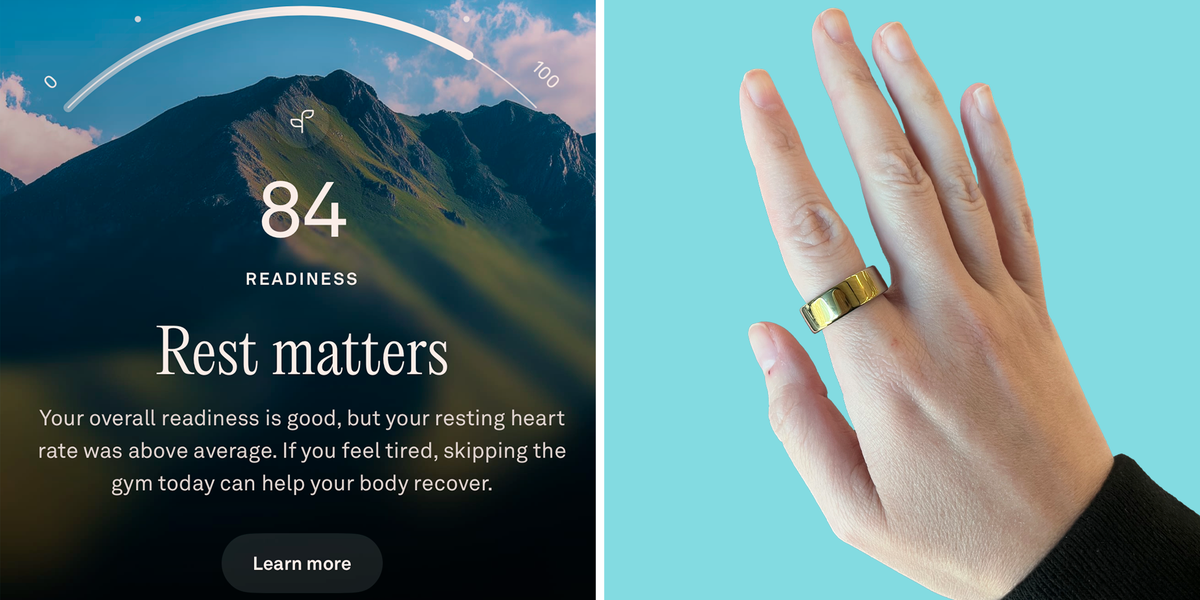
A year ago, I was offered the opportunity to test the Oura Ring, a smart wearable tracker that had a long-lasting battery life and was both easy and comfortable to wear. I immediately fell in love and started trying more health trackers; if one was great, could another one be better? Despite dabbling with others (including the ever-popular Apple Watch), I found myself losing interest after a few months, until they were eventually retired entirely. However, my Oura Ring remains firmly planted on my index finger, day after day, 365 days later.
With a full year of data collection behind me, here is why I’m still dedicated to my Oura Ring 4 more than ever:
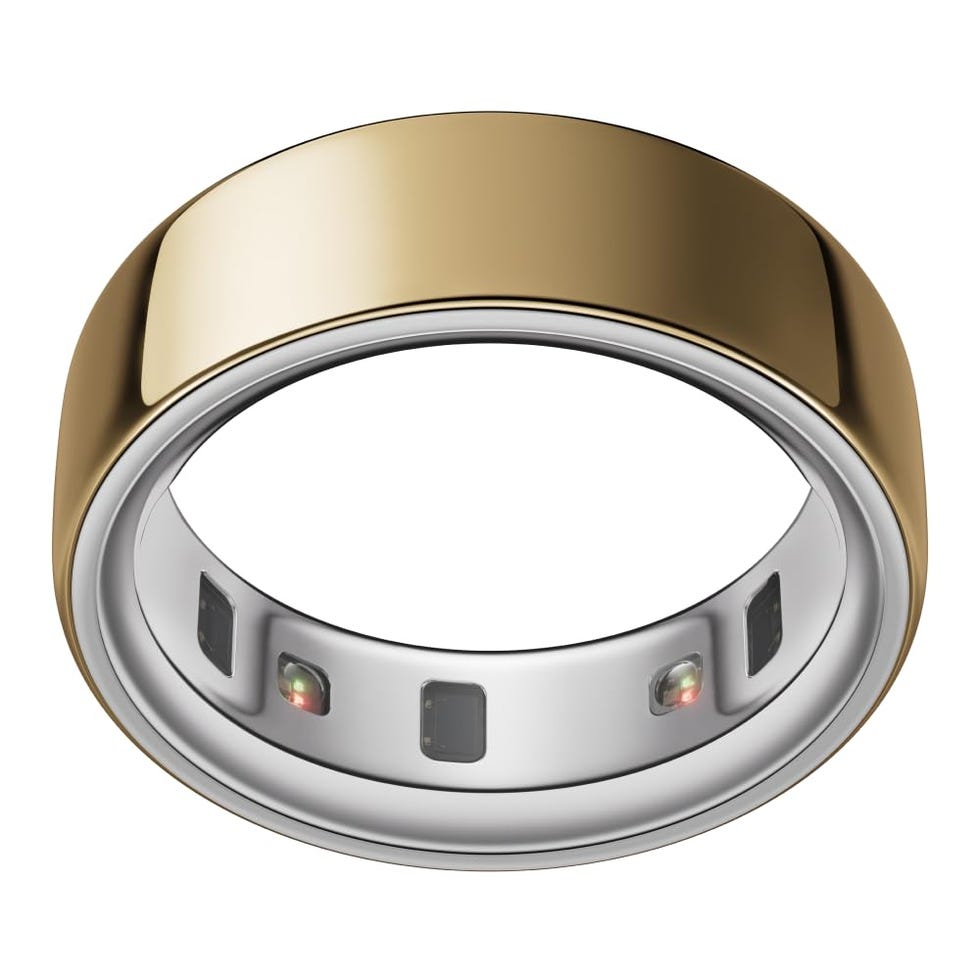
| Battery Life | 5-8 days |
| Material | Hypoallergenic Titanium |
| Sizes | 4-15 (using Oura’s sizing chart) |
| Colors | 10 finishes (metallic and ceramic) |
What is the Oura Ring 4 and how does it work?
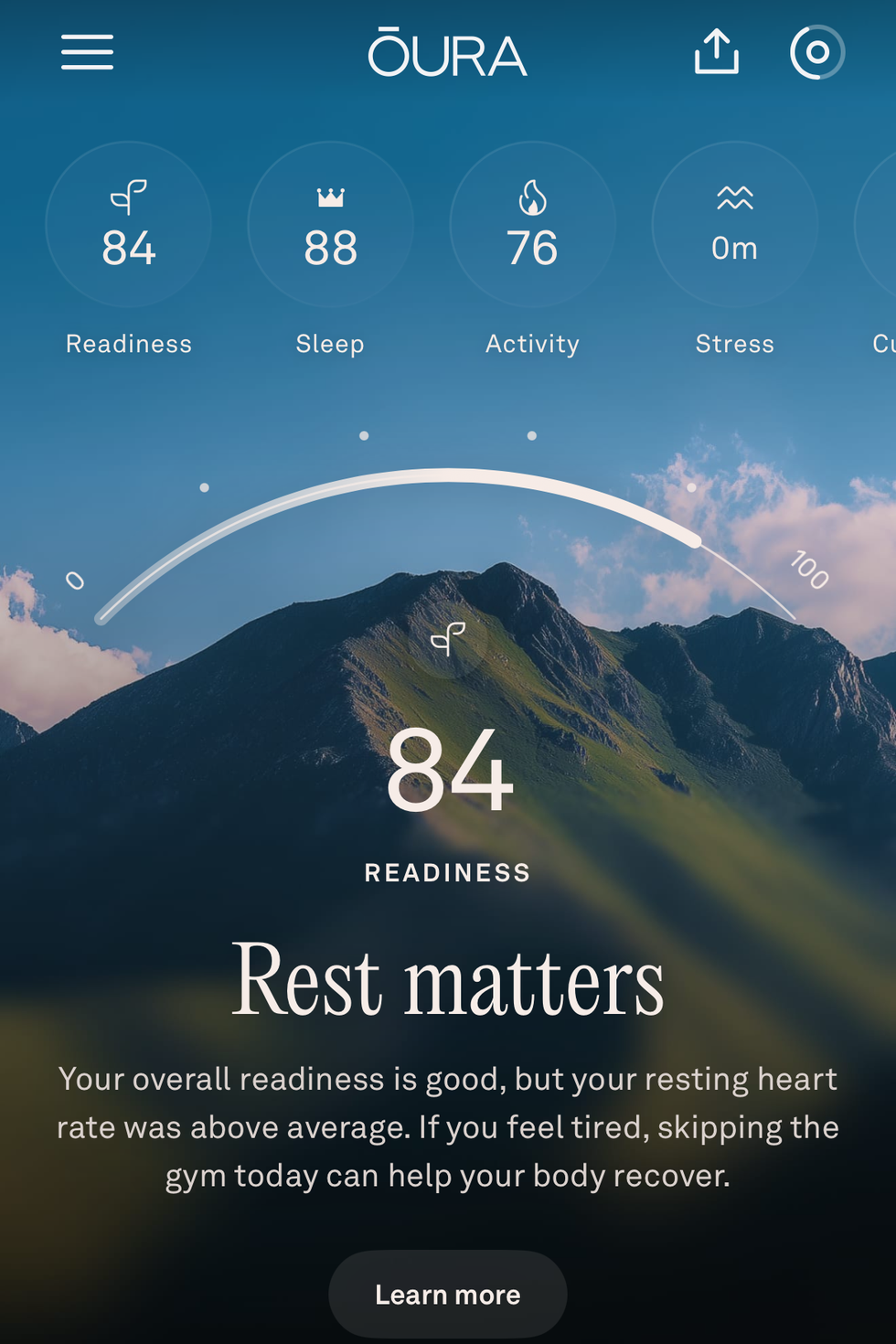
The Oura Ring 4 is a smart ring that looks like a demure piece of jewelry due to its metallic and ceramic finishes, but is actually so much more. Using advanced Smart Sensing, it measures more than just your biometrics; according to Oura, it tracks over 50 health metrics including blood oxygen, heart rate, temperature, and more. This gets calculated into three “Scores”—one for Sleep, Activity, and Readiness—to tell you how well you slept, what your movement looked like, and your general energy level for the day ahead.
All of this data shows up on the Oura app, which is easily downloaded and accessible via your phone. The app is also compatible with hundreds of other health and fitness apps and platforms (it connects to everything from Apple Health to Stelo glucose monitors) to bring you an even more comprehensive picture of your overall health. The first month is free, but then it is $5.99 for continued membership access.
How I tested
I received my Oura Ring 4 in May 2025 and have been wearing it (just about!) on my index finger every day since—taking it off to charge about 30-60 minutes, once a week. As you can imagine, a lot can happen in a year, meaning it has had a significant amount of time to gather a wide array of data from a multitude of metrics. This year, in addition to typical physical, mental, and emotional stressors like commuting, working, exercising, reading the news, running errands, cleaning, etc., I also spent holidays with my family and my in-laws, traveled by plane, hosted a friend in my second bedroom for two months, sustained a back injury, underwent three invasive medical procedures, started new medications, tried acupuncture for the first time, had the flu three months in a row, and most recently said goodbye to my senior dog after 14 years together. Needless to say, many ups and downs were tracked during this year-long testing period.
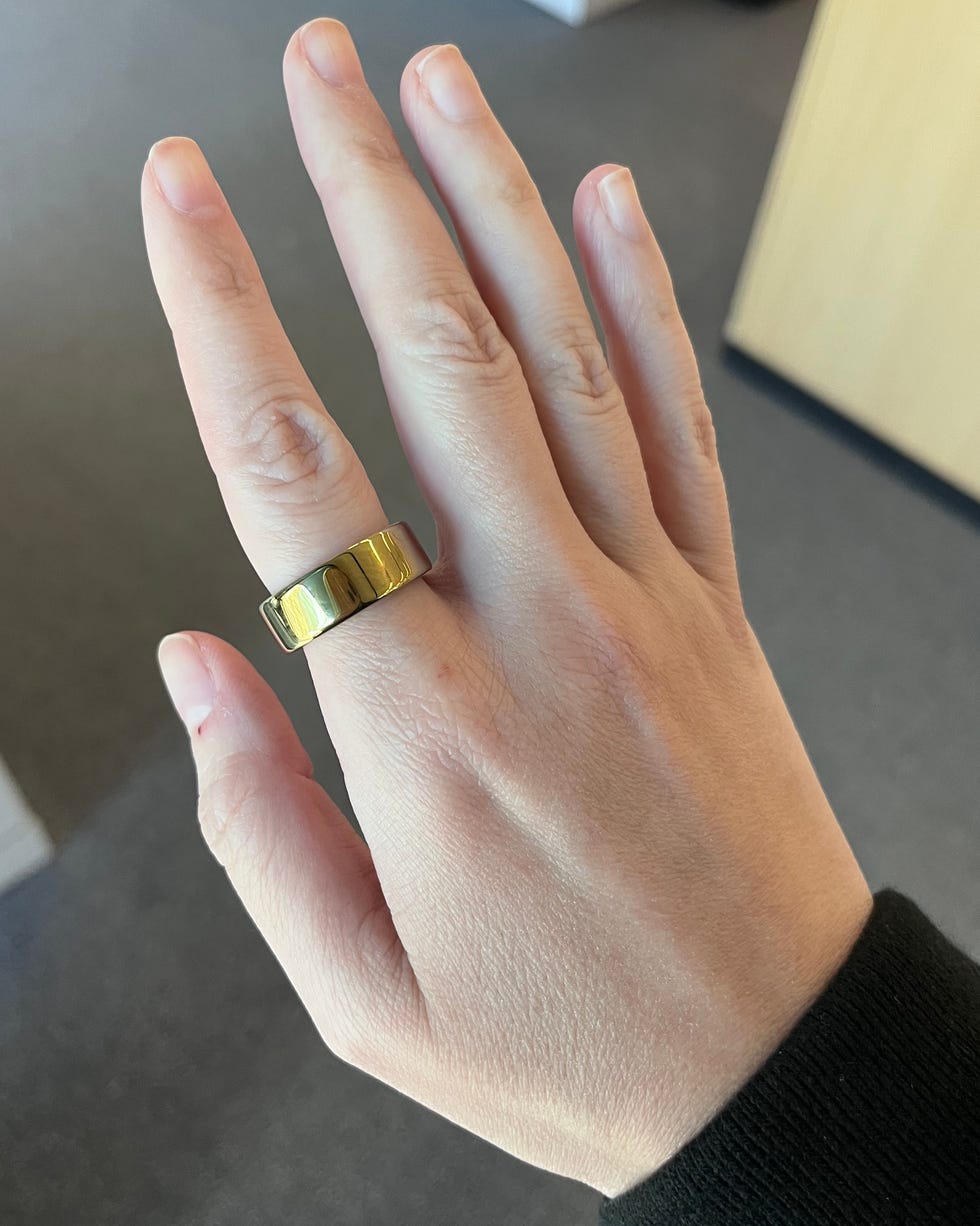
Cute, sleek, and discreet.
What I learned after a year of wearing the Oura Ring 4
In terms of (non-data specific) takeaways, I had several valuable takeaways. First, consistent use was easy because the Oura made it that way. Not only is it slim, discreet, and comfortable on my index finger, but I rarely had to think about it due to its quick charging time and long-lasting battery. A quick 30-minute charge while I was reading in bed lasted a full week on my finger. Plus, because it’s made from durable titanium, I never felt like it was getting too dinged up and still looked like a cute piece of jewelry on my finger, rather than a bulky tracker.
Though it may seem obvious, another key learning is that health doesn’t look the same for everyone, and I appreciate that the Oura Ring is able to take my health data and contextualize it within my own lifestyle. For example, I have always thought my sleep was bad because I tend to fall asleep late (around or after midnight). But Oura affirmed that my midnight bedtime was totally fine, as long as the sleep I was getting was quality (we’ll talk about how I improved that later on!). And in fact, my sleep scores are now often much higher than my early-to-bed friends.
The most surprising discovery? I felt totally comfortable ignoring the stress score every day, and ultimately, I don’t think it’s all that informative. That’s because stress as we traditionally refer to it (the heavy, anxiety-producing feeling weighing down our shoulders), is not what it’s measuring. This is a solely physical stress measurement, meaning that it gets triggered any time you are in motion or your heart rate or temperature gets elevated. That can obviously happen with psychological stress (I noticed distinct peaks in my data any time I was watching The Pitt), it also goes up when you climb a flight of stairs, go out dancing, or get exciting news. In short, it does not distinguish between positive or negative stress on your body, and therefore, it is less quantifiable than I wanted it to be. For people who are easily anxious or stressed out by bad scores, I think it’s totally fine to hide this one.
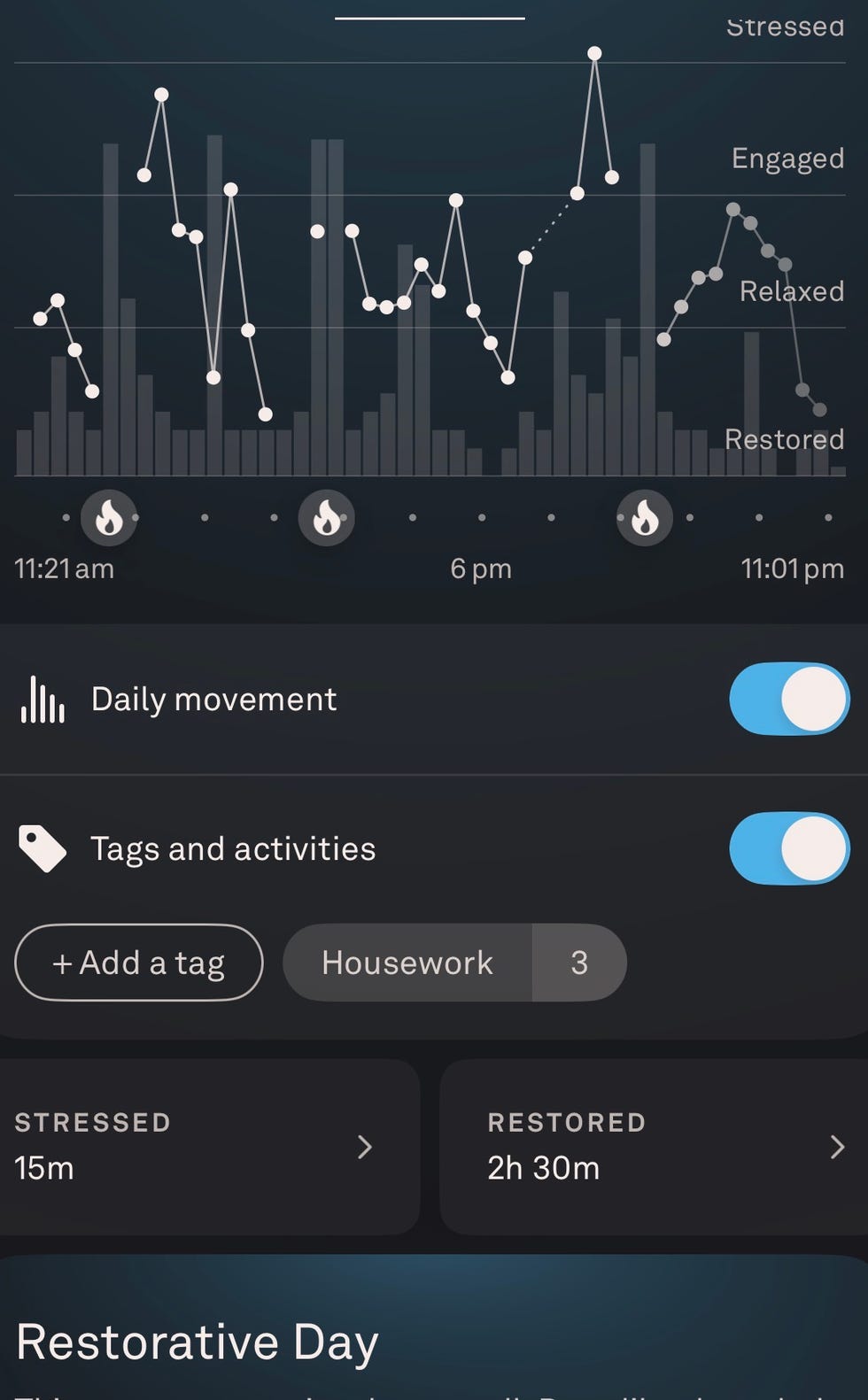
Day filled with emotional stress, housework, and unenjoyable errands.
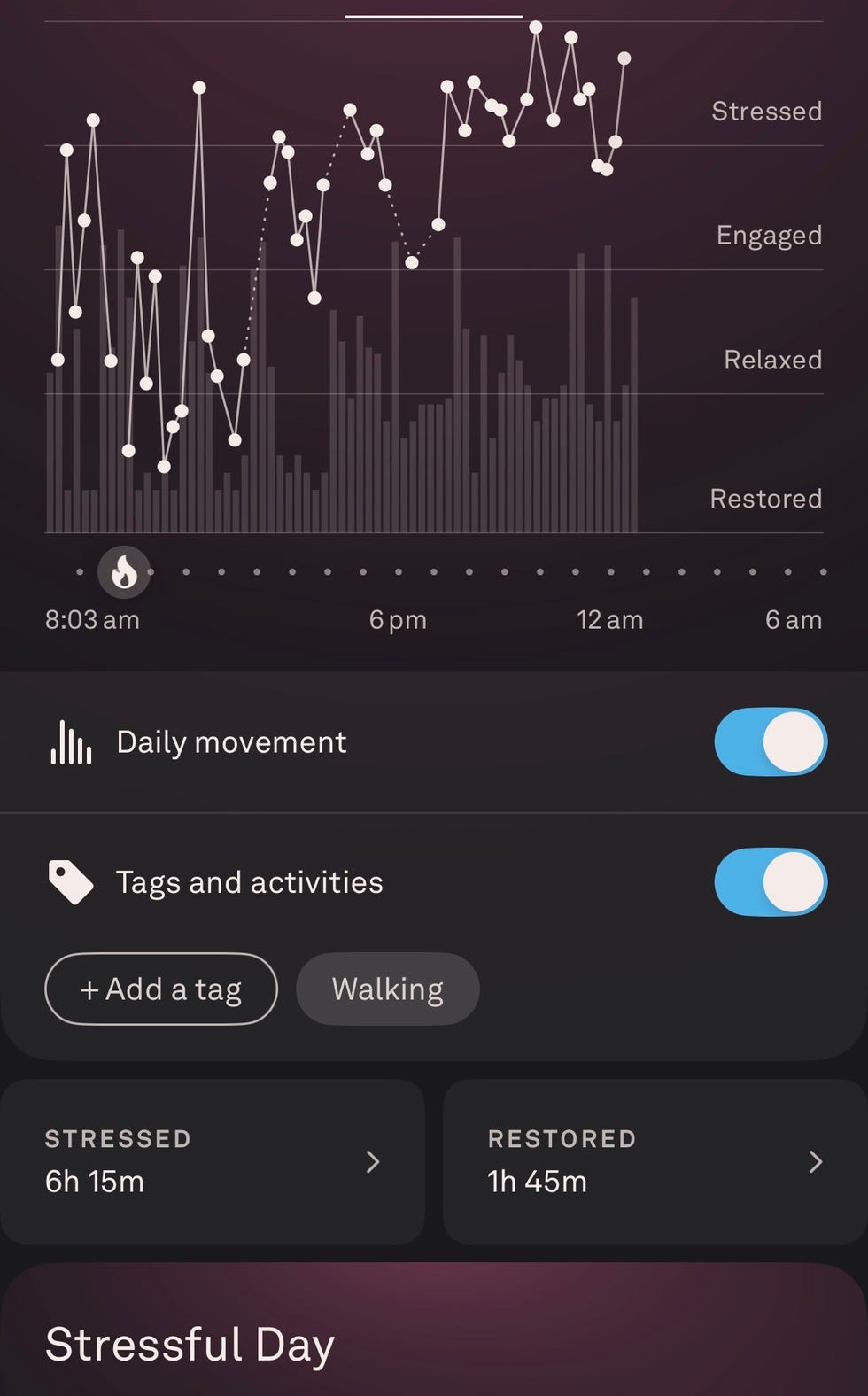
Day filled with seeing friends, going out to dinner, and enjoying a concert.
Finally, I really enjoy that Oura is more of a passive observer than a constantly buzzing piece of tech. Yes, it can send you alerts if you want, but I found it to be much more effective in its summaries and helping me understand my health, via soft encouraging (almost life coach-like blurbs) than guilting me every hour to get in my residual steps or make calorie goals. In fact, I really appreciated that I could toggle off anything related to calories specifically, and I never felt pressured to enter my meals into the app. It’s not what I wanted to use it for, as I find entering food portions to be not only tedious but often pretty triggering.
Health insights that actually changed my habits
In terms of the three different scores, here is how the data I received actually helped me make impactful and long-lasting changes in my behavior:
Activity
The number one thing I have learned after a year of wearing the Oura Ring 4: consistency is key. That seems like an obvious statement, but looking back at the year-long period, the evidence is damning. There were days I worked out well above my goal and days where I fell short, but as long as I got in my 7,000 steps most of the week, my readiness scores and sleep scores remained high.
Sleep
The habit I thought was most important (and one where Oura really shines) is sleep. But I learned very quickly that my idea of getting a “good night’s sleep” wasn’t always true. I assumed that sleep length and sleep timing were the markers of a good sleeper, so as someone who tends to go to bed around midnight and wake up around 8 a.m., I assumed I was a “bad sleeper.” I caught up on sleep during the weekends where I wouldn’t set an alarm and sometimes get 10-11 hours of sleep. Oura made me realize really quickly that was not the way to go. In fact, it wasn’t the timing and length of sleep that was making me exhausted and oversleeping on the weekends, but the quality. It identified triggers for my poor sleep as a few repeat offenders: eating too close to bedtime, exercising too late at night, and alcohol consumption. In theory, I knew those were likely to affect my sleep, but seeing just how drastically my sleep score improved when I eliminated all three of those habits was pretty eye-opening. After a few months, I noticed that not only has my daily sleep score improved due to better quality (with higher deep and REM sleep), but I’m also no longer sleeping the weekend away, even without an alarm.
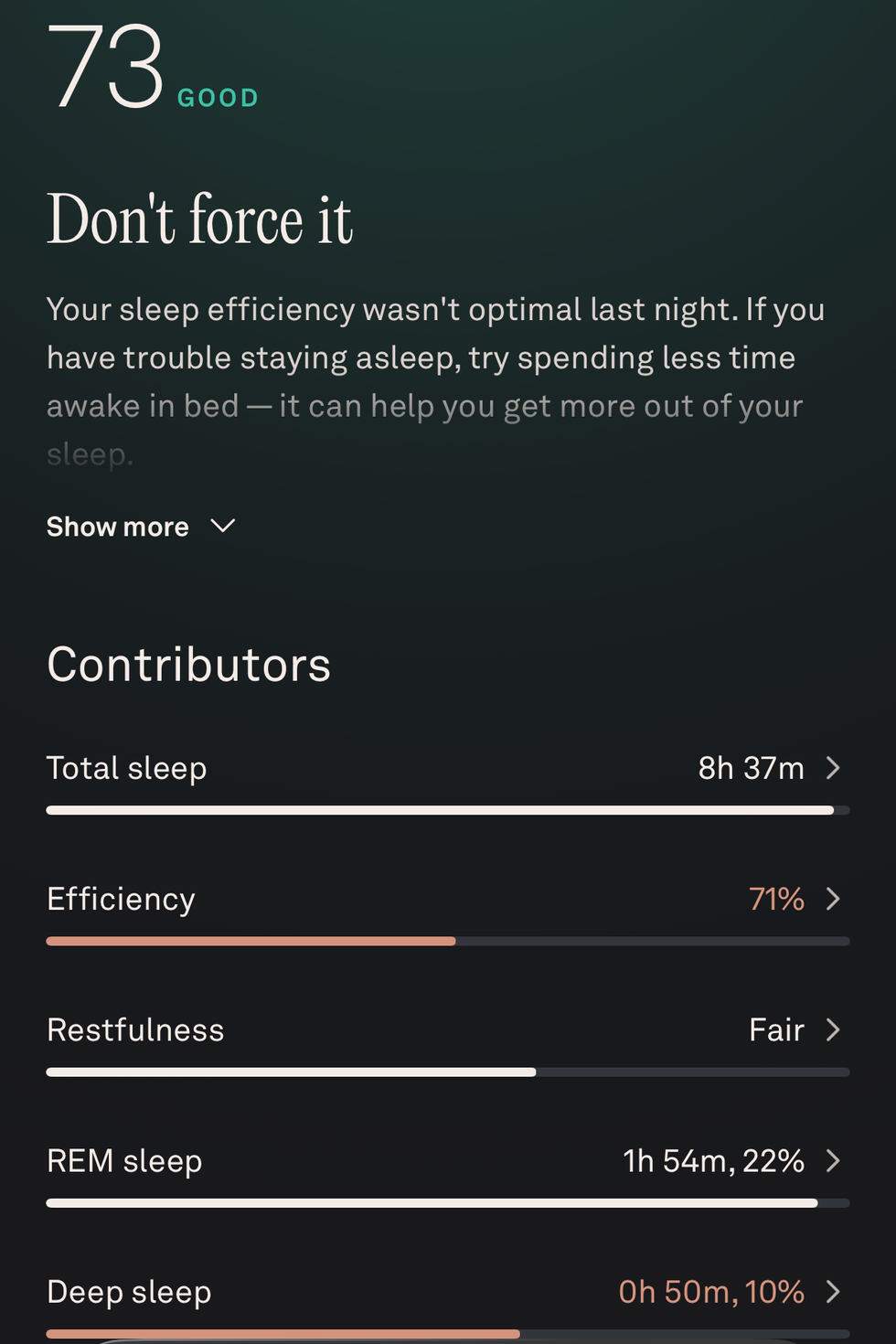
Lower score with approx. 9 hours of sleep.
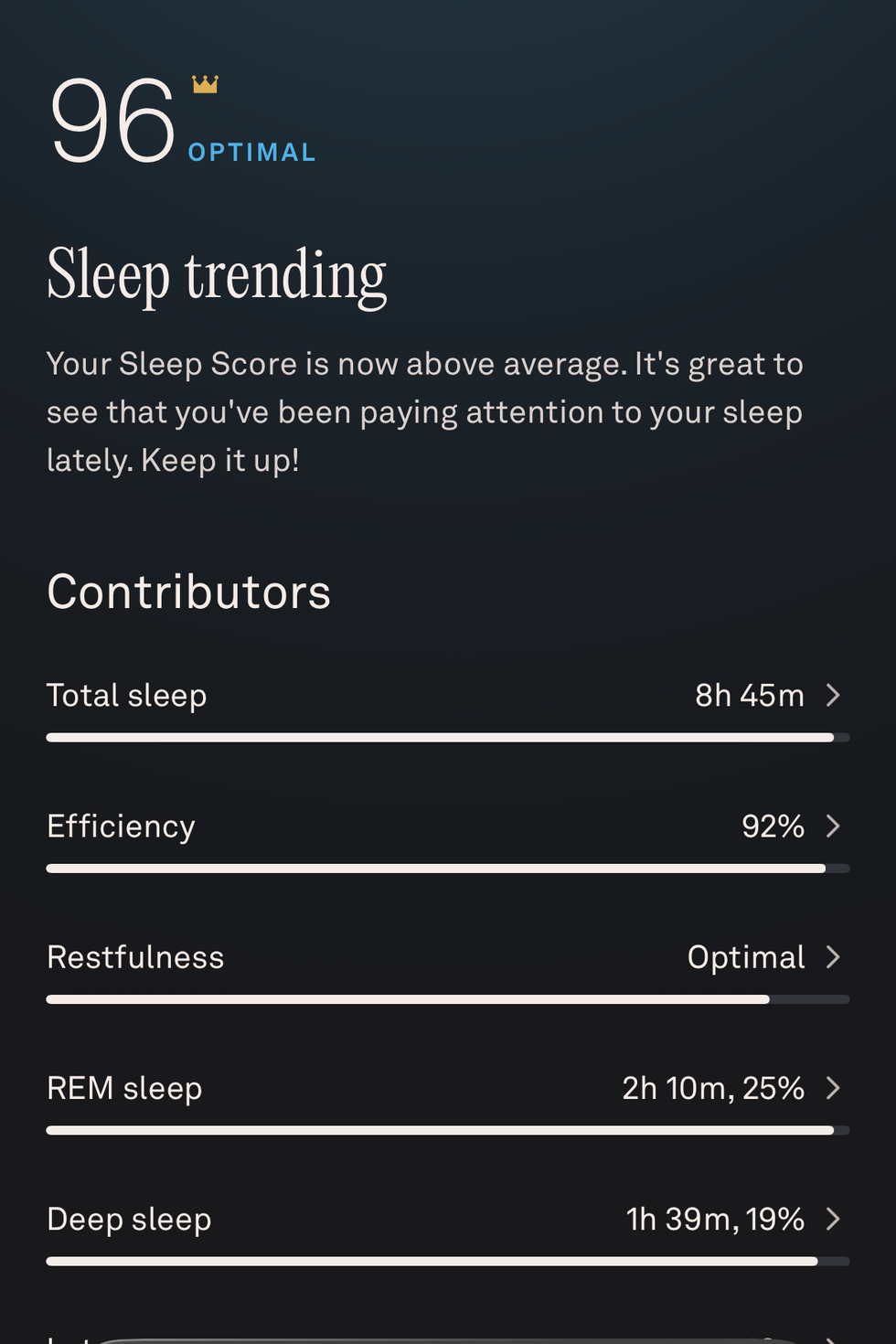
After removing triggers, a high score with approx. 9 hours of sleep.
Readiness
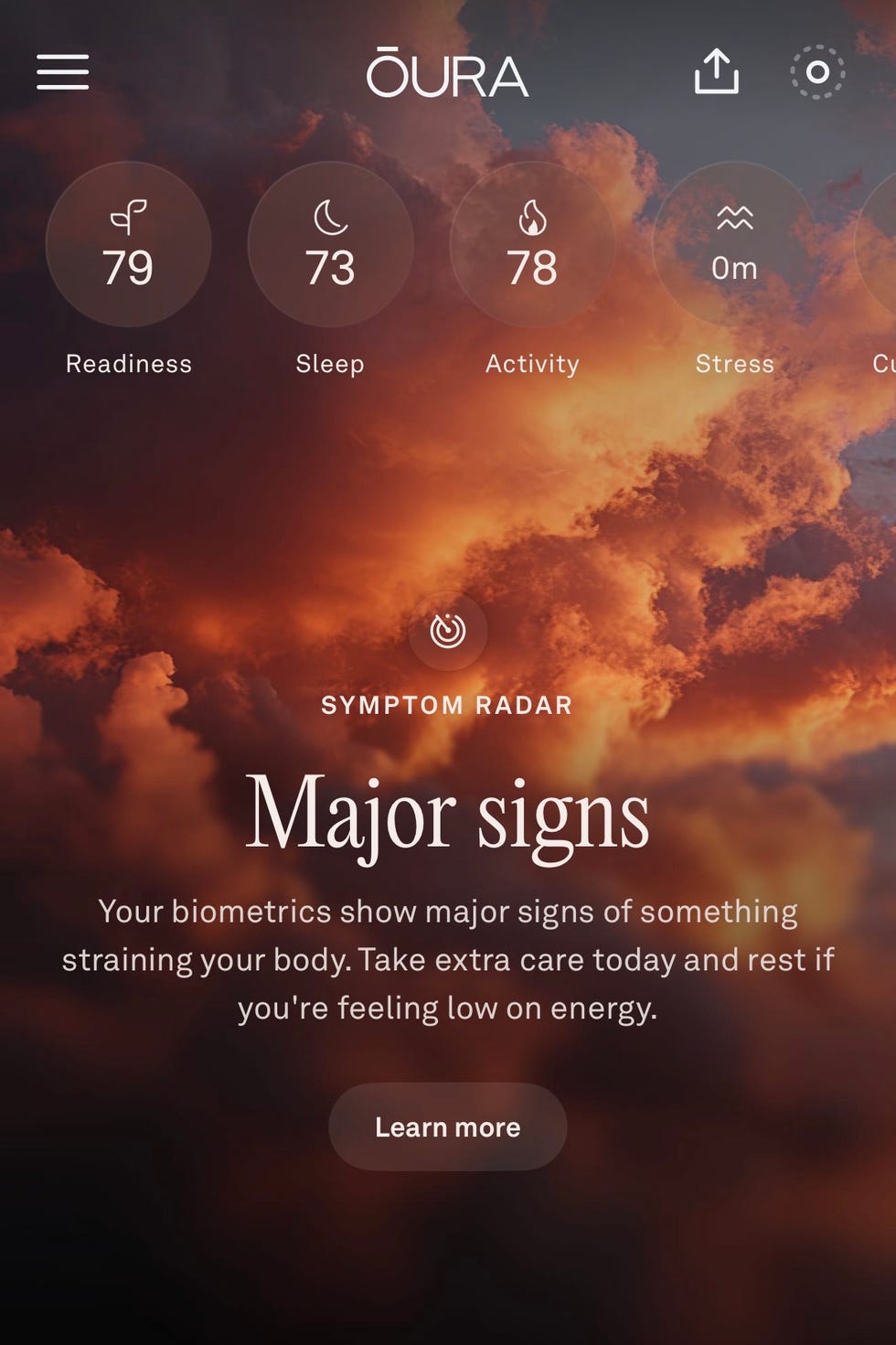
I also learned that rest means more than just sleep, though. I have always been a person who tends to “muscle through” stress and illness—often motivated by guilt—and Oura was very quick to help me learn that was not the best use of my time. On days when I was about to get sick (typically the day or two ahead of experiencing any symptoms), I would get a “Signs of Minor Strain” alert on my app. In the beginning, I’d dismissed this alert. I had work to do! Friends to see! Chores to get done, etc. etc. However, when the symptoms eventually showed up a few days later, I was taken down hard and started experiencing “Major Signs” (as obviously alerted by Oura, much to my regret). It turns out, the ring knows what it’s talking about! And as soon as I included some downtime in the days following the first signs of minor strain, I was able to recover much easier.
Where the Oura Ring 4 fell short
Because I was so impressed with the ring’s battery life, I immediately noticed when it stopped working optimally around ten months in. Suddenly, I found myself charging the ring every two to three days, rather than once a week—which was incredibly annoying. However, a quick message to the app’s chatbot revealed a battery malfunction during a remote diagnostic test. Within days, I had a replacement ring on my finger—no muss, no fuss, which was incredibly impressive. If I had had to upgrade to a newer ring after ten months, this likely would not have been such a glowing review.
However, there were other things I didn’t love about the Oura Ring. Over time, I found myself annoyed by the nuances of the interface and how to access all the metrics it actually measures. Getting my daily average scores was as simple as looking to the top of the screen, but I’ll admit it took me a lot of Googling to figure out where I could access my temperature data (though I was also battling the flu, so I wasn’t functioning at optimal capacity, to be fair). Also, I tend not to let any of my apps access my location because I find it to be such a huge battery drain to my phone, but without the Bluetooth on, my Oura can’t track my outdoor walk/run routes.
The bottom line
The Oura Ring 4 is best for people who want passive, sleep-first health tracking without the distractions of a smartwatch. It’s most beneficial for someone who doesn’t need instant feedback and alerts; if you are most motivated by a buzz every time you need to get up and walk around, or something that can integrate with your texting, this device is not for you. However, if you are looking for a “set it and forget it” tool to help you to build long-lasting health habits, especially pertaining to sleep and stress, the Oura Ring is still your best option.
SHOP THE OURA RING 4
Read the full article here