

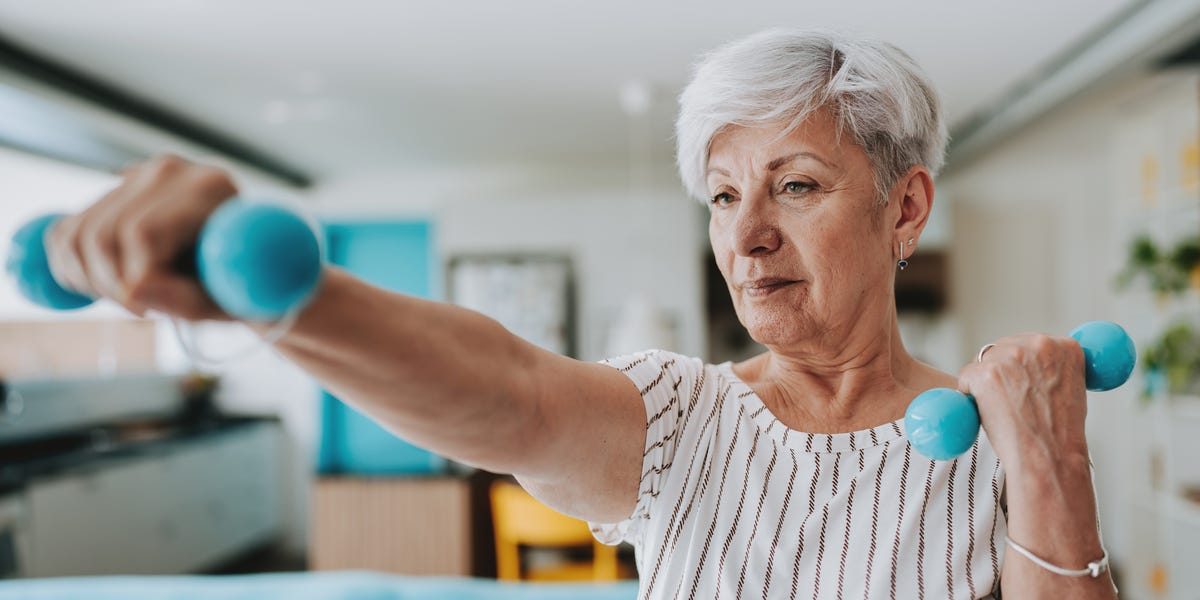
Being able to squat your body weight is an accomplishment for sure, but you don’t actually have to lift heavy weights to build muscle and preserve bone density. Happy news for those of us who don’t like working out at the gym or only have room at home for lighter dumbbells. The truth is that lighter weights can provide a very effective full-body workout and help you grow lean muscle too.
“You’ll lift lighter weights for a number of repetitions, then take a break. This increases muscle endurance, which is what helps you perform daily tasks such as carrying grocery bags or doing yard work more easily,” says Brook Benten, personal trainer and co-author of Lift Light, Get Lean: 28-Day Weight Training Plan for Safe and Easy Weight Loss.
Meet the experts: Keli Roberts, American College of Sports Medicine–certified exercise physiologist and certified personal trainer; Teddy Savage, certified personal trainer in Colorado; Brook Benten, personal trainer and co-author of Lift Light, Get Lean: 28-Day Weight Training Plan for Safe and Easy Weight Loss.
Anything that makes working out easier is a win, because doing regular strength-training workouts is especially important for women as they get older. Hormonal changes during perimenopause and menopause can accelerate the loss of muscle and bone density, which may affect strength, balance, metabolism, and fracture risk—but regular resistance training helps counter those changes by keeping muscles and bones strong.
“Doing light lifting several times a week should be your goal, and don’t skip a warmup, which is increasingly important as we get older,” adds Keli Roberts, American College of Sports Medicine–certified exercise physiologist and certified personal trainer.
Here’s how lifting lighter weights can help you build muscle and support healthy aging.
Health Benefits of Lifting Light Weights
Preserves Lean Muscle Mass
There’s no way around it: “Starting in your 30s, if you’re not growing stronger, you’re losing muscle mass,” says Roberts. “And with lost muscle mass, body fat starts to creep up.” In fact, muscle mass decreases 3% to 8% per decade after age 30, and at an even faster pace after age 60. Consistent light lifting can slow the decline by helping you maintain and grow lean muscle mass.
Helps Build Bone Density
Perimenopausal and postmenopausal women are at higher risk for osteoporosis due to declining levels of estrogen and progesterone. But using weights encourages cells to form new bone to offset age-related declines in bone mineral density. “Activities like walking are great, but that doesn’t do anything for the bones in the upper body, which also need resistance training to stay strong,” says Roberts.

Add Prevention as a preferred source in your Google search results.
Use your Google account to add this to your settings.

Boosts Mood and Lowers Stress
Exercise releases mood-boosting endorphins and serotonin, which reduces levels of stress hormones such as cortisol and adrenaline. And you’ll feel a sense of accomplishment every time you complete a workout. “But don’t beat yourself up if miss a day,” says Benten. “Applaud yourself for what you did accomplish, and get back on track. One missed day doesn’t have to become three missed days.” No wonder walking is so stress-relieving!
Improves Balance
Light weights can help build your core to make it easier to maintain good posture, and improve balance, which protects your body against falls due to sudden changes in movement, such as if you sidestep to try to avoid a crack in the sidewalk. “Ultimately, lifting helps you gain more muscle, which is what keeps you young and independent,” says Roberts.
Aids in Healthy Weight Maintenance
Aging slows the metabolism and makes it easier to gain body fat, especially around the waist and hips. But regular light lifting, along with cardio (walking helps with weight loss and muscle growth) and healthful eating, can build lean muscle mass, says Benten. With consistent light lifting, your body will look leaner and more toned, and your clothes will fit better.
How to Start Lifting Light Weights
It’s always recommended to start light with the weights (even if you’re using lighter dumbbells to begin with!) and work your way up as you feel comfortable with the mechanics and form of the exercise, says Teddy Savage, certified personal trainer in Colorado. “No matter your fitness level, you should go by the rule, ‘form and technique over how much weight is on the bar.’” If you want to max out at 5-lb dumbbells, try starting your workouts using 2-pounders.
“To get the right form down and get used to the movements, practice each move without any weights, first,” Savage says. “Once you feel comfortable with the motion, you can add light weights to provide an external resistance that will place your muscles under positive stress to aid in creating lean muscle and definition.”
Can You Lift Light Weights Every Day?
In short, yes. But, Savage says, “it all depends on what your personal goals are for your fitness journey. If your primary goal is to maintain strength and muscular definition, then sticking to lighter weights and higher repetitions is perfect for your routine. However, if your goal is to increase your strength or muscle mass, then you’ll need to add more weight and decrease the number of repetitions you complete per set.”
Read the full article here