

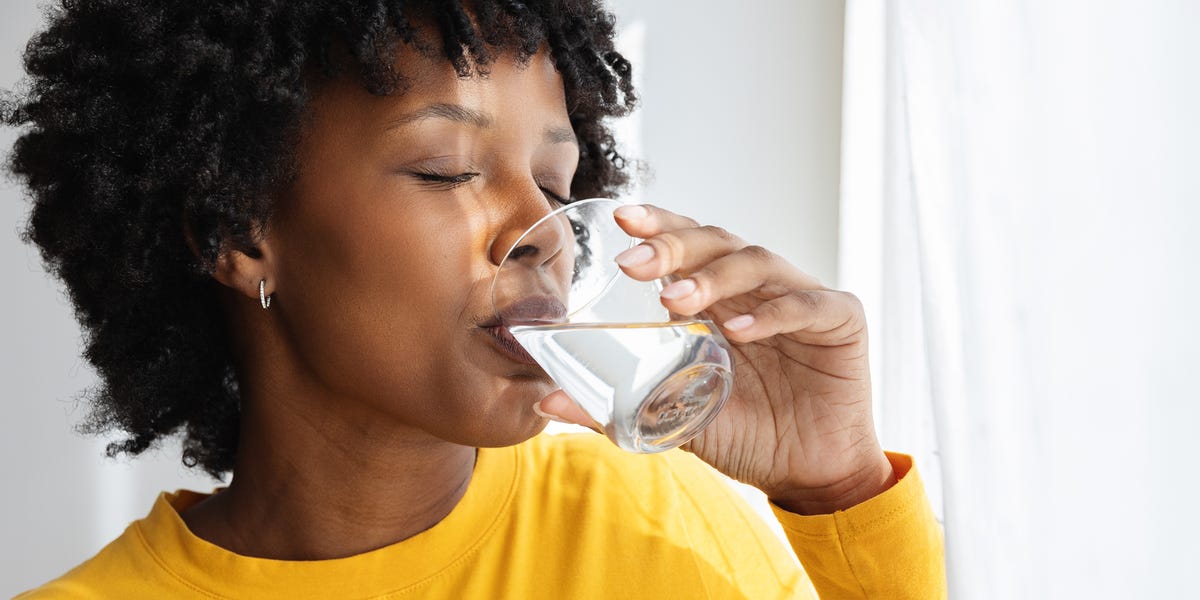
It’s easy to assume that you’ve got your hydration needs covered when you tote a water bottle around with you all day. But there’s a big difference between having water on-hand and drinking enough to meet your body’s needs.
The signs of dehydration can be subtle, making it important to at least be aware of them. After all, not being hydrated enough can have a big impact on your health—and no one is off-limits. “Anyone can suffer from dehydration, but certain people are more likely to have problems from it,” says Nicole McAllister, D.O., an emergency room physician at The Ohio State University Wexner Medical Center.
Older adults and young people are especially vulnerable, she says, but hot weather and being active raise the risk of dehydration, too. “When we are sick with vomiting or diarrhea, we are also at increased risk of dehydration,” Dr. McAllister says. Even certain medications like antihistamines raise your risk of dehydration, she says. Basically, there are a lot of elements that can work against your goal to stay hydrated.
Meet the experts: Michael Seth Smith, M.D., a sports medicine physician at the Florida Orthopaedic Institute in Gainesville, FL; Nicole McAllister, D.O., an emergency room physician at The Ohio State University Wexner Medical Center
Not sure where things stand for you on the hydration spectrum? These are subtle signs of dehydration to keep in mind, according to doctors. While minor dehydration can typically be turned around by drinking more water, doctors point out that sometimes medical intervention is needed. Here’s what you need to keep in mind.
Signs of dehydration
These are some of the most common signs of dehydration, according to doctors.
1. You’re thirsty.
“Usually when thirst occurs, the person is about 2% dehydrated,” says Michael Seth Smith, M.D., a sports medicine physician at the Florida Orthopaedic Institute in Gainesville, FL. That means you don’t have to sprint to a water fountain immediately, but you should grab a glass of water soon. If you don’t listen to your body’s signals, you’ll slowly become more dehydrated, especially if you’re engaging in physical activity.
2. You have dry mouth.
Dry mouth is another way your body tells you it needs more total body water, per the National Library of Medicine. Your body can’t make sufficient saliva if it doesn’t have enough fluids. Watch out for bad breath, too, which can be caused by dry mouth. Grab a bottle of water before a piece of gum, because the culprit is often mild dehydration.
3. Your urine looks like tea.
The more total body water you have, the clearer your urine will be. If it’s a darker color, that means it’s more concentrated, and it’s a sign you should drink more water.
4. You’re peeing less than usual.
Water helps your kidneys remove waste from your blood in the form of urine. If your kidneys aren’t getting enough water to carry waste from your body, you simply won’t urinate as frequently. Instead, you’ll keep that waste in your body, and if you’re chronically dehydrated, it can cause more serious problems over time. When urine is too concentrated, waste minerals can stick together to create kidney stones, per the Mayo Clinic.
It’s not just your renal system that depends on water to function properly—just about every major system in your body does, including your heart, brain, and lungs, Dr. Smith says.
5. Your skin is dry.
Your skin is your body’s largest organ, and just like any other organ, it needs the right amount of blood supply to function. If you notice that your skin is drier than usual, don’t just reach for a moisturizer (even though that can help, of course). It could be a sign that you don’t have enough total body water, and you should moisturize from the inside out by adding more of it to your diet.
6. Your blood pressure is low.
More than half of the blood in the body is plasma, the liquid part of the blood, per the American Society of Hematology. Plasma is made up of water, protein, and salt. Without enough H2O in your plasma, your blood will become more concentrated, and it will be a lot more difficult for it to flow through the body to the organs that need it, which can cause low blood pressure. Low blood pressure can cause you to feel dizzy, wiped out, and nauseous, among other things, according to the American Heart Association (AHA).
7. You’re getting muscle cramps.
When you’re dehydrated, your blood becomes more concentrated, and therefore your blood volume (the total volume of blood in your body) drops. So when you don’t hydrate properly, your body goes through a thought process: What parts of the body need blood the most? “The heart is going to win out over the muscles,” Dr. Smith says. Poor blood flow to the muscles causes those muscle cramps, he says.

Add Prevention as a preferred source in your Google search results.
Use your Google account to add this to your settings.

8. You’re constipated.
Like the renal system, your digestive system needs plenty of water to run smoothly. Water allows food to move through your intestines, and it also keeps your gut healthy and efficient. Constipation could be a sign that there isn’t enough fluid to carry waste through and out of the body, per the Cleveland Clinic.
9. You’re wiped out.
Always tired? Everything from a mid-afternoon slump to overwhelming fatigue could be caused by dehydration. When you don’t have enough water in your body, your blood pressure drops, the blood flow to your brain slows, and your heart rate increases—all of which can make you feel wiped out.
10. You’re struggling with headaches.
If your brain isn’t getting enough fluids to function properly, a range of symptoms will follow. Headaches are most common, and dehydration is also a common migraine trigger. Fading in and out of consciousness, feeling lightheaded and dizzy, and fainting are some of the most extreme signs that a person needs to rehydrate immediately.
Why is dehydration bad?
At baseline, being dehydrated means your body doesn’t have enough water, Dr. McAllister explains. “Dehydration is a problem because our bodies have a specific balance that we need for our cells and organs to function properly,” she says.
If you’re not hydrated enough, you may end up feeling tired and not quite yourself. But if you don’t take in enough fluids and the dehydration becomes more extreme, Dr. McAllister says you can cause damage to your body.
Your brain is especially vulnerable to dehydration, Dr. McAllister says. “Severe dehydration can lead to kidney failure, severe muscle spasms, seizures, and even death,” she says.
How much water should you drink in a day?
This is tough, given that everyone’s hydration needs vary. However, the U.S. National Academies of Sciences, Engineering, and Medicine has guidelines on how much liquid to take in a day.
According to the organization, women should strive to have 11.5 cups (92 ounces) of fluids a day, while men should aim to take in 15.5 cups (124 ounces) of fluids a day. This is from food and drink, and about 20% of fluids come from foods.
However, your hydration needs can change if you sweat a lot or take certain medications. That’s why healthcare providers generally suggest paying attention to the color of your urine—it should be pale yellow. If it’s darker, this is usually a sign that you’re not drinking enough fluids. (Keep in mind that you can also be over-hydrated, which can also be dangerous. If your urine looks like water, you may need to scale back on how much you’re drinking.)
How to treat the symptoms of dehydration
The treatment for dehydration—from mild to moderate—depends on replacing the fluids your body has lost. For mild symptoms, drink water and snack on something with sodium, which Dr. Smith says helps the body retain fluids. Take small sips of water instead of big gulps, as too much water can overload your stomach and make you nauseous.
If water and salty snacks aren’t enough to help you bounce back, or you’re experiencing more moderate symptoms, you should drink a sports drink with electrolytes. Electrolytes are minerals in the body’s fluids, and if you’ve sweat a lot, you may need to replenish them as well as your total body water, Dr. McAllister says.
When to see a doctor for dehydration
Severe dehydration is a medical emergency, Dr. McAllister points out. If you’ve been in the heat or have been sick and develop a fever over 102 degrees Fahrenheit, have confusion, dizziness, severe muscle cramps, and chest pain, and you’re unable to keep fluids down, Dr. McAllister says you need to be seen by a medical provider immediately.
“Your providers will be able to get an IV if you are exhibiting signs or symptoms of dehydration,” she says. Doctors may also give you electrolytes, Dr. McAllister adds.
Again, dehydration can be serious, making it important to act quickly if you suspect that you’re dealing with it.
Read the full article here