

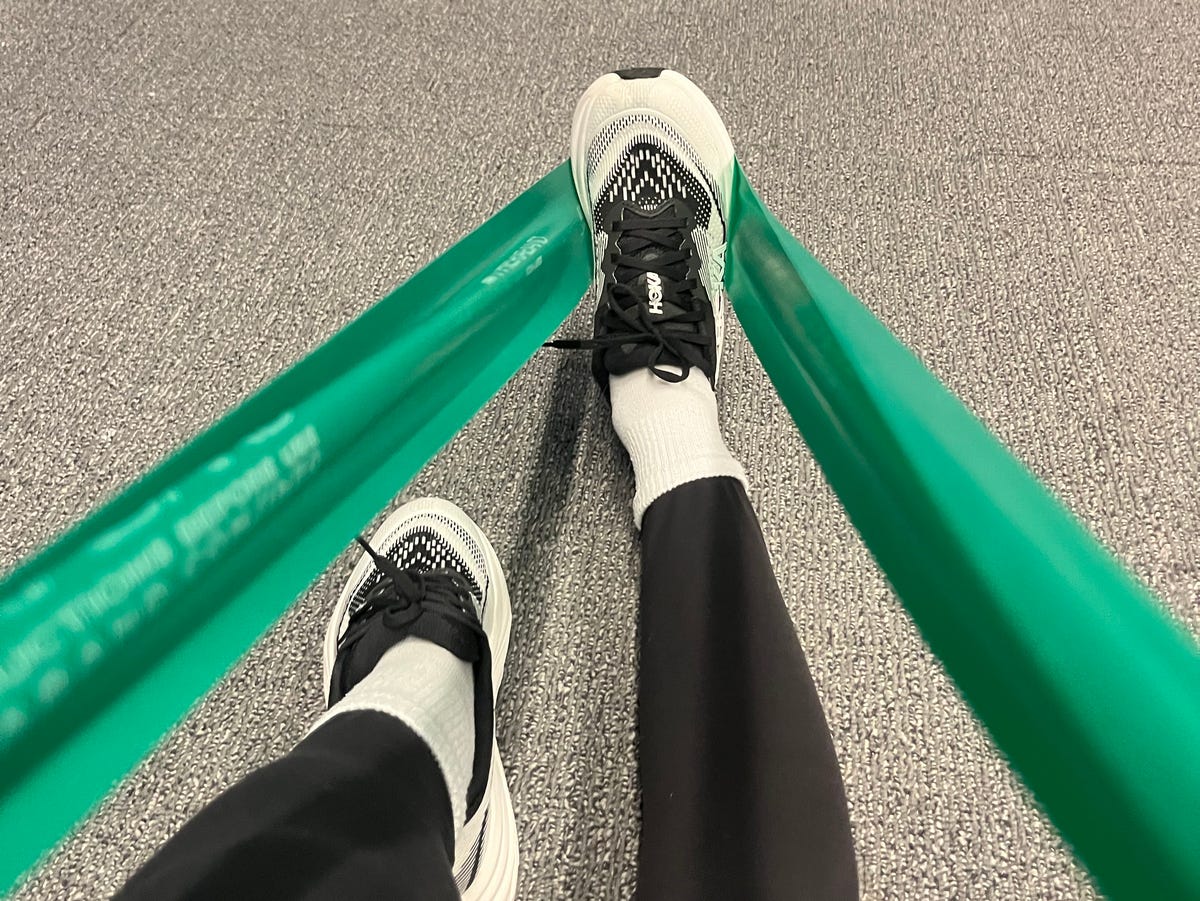
I have a confession: I’m a little scared of the weights section at the gym. As someone whose workouts mostly consist of walking and yoga, I’ve always found weight training a little (okay, a lot) intimidating. But, as it turns out, there’s another great way to strength train without needing to lift any big, scary, heavy weights: by using resistance bands.
Resistance bands are stretchy, elastic bands that work by “providing external resistance, like a dumbbell, to different exercise movements,” Alex Germano, P.T., D.P.T., G.C.S., CF-L2, a physical therapist and clinician with FOX Rehabilitation, previously explained to Prevention. Experts say they’re an easy, inexpensive way to level up your fitness routine without the bulky equipment or high cost of traditional weights. But, as someone who doesn’t usually strength train, could they actually work for me?
I decided to put it to the test one of our expert-recommended picks for the best resistance bands, the Theraband Resistance Bands Set—which also happens to be an Amazon best-seller (it boasts an impressive 4.6-star rating from nearly 15,500 shoppers!). After testing it out myself, here are my honest thoughts—and whether they’re worth adding to your own workout routine.
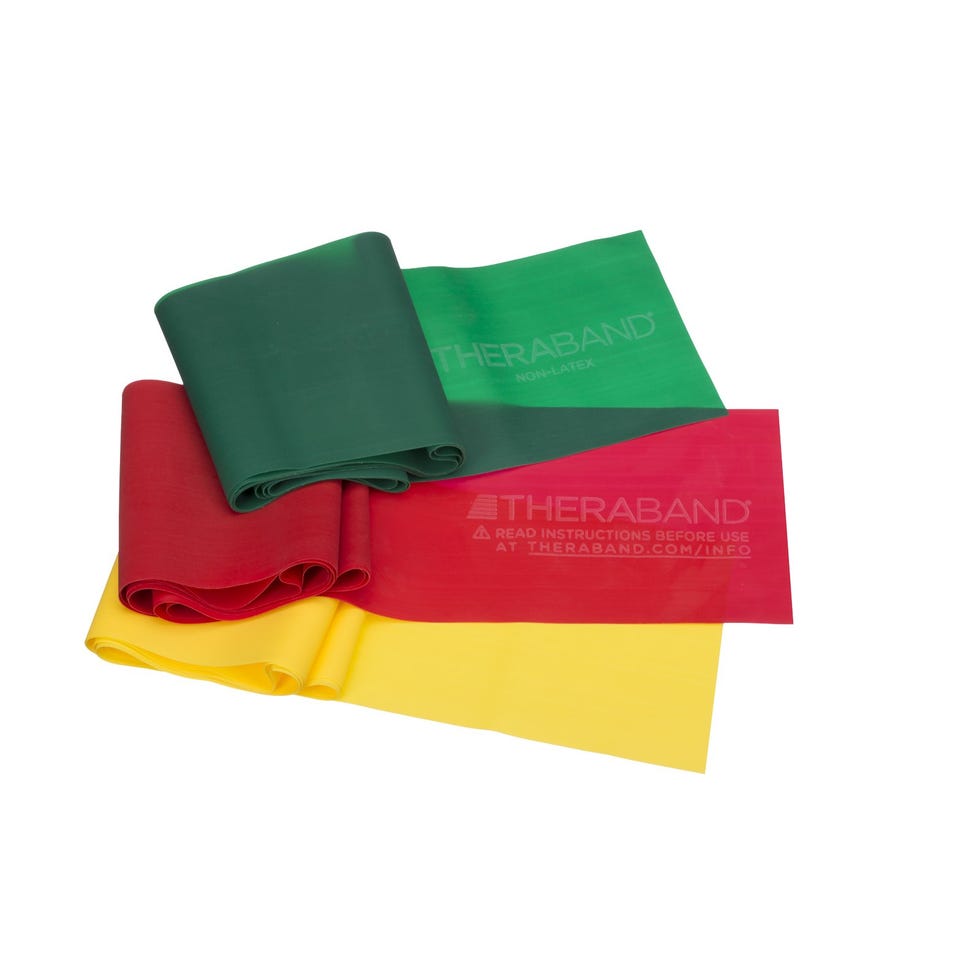
| Material | Latex or Non-latex |
| Dimensions | 5 feet long x 4 inches wide |
| Options | Beginner (3-pack), Intermediate (3-pack), Advanced (2-pack), Advanced (3-pack) |
| Levels | 7 levels (Light to Max) |
What are the benefits of resistance bands?
Commonly used for strength training, stretching, and physical therapy, resistance bands can help build strength, improve mobility and joint health, and increase muscle mass. “Resistance bands are found to be as effective as weights for building strength,” Germano previously told us. “They are also more portable than traditional weights and are more cost-friendly.”
Resistance band exercises are also low-impact and gentle on joints, making them ideal for beginners, older adults and those who have arthritis, and people recovering from injuries. In fact, according to Kimberly Nolan, C.P.T., certified personal trainer and author of Prevention’s Easy Resistance Band Slim-Down, the bands’ stretchiness allows your body to work harder to stabilize and go through the range of motion movements than it would if you were using rigid weights—which can ultimately improve joint strength over time.
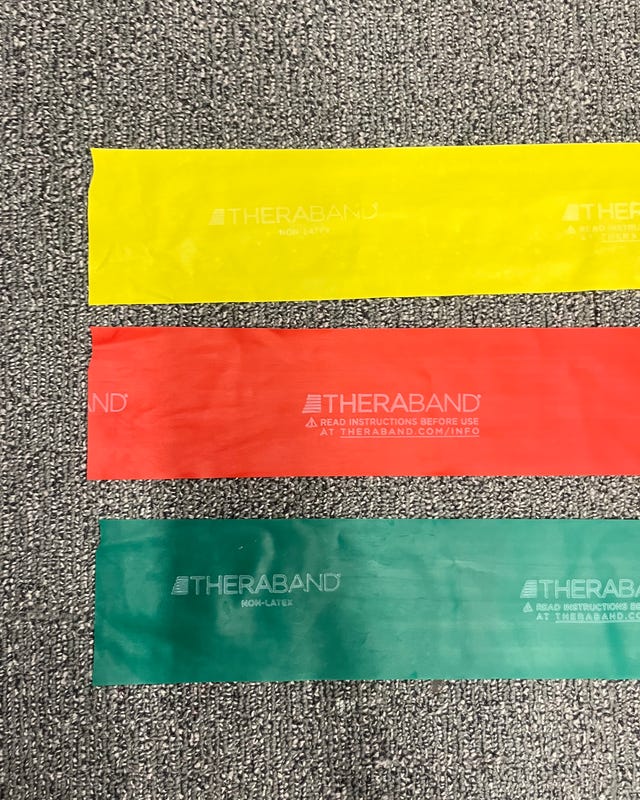
The three bands in the Theraband Resistance Bands Set in yellow (Level 1), red (Level 2), and green (Level 3)
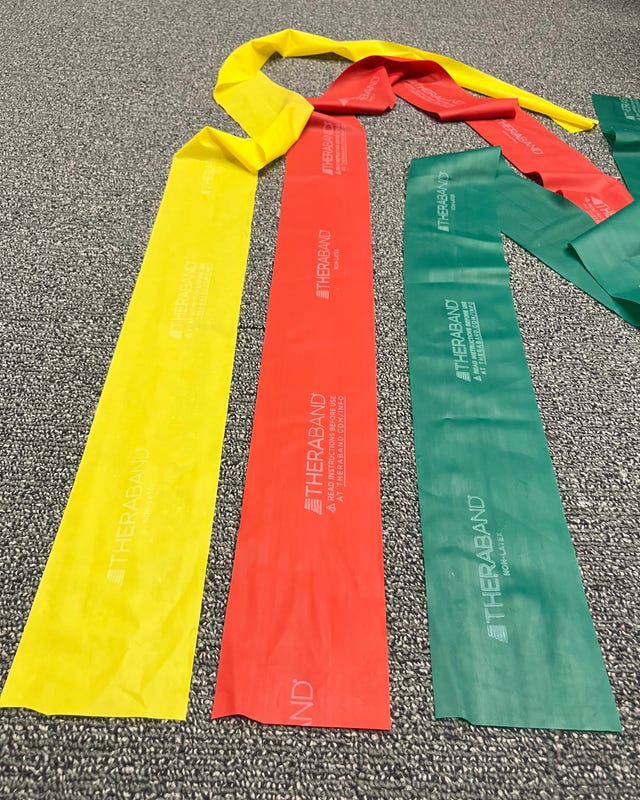
The three bands in the Theraband Resistance Bands Set in yellow (Level 1), red (Level 2), and green (Level 3)
How do the Theraband Resistance Bands work?
One of the most popular choices for resistance bands, Theraband comes recommended by experts. “Theraband is one of the most reputable and durable brands of resistance bands, boasting a large array of resistance levels,” Jonathan Tylicki, NASM-certified personal trainer and director of education for AKT, previously noted to Prevention.
The brand offers a variety of options suited to different fitness levels and needs, but their best-selling product is the classic Theraband Resistance Bands Set, which are long, flat, thin sheets of elastic with no handles or loops. This set is available in Beginner, Intermediate, and Advanced sets and in both latex and non-latex options.
Each of the bands measures 5 feet long and 4 inches wide, and comes in seven progressive resistance levels from “Light” to “Max,” each coded with a different color. The beginner set comes with bands that are yellow, red, and green, which are Level 1 or “Light” (3 lb resistance at 100% elongation), Level 2 or “Medium” (3.7 lb), Level 3 or “Heavy” (4.6 lb), respectively. The set also comes with a small leaflet with information about how to use the resistance bands—including examples of six different exercises you can perform with them.
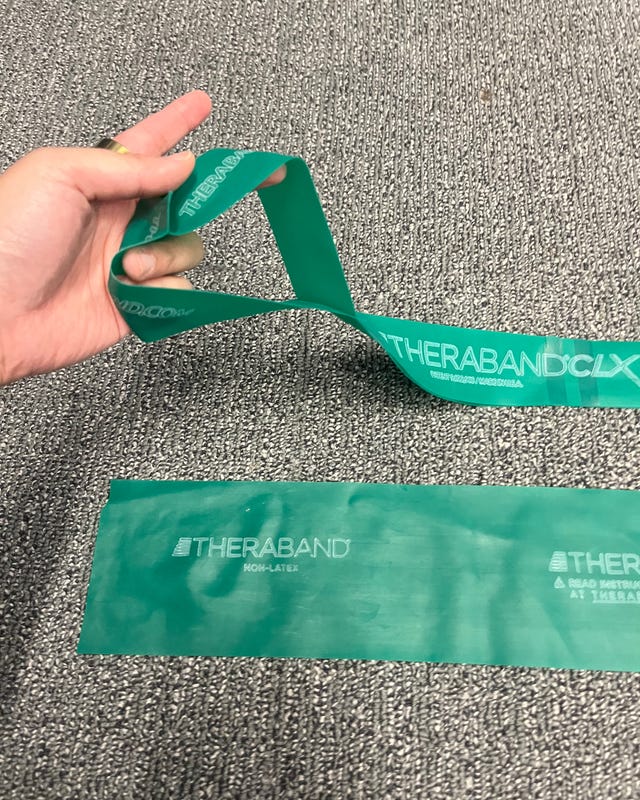
Theraband’s CLX Resistance Band With Loops (top) vs. Theraband’s Resistance Band (bottom)
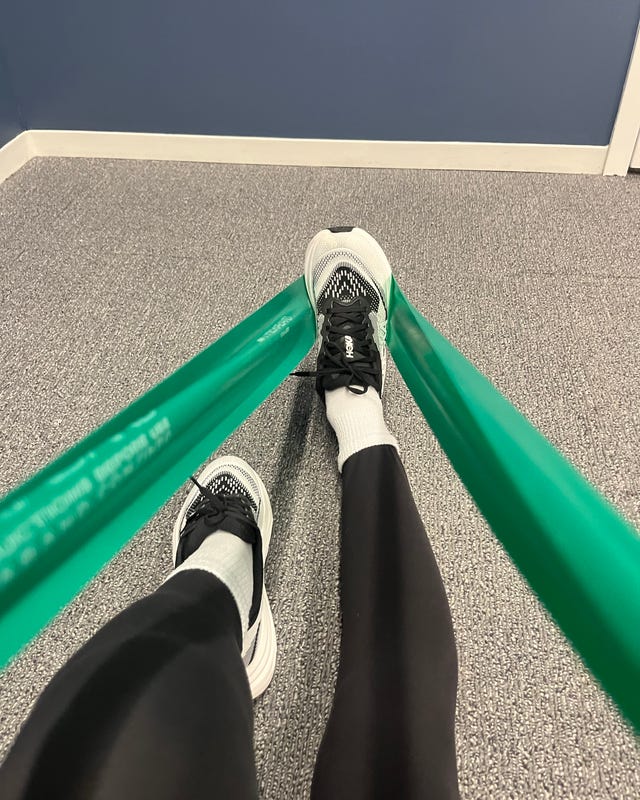
Performing the plantar flexion exercise with the Theraband Resistance Band in green (Level 3)
How I tested
As someone who’s never tried resistance bands before, I opted for the Beginner Set for the Theraband Resistance Bands Set, making sure to try each of the three bands that came in the set (yellow, red, green). I also tried the CLX Resistance Band With Loops, which comes with a single, 5-foot-long band that comes with built-in, consecutive loops that you can use as handles, in the green band (Level 3 or “Heavy”).
To test the bands, I followed the leaflet’s recommendations of performing two to three sets of 8-12 repetitions of each exercise, with rest between each. I specifically tried the following exercises, which contain a mix of those suggested in the leaflet and those recommended in our best resistance bands exercises:
- Pull-apart
- Shoulder shrug
- Bicep curl
- Lateral raise
- Front squat
- Plantar flexion

Add Prevention as a preferred source in your Google search results.
Use your Google account to add this to your settings.

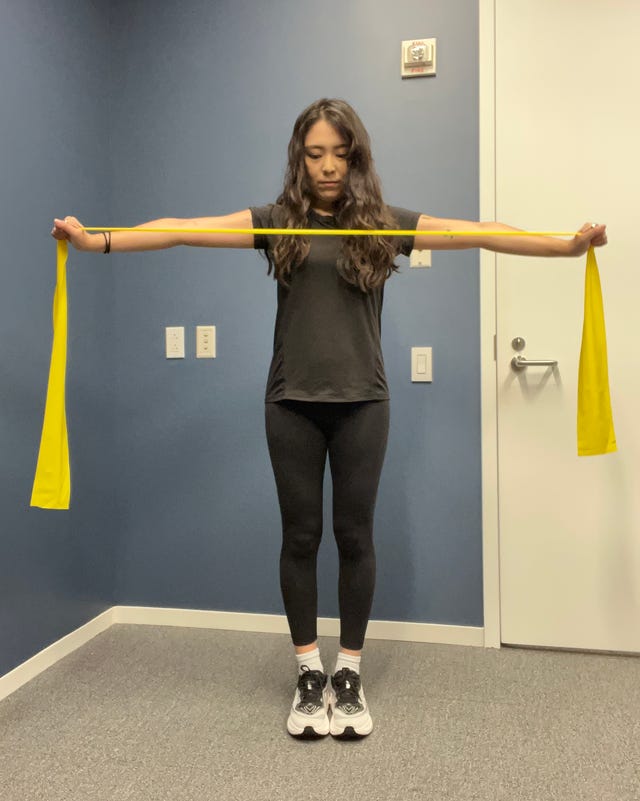
Performing the pull-apart exercise, using the Theraband Resistance Band in yellow (Level 1)
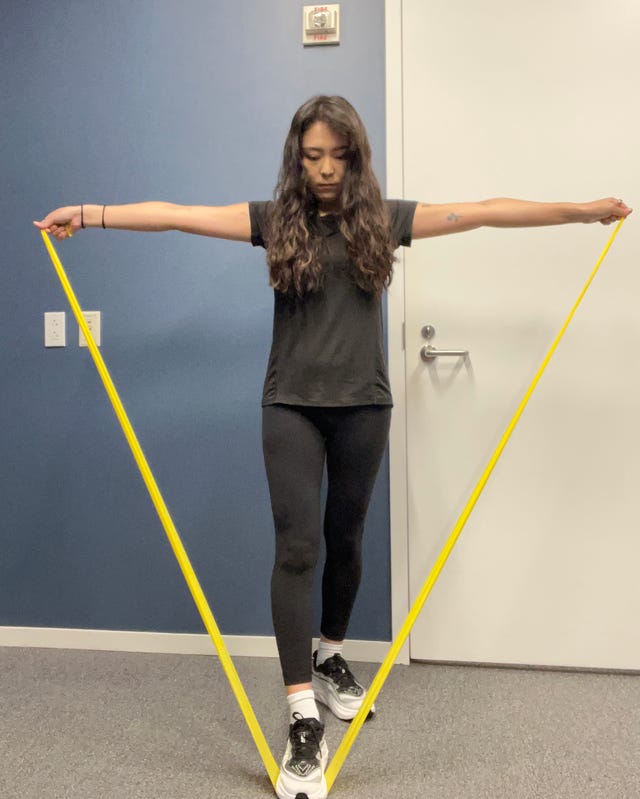
Performing the lateral raise exercise, using the Theraband Resistance Band in yellow (Level 1)
What I liked about the Theraband Resistance Bands
The first thing I noticed when I unboxed the Theraband set was how durable and high-quality the resistance bands felt. They were lightweight and easy to fold or roll for storage (though I do wish they came with a storage bag instead of just in a box). The rubber material also didn’t immediately attract dust or cause static like I expected it to.
When trying the exercises, I found the bands easy to grip as well as easy to pull apart, with noticeable stretch and tension. For each of the exercises, I started with the yellow band (Level 1 resistance), before trying the red (Level 2) and then the green (Level 3) bands. I appreciated that the bands were color-coded for easy identification—and I loved that I was able to progress the resistance levels to gradually intensify my workout. I found the yellow band a great starting point for a beginner, with a pretty easy resistance level, while the green band definitely felt like more of a challenge. Personally, I preferred the red band, as it felt like the perfect middle ground between the two.
While these bands in the Theraband Resistance Bands Set were easy to grip or wrap around my hands, I found that I generally preferred using the CLX Resistance Band With Loops, as they were easier and less awkward to hold with the help of the built-in handles. Additionally, I noticed that the bands weren’t as easy to use with some of the exercises I wanted to try (e.g., hip abduction and leg press), as it required tying the ends of the band together into a loop. For these exercises, Theraband’s loop resistance bands (bands that come looped in a closed circle) would be the better choice.
Overall, though, I was surprised at how well these resistance bands worked for me. They provided great stretch and tension to actually engage my muscles—much in the same way that lifting traditional weights has felt for me in the past. By the end of the session, I was sweating considerably and felt like I had actually gotten a good workout in.
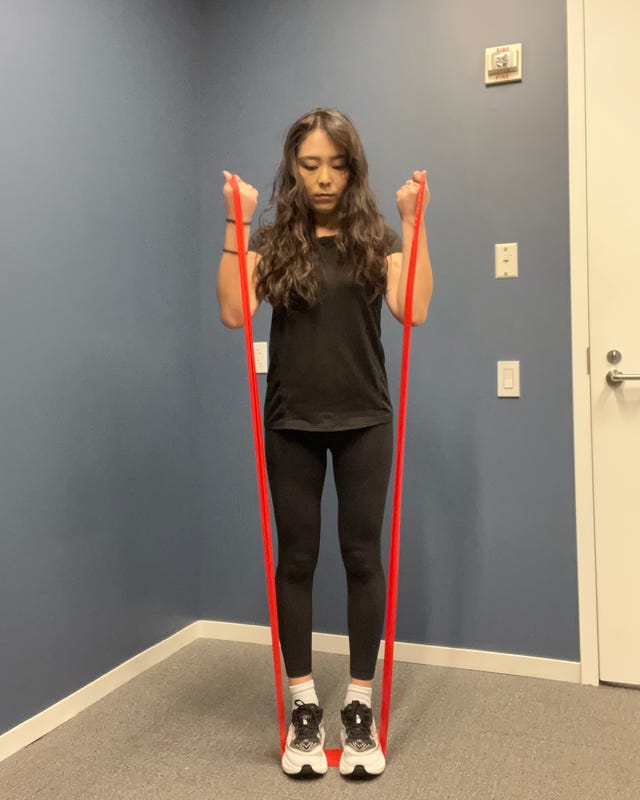
Performing the bicep curl exercise, using the Theraband Resistance Band in red (Level 2)
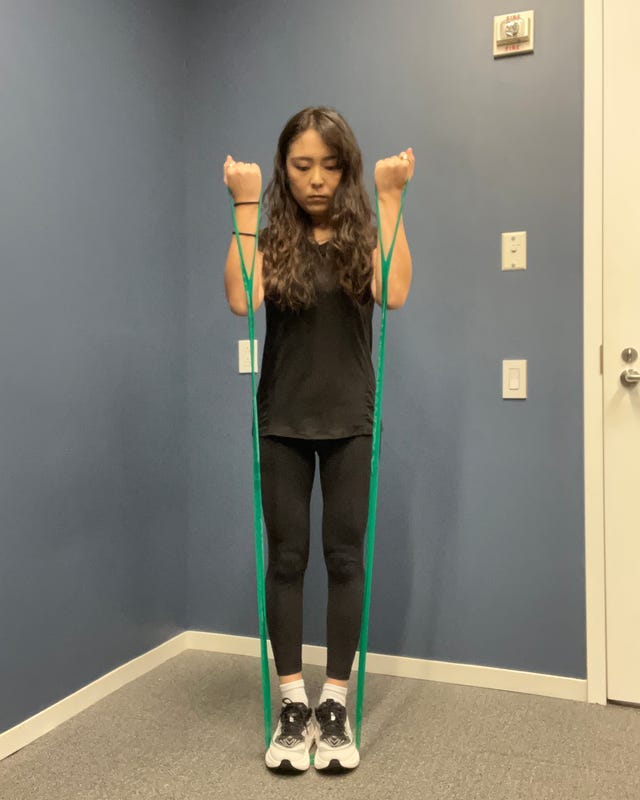
Performing the bicep curl exercise, using the Theraband CLX Resistance Band With Loops in green (Level 3)
The bottom line
All in all, I found the Theraband Resistance Bands Set easy to use, even as a beginner with little experience in strength training. I definitely recommend these resistance bands as an easy, low-impact exercise method to build strength and improve mobility—especially as a more convenient alternative to traditional weight training. Because they’re beginner-friendly, portable, and affordable, I’d say they’re an excellent option if you’re a beginner, are looking to avoid the bulky equipment or high cost of traditional weights, or are generally just looking for something more low-impact and easier on the joints. Personally, I found using these bands much more approachable (and less daunting!) than lifting standard weights.
I’d say the set is definitely worth the buy, especially as it’s available in different options from Beginner to Advanced, with each one coming with three bands of different resistance levels to customize your workout. But, I’d also recommend considering Theraband’s other products, depending on your fitness level and what type of exercise you want to use them for.
For instance, I personally recommend Theraband’s CLX Resistance Band With Loops for the built-in handles, which make it easier to hold onto the bands (note that these don’t come in a set, however). Or, you may want to opt for the Loop Set instead, which is more ideal for lower-body and leg exercises. Shop these options, and more from Theraband, below:
Theraband Resistance Bands Set
Now 16% Off
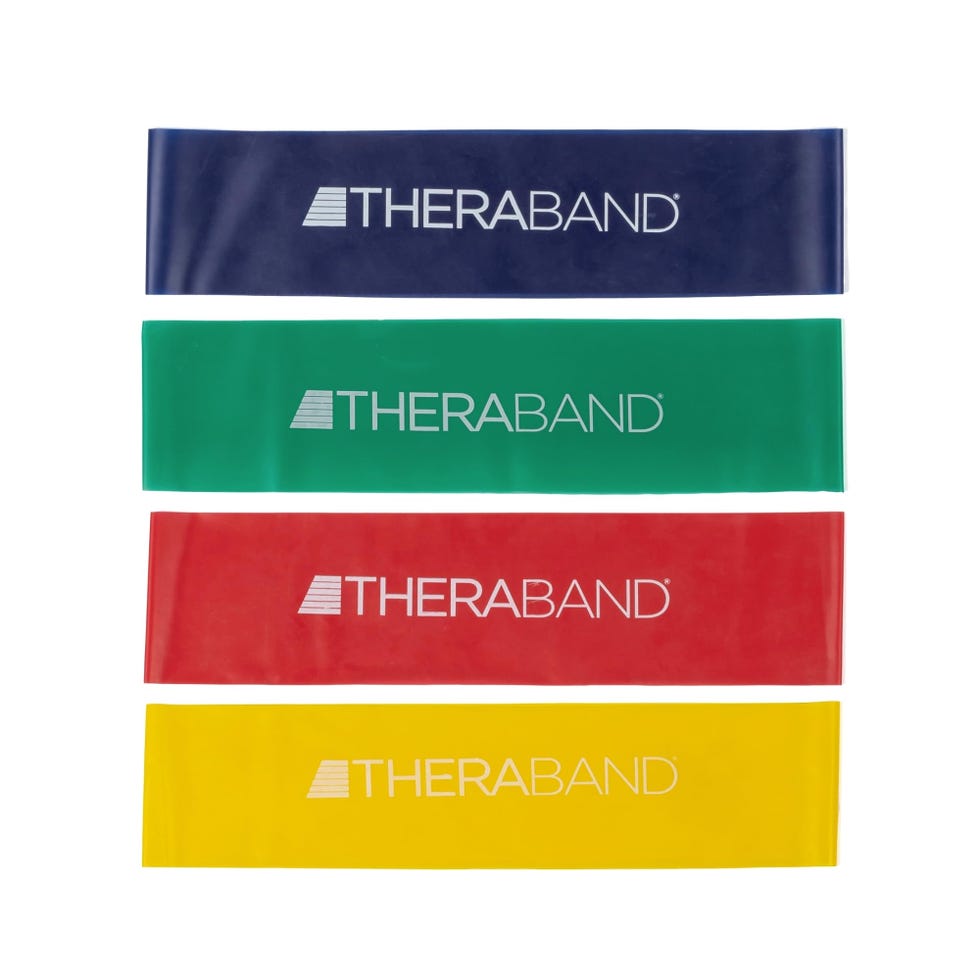
Theraband Resistance Band Loop Set
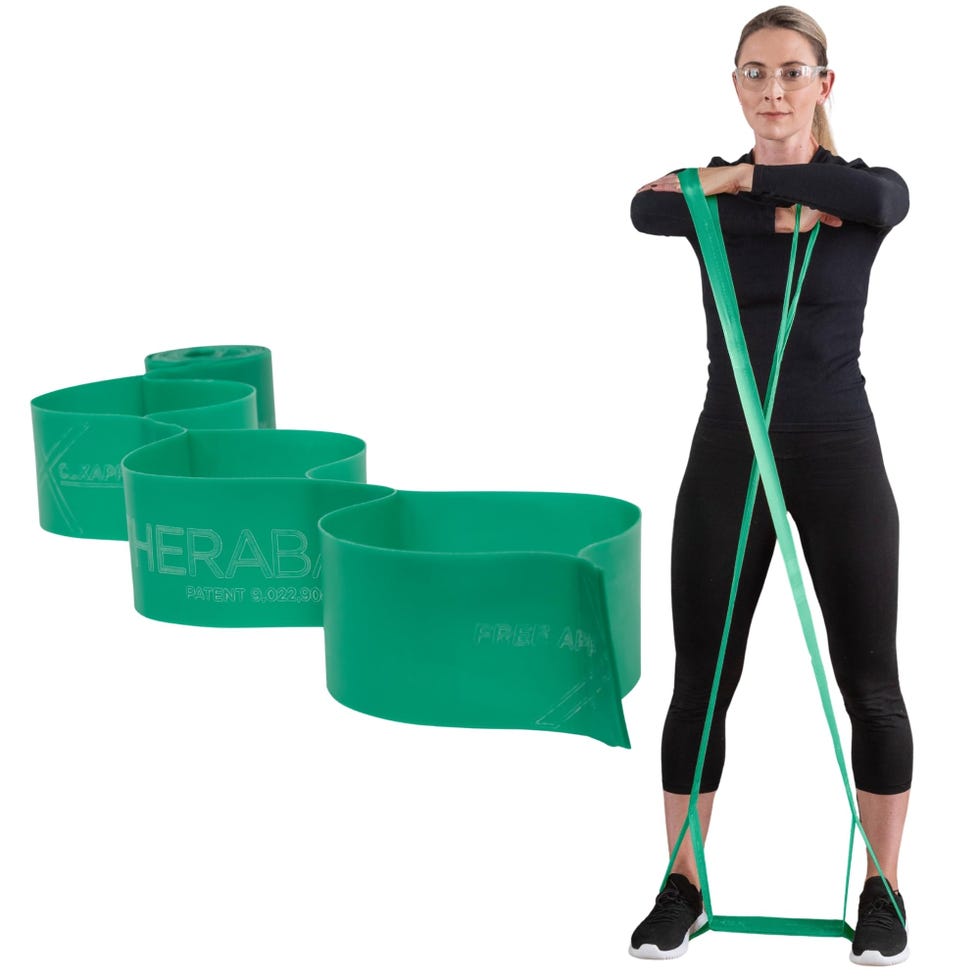
Theraband CLX Resistance Band with Loops
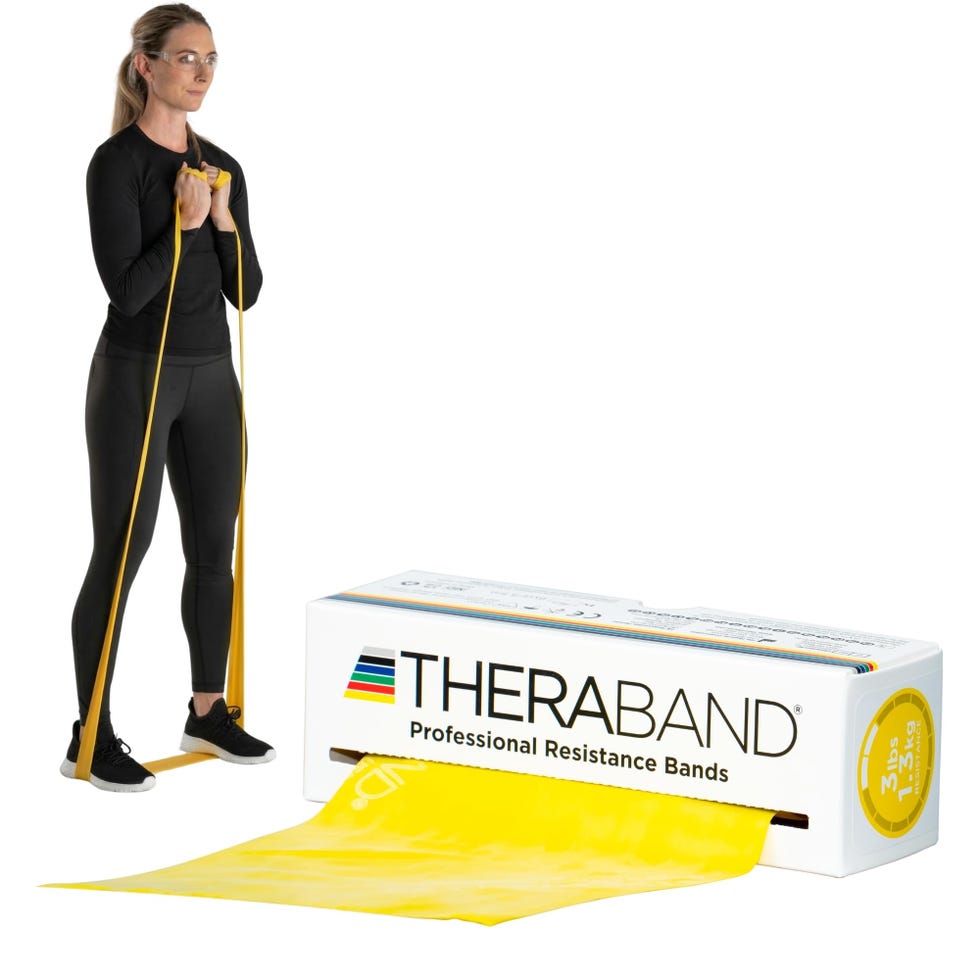
Theraband Resistance Bands
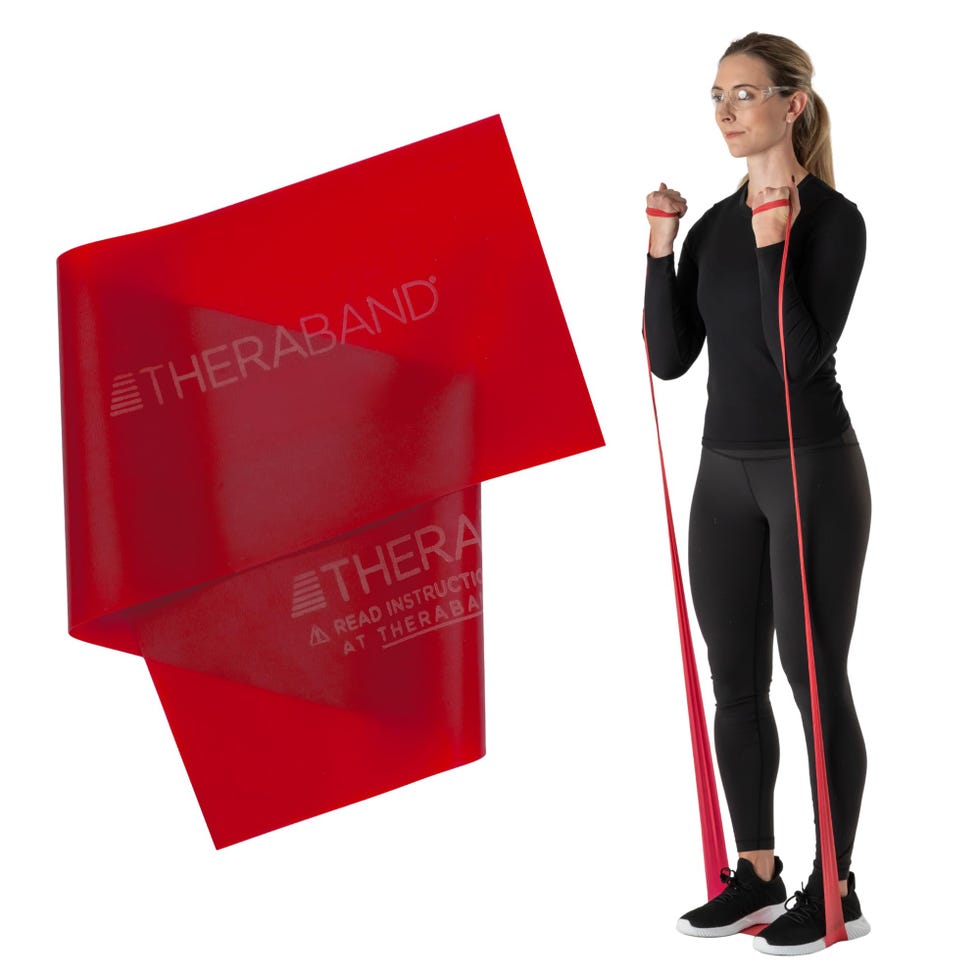
Theraband Professional Resistance Band
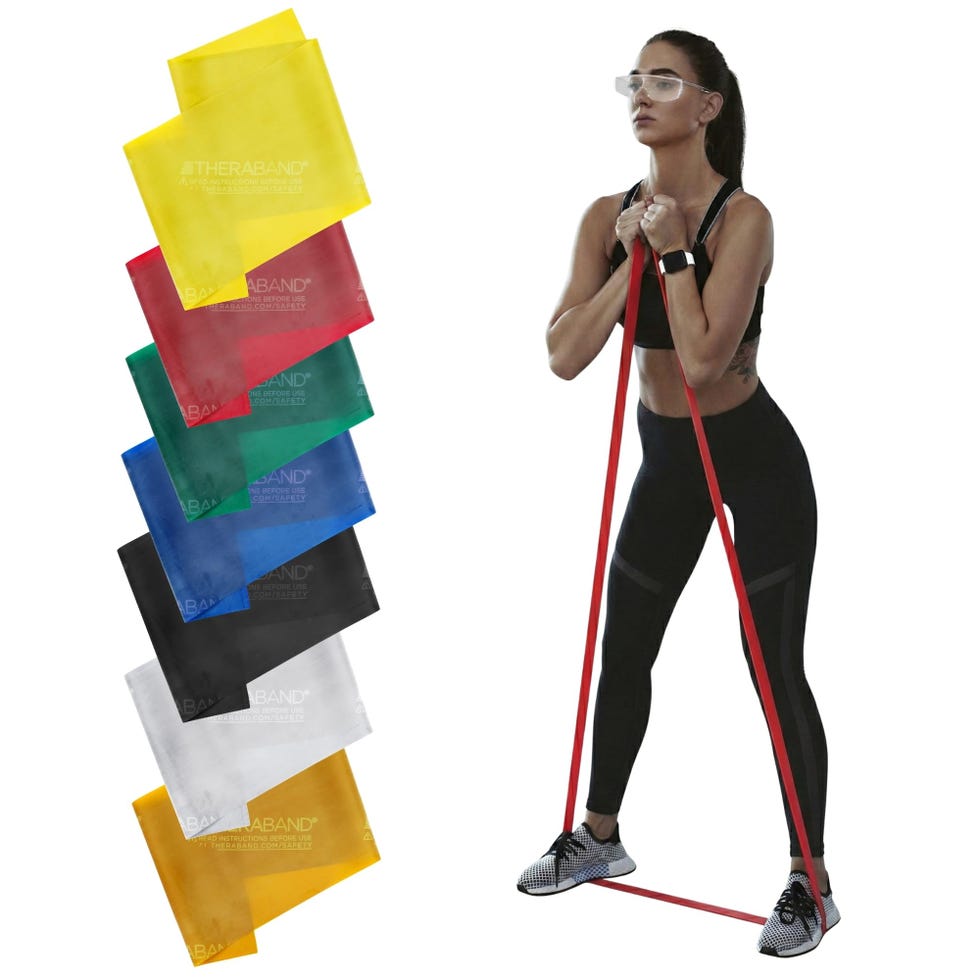
Theraband Professional Latex Resistance Band Set
Read the full article here