

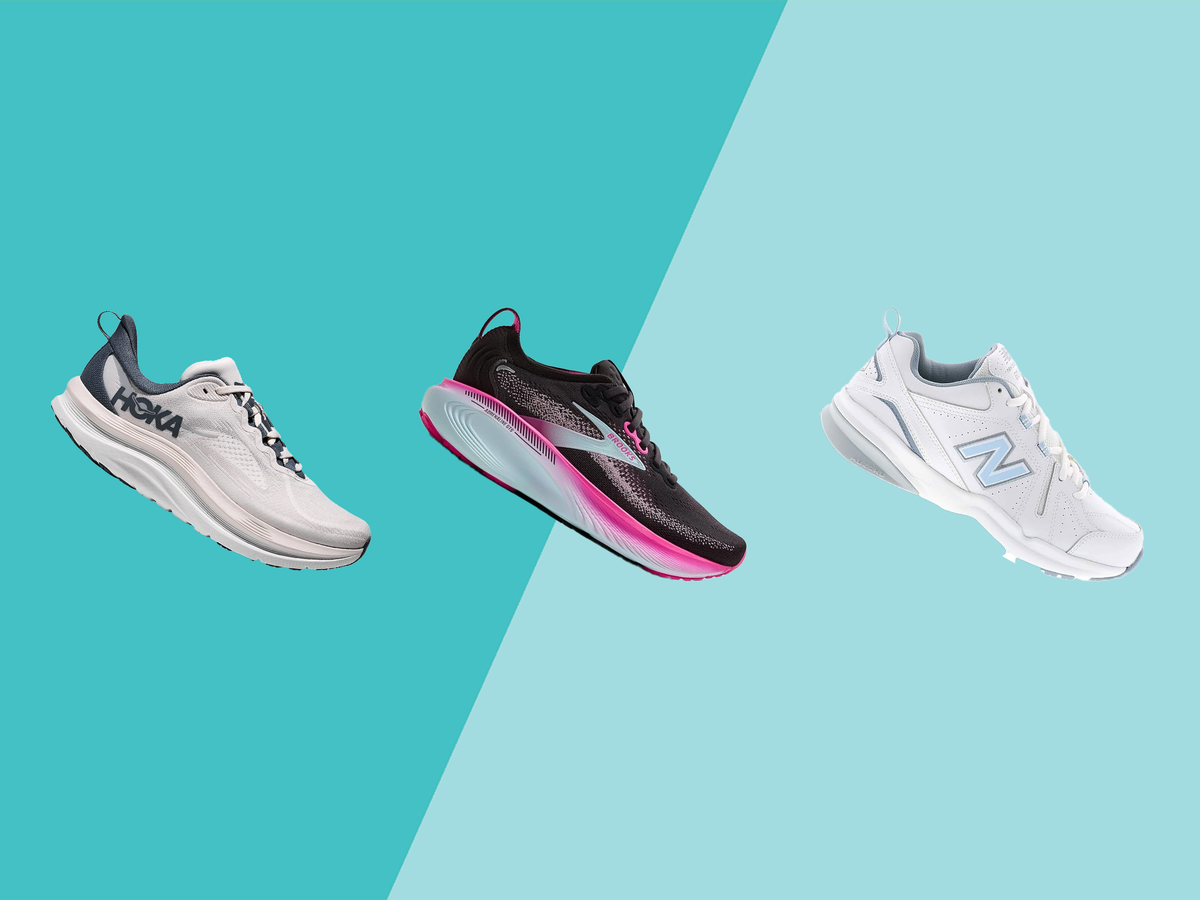
Although it’s technically a running shoe, Tulpule calls the Brooks Adrenaline GTS her personal favorite cross-training shoe. She wears it during runs, walks, and HIIT classes. “It really does allow for the arch to be fully supported,” she says. “Even if you don’t necessarily have any custom inserts in the shoe, the sole is still supportive and soft enough to give that additional stability.”
It’s also a personal favorite of mine for gym classes. As someone with weak ankles (I sprained both of them a few years back at the same time, and they have yet to regain their full strength), I love the extra assist in keeping my knee and ankle aligned to prevent injury.
Full Brooks Adrenaline GTS 25 Review

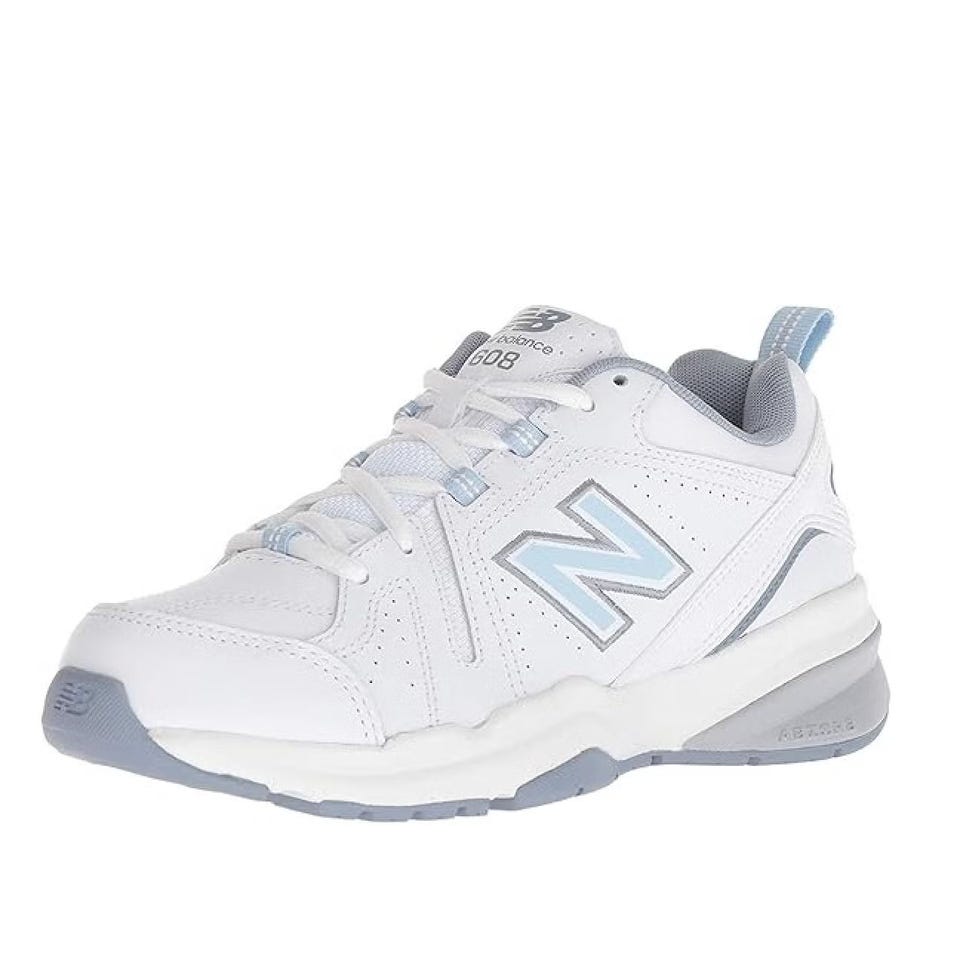
“A lower and firmer shoe helps a person feel connected to the floor during deadlifts, squats, and lunges,” says Daniels. “Many have durable rubber along the sides for rope climbs, tough uppers, and outsole grip that work on rubber gym floors. The New Balance 608 V5 is a good example of that design. It uses a wide toe box, a firm heel plate for lifting, a secure midfoot band, and a stable heel cup.” At $60, it’s plenty affordable, too.
Advertisement – Continue Reading Below
Hoka shoes have topped our recommendations in pretty much every category. But if you’re looking for a versatile trainer among the brand’s offerings, Sharkey suggests the Kawana 3. “This Hoka model has compression-molded EVA foam that is fantastic for shock absorption and arch support,” she says. And Pourziaee agrees. “Hoka’s cushioning can help decrease repetitive impact on the heel, while the shoe provides a more stable platform than many highly cushioned running shoes,” he adds.
“A good lifting shoe should provide a firm, stable foundation rather than excessive soft cushioning,” explains Pourziaee. “The Metcon’s stable heel and relatively broad base help create a solid platform for squats, deadlifts, and other strength exercises while still allowing the shoe to be used for more dynamic gym movements.”
Extra stability comes in the form of a wide outsole, a secure heel, a structured upper, and a firm midsole. This particular shoe also has a wide toe box and good midfoot support to help your foot stay secure—even during lateral movements, making it a great overall gym shoe, too.
Advertisement – Continue Reading Below
Pourziaee recommends this Reebok trainer for its “broad, relatively firm platform that helps keep the foot planted during squats, lunges, strength training, and multidirectional movements. This is especially important during exercises where excessive movement between the foot and the floor can affect both balance and technique.”
This latest version is particularly comfortable for those with wide feet, as it runs large. However, in addition to running wide it also runs long, so for those with shorter toes, you might want to size down.
When looking for a shoe to help with plantar fasciitis, Sharkey recommends choosing one with a heel-to-toe drop of 10 mm “for less pressure to the plantar fascia, support for secure lateral movement, and a midfoot lock.” This option from Kuru is her favorite, as it’s specifically designed to support the heel and reduce pain and impact that can inflame the plantar fascia. At the same time, it keeps your foot secure for lateral movements.
Advertisement – Continue Reading Below
Did you know your foot technically has three different structural arches: transverse (across the ball of your foot), lateral (from your pinky to your heel), and medial (what you think of traditionally as the arch of your foot)? This trainer from GoRuck is designed to support all three, which is why Sharkey recommends it for those who need extra stability. That kind of support means your foot is extremely secure, no matter how you move. “These shoes have three times the support for all three of the arches in your foot,” she says.
Another of Tulpule’s most frequent recommendations, the Gel-Kayano offers plenty of cushioning, which is ideal for running on surfaces like treadmills. The redesigned external heel counter helps keep the foot stable while you move. Asics also includes super-light foam, cutting down on weight and adding a spring to your step. Plus, you won’t have to deal with sweaty sneaks—a mesh upper allows full breathability while you train.
Advertisement – Continue Reading Below
Available in wide widths, these flexible, snug-fitting kicks are ideal for athletes with bunions, since there’s so much space in the toe box. “Because bunions are a forefoot issue, you want to maximize width—that way, there’s no rubbing up against the big toe joints,” Tulpule says. “New Balance shoes are a really nice brand offering width.”
While this New Balance shoe does have some structure in its upper, just be aware that the flexibility required for a slip-on shoe reduces the support at the ankle. This may make it less appropriate for HIIT-style exercises and workouts that require quick changes of direction or multiplane movements that require greater ankle support from a shoe.
You’ll crush every workout day with these lightweight and durable shoes (that also happen to be cute). Because cross-training is tough on your feet, the Solstice has a supportive midsole to absorb impact where you need it most. Better yet, it’s designed specifically for women’s feet, ensuring an optimum fit.
They come in fewer colorways than other shoes, but the basic black and white versions are more than enough considering how well they perform, particularly for HIIT, resistance training, and CrossFit workouts. The flat sole and wide toe box are ideal for strength training workouts.
Watch Next
Advertisement – Continue Reading Below
Readers Also Read
Advertisement – Continue Reading Below
Advertisement – Continue Reading Below
Read the full article here