

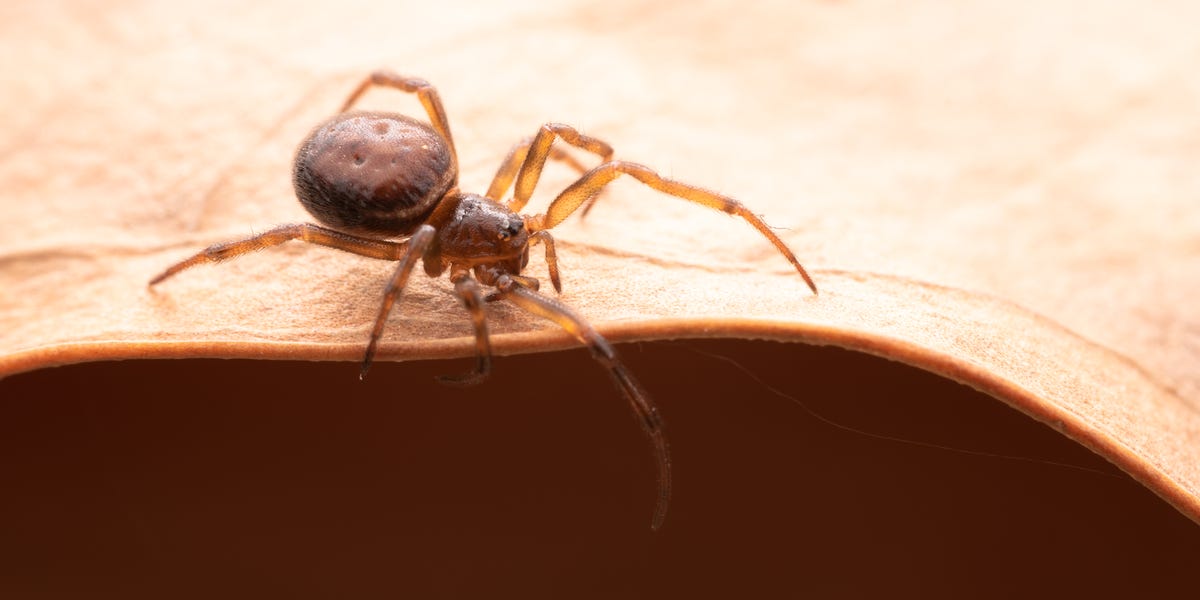
Upon waking up, you discover a mysterious welt on your arm, immediately grab your phone and search: “spider bite pictures” followed by “spider bite symptoms.” It’s a valid, panicked reaction to such a jarring sight. But the results it yields can be quite the bug bite rabbit hole, and not one you want to dig through if you’re in any kind of pain, never mind danger. That’s why we asked a doctor and bug experts to vet real spider bite pictures and share what there is to know about them to stay safe.
Many spider bites are completely harmless. They cause some redness and swelling and heal after a couple of days. Others can cause serious complications, especially if you don’t see a doctor right away.
Meet the Experts: Nick Kman, M.D., an emergency medicine physician at Ohio State University Wexner Medical Center; Howard Russell, M.S., an entomologist at Michigan State University; Nancy Troyano, Ph.D., a board-certified medical entomologist with Ehrlich Pest Control.
Below, experts break down the difference between a worry-worthy bite and those that aren’t, plus, concerning signs and symptoms to look out for.
What does a bite from a spider look like?
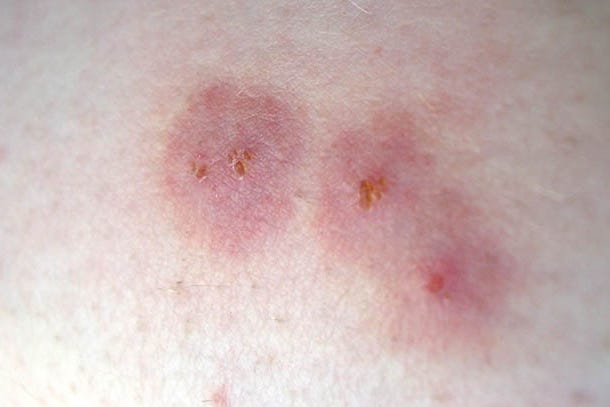
If you’re bitten and see a spider scurrying away, the odds are pretty high that it was the offender. If you didn’t witness a bite, the source might be trickier to pin down. “With a few exceptions, it is very hard, even for medical professionals, to positively identify a bite or skin irritation as a spider bite,” explains Nancy Troyano, Ph.D., a board-certified medical entomologist with Ehrlich Pest Control. And this fact is true for many insect bites. However, there are a few signs that it could be from a spider:
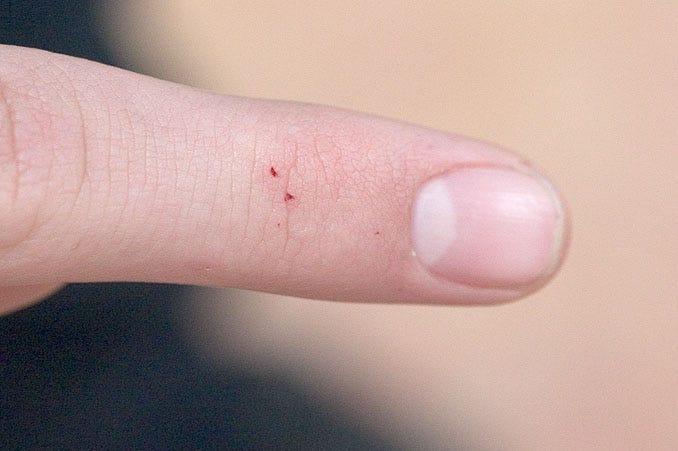
✔️ Two tiny holes: Spiders have two fangs, so you might see two tiny holes in the center of the bite, says Howard Russell, M.S., an entomologist at Michigan State University.
✔️ Redness and swelling: When a spider bites, foreign proteins from its saliva are injected into your skin, Troyano explains. That can cause a localized reaction that’s similar to what might happen if you got a mosquito bite or bee sting. You might have swelling, redness, or irritation around the bite site.
✔️ Mild pain: As for what it feels like, Troyano says most people compare it to how you’d feel when you’re stung by a bee—so, not fun.
✔️ Possible itching: This symptom depends on how you personally react to an insect bite, but some spider bites can cause the release of the compound histamine in your body which can cause itching, says Nick Kman, M.D., an emergency medicine physician at Ohio State University Wexner Medical Center.
When to worry about a spider bite
In the United States, there are two types of spiders that can cause severe reactions: the brown recluse and black widow. To be certain you aren’t dealing with a serious reaction, ask yourself if it’s NOT RECLUSE, a mnemonic that can be used to rule out the possibility of a brown recluse spider bite. The clues are:
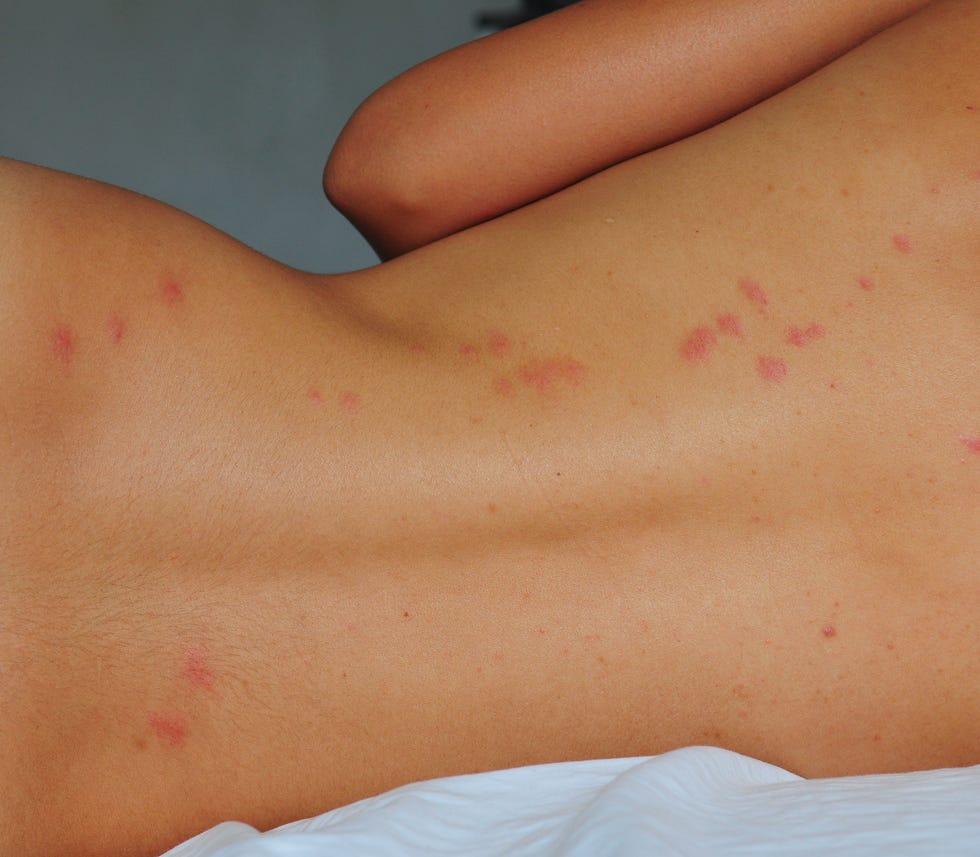
Numerous: If you are dealing with a number of bites, they most likely didn’t come from a recluse, or any spider for that matter. Clusters of bumps are more likely to be mosquito bites or those from bed bugs or chiggers.
Occurrence: Brown recluse and black widow spiders prefer cool, dark places and are more likely to be found in an attic, garage, or basement. Many bites occur when a sleeping person rolls over on a spider in bed or when putting on shoes or clothes that have sat out on the floor overnight. Recluses do not live in green vegetation, so skin lesions that show up after gardening are more likely due to poison ivy or poison oak, especially if lesions show up on the forearms and backs of the hands.
Timing: Brown recluse and black widow spiders are most active when the weather is warmer and drier, so most bites occur during mating season from late summer into fall. Even in heated homes, recluses disappear for the winter. So if you get a bite during the colder months, it’s unlikely to be of major concern.
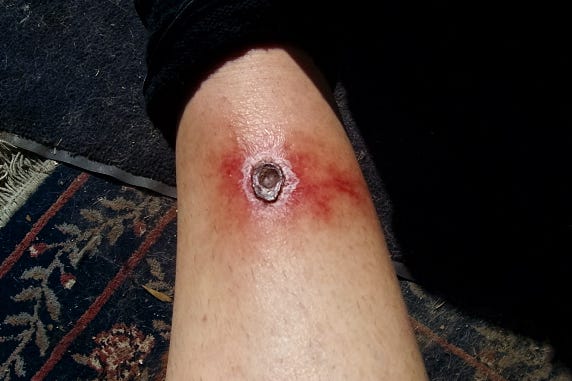
Red center: With a brown recluse bite, the skin is more likely to be white, purplish, or black rather than red—recluse venom destroys the capillary network at the bite site so red blood cells can’t get to the area. Though some spider bites can cause a small, red bump, a lesion with a red inflamed center is not usually the mark of a venomous spider bite. If your bite has a red center, chances are a skin infection is a more likely culprit.
Elevated: If your bite is a raised bump, it may be from a spider, but not a brown recluse. Recluse bites are flat or slightly sunken due to the destruction of underlying blood vessels and tissues.
Chronic: Black widow spider bites usually take a few days or weeks to resolve. Most brown recluse bites heal within three weeks and even the biggest ones heal within three months. If it takes longer than three months for the lesion to heal, it might not be due to a brown recluse bite. Nonetheless, you may want to get the persistent lesion checked out by your doctor to rule out any serious concerns, like skin cancer.
Large: Brown recluse bites are known for having dead tissues in the center of the lesion, but most recluse bites do not become larger than 10 cm (2 1/2 inches).
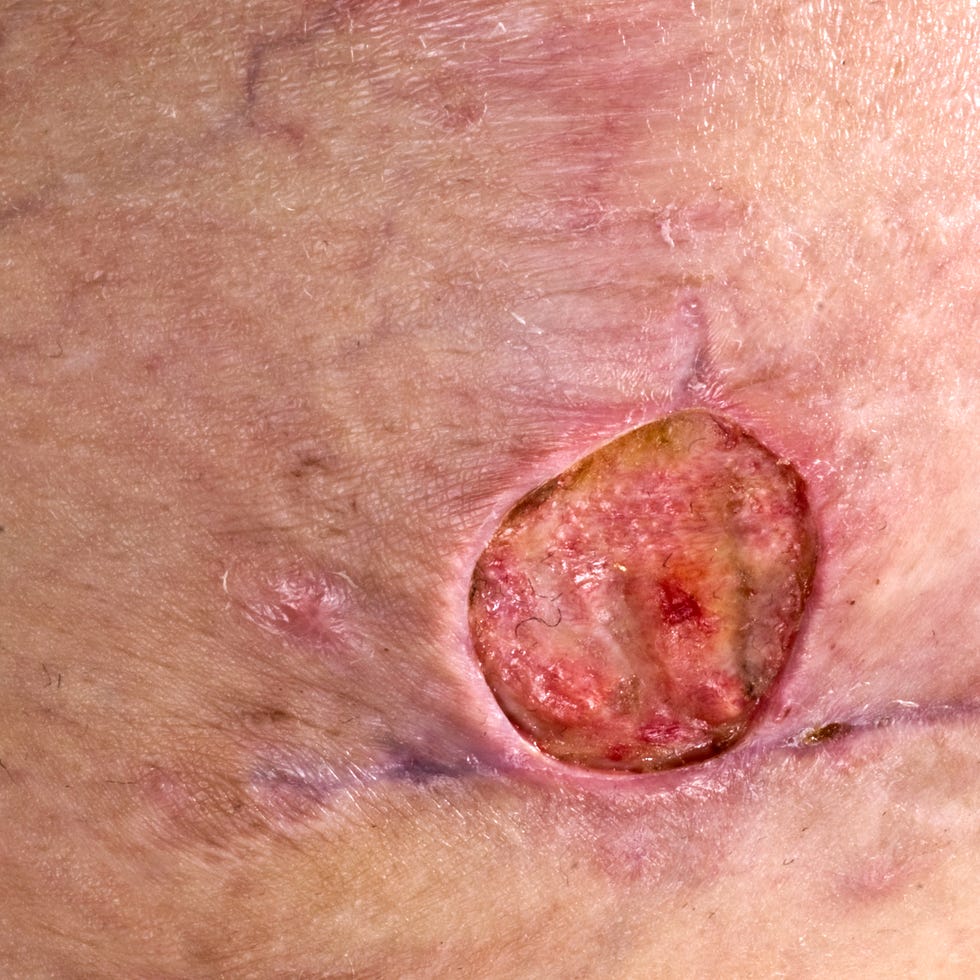
Ulcerates too early: Venom from a brown recluse spider can cause blistering and the formation of a single ulcer, but the bites don’t usually develop into a painful sore until day seven to day 14. If you have a bite that forms a sore before then, it’s probably not from a brown recluse.
Swelling: Brown recluse bites typically only cause significant swelling if the bite is on the head or feet. If you have swelling between the neck and ankles, it could indicate a bacterial infection or a bee/wasp sting.
Exudative: Recluse bites may form a small fluid-filled blister at the bite site soon after the bite. But, in general, recluse bites are usually dry. If a skin lesion is exuding pus, blood or fluids, that indicates something other than spiders is the cause. A skin ulcer that is oozing or causing local swelling could be from a bacterial infection. The resistant MRSA is very common in human populations worldwide.
Other systemic symptoms of venomous bites may include:
- Muscle cramps
- Weakness
- Fever
- Chills
- Nausea
- Difficulty breathing
- Chest pain
- Fast heart rate
- Swollen or droopy eyes
- Headache
- Increased saliva production.
If you’re experiencing any of these symptoms you should seek urgent medical care.
Which spiders are most likely to bite?
Most types of spiders don’t actually go out of their way to bite humans. “Spiders get blamed for a lot of skin irritations that are not their fault,” says Troyano. And when they do bite, it’s out of self-defense—“a last resort to protect themselves,” she adds.
Spiders also bite to paralyze their prey, and even though you’re not it, there can be situations where a common house spider (like a jumping spider or wolf spider) might mistake you for lunch or feel like you’re threatening them—even if you’re not trying to take them on.
There is a possible exception, though: Yellow sac spiders—yellowish or pale beige spiders that like to build tent-like silk structures—are reported to be “recreational biters” meaning, “they bite us just for the fun of it,” says Howard Russell, M.S., an entomologist at Michigan State University. Even then, spider bites are still super scarce. You’re much more likely to get bit by other common house insects like mosquitoes, ants, or flies.
How long do spider bites last?
If you’re bitten by a generally harmless spider, the reaction will be “fairly immediate and happen within the first 24 hours,” Troyano says. “Most will go away just after a couple of days.” However, the healing process can become longer if the bite area becomes infected. In the case of a brown recluse or black widow bite, it may take weeks to properly heal, depending on the severity of the reaction or if an infection ensues.
How to treat a spider bite
Russell says most spider bites don’t require anything more than you’d do for a mosquito bite or bee sting, like washing the wound and using hydrocortisone cream. You can also apply ice to the bite itself to minimize swelling. And, if you find that your bite is itchy, Dr. Kman recommends taking an antihistamine like Benadryl or Zyrtec.
Additionally, if you have pain and swelling you can take an over-the-counter nonsteroidal anti-inflammatory drug (NSAID), such as Advil (ibuprofen).
How do I know if a spider bite is getting infected?
Troyano says an infected bite is usually signaled by excessive swelling, pain, and the bite feeling hot to the touch.
Brown recluse spider bites
The brown recluse—also known as the fiddleback or violin spider—has a distinct violin-shaped marking that starts at the top of its head and goes down its back. It’s also identified by its six eyes instead of the typical eight. It likes to hide in homes—preferably in dark, undisturbed areas like closets, shoes, or basements—and sheds, most commonly in the Midwest and southern states, according to the Centers for Disease Control and Prevention (CDC).
The brown recluse cannot bite a human without “some form of counter pressure,” per the CDC—say, you slip your foot into a shoe and trap it. However, its bite can be extremely painful should you happen to get one. “In the case of 90% of brown recluse bites, reactions are not severe, but they can be,” Troyano says. “If the spider’s bite includes a large enough dose of hemotoxic venom, it can cause necrotic wounds or lesions that can take months to heal or require surgical repair.” This can appear as a white blister or discolored ulcer and cause other system-wide symptoms like muscle aches and a fever.
Reactions to a brown recluse spider bite can also vary based on the health and age of the person who is bitten, Troyano says. For an elderly or diabetic person who may be immunocompromised, healing from a bite may be more difficult than for someone with a healthier immune system.
Per Cleveland Clinic, other whole-body symptoms of a brown recluse spider bite may include:
- Pain
- Ache at the site
- Pain surrounding muscles near the bite
- Pain in your abdomen, back, chest and legs
- Blister at the site
- Swelling
- Bruising
Black widow spider bites
Identifying a black widow is easy: It has a shiny, jet black exterior with a bright-red, hourglass-shaped marking on the underside of its abdomen. Unfortunately, black widow spiders do like to hang out in homes, particularly in the southern and western parts of the U.S.
You can typically find them in garages or workplaces with lots of debris. Black widows tend to build webs where there are lots of corners, edges, or tall grass—and stumbling through one of these is when a bite is most likely.
Black widow bites are also rare “but can be extremely dangerous, even deadly,” Troyano says. If you’re bitten by a black widow, you’ll notice two distinct puncture marks and might feel burning, redness, and swelling at the bite site—and this can eventually spread to other parts of your body, the CDC says.
Per Cleveland Clinic, other whole-body symptoms of a black widow bite may include:
- Difficulty breathing
- Droopy or swollen eyes
- Headache
- Increased saliva production
- Nausea and vomiting
- Painful muscle cramps and stiffness in the stomach, shoulders, chest and back
- Profuse sweating
- Itchy skin rash
If you head to the emergency room immediately, you should be okay. In the United States, no deaths due to black widows have been reported to the American Association of Poison Control Centers since 1983.
When to see a doctor for a spider bite
If you suspect you’ve been bitten by a brown recluse or black widow, you don’t want to take it lightly. If you notice any of the following symptoms, the Mayo Clinic recommends seeking medical attention ASAP:
- The bite spot is hot to the touch.
- The bite spot becomes a wound or lesion.
- You develop a fever.
- You have signs of anaphylaxis (difficulty breathing, swelling of tongue or airways, dizziness, loss of consciousness).
- You have moderate to excessive swelling.
- You have any neurological symptoms, like muscle spasms, nausea, vomiting, sweating, tremors, or weakness.
If you actually saw the spider that bit you, Troyano recommends trying to capture it and putting it in a plastic bag so you can show your doctor, who can better target treatment with the proper perpetrator information.

Mona Gohara, M.D. is a Yale-trained, board-certified dermatologist, Oberlin College-bred feminist, medical media expert, and member of the ELLE Beauty Advisory Board. Mona enjoys educating on skin health, skin cancer, skin of color, and sun protection. She has done this through writing, lecturing on the local, national, and international levels, and by engaging popular media. Mona is an active member of the American Academy of Dermatology, where she chaired the social media task force, The Women’s Dermatologic Society where she serves as president, and The American Society for Dermatologic Surgery, where she chairs the DEI Work Group.
Read the full article here