

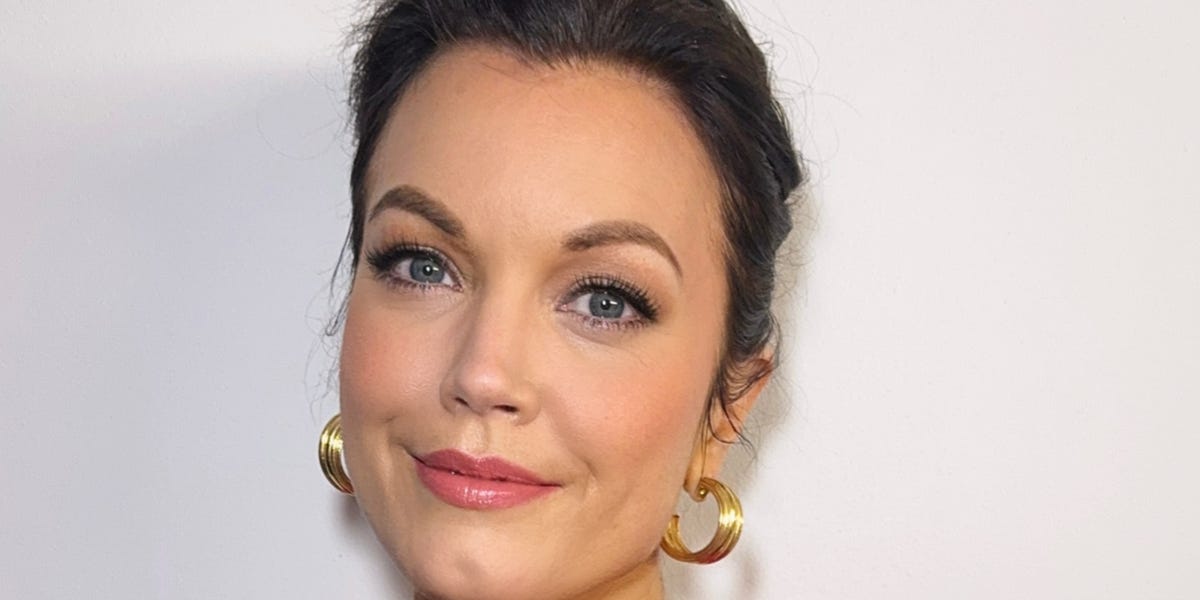
Actress Bellamy Young has spent her career playing a role. Scandal stans know her as first lady Mellie Grant, and she currently stars as Dr. Amelia Frank in NBC’s Brilliant Minds. But now, she’s stepping into perhaps her pinnacle role, and this time she’s not playing a part.
Young is on a mission to raise awareness about hepatic encephalopathy (HE), a decline in brain function that happens when the liver is unable to filter out toxins due to scarring or damage. Her father was diagnosed with HE when Young was a teenager, thrusting her into her first major role: being a caregiver.
At the time, Young remembers feeling confused and alone. But now she knows that she wasn’t. HE occurs in about 30% to 40% of people with cirrhosis (permanent liver damage). And there are an estimated 43.5 million family caregivers in the U.S., according to recent data.
In the decades since her dad’s passing, Young has always wished that there had been more information and discussion about HE, the condition that defined the end of his life. That’s why she’s working with the campaign UnderstandingHE.com—her goal is to raise awareness around HE (and erase the stigma), as well as to bring attention to caregivers, through conversations posted to her Instagram.
Young sat down with Prevention to share the behind-the-scenes story of her own life, and how helping people understand caregiving and HE might just become her most defining role.
Why is this initiative, the UnderstandingHE.com campaign, such an important role for you?
Shame has such strong fingers, once it gets into you. My family felt so alone [when we were dealing with my dad’s HE diagnosis], and I don’t want anybody else to feel that way. So I’m very grateful to get to partner with Salix to have these conversations, and grateful to people like you for writing this article, because it affects so many people.
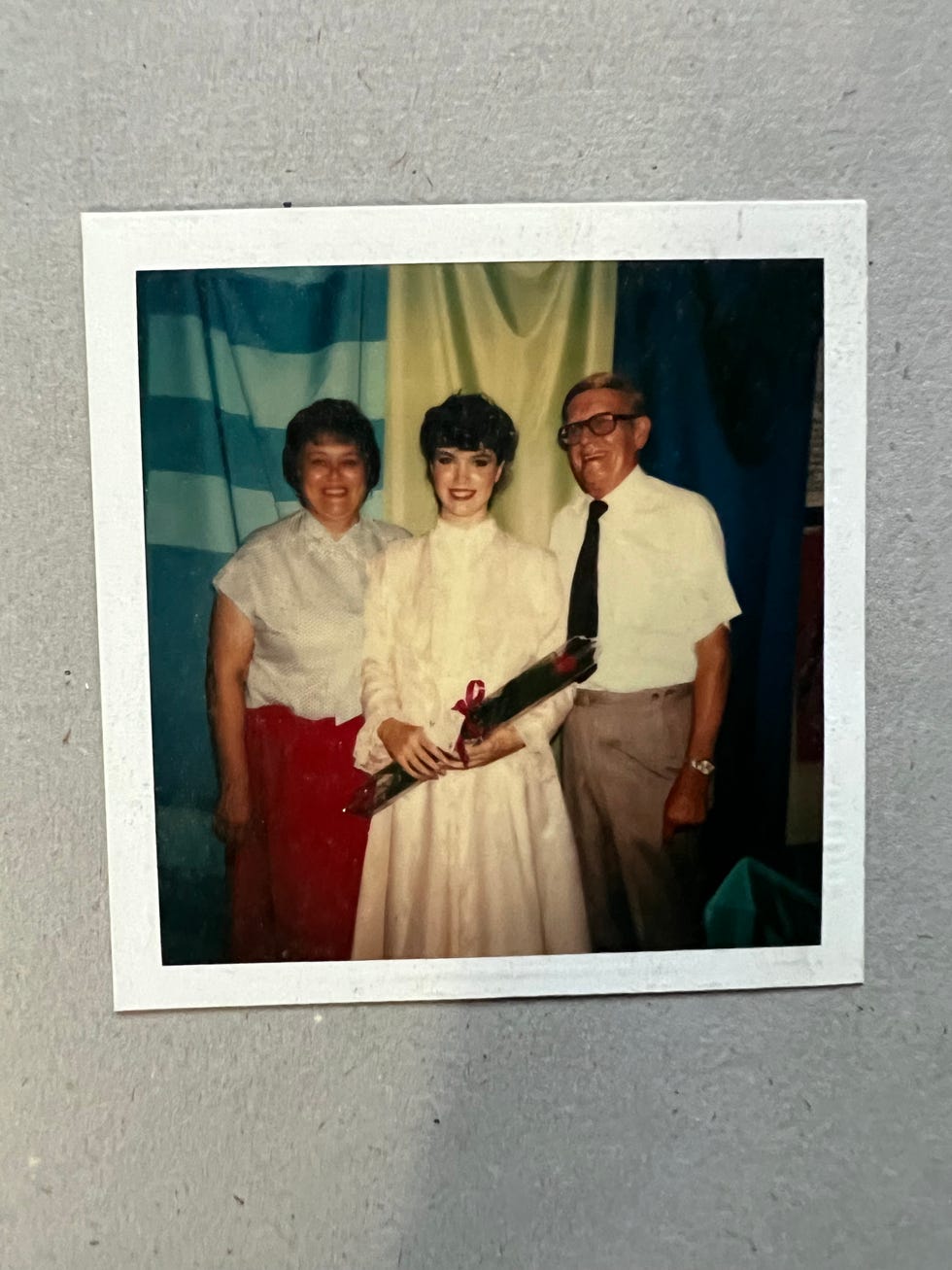
Teenage Bellamy with her parents.
How did you find out that your father had HE? It didn’t happen immediately.
My dad was an alcoholic. He was, bless his heart, a sneak-to-drink kind of guy, so he’d go down to the basement. He wasn’t a sad, mopey drunk—he was a fun dude. He was my dad, my hero. But when I was 15, I started noticing little changes. He became argumentative and combative. He would forget to pick me up from school, and he couldn’t be trusted to drive me to dance rehearsal. His breath smelled different (it had a sweet muskiness), he was unstable on his feet, and he developed this weird hand flap (I now know it’s a common hallmark of HE, but at the time, I thought it was just this embarrassing thing he’d do with his hands).
At first, he received a cirrhosis diagnosis (this is one cause of hepatic encephalopathy, but not the only one). But doctors didn’t mention HE at the time, so nothing changed; there was no alcohol intervention like “let’s heal your liver.” It was just “OK, you’re that guy, now you have cirrhosis.” We felt ashamed.
Then one day, he couldn’t find his way home from the office building he’d worked at for 20 years. That’s what got us back to the doctor, who told us: overt hepatic encephalopathy [overt means symptoms are noticeable]. It was heartbreaking, so gutting. Because we didn’t catch it until it was so far along, if we had known it was a possibility, we felt we could have been on his side and in his corner better. But it was a very different time; there was no conversation around HE and there were far fewer treatment options. That’s why it means so much to me now, to talk about this and spread awareness.
You became a caregiver at 15—how did that impact your childhood?
Home was like a vortex. He was sick in the living room, so there was no going on dates or having friends over—we didn’t want anybody to know what was going on. It was just me and my mom, who was a full-time teacher, doing everything. I had to step in and do all the things my dad had handled. I had to figure out how to pay the bills, keep the lights on, fix things around the house, basically doing all the things he could no longer do. I sort of became the man of the house—but that was my promise to him, that I would take those responsibilities on. He passed within months, from a different disease process. I’m sure that time period was formative to who I am—I’m such a hermit, it’s a habit to not have anybody in my space.
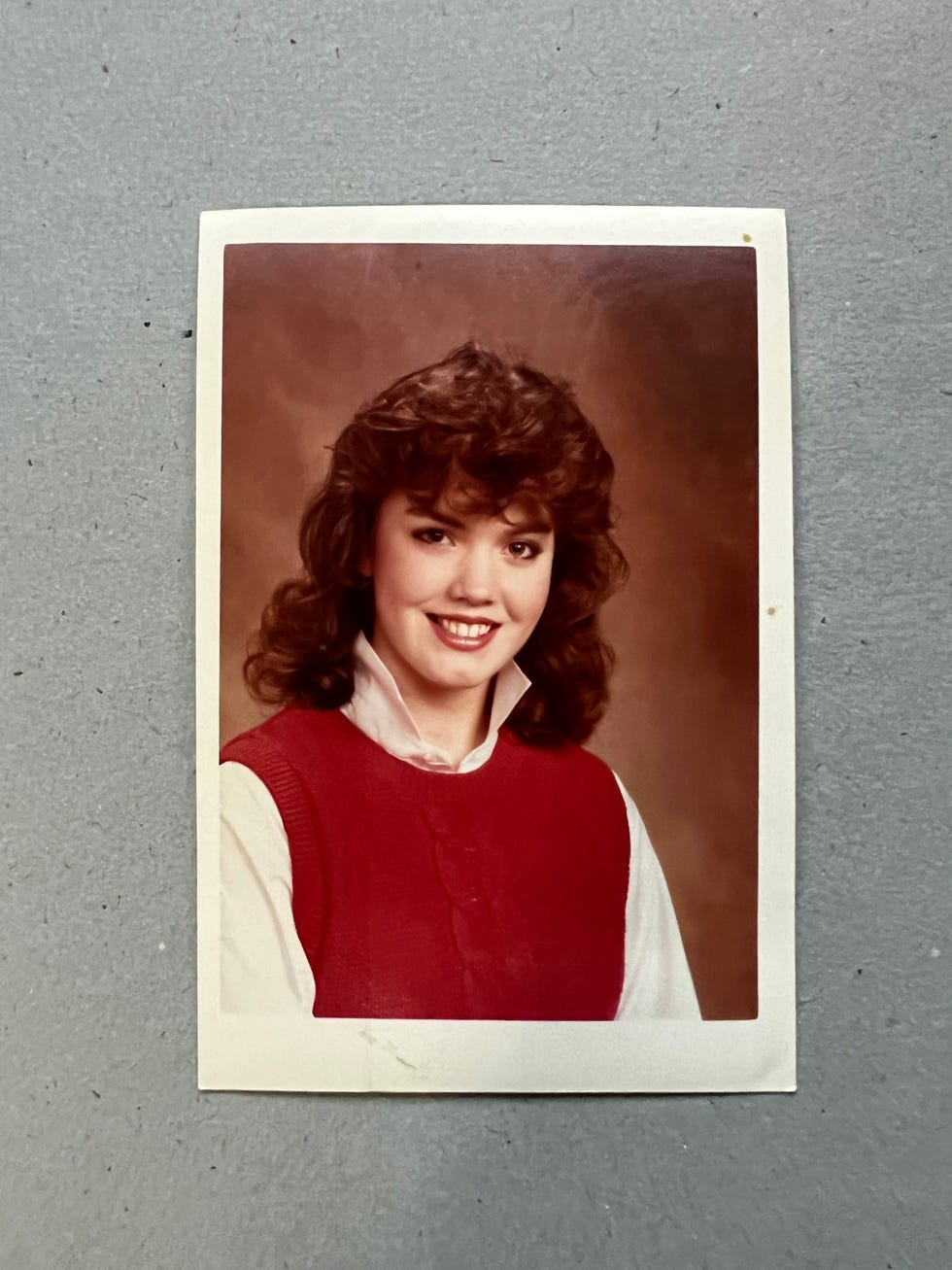
Bellamy at the age she started caregiving for her father.
What do you say to people who are navigating a tough diagnosis (like your family did with your dad’s HE)?
Getting a diagnosis is terrifying, and it’s even harder to process when you don’t understand the language around the disease. It can feel even more alienating and has the potential to make you feel shame. That’s how my family felt. That’s why I’m having these conversations. There’s also a surrender of ego that happens. We’re all going to face death, we all have that ahead of us, and hopefully it’s not something we’ll face alone—so when you’re helping someone and beside someone dealing with that, it’s not about you.
Caregiving can take a toll—what do you wish people knew about that role?
Know how to care for yourself, too. Caregiver burnout is real and can come fast because of that element of existential fear, and how much you love someone who’s going through something. You have to keep yourself fueled to be able to … show up with love and presence for the person who’s walking that path. Learn how to breathe through it all, because you’re never going to get rid of or be able to swallow down that fear of watching someone be sick and possibly die, so breathing through it helps you get clear. It’s frustrating that you can’t fix it, but it’s not in your control to fix. There’s nothing shameful about being sick or loving someone who is sick. Love is the only answer in these moments.
You’ve been having lots of conversations around HE and caregiving to help others, but what have these efforts done for you?
They have been really healing. Talking with people who are having the lived experience I did, talking about caregiving … it’s some of the work that I’m most grateful for, it’s been so meaningful. People see me and still want to talk about Scandal, and that’s always a joy, a delight. But the other day, I was at Jazz at Lincoln Center in New York City, and one of the ushers came up to me and I thought they wanted to have a conversation about Scandal … but they wanted to tell me that they saw one of my conversations about HE, and that their loved one was suffering from it, and they thanked me because it affects so many people but nobody says a word about it.
These conversations are creating a community. There’s the cognitive knowledge that you’re not going through anything unprecedented, which means that someone else has gone through it and lived through it, so you probably will too. But there’s also the vibe of being in the room and sharing your microbiome with other people who are also survivors and informed. We’re like soldiers in the army of caregiving. I don’t want anyone to think they have to do this alone.
Hepatic encephalopathy is a complication of cirrhosis, a severe form of liver disease that may be caused by chronic alcohol and drug use, as well as certain infections (like hepatitis) or other conditions that affect the liver. There are different grades of HE depending on severity. Learn about (and track) the symptoms at UnderstandingHE.com.
Read the full article here