

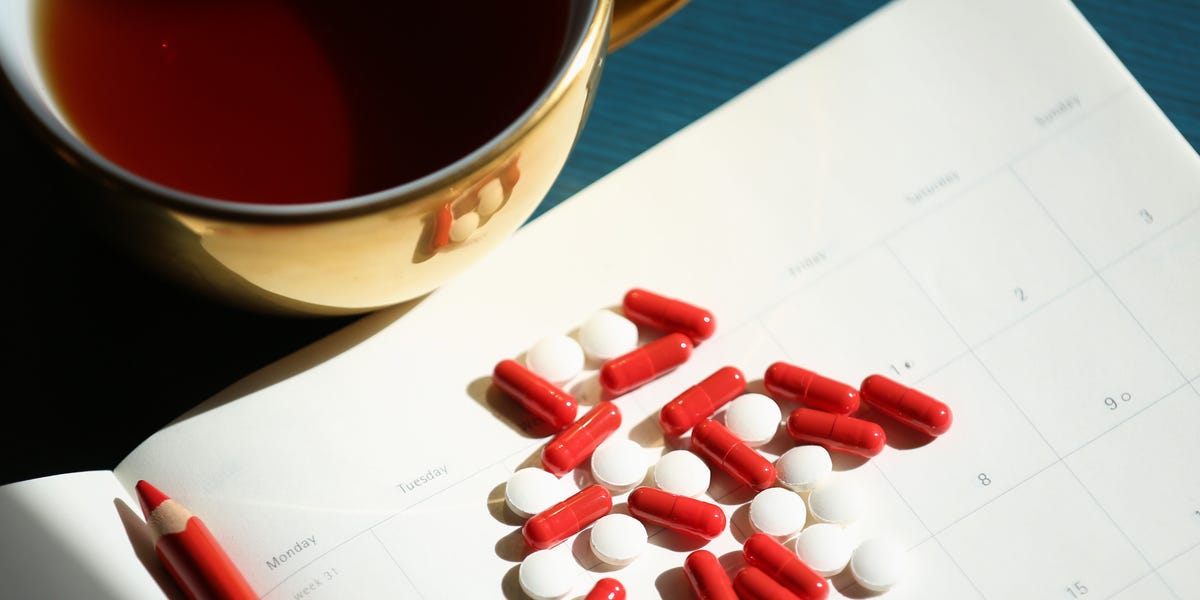
If your doctor recommended you take iron supplements based on blood work, but you’re still dragging through your days, a few factors could be keeping that iron from actually getting absorbed into the body.
For starters, having three cups of coffee to stay awake could contribute to the problem.
Iron is essential for cellular energy production and transporting oxygen throughout the body, which supports your heart, immunity, cognitive health, and more, giving you energy throughout the day.
Although many people think of iron deficiency as a concern for menstruating and pregnant women, it’s also common in older adults; up to 1 in 3 people age 65 and older has anemia.
A mix of factors may play a role in anemia as you get older, including age-related inflammation, which triggers the release of a hormone called hepcidin, blocking iron absorption. The natural decline in stomach acid that comes with aging, as well as with taking antacids and acid-reducing medications like PPIs, can also contribute. “The less acid we have, the harder it is to absorb iron,” explains registered dietitian Keri Gans, R.D.N., author of The Small Change Diet.
Taking an iron supplement can correct a deficiency, but only if your body actually absorbs it. To get the most out of your dose, turn to these expert- and research-backed strategies.
A quick note before you start: This advice is meant for people who’ve been diagnosed with low iron and told by a doctor to supplement. If your iron levels are healthy, you don’t need to worry about timing your meals around things like coffee or calcium. Research shows that eating and drinking the foods mentioned as part of a normal, varied diet doesn’t meaningfully affect long-term iron status in people who aren’t deficient.
1. Be Mindful of What and When You Consume
Dana Angelini, M.D., a hematologist at the Cleveland Clinic, says she commonly sees patients who unknowingly take their iron supplement with a meal that undermines its absorption. This includes:
Coffee and Tea
Both are sources of polyphenols. These beneficial micronutrients have anti-inflammatory, antioxidative, and even anticancer and neuroprotective properties.
However, polyphenols aren’t so great if you’re trying to maximize absorption from iron supplements. Once in the digestive tract, tannins in tea and chlorogenic acids in coffee bind to non-heme iron, forming insoluble complexes that make it harder to absorb the iron.
Foods with Phytates
Whole grains, legumes, nuts, seeds, and soybeans store much of their phosphorus as phytate (a.k.a. phytic acid). Like tannins (found in tea) and chlorogenic acids (found in coffee), phytates latch onto iron and trap it before your body can absorb it.
Eggs
Studies show that just one egg can cut iron absorption from a meal by about 27%. The proteins in eggs bind up iron, reducing its bioavailability. (This is just a concern with egg protein; other animal sources can enhance iron absorption.)
You don’t have to give up any of these drinks and foods, Gans says. “Just don’t take iron supplements with them.” Aim to take your iron supplement two hours before or after.

Add Prevention as a preferred source in your Google search results.
Use your Google account to add this to your settings.

Iron is mainly absorbed in the upper part of the small intestine, and it takes roughly one to two hours for a supplement to dissolve and travel beyond that. It also takes about two hours for most of a meal to empty out of the stomach and upper gut. By then, there’s less food left to compete with iron.
2. Pair It With Vitamin C
While certain nutrients hold tightly to iron or even wrap it up in a straitjacket, ascorbic acid (a.k.a. vitamin C) does the opposite: It makes iron more bioavailable, so your body absorbs more of it.
Non-heme iron (the type in supplements and plant foods) requires an acidic environment to convert into a form your body can use. Vitamin C boosts acidity in the stomach, facilitating iron absorption from a supplement or meal.
So pair your iron supplement with one of these vitamin C-rich foods, which can be gentler on the stomach than popping a pill. Aim for at least 50 milligrams (mg), which appears to offer the desired effect:
3. Take It First Thing in the Morning
Given how many foods and nutrients can interfere with iron, some doctors recommend taking supplements when you wake up and your stomach is empty. As a bonus, if your alarm clock goes off early enough, this may give you the two-hour window (or close to it) so you don’t have to strategize your breakfast around your iron intake.
However, if you are one of the many who find that iron by itself leaves you queasy, see the vitamin C tip above.
4. Skip a Day
Create reminders in your calendar to take your supplement on alternate days to maximize how much iron you absorb each dose. Several small trials show this frequency increases fractional iron absorption (how much of the iron your body takes in and uses) and may cause fewer GI side effects in women with low iron stores who aren’t yet anemic.
The likely reasons: Taking iron supplements daily boosts hepcidin, which can block the release of iron into the bloodstream. Although more research is needed, most experts recommend taking iron supplements every other day.
However, “if taking your supplement daily helps you take it routinely, but skipping every other day makes you forget when you last took it, it’s better to take it daily,” Gans says.
5. Choose the Right Formulation
Iron supplements use different types of iron, each of which differ in bioavailability and side effects, which will also vary per person:
- Ferric iron is three to four times less bioavailable than ferrous iron.
- Ferrous iron (ferrous fumarate, ferrous gluconate, and ferrous sulfate) tends to be inexpensive but can cause upset stomach, nausea, constipation, and diarrhea.
- Ferrous bisglycinate is marketed as being more bioavailable, and research does suggest its absorption is less affected by diet. But studies haven’t shown it outperforms other forms in terms of overall benefits.
- Heme iron polypeptide is also marketed as being highly bioavailable and gentler on the stomach, though more research is needed to confirm if it works better to boost iron levels in specific groups of people.
- Slow-release iron is thought to reduce gastrointestinal effects; however, it may be released lower in the gut, where less absorption occurs.
“There are a lot of supplements out there, and some brands advertise as being ‘best absorbed’ or ‘best tolerated,’” Angelini says. “But the brands haven’t been compared head to head.”
So discuss your options with your healthcare provider, who should recheck your iron levels after about two to three months, because it typically takes that long for iron stores to build up, Angelini says. If your numbers are improving and you’re tolerating the supplement well, stick with what’s working. If not, ask more questions about whether you need to switch things up.
Read the full article here