

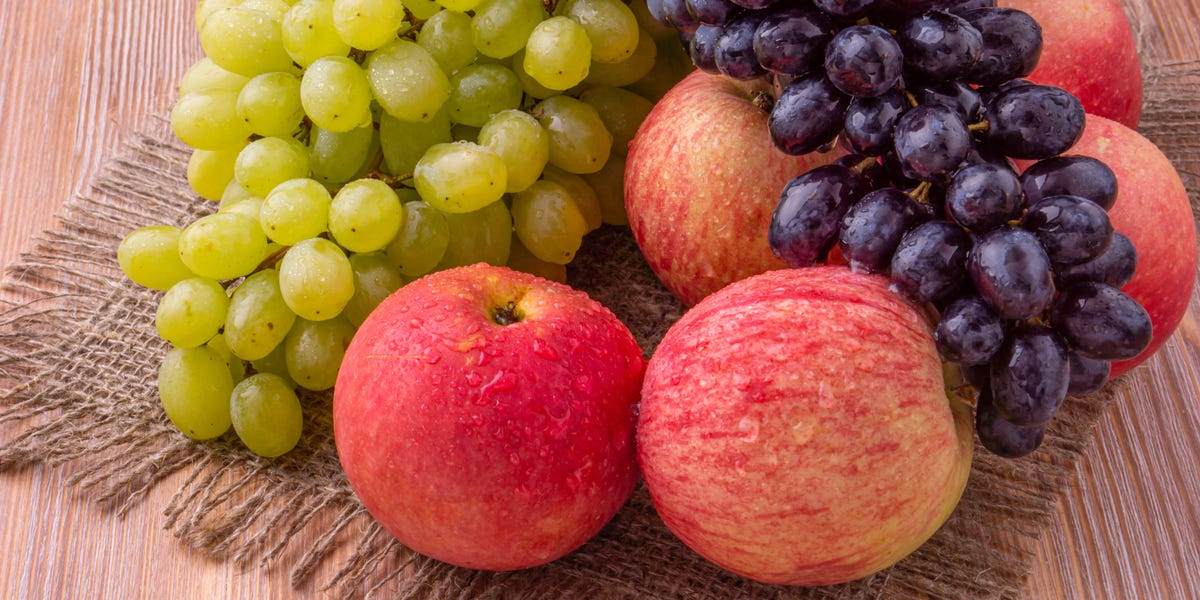
If you’re watching your blood sugar, it can be tempting to avoid fruit altogether so you don’t need to consider the glucose spikes caused by their natural sugars. But fruit is an important part of a well-balanced diet, regardless of whether you have diabetes, prediabetes, or neither. Still, some support blood sugar management better than others. If it’s grapes vs. apples for blood sugar, which should you choose?
Meet the experts: Juliana Vocca, M.S., R.D., a registered dietitian and owner of Prime Women Nutrition in Moorestown, N.J.; Amna Haq, M.S., R.D., L.D.N., a registered dietitian and owner of the Inclusive Dietitian in Chicago.
Here, dietitians explain exactly how each of these popular fruits can impact your blood sugar levels, plus other reasons to include them in your healthy diet.
How do grapes affect blood sugar?
“Grapes, often called nature’s candy, are nutritious fruits that everyone can eN.J.oy,” says Juliana Vocca, M.S., R.D., a registered dietitian and owner of Prime Women Nutrition in Moorestown, NJ. “They do raise blood sugar, but when eaten in moderate portions and paired with other nutrients, they can be safely included in a balanced diet for both people with and without diabetes.” That’s because they contain the natural sugars glucose and fructose, Vocca explains, which increase blood glucose levels once they are digested and absorbed.
“If you’re familiar with carb counting (a method to track carbohydrate intake), about 17 grapes count as one carbohydrate choice (15 grams of carbohydrate),” says Amna Haq, M.S., R.D., L.D.N., a registered dietitian and owner of the Inclusive Dietitian in Chicago. According to the American Diabetes Association (ADA), counting carbs using “carbohydrate choices” is a more basic version of carb counting that some people with type 2 diabetes use to track their carbohydrate intake over the course of the day. “This usually makes for a wonderful snack, but I always recommend pairing grapes with a source of protein or healthy fat, like string cheese, nuts, or Greek yogurt, as this can improve satiety and support steadier blood sugar levels,” Haq explains.
As far as how quickly grapes increase blood sugar, Vocca notes that they have a low-to-moderate glycemic index of 54. “This means they raise blood sugar more slowly than refined sugars but faster than high-fiber fruits like berries,” says Vocca.
Other perks of eating grapes
Apart from their impact on blood sugar levels, Vocca says that grapes are a heart-healthy, gut-friendly, antioxidant-rich food. “One serving of grapes provides about 15% of the daily value for vitamin K, making it a good source of this fat-soluble vitamin, which is important for blood clotting and bone health,” Vocca explains. It also contains some potassium and fiber, both of which support healthy blood pressure.
If you’re comparing green vs. red grapes, they share some perks while each offers some of their own as well. Red grapes get their reddish-purple color from anthocyanins, powerful plant polyphenols that have been shown to help combat age-related illnesses like neurodegenerative disorders, osteoporosis, cancer, and cardiovascular diseases. Green grapes also contain polyphenols, mainly flavanols, which research says may strengthen and support the immune system.
How do apples affect blood sugar?
“Apples tend to have a relatively low glycemic impact thanks to their fiber content,” says Haq. “One medium apple provides about 20 grams of carbohydrate and around 5 grams of fiber, which helps slow digestion and promotes a more gradual rise in blood sugar rather than a rapid spike.” Just make sure you’re eating the skin, which is where most of the fiber is. This includes pectin, a soluble fiber that may slow the release of glucose into the bloodstream, according to research in the International Journal of Molecular Sciences. “The combination of soluble fiber (pectin) and water helps slow digestion, promote fullness, and prevent the quick blood sugar spikes you get from lower‑fiber snacks,” Vocca explains.
Still, apples do contain some carbohydrates, notes Vocca, so pairing them with protein or healthy fats, such as nut butter, to help temper the flow of glucose is key. “Larger apples contain more carbohydrates,” she adds. “A good serving size is about the size of a tennis ball.”
Other perks of eating apples
Apples are loaded with nutrients that support overall health. “They’re a good source of vitamin C, which supports immune function and collagen production. They also contain antioxidants, including quercetin and other polyphenols, which may help reduce inflammation, protect cells from oxidative stress, and support heart health,” Haq explains. According to a review in Nutrients, the quercetin in apples (in the skin, to be more specific) may help lower blood pressure and strengthen the immune system.
In addition to potentially tempering the blood sugar impact of apples, pectin is also a prebiotic fiber, meaning it’s the fuel of choice for the beneficial bacteria that make up your microbiome. “The fiber feeds the gut bacteria, supporting smoother digestion and helping prevent constipation,” says Vocca.
Grapes vs. apples: Which is better for blood sugar management?
If your goal is to keep your blood sugar as stable as possible, Haq and Vocca agree that apples are a slightly better choice than grapes. “Their fiber, water content, and slower digestion make them more blood sugar‑friendly,” Vocca says. Still, if you’re enjoying grapes in moderation and/or paired with foods rich in protein or healthy fat, they can “absolutely fit into a blood sugar-friendly eating pattern,” says Haq. Both fruits offer many nourishing benefits that balance out their natural sugars and make them worth including in a healthy, well-rounded diet.
Read the full article here