

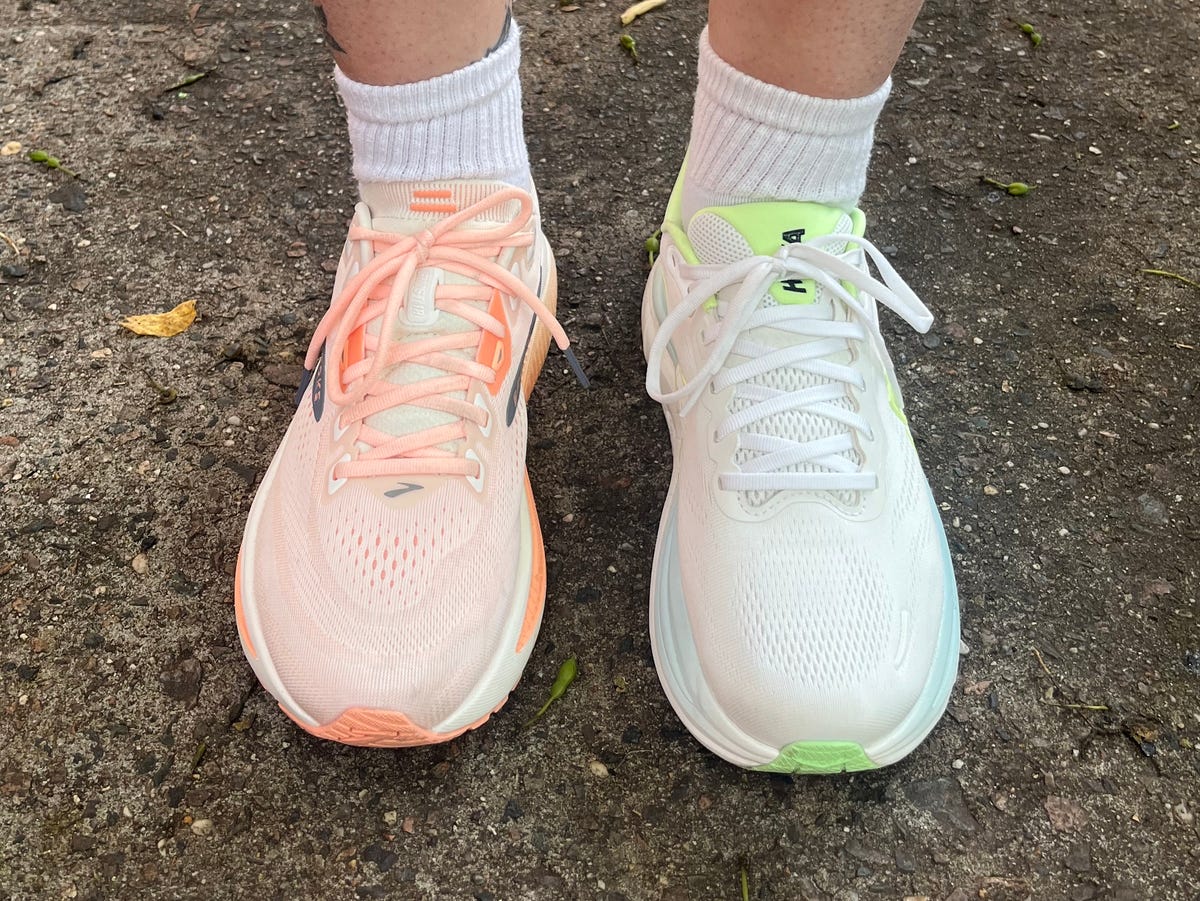
When it comes to cushioned, comfortable walking shoes, two brands are always on our minds: Hoka and Brooks. Their arrays of top-performing and podiatrist-recommended shoes have appeared on our lists of the best shoes for plantar fasciitis, the best shoes for standing all day, and more. But how do they stack up side-by-side? To find out, I put each of the brand’s most popular and versatile cushioned walking shoes to the test: the Hoka Clifton 11 and the Brooks Ghost 18.
On paper, these two pairs of versatile shoes provide similar specs. Both offer neutral support, balanced cushioning, a ventilated mesh upper with a secure sockliner, and a grippy outsole that provides a smooth and balanced stride for both walks and runs. Both also earned the Seal of Acceptance from the American Podiatric Medical Association (APMA). So, how exactly do they differ, and is one better for your needs than the other? In my head-to-head face-off, the Hoka Clifton and Brooks Ghost stack up against each other nearly evenly—but I found one to be a standout in comfort, and the other peaked in stability. Here’s the breakdown.
Key Differences: Hoka Clifton vs. Brooks Ghost
[[can we give the shoes accolades in the product embeds below? whatever matches their accolades from the buying guides they also appear in?]]
I have not been secretive about my love for the Brooks Ghosts. I have worn every iteration of them since the Brooks Ghost 8 (back in 2015!). And the 18 is no exception. Weighing 9.2 ounces, these shoes are lightweight enough for all-day wear—and comfortable enough, too, due to their balanced cushioning. Made from Brooks’s patented nitrogen-infused DNA Loft, the insole offers both dynamic and soft cushion. The dual-layered comfort is for energized and powerful toe-offs, while still being soft enough to reduce joint pain during landings. The result is a smooth stride that’s comfortable without losing the sense of groundedness that other cushioned sneakers can have. The 18 has also topped our lists for the best stability walking shoes for women and best walking shoe for plantar fasciitis.
Read Full Brooks Ghost 18 Review
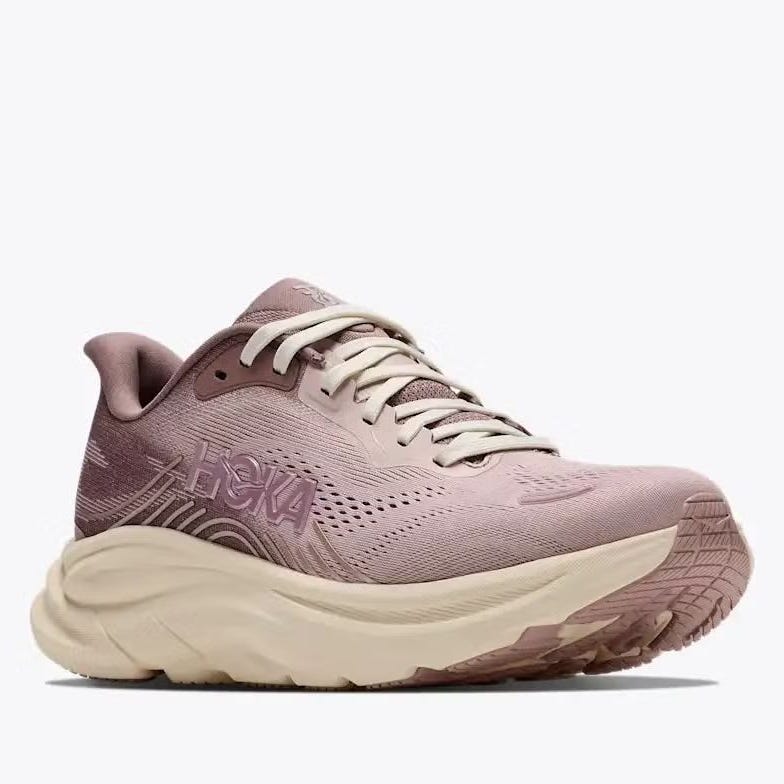
| Sizes | 4-12 |
| Widths | Medium, Wide, Extra-Wide |
| Weight | 8.3 oz |
| Heel-to-Toe Drop | 8 mm |
If you’re not familiar with the Hoka Clifton, we love this shoe for its plush, lightweight comfort and chunky and trendy aesthetic. It’s earned our top spot for the best Hoka shoes for walking, with rave reviews from multiple editors. The newly released Clifton 11 is updated with a softer mesh upper and sockliner. And, like its previous iterations, it boasts the Seal of Acceptance from the American Podiatric Medical Association—meaning it’s been rigorously evaluated by podiatrists to promote good foot health. At 8.3 ounces, it’s nearly a full ounce lighter than the Ghost, though the stack height is taller, making it easy to wear all day. Plus, its EVA foam cushioning compresses with each step.
Read Full Hoka Clifton 11 Review
How I tested
For the past two months, I have worn the Hoka Clifton 11 and the Brooks Ghost 18 on daily walks, including commutes, and long days on my feet around New York City. They have traversed city streets during the hottest days of summer, as well as during rainstorms, and braved slippery subway platforms. I’ve worn each pair to a four-hour-long stadium concert to accurately test how well each stands up in terms of fit, comfort, and stability. I also tested both shoes on short jogs to see if they performed differently for walking than running.
Fit and material
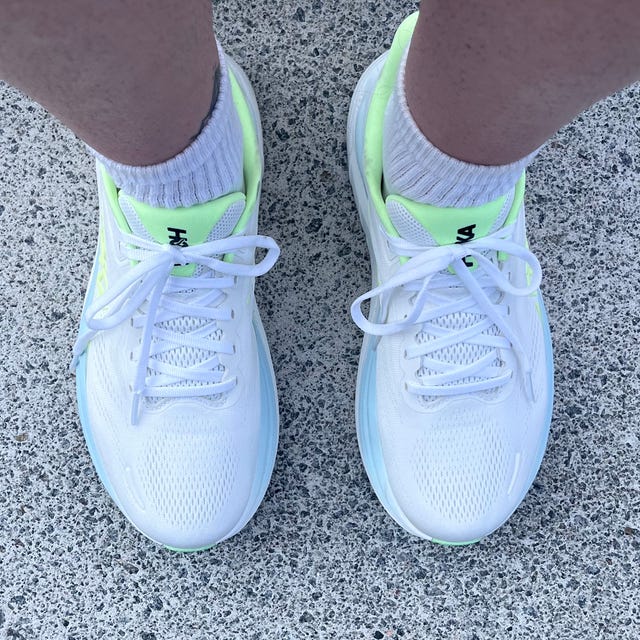
Hoka Clifton 11, roomy toe box and cushioned fit
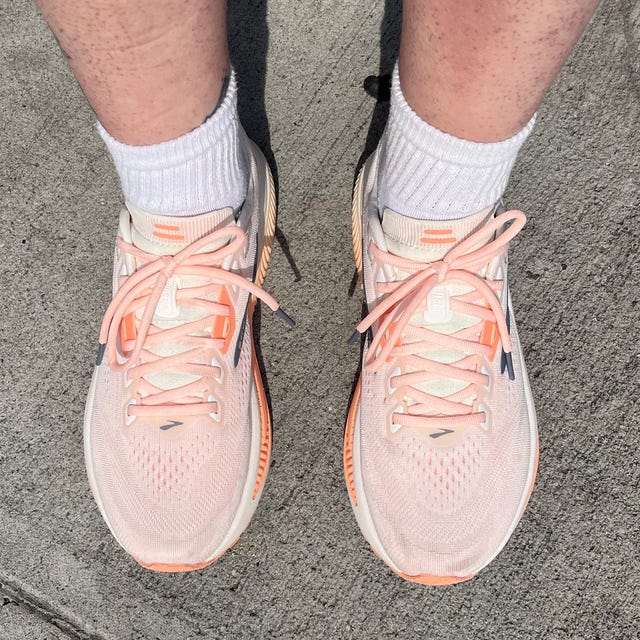
Brooks Ghost 18, sleek and fitted
I opted for my normal 9.5 athletic shoe size in both shoes and found them both to be true-to-size. However, the fit and feel were fairly different. When compared side-by-side, it’s immediately noticeable that the Brooks Ghost 18 offers a sleeker fit than the Cliftons. This is due to its enhanced upper, made with a new flat tongue and a breathable knit sockliner that hugged my foot to help keep it secure. Despite its snug fit, though, Brooks upgraded this latest Ghost with a spacious toe box that afforded ample room to spread my foot with each step. In our recent team review, each tester said they really enjoyed the fit of the Ghost, which felt true to size in both length and width.
While I expected the sleek Ghost to be less cumbersome on my foot than the chunkier and more structured-looking Clifton, I was really impressed by how light the Cliftons felt on my foot. It felt almost airy while still providing a roomier fit. This is likely due to its 3-D sockliner, which adds 360 cushioning around the entire foot, including the plush tongue, which helps secure your foot in place. In addition to the slightly wider fit, the Clifton’s toe box also felt roomier than the Brooks—to the point where a previous tester said it was the perfect shoe for keeping her bunions comfortable.

Add Prevention as a preferred source in your Google search results.
Use your Google account to add this to your settings.

Cushioning and comfort
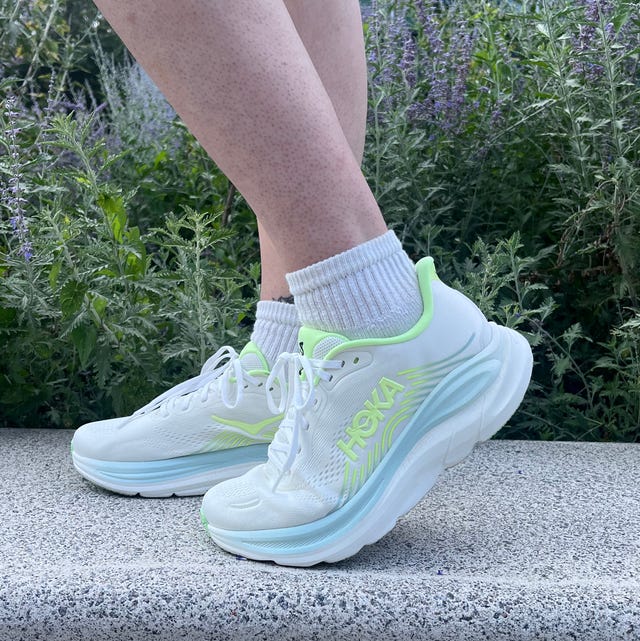
Hoka Clifton 11 side view—thick stack
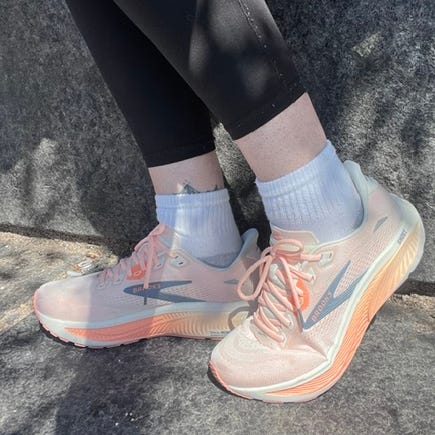
Brooks Ghost 18 side view—moderate stack
Both the Hoka Clifton and Brooks Ghost offer a “balanced” level of cushion, but they also felt extremely different, likely due to their use of different materials. Brooks uses a nitrogen-infused DNA Loft made of a dual-layer construction that Brooks calls both “soft and dynamic.” This level of cushion has traditionally been my favorite part of the Brooks Ghosts, as this brand-patented cushion offers a grounded feel that lends itself to an unmatched balance of comfort and stability that is ideal for long walks and long days on your feet. Traditionally, that is where Hokas tend to lose me. The brand’s cushioned shoes tend to feel less grounded due to the high stack height and ultra-plush cushion. It feels like walking on mattresses. Most of Hoka’s shoes feel unsteady and less supported—to the point where it takes me a while to figure out how to walk in them.
However, the newest Clifton 11 didn’t seem to have that problem at all. Though its stack is much higher than the Ghosts, its thick layer of EVA foam cushioning is compressive, meaning my foot could sink in for a more balanced feeling, while not feeling too plush or immobile. It felt almost like an airy memory foam, moving to support my foot and meet my stride where it was at. So despite its (overly) substantial cushioning, I never felt anything other than cradled and comfortable during my long walks and runs because of this “forgiving” feel. Especially during my long concert days of stadium walking and standing, the cushion felt much softer on my foot and my joints ached significantly less than the same venue weeks earlier in the Brooks.
Traction and stability
Stability-wise, nothing outshines the Brooks Ghost 18. The snug fit, combined with the firm and tapered heel counter, made sure my foot felt grounded—no matter how fast I was flying on the pavement. I have a recurring bout of plantar fasciitis and normal to high arches, and I appreciated how well-balanced this pair of shoes felt. Podiatrists typically recommend choosing a 10mm heel-to-toe drop for less strain on the fascia, which the Ghosts have, and I appreciated how supported I felt in them.
While the Hoka shines in its balanced cushioning, I will admit it is slightly outmatched when it comes to stability by the Brooks. That’s not to say it’s lacking stability, though. The Cliftons now have a rear-foot frame and double-lace lock system that ensures the foot stays in place and offers a level of stability I don’t think previous models of the same shoe have had. However, the higher stack height combined with the rocker outsole does still require a bit of getting used to.
The final verdict
Ultimately, both sneakers deliver the balanced cushion they promise for all-day easy-to-wear comfort. But as a longtime Brooks (specifically Brooks Ghost!) loyalist, it pains me to admit how often I am reaching for the Hokas. For anyone who wants a supportive and cushioned shoe that is supremely lightweight, the Hoka Clifton 11 is the way to go. It just feels so much lighter on my feet, which is a huge advantage for both long walks and days. When it comes to comfort, it’s my current go-to.
However, because of the Clifton’s rocker outsole, combined with the Ghost’s sleeker and less clunky silhouette, the Brooks Ghost 18 is the better choice for those who need more stability. I find it preferable when I need a more grounded feel (especially on rainy days!). Otherwise, I found the two shoes nearly evenly matched with nearly negligible differences—especially in their value. Honestly, I believe you can’t lose with either pair.
Read the full article here