

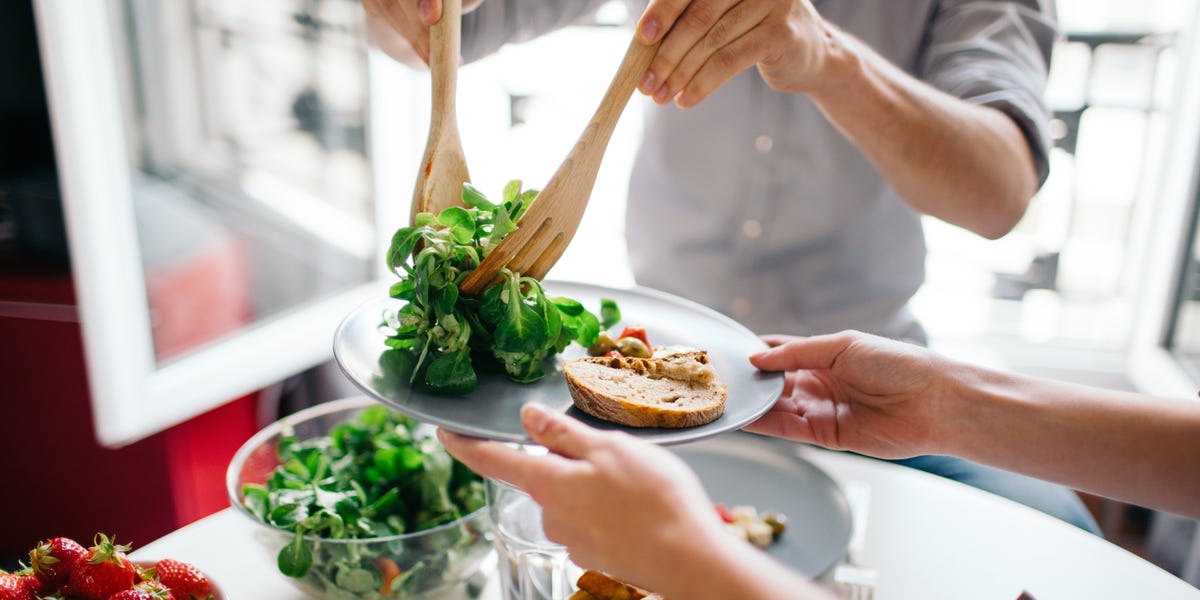
If you’re interested in nutrition, you likely put a lot of thought into what you eat—choosing whole grains over refined carbohydrates, getting plenty of fruits and veggies, prioritizing lean protein. But there’s still a crucial piece of the puzzle you may be missing, and it has to do with how you eat your healthful, well-balanced dishes.
Meal sequencing, also known as food sequencing or carbohydrate-last eating, is a glucose-management strategy that calls for different food groups to be eaten in a certain order. (Yes, you read that right: It matters what order you eat your meal in.)
“When sitting down to eat any meal or snack, sequencing the order in which you eat the foods on your plate can have an impact on your overall digestion and how your body releases hormones, which can impact blood sugar response, overall satiety, and energy levels,” says Kristen Nicolai, M.S., R.D., clinical nutrition coordinator at Mount Sinai Health System.
So, what order does meal sequencing call for, and how might it help with your health? Ahead, experts break it down.
Meet the experts: Joyce Patterson, M.P.H., R.D.N., a diabetes care and education specialist at University of Michigan Health; Kristen Nicolai, M.S., R.D., Clinical Nutrition Coordinator at Mount Sinai Health System.
What is meal sequencing?
Rather than eating carbohydrates, proteins, and vegetables simultaneously or in a random order, meal sequencing offers specific guidelines for the order in which you eat:
- Non-starchy vegetables
- Protein
- Carbohydrates
The idea is to smooth spikes in blood sugar, a.k.a. glucose. Fiber, protein, and fat have been shown to slow stomach emptying, which curbs the glucose spike that occurs after eating carbs. “The more slowly food leaves the stomach, the more slowly carbs turn into glucose, and the more slowly our blood glucose rises,” says Joyce Patterson, M.P.H., R.D.N., a diabetes care and education specialist at University of Michigan Health. “So instead of a quick spike, we get a slow, steady rise and fall in blood glucose levels.”
Still, using meal sequencing doesn’t mean you can safely overload on carbs. Even when eaten last, “eating a large portion of refined carbohydrates such as white rice or pasta may mitigate the benefit” of meal sequencing, Nicolai says.
What are the benefits of reducing glucose spikes?
When glucose levels rise, the pancreas produces insulin, the hormone that reduces glucose levels. When blood sugar spikes, the pancreas has to work extra hard to produce a lot of insulin at once.

Add Prevention as a preferred source in your Google search results.
Use your Google account to add this to your settings.

“These large fluctuations in blood sugar can contribute to energy crashes, sugar cravings, increased hunger, irritability, anxiety, and even brain fog,” Nicolai says, adding that frequent, large glucose spikes can also have long-term consequences, including “cellular damage, chronic inflammation, and damage to blood vessels.”
“High insulin levels also increase fat storage, especially deep belly fat (also known as visceral fat). Visceral fat can cause insulin resistance, where the insulin does not work as well, leading to high blood glucose levels,” Patterson says, adding that the combination of high insulin levels and insulin resistance can cause prediabetes. “Over time, the pancreas is not able to keep up, and its ability to produce enough insulin diminishes, leading to low insulin levels. The insulin resistance and low insulin production are characteristic of most cases of type 2 diabetes.”
Who might benefit most from meal sequencing?
“Someone with type 2 diabetes, pre-diabetes, gestational diabetes, PMOS [previously known as PCOS], or anyone with insulin resistance would be most likely to benefit from paying attention to the sequencing of their meals,” Nicolai says. “Even those who are looking for improved energy and are battling the afternoon energy slump after meals could benefit.”
While there is limited research on the topic, some studies suggest that meal sequencing may help lower glucose spikes and HbA1c (an indicator of average glucose levels) in people with prediabetes and type 2 diabetes.
However, Nicolai cautions people with these conditions against using meal sequencing as a primary means of controlling blood sugar; it’s best employed as a complementary method.
Does meal sequencing come with any risks?
Like any dietary intervention, meal sequencing isn’t advisable for everyone. “For those with GI conditions like gastroparesis, sequencing can worsen their symptoms, which include prolonged fullness, bloating, nausea, or vomiting. For those with diabetic gastroparesis who use mealtime insulin, sequencing may increase their risk for dangerously low blood glucose after eating,” Patterson warns. Those using GLP-1 medications should also be cautious, she adds. “One of the effects of GLP-1 medications is to slow stomach emptying. Food sequencing can exacerbate this effect and worsen side effects.”
Read the full article here