

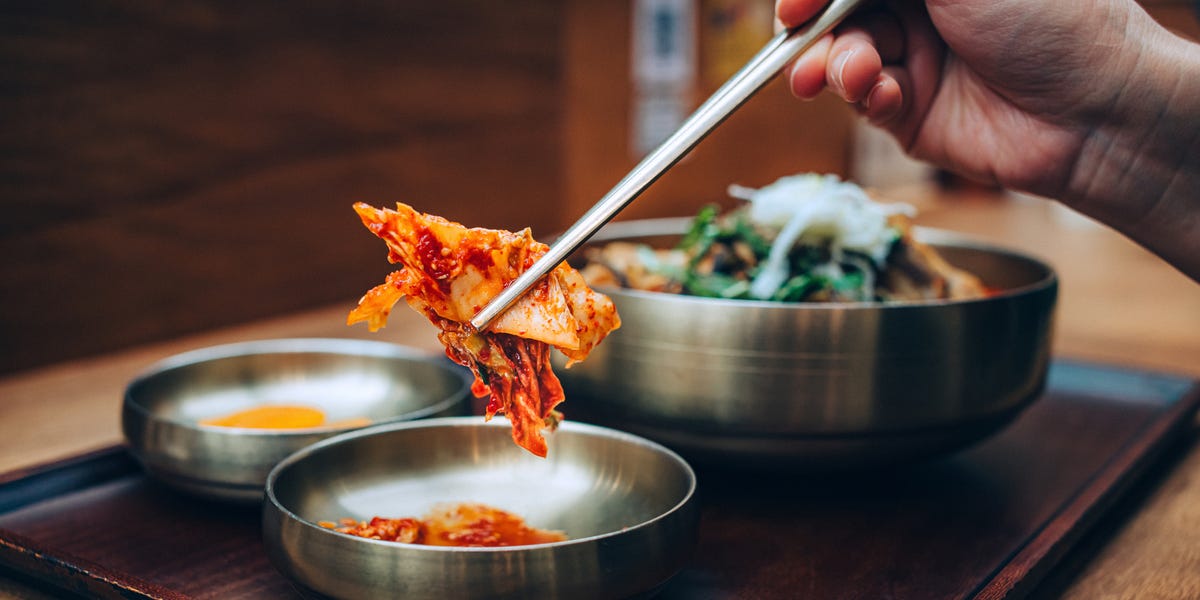
Fermented foods have had a moment for a while now, and honestly, the hype is deserved. As a dietitian, I’ve watched kombucha go from niche health food status to a mainstay in every grocery store’s refrigerated section, and kimchi earn a permanent spot in mainstream fridges.
But beyond the trend cycle, the healthiest fermented foods have something most buzzy wellness foods don’t: thousands of years of actual use, and a growing body of research to back them up. So if you’ve been eyeing that jar of sauerkraut and wondering whether it’s worth it, the short answer is yes. Here’s what you need to know about fermented foods.
What is fermentation?
First, it’s important to know what fermentation actually is. Fermentation happens when microorganisms like bacteria or yeast break down sugars and starches in food. That process creates tangy flavors, extends shelf life, and in many cases adds live beneficial bacteria.
Some research suggests that eating fermented foods may support a more diverse gut microbiome, which in turn is linked to better digestion and immune function. The evidence is still growing, so I won’t promise miracles, but in my humble professional opinion, these foods are genuinely worth a spot on your plate.
What makes fermented foods good for your gut?
Your gut is home to trillions of microbes that help digest food, make certain vitamins, and communicate with your immune system. Many fermented foods contain live cultures, often called probiotics, that may add to this community of helpful bacteria.
A well-known small study from Stanford found that people who ate more fermented foods over 10 weeks had greater microbial diversity and lower markers of inflammation. It’s one study, so we shouldn’t overstate it—but it’s an encouraging sign. Just keep in mind that not every fermented food contains live cultures, since heat and processing can kill them. When live bacteria matter to you, look for “live and active cultures” on the label, and choose refrigerated products when possible.
The healthiest fermented foods
With that being said, these are the fermented foods I recommend most, plus simple ways to work them into your menu.
Yogurt
Yogurt is one of the easiest—and most affordable—fermented foods to add to your routine. Made by fermenting milk with specific bacterial cultures, it delivers nutrients like protein, calcium, and often live probiotics.
For the most benefits, look for plain versions with “live and active cultures” on the label, and skip the ones loaded with added sugar. Greek yogurt is also an especially good choice if you’re looking to up your protein intake.
Try it: Stir it into overnight oats, use it as a base for a smoothie, or swap it for sour cream on tacos and baked potatoes.
Kefir
Think of kefir as yogurt’s drinkable cousin. It’s a fermented milk beverage that typically contains a wider variety of bacteria and yeast than yogurt, which is why some people reach for it specifically.
It has a tart, slightly effervescent taste that grows on you. If you’re sensitive to dairy, you may find kefir a bit easier to tolerate, since fermentation breaks down some of the lactose (though it’s not lactose-free).
Try it: Drink a small glass on its own, pour it over granola, or blend it into smoothies for extra tang.
Kimchi
Kimchi is a Korean staple made from fermented vegetables—usually napa cabbage and radish—seasoned with garlic, ginger, and chili. It’s rich in fiber and plant compounds, and unpasteurized varieties deliver live cultures. As a bonus, it packs a lot of flavor for very few calories, which makes it an easy way to make simple meals more interesting.
Try it: Add a spoonful to rice bowls, fold it into scrambled eggs, or pile it onto a grain bowl for a spicy, tangy kick.
Sauerkraut
A different variety of fermented cabbage, sauerkraut has been a pantry classic in many cultures for generations. It offers fiber and, when unpasteurized, live cultures too.

Add Prevention as a preferred source in your Google search results.
Use your Google account to add this to your settings.

Here’s my one caveat: many shelf-stable versions are pasteurized, which means the beneficial bacteria are gone. For probiotic benefits, buy refrigerated sauerkraut and check that it wasn’t heat-treated.
Try it: Layer it on sandwiches, serve it alongside roasted meats or veggie sausages, or toss a forkful into a salad.
Miso
Miso is a savory paste made from fermented soybeans, often with rice or barley. It brings a deep, salty, umami flavor that can transform a dish, and it contains beneficial microbes when it’s not cooked at high heat for too long.
An important note: miso is high in sodium, which means a little goes a long way. That works in your favor—you only need a small amount to add big flavor.
Try it: Whisk it into salad dressings, stir it into soups after cooking, or add it to marinades. To protect the live cultures, mix it in at the end rather than boiling it.
Tempeh
Tempeh is made from fermented soybeans pressed into a firm, nutty cake. It’s an excellent plant-based protein source that offers fiber, too, making it a satisfying swap for meat.
While cooking tempeh reduces its live cultures, fermentation still makes the soy easier to digest and may improve nutrient absorption. It’s a nutritious choice whether or not the probiotics survive.
Try it: Slice and pan-fry it, crumble it into chili or tacos, or marinate and roast it for grain bowls.
Kombucha
Kombucha is a fizzy fermented tea that has exploded in popularity, and it can be a fun alternative to soda. It has that signature tangy, slightly sour taste, and many varieties contain live cultures. Pasteurization and other processing methods can reduce or eliminate those beneficial microbes, so if probiotics are your goal, check the label for live cultures and look for refrigerated options when possible.
One thing to watch: some bottles carry a surprising amount of added sugar, so read the label and choose lower-sugar options. Portions matter here, since kombucha is a beverage that’s easy to overdo.
Try it: Sip a small glass in the afternoon, or use it as a sparkling mixer in place of sugary sodas.
How to add fermented foods to your diet
You don’t need to overhaul your meals to enjoy these benefits. Start small and build from there.
- Go slow. If you’re new to fermented foods, add them gradually. Some people notice temporary gas or bloating as their gut adjusts, so this isn’t a habit you want to go “all in” with immediately.
- Aim for variety. Different foods carry different microbes, so rotating your choices may support more diversity.
- Read labels. Look for “live and active cultures,” and choose refrigerated, unpasteurized options when probiotics are your goal.
- Note the sodium and sugar content. Kimchi, sauerkraut, and miso can be salty, while some kombuchas are sugary.
- Pair with fiber. Beneficial bacteria feed on fiber from fruits, vegetables, beans, and whole grains, so eat these alongside your fermented favorites.
Fermented foods aren’t a cure-all, and they work best as part of an overall balanced diet. But they’re flavorful, versatile, and backed by promising research, which makes them one of the easiest healthy habits I recommend.
Read the full article here