

Many people have read or heard that ultra-processed foods have been linked to serious health conditions, including cancer and dementia. But what’s often missing from these conversations is clarity around which foods are considered ultra-processed. We asked dietitians to explain what ultra-processed foods are, what the research says about them, and where they should fit in your diet.
“Many ultra-processed foods are easy to recognize,” explains Jennifer Pallian, a registered dietitian and founder of Foodess. A few of the examples she lists include soft drinks, packaged sweet and savory snacks, candy, cakes, instant noodles, frozen pizza, and chicken nuggets “Some foods, however, may be more surprising,” she says, “Products marketed as ‘healthy,’ ‘light,’ ‘organic,’ ‘vegan,’ or ‘gluten-free’ are not necessarily minimally processed. For instance, many plant-based meat substitutes and dairy alternatives are considered ultra-processed, as are some granola bars, flavored yogurts, packaged breakfast cereals, crackers, applesauce, and mass-produced breads.”
Meet the Experts: Jennifer Pallian, a registered dietitian and founder of Foodess; Kristine Dilley, a registered dietitian at The Ohio State University Wexner Medical Center; Scott Keatley, a registered dietitian and adjunct lecturer in the nutrition department at Lehman College; Beth Warren, a registered dietitian and founder of Nourished by Beth
Below, experts explain what to know about ultra-processed foods and share guidance around how much of these foods you should be consuming.
Additional expert sources include Sonya Angelone, a registered dietitian and former spokeswoman for the Academy of Nutrition and Dietetics and Deborah Cohen, a registered dietitian and associate professor in the department of clinical and preventive nutrition sciences at Rutgers University.
What are ultra-processed foods?
Ultra-processed foods are part of a newer classification system of foods called the NOVA scale. Under the system, foods are grouped into four main categories, per Harvard Health:
- Unprocessed and minimally processed foods: These foods are in their natural state or barely altered, with vitamins and nutrients still intact. Example: carrots, avocados, and milk.
- Processed culinary ingredients: These are ingredients that are created from a minimally processed food by pressing, refining, grinding, or milling. Think: olive oil or almond flour.
- Processed foods: These are foods that are changed from their natural state, usually with the addition of sugar, oil, salt, or other substances. Example: Canned tuna and some cheeses.
- Ultra-processed foods: Ultra-processed foods are processed foods that take things a step farther, adding ingredients like artificial colors and flavors, preservatives for shelf stability, and ingredients to preserve texture. These include many packaged foods.
Kristine Dilley, a registered dietitian at The Ohio State University Wexner Medical Center, admits that the definitions of food processing can be confusing.
“So many foods that people think of as ‘whole foods’ technically are minimally processed, like frozen fruit or vegetables, or those bags of pre-cut veggies at the grocery store,” she says. However, she points out, NOVA defines ultra-processed foods as “having at least five ingredients (often many more) and containing ingredients not commonly used in culinary preparations.”
In general, ultra-processed foods “are foods that have been combined with a significant amount of manufactured ingredients,” says Scott Keatley, a registered dietitian and adjunct lecturer in the nutrition department at Lehman College.
The term, “ultra-processed foods” usually means that they lack nutritional value, explains Beth Warren, R.D., founder of Nourished by Beth and author of Secrets of a Kosher Girl. But, she adds, “this is not always the case. It can also mean that the processed ingredients put in are to enhance sweetness or sodium levels, in which case they are not the healthiest options.”
Ultra-processed foods list
Many foods qualify as ultra-processed. Those can include:
- Frozen meals
- Soft drinks
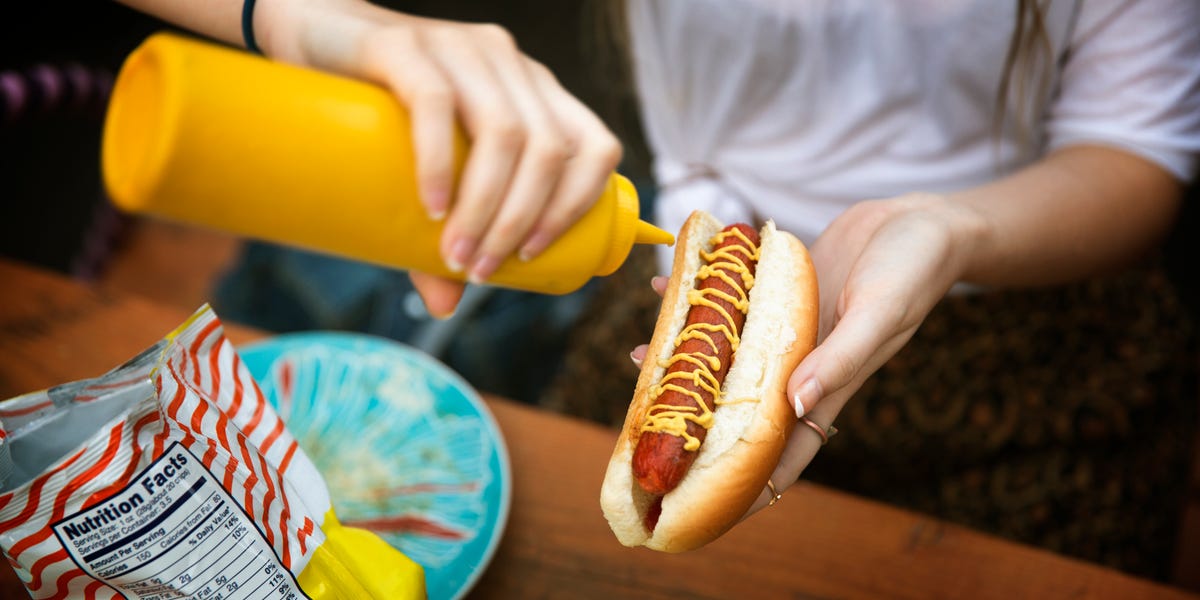
- Hot dogs
- Deli meat
- Fast food
- Packaged cookies
- Cakes
- Salty snacks
- Plant-based milks
- Jarred sauces
Why might ultra-processed foods be bad for you?
There have been several studies lately that have suggested ultra-processed foods aren’t good for your health. In December 2022, a study published in JAMA Neurology linked ultra-processed foods to an increased risk of dementia.
The study followed 10,775 people for 10 years and had them fill out questionnaires about the food they ate and their caloric intake during the study. At the end of the study, the participants were assessed on changes in cognitive performance over time with specialized tests. The researchers discovered that people who got 28% or more of their calories (or 400 calories in a 2,000 calorie diet) from ultra-processed foods had a higher risk of dementia. Another study published in July 2022 also linked ultra-processed foods to a greater risk of dementia.
Two large research studies published last year also linked ultra-processed foods to cancer. One was published in The British Medical Journal and, after analyzing data from roughly 46,000 men and 160,000 women, determined that men who ate the most ultra-processed foods had a 29% higher risk of developing colorectal cancer. (The same association wasn’t found for women.)
Another study published in The British Medical Journal analyzed the diets of more than 22,000 people in Italy and their mortality risk after 14 years. The researchers found that those whose diets were heavy in ultra-processed foods had a higher risk of developing chronic disease or dying prematurely, particularly from cardiovascular disease. Specifically, study participants with the least-healthy diet based on the NOVA scale had a 19% and 27% higher risk for all-cause and cardiovascular mortality.

Add Prevention as a preferred source in your Google search results.
Use your Google account to add this to your settings.

“There are a couple reasons why these foods are not as good for you as their less processed counterparts. The food has been broken down to its simplest parts which make it far more digestible than less processed foods,” Keatley says. “While this doesn’t sound like a bad thing, giving your body access to high-energy fats and simple sugars with limited fiber can increase blood sugar very quickly and activate the reward center of the brain, keeping us coming back for more and potentially overeating.”
In addition, he says, “the more times fats and oils are heated, the more likely it is for trans-fatty acids to occur.” (Trans-fatty acids have been linked to higher levels of LDL (bad) cholesterol and a higher risk of developing stroke, heart disease, and type 2 diabetes, the American Heart Association explains.)
The link between ultra-processed foods and poor health consequences may also be more than the foods themselves. “It may be that these food directly cause these diseases or the rest of the diet and lifestyle of those who eat these foods” says Sonya Angelone, a registered dietitian and former spokeswoman for the Academy of Nutrition and Dietetics. “In other words, it may be a lack of healthier foods that increases risk for these diseases.”
A study published in July 2026 suggests that the processing itself may independently have a negative impact on health. Researchers found that people who ate more ultra-processed foods had worse health outcomes, even after accounting for the overall nutritional quality of the foods. “The findings suggest ultra-processed-food factors beyond nutrients—such as changes to foods’ cellular structure, loss of beneficial chemical compounds, additives, and chemicals from packaging—may create health risks not addressed by traditional nutrition metrics or policies,” said the study’s senior author, Dariush Mozaffarian, speaking with Tufts Now.
Is it OK to have some ultra-processed foods?
Experts stress that you aren’t going to keel over if you have ultra-processed foods here and there, but it’s a good idea to be aware of how much of these foods you’re eating on a regular basis.
“Completely avoiding ultra-processed foods is unrealistic,” says Pallian. “That’s because they’re inexpensive, convenient, widely available, and deeply woven into modern food culture, making them difficult for many people to eliminate entirely. A more practical approach is to gradually replace frequently eaten ultra-processed foods with minimally processed alternatives.”
“Not all ultra-processed foods are bad for you and many are helpful if you have dietary allergies or restrictions such as plant-based milk,” Warren says. Worth noting: One of The British Medical Journal studies found that women who ate processed foods that included yogurt and dairy-based desserts actually had a lowered risk of colorectal cancer.
Ultra-processed foods are also just more convenient, Keatley points out. “We don’t have the ability to harvest our own wheat for the bread we’re going to make or milk our own cows —every single day,” he says. “It’s okay to use these products to supplement a generally healthy diet. This would look like a nice sized plate of minimally-processed foods like fish, vegetables and grains along with maybe a cup of ultra-processed soy milk…The problems occur when we go the other way—consuming mostly ultra-processed foods.”
Still, Dilley warns about the health halo surrounding some plant-based ultra-processed foods. “Food manufacturers and marketing professionals jump on health trends and try to make convenience versions of the recommended ‘healthy’ foods,” she says. “Plant-focused eating has been in the forefront the last few years, leading to a plethora of ultra-processed foods that fit into that category—veggie burgers, fake chicken patties, or many other vegan products that come in a box. Many of these items still qualify as ultra-processed and are likely not bringing the nutritional value the consumer expects based on the marketing.”
“Folks still need to read labels,” advises Deborah Cohen, a registered dietitian and associate professor in the department of clinical and preventive nutrition sciences at Rutgers University. That can mean making sure to only buy plant-based milk that’s unsweetened and tofu that doesn’t have added sugar or added fats, she says.
Ultimately, Warren says, “it is helpful to try to look for ‘less processed’ foods because [many] products on the market today will have some degree of processing and that does not make them bad.”
Cohen adds, “Eating ultra-processed foods on a very occasional basis is OK, however, they should definitely not be the mainstay of anyone’s diet.”
..
Read the full article here