

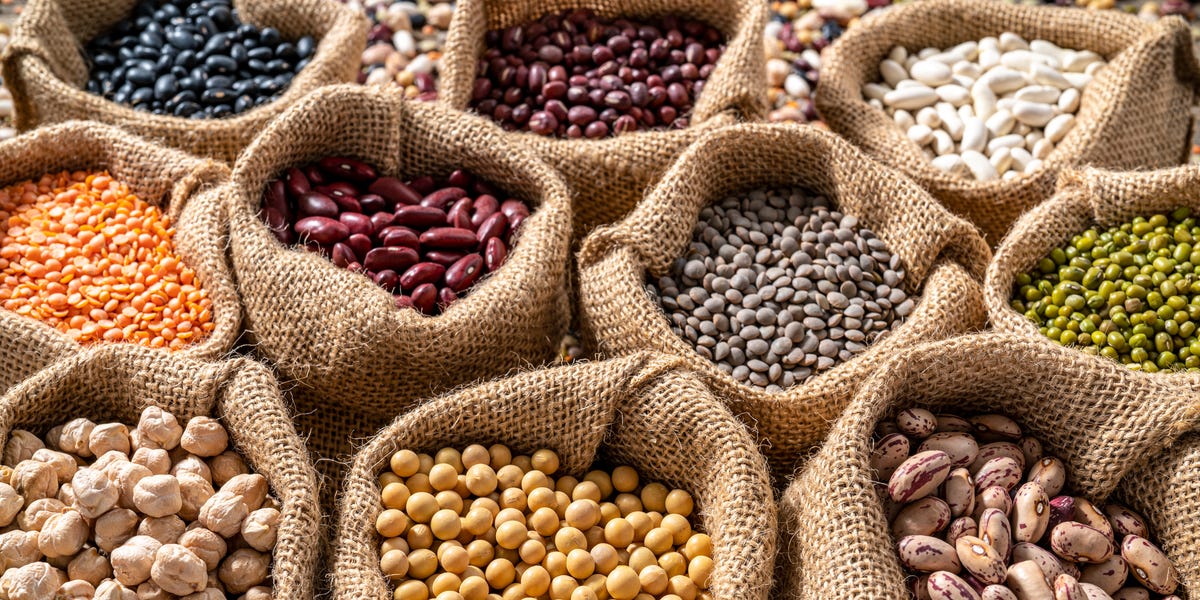
In general, it’s never a bad idea to include more legumes in your daily diet. But if you’re trying to decide what type to eat, beans vs. lentils, there are some key characteristics worth knowing.
“Beans are larger, take longer to cook, and come in a variety of types like black beans, kidney beans, and chickpeas,” said Lauren Manaker, M.S., R.D.N., L.D., a registered dietitian nutritionist and women’s health expert. “Lentils are smaller, cook faster, and are often split into red, green, or brown varieties. Both are legumes but have slightly different textures and nutrient profiles.”
Meet the experts: Lauren Manaker, M.S., R.D.N., L.D., a registered dietitian nutritionist and women’s health expert; Rachel Gargano, M.S., R.D., C.S.S.D., the chief registered dietitian at Live it Up.
Read on to discover how beans and lentils compare in terms of health and nutrition benefits, plus how each may help you meet your wellness goals.
Beans vs. lentils: Nutrition
Beans and lentils are quite similar from a nutrition perspective, and as such can help fill similar needs.
Beans nutrition
There are many varieties of beans. According to the U.S. Dry Bean Council, the most popular types of beans in the United States are pinto beans (the type used to make refried beans and bean soup) and navy beans (the type used to make baked beans), followed by Great Northern beans, red kidney beans, and black beans. Per the U.S. Department of Agriculture (USDA), 100 grams (g) of cooked pinto beans, which is just under ½ cup, contains:
- 117 calories
- 7 g of protein
- 1 g of fat
- 20 g of carbohydrates
- 7 g of fiber
The USDA says that the same amount of cooked navy beans contains:
- 119 calories
- 6.5 g of protein
- 1 g of fat
- 20 g of carbohydrates
- 7 g of fiber
Lentils nutrition
There are many different types of lentils, but they are all very similar in terms of nutrition. Per the USDA, 100 g of cooked lentils, or about ½ cup, contains:
- 114 calories
- 9 g of protein
- 0.4 g of fat
- 19.5 g of carbohydrates
- 8 g of fiber
Health benefits of beans
“While all beans have a slightly different nutritional profile, most are rich in protein, fiber (including resistant starch), iron, folate, phosphorus, antioxidants, and other bioactive compounds,” said Rachel Gargano, M.S., R.D., C.S.S.D., the chief registered dietitian at Live it Up. Protein and fiber, especially, are important for maintaining optimal energy levels and boosting satiety to help you avoid snacking between meals. Depending on the variety, beans can also be a good source of iron, according to the National Institutes of Health (NIH). Iron is critical for helping the body make hemoglobin, the protein in red blood cells that transports oxygen throughout the body.
Multiple studies have shown the benefits of incorporating beans into your diet on a regular basis. One study published in Nutrition Journal found that a higher bean intake was associated with higher overall diet quality and a higher intake of shortfall nutrients (those that most people don’t get enough of). Eating beans may also improve digestion, stabilize blood sugar, and boost heart health, per the Cleveland Clinic.

Add Prevention as a preferred source in your Google search results.
Use your Google account to add this to your settings.

Another benefit of beans is the large variety available—if there’s one you don’t like, there are plenty of others to try. “I love black beans for their versatility and creamy texture,” said Manaker.
Potential drawbacks of beans
“For many people, gas tends to be the biggest reason why they avoid beans,” said Gargano. “Beans contain the alpha-galacto-oligosaccharide raffinose, which is fermented by bacteria in our gut. The bacteria produce gas as a result of breaking down this carbohydrate, resulting in our uncomfortable flatulence.” That said, Gargano added that there are ways to reduce the concentration of this nutrient, such as soaking dried beans overnight before cooking them or cooking canned beans further before eating them, which may significantly curb gas and bloating.
“Some people are also concerned about the ‘anti-nutrient’ content of beans,” Gargano said. “It’s true that raw legumes can contain lectins, phytates, and tannins, all of which may impact the absorption of some nutrients.” But again, she noted that soaking, cooking, and sprouting have all been shown to reduce the concentration of these compounds. “The benefits of eating plants far outweigh the possible nutrient impacts of anti-nutrients,” said Gargano. “For most healthy people, anti-nutrients are not a concern and have not been shown to have poor health effects.”
Health benefits of lentils
Enjoying lentils can deliver many of the same health benefits as beans. “Lentils are also high in fiber and contain protein but tend to have slightly more iron and folate than beans,” said Manaker. Per the NIH, folate plays a key role in the synthesis of DNA and the metabolism of amino acids.
While the amount of carbohydrates in beans and lentils may seem high, the total nutrient content means they won’t spike your blood sugar. “Both beans and lentils are lower on the glycemic index, meaning they don’t impact our blood sugar levels as much as other carbohydrate-rich foods,” explained Gargano. “This is because they contain plenty of fiber and protein to help slow down how fast the carbohydrates are broken down.” In fact, a study published in Nutrients found that higher lentil consumption was associated with lower blood glucose and insulin levels.
Potential drawbacks of lentils
“Like beans, lentils contain carbohydrates that are fermented by our gut bacteria, which can cause uncomfortable gas and bloating,” said Gargano. “But the same strategies that can reduce bean-related flatulence and abdominal discomfort can be used for lentils.” In addition to soaking and cooking, increasing your lentil intake slowly may help limit digestive discomfort.
Beans vs. lentils: Which support weight loss?
“Both beans and lentils are excellent for weight loss because they’re high in fiber and protein, which keep you full,” said Manaker. A study published in Obesity Science & Practice found that among people trying to lose weight, those who lost the most over the course of the study were the folks who consumed the most protein and fiber. Considering that beans and lentils are excellent sources of both of these nutrients, they can be a great addition to a weight-loss-promoting eating plan.
Beans vs. lentils: Which are healthier?
“Overall, lentils and beans are almost identical in benefits and nutritional profile,” said Gargano. If we wanted to nitpick, lentils have slightly more protein and fiber and twice as much iron as beans, but beans may be more versatile and easier to incorporate into a wider variety of recipes. “The goal,” Gargano said, “is simply to get more of both to help positively impact your health!”
Read the full article here