

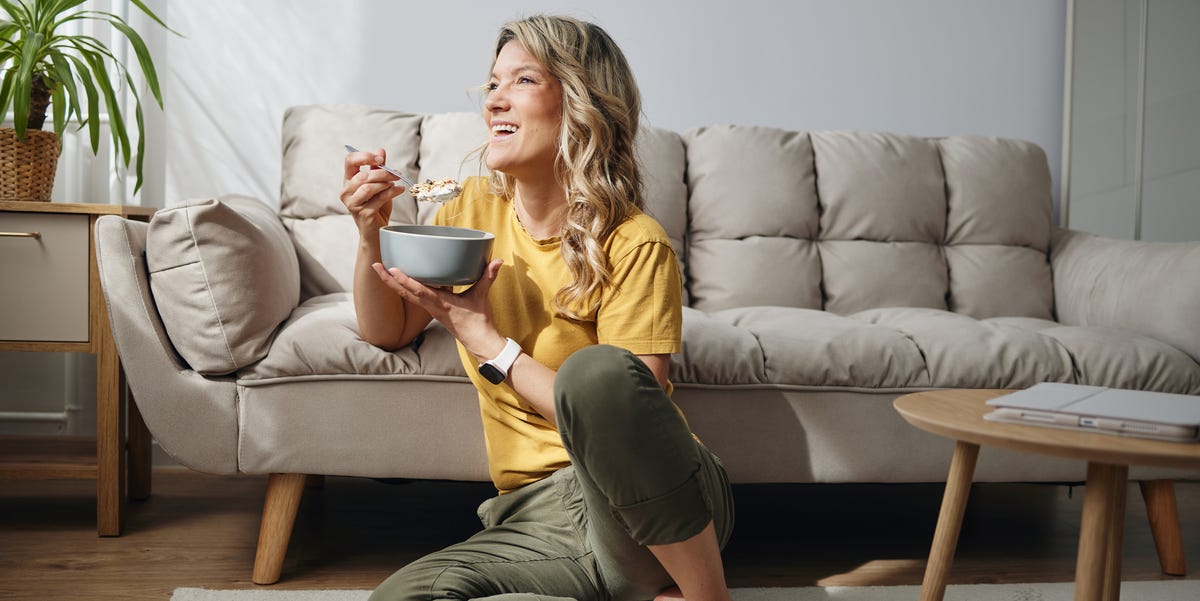
When you’re watching your blood sugar, starting your day with the right breakfast can be the difference between keeping your levels steady and watching them spike and drop all day. So if it’s oatmeal vs. granola for blood sugar, which should you choose?
Meet the experts: Amna Haq, M.S., R.D., L.D.N., a registered dietitian and owner of the Inclusive Dietitian in Chicago; Juliana Vocca, M.S., R.D., a registered dietitian and owner of Prime Women Nutrition in Moorestown, N.J.
Here, dietitians explain how these two popular breakfast foods impact your blood sugar levels, the best ways to prepare and enjoy them, and if one is better than the other when it comes to blood sugar management.
How does oatmeal impact your blood sugar?
“Oatmeal can be an excellent choice for people watching their blood sugar,” says Amna Haq, M.S., R.D., L.D.N., a registered dietitian and owner of the Inclusive Dietitian in Chicago. “It’s a whole grain that’s rich in soluble fiber, particularly beta-glucan, which slows digestion and helps promote a more gradual rise in blood sugar after a meal.” A gradual rise is preferable to a more rapid spike in blood sugar, which is often followed by a “crash” that leads to fatigue, irritability, and sudden hunger, notes Juliana Vocca, M.S., R.D., a registered dietitian and owner of Prime Women Nutrition in Moorestown, N.J.
Just how effective are oats for slowing down digestion and glucose absorption? According to a review published in BMJ Open Diabetes Research & Care, the beta-glucan in oats may help improve both fasting and post-meal blood glucose levels in people with type 2 diabetes. “Oats also provide important nutrients like magnesium, iron, and B vitamins that support overall metabolic health,” adds Haq.
How to enjoy oatmeal for blood sugar management
Oatmeal has the potential to support blood sugar management in a big way, but only if you choose the right kind of oats. “The more processed the oat, the faster it digests and the quicker your blood sugar can rise,” Vocca says. “So, eating minimally processed oats, such as steel-cut oats, leads to a much smaller increase in blood sugar and insulin after a meal than more processed oats, such as instant oats.” She explains that steel-cut oats are processed the least, followed close behind by old-fashioned rolled oats. “Instant oats, especially flavored packets, are broken down the most and raise blood sugar more quickly,” Vocca adds.
Once you have your minimally processed oats, picking the right add-ins is the next step. “Since oatmeal is primarily a carbohydrate source, pairing it with protein and healthy fats can help make it more balanced and keep you feeling full longer,” says Haq. “Some great additions include Greek yogurt, nut butter, and seeds (like chia, hemp, or ground flax). You can also add berries for even more fiber and antioxidants while keeping added sugars low.”
Creating the ideal combination of carbs, protein, and fat (and avoiding adding too many sweeteners, such as honey or maple syrup) serves to further prevent any rapid spikes in blood sugar. “Protein slows gastric emptying and gives your body more time to handle the carbs in oats, while healthy fats slow the breakdown of carbohydrates and help keep blood sugar steady for hours,” explains Vocca. And all the while, the fiber in the oats will help slow the release of glucose into the bloodstream.
How does granola impact your blood sugar?
“Granola can be a good choice for blood sugar management if it’s the right kind and in the right portion,” says Vocca. Most store-bought granolas are made with oats, nuts, and seeds, she adds. “These provide fiber, protein, and healthy fats, all of which slow digestion and help keep blood sugar steadier.” If there are minimally processed oats in your granola, you’ll get the same beta-glucan we mentioned above, which helps slow down the flow of glucose into the bloodstream. And nuts and seeds provide protein, healthy fats, and fiber, which “equals a steadier, flatter glucose curve,” Vocca says.

Add Prevention as a preferred source in your Google search results.
Use your Google account to add this to your settings.

Incorporating more nuts into your diet, whether as part of your granola for breakfast or otherwise, may also offer benefits in the prevention and management of type 2 diabetes such as better blood glucose control and a lower risk of diabetes-related cardiovascular disease, according to a review in Nutrients.
How to enjoy granola for blood sugar management
As is the case with oats, choosing the healthiest granola is critical. Many are sweetened with added sugars, says Haq, so reading the nutrition label is key. Haq and Vocca suggest choosing a granola that has minimal added sugar, three to five grams of fiber per serving, and lists oats, nuts, or seeds as the first ingredients, not sugar, crisped rice, or oils. You could also make your own at home.
Once you’ve found a low-sugar, high-fiber option, “granola is best enjoyed as a topping rather than the main event,” Haq says. “Pair it with a high-protein food like plain Greek yogurt, cottage cheese, or skyr yogurt, and add fresh berries or another whole fruit for additional fiber.” Treating granola as a topping can also help ensure you don’t overdo it on the portion size. “A serving is typically ¼ cup, which is tiny. Granola is calorie‑dense and easy to overeat, and doubling or tripling the portion means doubling or tripling the carb load,” explains Vocca, which can result in a blood sugar spike.
Oatmeal vs. granola: Which is best for your blood sugar?
Vocca and Haq agree that if your goal is to limit blood sugar spikes as much as possible, go for the oatmeal over the granola. “Oatmeal is lower in added sugar (most plain oats have zero added sugar), higher in soluble fiber (especially beta‑glucan, which slows glucose absorption), less calorie‑dense, easier to portion, and minimally processed,” Vocca explains. “Hence, it is digested more slowly and produces a gentler rise in blood glucose.” Still, if you have a low-sugar, minimally processed granola that you love to sprinkle on Greek yogurt in the morning, there’s no need to toss it. “Granola can absolutely fit into a blood sugar-friendly eating pattern as well,” says Haq. “But in general, plain oatmeal is the better choice.”
Read the full article here