

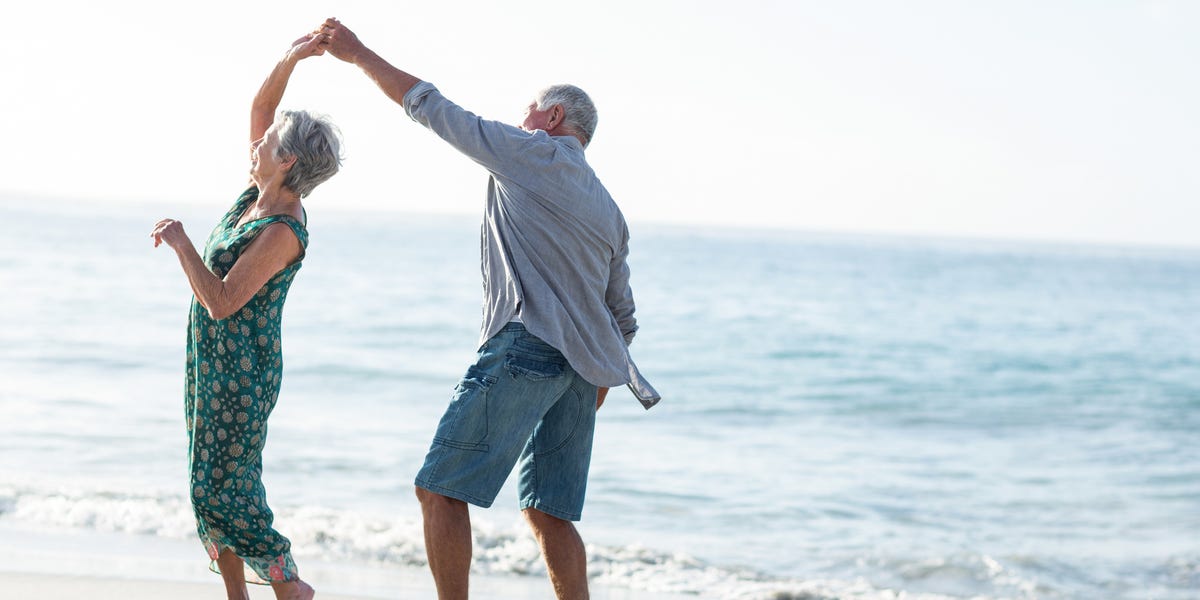
Scientists have been trying to find a cure for Alzheimer’s disease for decades, but we’re still frustratingly far away from a magic pill that can stop or reverse the memory loss and cognitive decline caused by the disease.
However, we do know that making certain lifestyle changes, including being physically active and eating a healthy Mediterranean-style diet, can potentially push back the onset of Alzheimer’s and other forms of dementia.
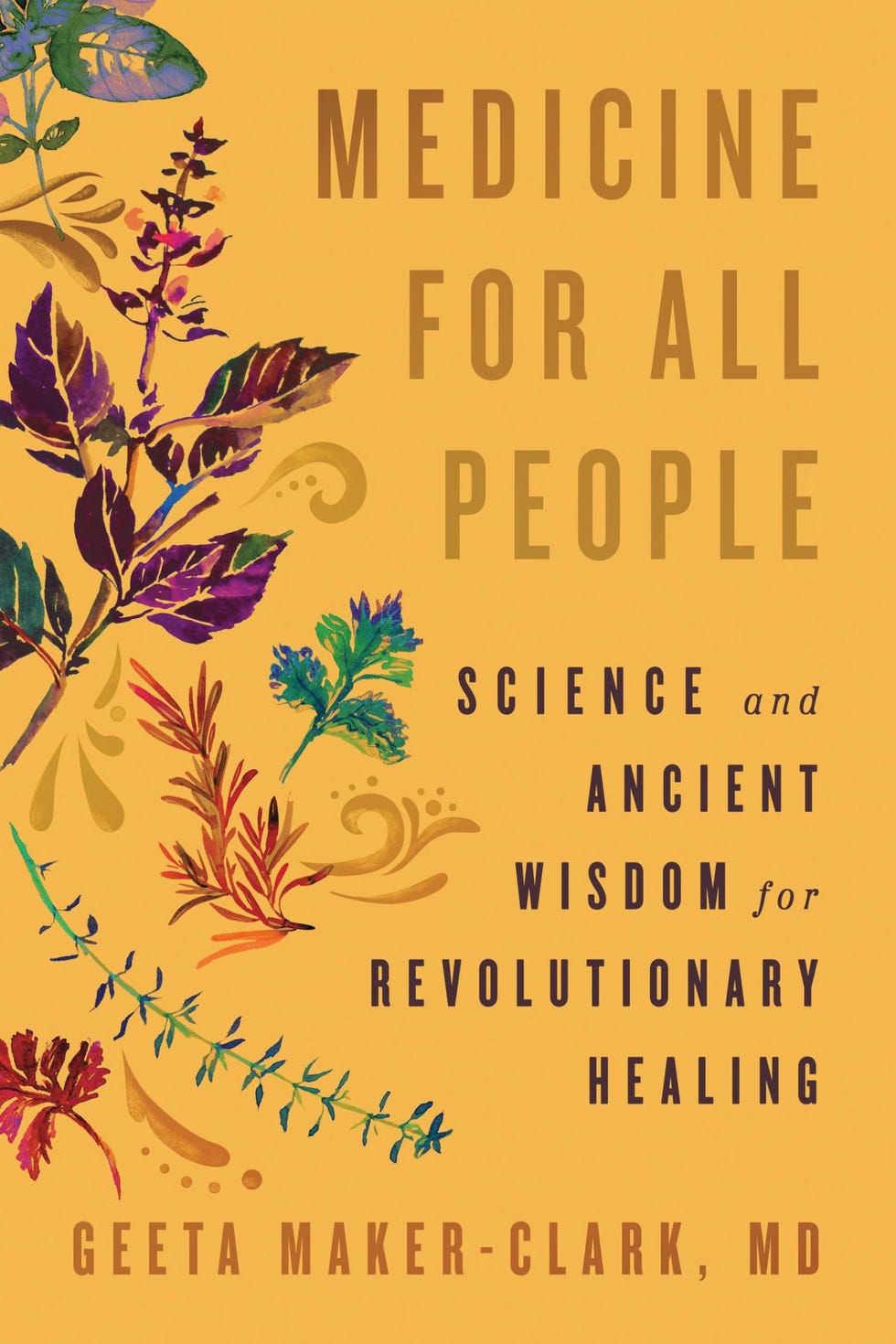
Research also points to a more specific activity, which may be one of the most effective—and certainly the most delightful—for keeping your brain healthy, says Geeta Maker-Clark, M.D., a clinical assistant professor at the University of Chicago Pritzker School of Medicine and author of Medicine for All People: Science and Ancient Wisdom for Revolutionary Healing (out August 11). The best part is you can do it right this minute.
It’s all about dance.
Whether you love salsa, tap dancing, Jazzercise, country line dancing, African dance, Bollywood-style dance, or just getting your groove on in the kitchen with your sweetie while you cook dinner, moving your body to the music has multiple benefits for the brain, Dr. Maker-Clark says.
“The truly unique and amazing qualities of dance for dementia protection have a lot to do with the way that our brain processes the music and the rhythm and the movement,” she explains. “There are brand-new synapses being created when we hear music and then move and translate that music and rhythm into dance in the body. And that neuroplasticity—the ability for the brain to make new connections and grow and change—turns out to be very important and useful for our brain as we age.”
A growing body of research bears this out: A Spanish study published last year included 92 older adults with mild cognitive impairment. Forty-seven of those participants completed a 12-week dance-based exercise program, while the rest did not take a dance class. Researchers found that after completing the program, the dancers saw improvement in tests of executive function, verbal fluency, and general cognitive function, while the control group did not.
In an earlier groundbreaking study out of Germany, published in 2018, researchers put 38 elderly adults, ages 63 to 80, on either a six-month conventional fitness program, like cycling, or a dance program, which involved learning choreography. While both groups experienced benefits, only those who took dance classes showed a greater increase in volume of the hippocampus, the area of the brain that plays a critical role in memory and balance.
Finally, a 2019 meta-analysis from Brazil found a connection between dance and positive changes in the brain, including hippocampal volume, gray matter volume (which helps with processing power, better memory, and emotional regulation), and white matter integrity (which helps with faster processing, abstract thinking, and motor coordination), as well as significant improvement specifically in memory, attention, and balance.
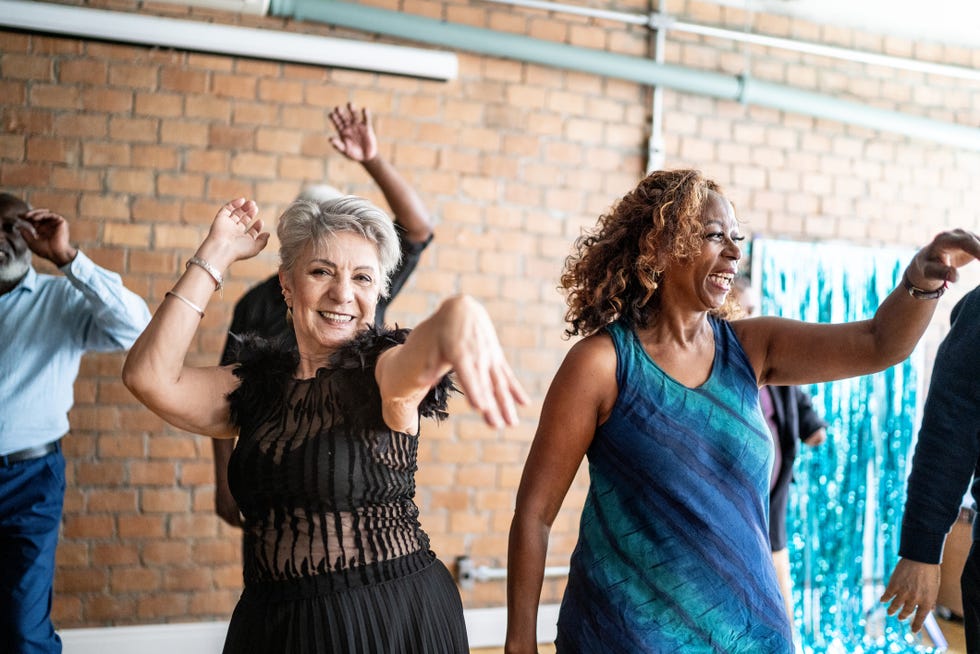
How Dancing Boosts Your Brain Health
You Have to Master New Patterns
If you take a class where you learn a routine, say, a Zumba or Broadway-style dance class, it challenges your brain in a similar way that learning a new language or playing an instrument does, Dr. Maker-Clark says.
“It can be really challenging. You have to learn and remember the steps and be able to get both sides of your body to cooperate,” she explains. While this might feel difficult at first, it becomes easier over time. “That’s an amazing aspect of our brain, and another way in which dance can bring so much richness to our neural activity without it feeling like work,” she adds.
It Provides Aerobic Activity
There’s a saying in brain health: Whatever is good for the heart is good for the brain. And keeping the heart pumping and the blood moving to your brain is key.
Exercise also helps manage blood pressure and decreases risk of anxiety and depression, all of which are risk factors for dementia.
It Strengthens Social Ties
If you join a dance class, or even just make a regular date to go out with friends to a restaurant with live music, where you can get up and sway to the beat, you are strengthening your human connections, another key aspect of keeping dementia at bay.
“Dance is a way of communing,” says Dr. Maker-Clark. “It’s so powerful, because when we dance with other people, we’re not just moving our own muscles. We’re synchronizing with rhythm and music and breath and eye contact and the bodies around us. And that can create a very deep sense of safety and connection. The nervous system really responds to that.”
I’m Nearly Convinced, but How Do I Get Started?
If You Think You’re Lacking Coordination…
You don’t have to be graceful or coordinated or have ever taken even one ballet class to reap the brain benefits of dance, says Dr. Maker-Clark. “I write out a prescription to my patients to dance for five minutes a day,” she says. “It’s easy to fit into the course of a day.”
All you need to do is turn on some music you love, take some breaths, and then let the rhythm move you. Try it after dinner or as you’re getting ready to start your day. As they say on T-shirts and greeting cards: Dance like no one is watching you.
If You Have More Than 5 Minutes…
To really boost the benefit, including the social aspect, consider signing up for a group class at your local community center, gym, YMCA, senior center, or faith community, suggests Dr. Maker-Clark. Remember, you’re not auditioning for the Rockettes, so don’t worry if you can’t do all the moves or if you feel like a toddler trying to take her first steps. It’s all about getting your body to move to the music.
If You Have a Physical Limitation…
Dr. Maker-Clark understands that not everyone has the physical ability to make it through a traditional dance class and encourages them to explore other options. “For people who have mobility issues, chronic pain, balance concerns, or fatigue, dance can still be available and can be modified. You can sit in a chair and move only your upper body in a chair dance class, or hold onto a railing,” she suggests. You can also take frequent breaks if needed.
If There Aren’t Any Classes Near You…
This is where the internet can be a lifesaver! Jazzercise, for example, offers livestreamed classes, and many are geared to beginners and older dancers. Or search online for your favorite type of dance, and there is almost definitely a YouTube series or other video for you to try.
Now go ahead and shake that booty!
Read the full article here