

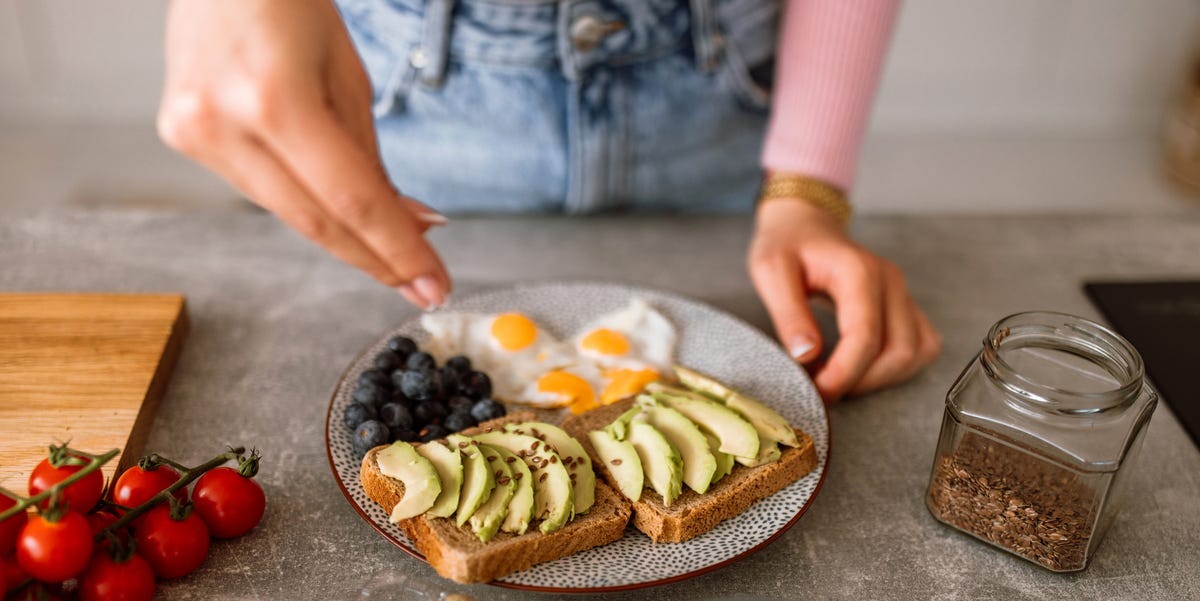
When my editor challenged me to start my days off protein-strong by clocking 30 grams of protein at breakfast, it felt like both a challenge and a priority.
See, protein is quite essential for good overall health and healthy aging. Protein helps build muscle and helps keep hunger in check. And as someone in perimenopause, I’m even more tuned in to the importance of protein, as this stage of life comes with shifting hormones and a gradual loss of muscle mass—which makes getting plenty of protein especially paramount.
And here’s a relatable confession: hectic mornings often mean I skip breakfast and survive on coffee and vibes. I’m eager to change that, so I was definitely looking forward to taking on this protein-heavy week.
Here’s what happened when I ate 30 grams of protein at breakfast every day for a week, plus easy ways to get more protein.
What Happened When I Ate 30 Grams of Protein at Breakfast Every Day for a Week
The textbook outcomes that I always talk to my clients about actually showed up, and pretty quickly, too. Fullness, for starters—within a couple of days, that relentless midmorning hunger I’d quietly normalized started to quiet down. The 10:30 a.m. pantry raids? Fewer. The pull toward a second coffee and something sweet to satisfy me? Noticeably calmer.
My energy felt steadier, too. I want to be careful here, because plenty of things affect energy (like sleep, stress, and hydration), but I did feel less of the shaky, running-on-empty sensation I sometimes get when I skip a real breakfast. Whether that was the protein, the simple act of eating something substantial versus relying solely on caffeine, or a bit of both, it was a welcome change.
But the biggest shift that I noticed was a mental one. Hitting 30 grams of protein for breakfast took planning, but that made my mornings more intentional and mindful. I enjoyed fueling up on eggs with cottage cheese, Greek yogurt with seeds, or an egg scramble loaded with extra veggies. On chaotic mornings, I leaned on Koia protein shakes, which pack around 20 grams of protein; grabbing one on the way out the door got me most of the way to my goal with almost no effort.
Was starting my day with 30 grams of protein at breakfast life-changing? No. But I felt more satisfied, less reactive with food, and more like I’d set myself up well for the day. And long-term, I know if I keep up with this habit, it will be fantastic for my overall health—and yours!
Benefits of Protein
Aids in Appetite Control
Protein influences appetite-regulating hormones and slows how quickly your stomach empties, which is why you feel satisfied for longer after a protein-rich meal.
In one small study, having 30 grams of protein at breakfast was associated with greater satiety-related hormone responses than a low-protein, high-carb breakfast, and participants reported better appetite control—and that all tracked with my own experience, too.
Supports Steady Energy
A breakfast built around protein rather than refined carbs (like that tasty muffin) tends to lead to a more gradual rise and fall in blood sugar—which may help you avoid the energy crash that often follows a low-protein start.

Add Prevention as a preferred source in your Google search results.
Use your Google account to add this to your settings.

Helps Maintain and Build Muscle
Protein provides the amino acids your body needs to repair and build muscle tissue. This becomes especially relevant in midlife, since muscle mass naturally declines with age and shifting hormones during perimenopause and menopause.
Research suggests that menopause may be a particularly important time to pay attention to muscle health, and a 2026 review found that lean muscle mass tends to decline as early as perimenopause (the period leading up to menopause’s completion).
Should Anyone Not Eat 30 Grams of Protein at Breakfast?
Thirty grams is a useful benchmark to help ensure you get enough protein, but it’s not a universal rule. For some people, that number, or the way it’s distributed, depends on their individual lifestyle habits, activity level, or health history, so it’s a good idea to chat with a dietitian about what your personal protein goals should be.
If you have kidney disease or reduced kidney function, higher intakes can sometimes be a concern, so always talk to your doctor before increasing how much protein you’re eating.
The Bottom Line
One week in, and I’m a protein-at-breakfast convert. Showing up to breakfast with intention and actual protein made a difference I could feel: less hungry, more even-keeled, and weirdly more in control of how my day unfolded. That’s not nothing. That’s actually kind of everything.
Aiming to hit 30 grams of protein at breakfast isn’t about rigid rules. Instead, it’s about building a breakfast that actually works for your real life. Some mornings, that’s a full egg meal; other days, it’s a quick cottage cheese bowl or a grab-and-go protein shake. All types of protein-forward breakfasts count and will benefit your health. Because protein-rich foods bring more to the table than protein alone—Greek yogurt, eggs, cottage cheese, nuts, seeds, tofu, fish, poultry, and milk also provide bonus nutrients such as calcium, iron, choline, fiber, and healthy fats. Centering your breakfast around protein may also help you start the day with a little more nutritional substance and balance.
Read the full article here