

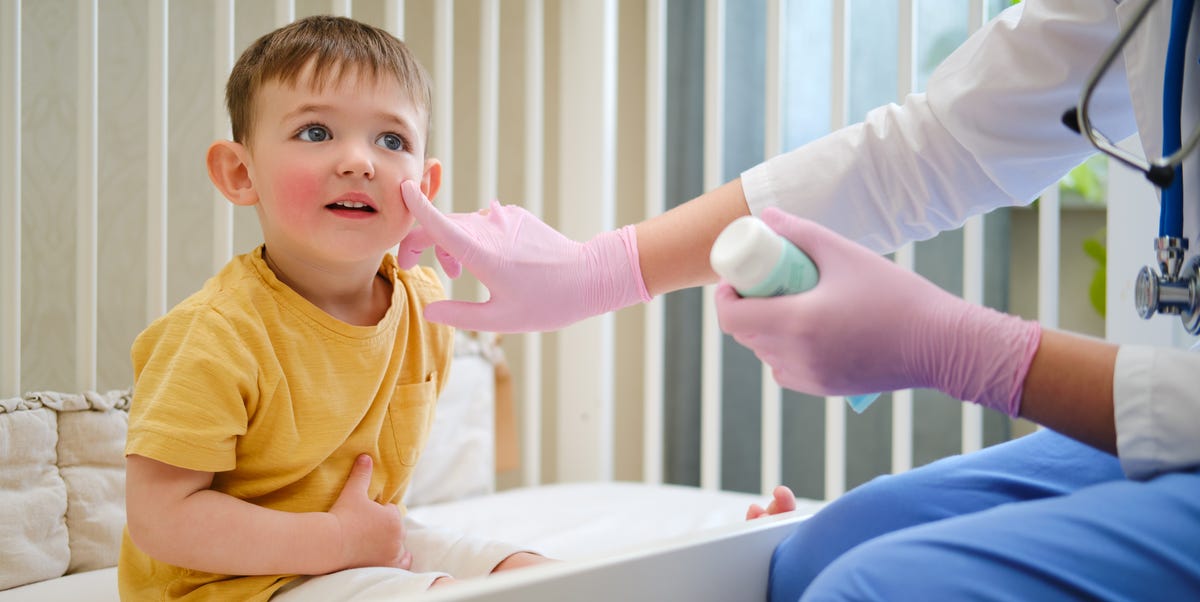
Your child is diagnosed with eczema, or atopic dermatitis. It’s time to take a breath. You finally have an explanation for why your little one has struggled with itchy, dry skin, and now it’s time to figure out what treatment plan makes sense. It can feel like a whole new challenge is ahead of you.
The good news: There are a lot of treatment options for eczema, from lifestyle changes and skincare routines to prescription therapies. The best approach depends on factors like your child’s symptoms, age, triggers, and how much the condition affects daily life. “There’s no one size fits all treatment; it should be tailored to each individual child,” says Shehla Admani, M.D., a pediatric dermatologist and clinical associate professor in the Department of Dermatology at Stanford University School of Medicine.
Your child’s healthcare provider should guide treatment decisions, but understanding your options can help make the process feel less overwhelming. Whether you’re preparing for your next appointment or considering changes to the current regimen, use this guide to navigate your child’s eczema treatment journey with confidence.
Meet the experts: Brittany Chan, M.D., a pediatrician with Texas Children’s Pediatrics in Spring, TX; Joan Tamburro, D.O., pediatric dermatologist at Cleveland Clinic Children’s Outpatient Center; Andrew Krakowski, M.D., pediatric dermatologist and Network Chair of Dermatology for St. Luke’s University Health Network in Bethlehem, PA; Shehla Admani, M.D., pediatric dermatologist, clinical associate professor in the Department of Dermatology at Stanford University School of Medicine, and spokesperson for the Society for Pediatric Dermatology
Care starts at home
Managing eczema begins with everyday practices. Doctors recommend the following approaches to help reduce flares and keep skin healthier and more comfortable.
Basic skincare: Gentle soaps and moisturizers are a cornerstone of eczema care. “When choosing skincare products, look for products labeled ‘fragrance-free,’” Dr. Admani says. She notes that “unscented” isn’t the same thing, since some products use masking fragrances to neutralize odors. Even “fragrance-free” products deserve a closer look at the ingredient list. “The FDA doesn’t regulate use of the claim ‘fragrance-free,’ and products with botanical (plant-based) fragrance may still carry that label,” Dr. Admani says. If your child is sensitive to fragrances, she recommends avoiding products with botanical extracts.
Dr. Admani recommends selecting a cream-based moisturizer under most circumstances. However, she adds this caveat: “Even the gentlest creams can cause a burning or stinging sensation when the skin is very inflamed. If this is noted, it may be best to use an ointment during those times.”
Bathing habits: Years ago, the medical community recommended that children with eczema avoid daily baths. But research has since shown there’s no difference in symptoms in people who bathe daily or less frequently. “I personally favor daily or every-other-day short, lukewarm baths to clean away allergens and bacteria and to hydrate the skin,” says Andrew Krakowski, M.D., pediatric dermatologist and Network Chair of Dermatology for St. Luke’s University Health Network in Bethlehem, PA.
He recommends following the “three-minute window” after you bathe your child: “Apply moisturizer or topical medication within three minutes of getting out of the tub, while the skin is still damp,” Dr. Krakowski says. “This traps the water in the skin. Waiting too long allows the moisture to evaporate, leaving the skin drier than before.”
Trigger avoidance: Eczema triggers aren’t always obvious, but Dr. Krakowski suggests starting with the common culprits. “Switch the entire household to fragrance-free, dye-free laundry detergents, and skip the fabric softeners or dryer sheets,” he says. “Wash new clothes before they’re worn.”
While children with eczema may also have food allergies, Dr. Krakowski says they’re rarely the cause of eczema flares. “I strongly advise against putting children on restrictive elimination diets without consulting an allergist or pediatric dermatologist first,” he says.
Dr. Admani stresses that some flare triggers are tough to avoid. “Caregivers should remember that even if they do everything perfectly, there can still be flare triggers that are out of their control, such as weather changes, illness, or emotional stress,” she says. “It’s important to work closely with your healthcare provider to create a toolkit for eczema management, so if a flare happens, you’re ready to tackle it.”
Prescription treatments for more support
If lifestyle strategies aren’t enough, doctors have more prescription options than ever for treating eczema. “We’re in a very exciting time for eczema management, as we now have multiple non-steroid treatments that are FDA-approved for eczema in children,” Dr. Admani says. Here are the major treatment categories your healthcare provider may recommend:
Topical steroids. These are considered a first-line treatment for flares, according to Dr. Krakowski. “When used properly—meaning the right strength for the right body site for a limited period—they’re incredibly safe and effective,” he says. These typically come in cream or ointment form, says Brittany Chan, M.D., a pediatrician with Texas Children’s Pediatrics in Spring, TX. “These are used safely, even in infants, but using them for a very prolonged period can cause skin changes such as thinning or discoloration,” she says. “There are also some areas of the body where topical steroid use is not recommended, such as the eyelids.”
Non-steroidal topical medications. These include medications like topical calcineurin inhibitors or PDE4 inhibitors. “They’re fantastic for long-term maintenance and sensitive areas like the face and eyelids,” Dr. Krakowski says. Worth noting: Some people will experience a burning sensation after using topical calcineurin inhibitors or PDE4 inhibitors, but this side effect isn’t typically harmful and often improves with continued use.
Advanced systemic medications. “For children with moderate-to-severe eczema that doesn’t respond to topicals, we’re in a golden era of medicine,” Dr. Krakowski says. Biologic medications and JAK inhibitors target immune pathways that cause inflammation, he explains. As a result, they can help children develop clear skin and feel more comfortable. They also have an “excellent safety profile,” Dr. Krakowski says. These medications aren’t perfect, though so you will want to talk to your doctor about any possible side effects.
How doctors and families can work together
Choosing an eczema treatment plan for your child should be a shared decision-making process, according to Dr. Krakowski. “I never just hand over a prescription; I partner with the parents,” he says.
Because all medications carry potential side effects, providers should review the risks, benefits, lifestyle factors, and severity of symptoms when discussing treatment options, says Joan Tamburro, D.O., a pediatric dermatologist at Cleveland Clinic Children’s, who takes a similar approach. “We keep in mind the family’s lifestyle and how affected their child is by this disorder,” she says.
Dr. Krakowski usually recommends his patients and their families start with a “strong foundation of daily skincare” before considering targeted therapies, depending on whether the eczema is mild, moderate, or severe. “I also address ‘steroid phobia’ early on, providing education so parents understand how to use medications safely and confidently without fear,” he says.
Questions to ask at your child’s next appointment
Your child’s next doctor’s appointment is a chance to get clear on how the treatment plan works and what to expect moving forward. The experts we spoke with recommend asking these questions as well as any others you have:
- Can you give me a step-by-step eczema action plan so I know exactly what to do when my child’s skin is clear versus when they’re having a severe flare?
- Which treatment is for daily maintenance and which is strictly for active flares?
- Where on my child’s body can I safely apply this prescription medication?
- How many days in a row can I use this medication?
- How much of this cream should I apply, and can you show me what a “fingertip unit” looks like?
- If an eczema patch is not improving, what’s the next step or alternative option?
Dr. Admani also recommends either bringing your child’s current skincare products to your appointment or taking photos of them and the ingredients lists to show the doctor. “Review these with your healthcare provider to make sure they’re right for your child,” she says.
When it may be time to adjust the treatment plan
Not all medications or lifestyle treatments will cause immediate results. Dr. Krakowski generally suggests giving a treatment two weeks to see if it leads to meaningful results. (However, your child’s healthcare provider may suggest a specific timeline based on the treatment itself.)
“If you’re noticing any new symptoms that you suspect may be side effects of the prescribed treatment, or the eczema doesn’t seem to be improving in the expected time frame or is getting worse, reach out to your physician for further guidance,” Dr. Chan says. If your doctor seems reluctant to change the treatment plan, despite a lack of results, or you don’t feel that your concerns are being heard, don’t hesitate to get a second opinion.
The goal isn’t just clearer skin—it’s finding a treatment plan that works for your child and feels manageable for your family.
Read the full article here