

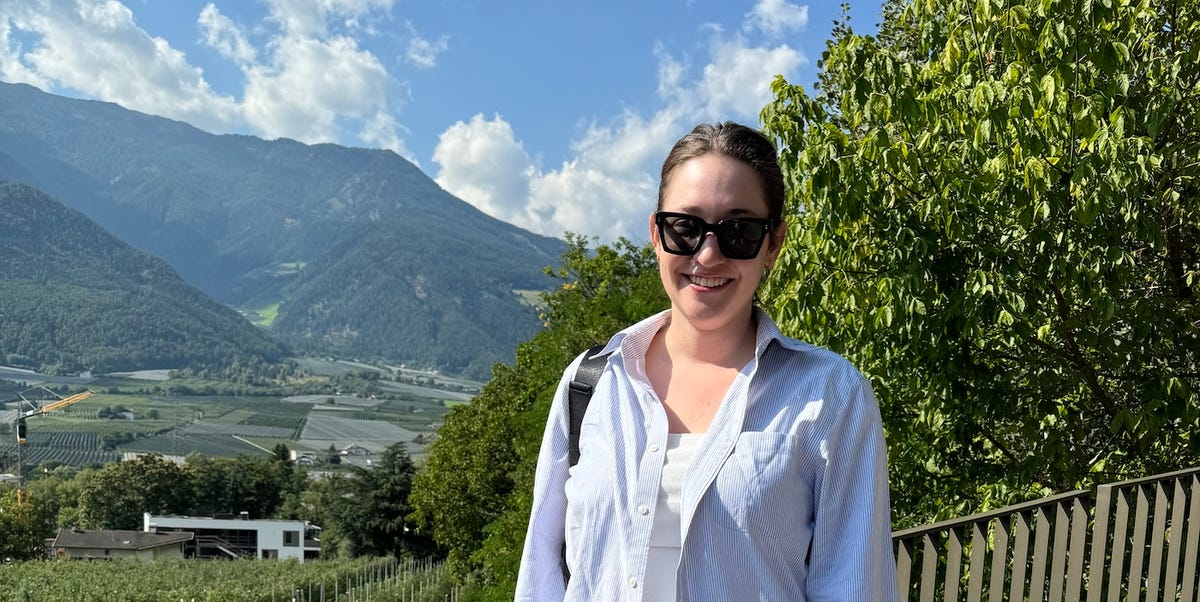
We’ve all had to pee so badly that we do the “pee dance” all the way to the loo. But have you ever had to go so intensely that you get goosebumps? That was me in 2013, when it started happening suddenly, and all the time. The urge would hit before college lectures, during my workout, and it would wake me in the night. It became all-consuming.
What was wrong? Was I just making good on my goal to drink more H2O? Or perhaps I was persistently parched due to the dining hall chefs becoming more generous with their salt seasoning. I tried desperately to make sense of my symptoms that didn’t make sense.
For instance, I was also always tired, struggling to get out of bed on most days. My head was constantly pounding, I felt endlessly parched, and my arms and legs suddenly felt as heavy as the weights I no longer had the energy to lift. I told myself it was just the stress of college—my schedule was intense and my family was far away—it’s no surprise that I would feel drained.
I went on like this for 14 months, but no matter how much I tried to reason away my symptoms, I couldn’t ignore the truth: Something was wrong.
My First (Incorrect) Diagnosis
About 10 months before my serious symptoms began, there were some mild signs something was up—like headaches, nausea, and exhaustion. I started seeing a general practitioner in my hometown (where I also had an endocrinologist, since I have Hashimoto’s disease, an autoimmune disease that affects the thyroid).
But after my very first appointment, I got a diagnosis and a prescription that threw me off.
My fasting blood sugar was 300 mg/dL—three times the normal range. The doctor told me I’d need to start taking metformin, a drug that helps manage high blood sugar, for prediabetes. Plus, I’d have to adjust my diet and exercise routine. “Otherwise, everything looks good!” she said.
Hold up. First of all, fasting blood sugar? I’d had a bowl of cereal before getting my bloodwork done, so the numbers must be off, I said. She explained the number was high regardless. I was still processing the “prediabetes.”
I was 19 years old, maybe 15 pounds overweight, and otherwise healthy—she’d just said so herself! I also had no family history of diabetes. But she sent me home with a prescription for metformin anyway. I followed up with my endocrinologist, who agreed with the doctor. So despite my shock and worry, I started taking metformin.
Signs Something Was Still Wrong
After just a few days on the medication, I couldn’t believe it was right for me. My stomach cramped on and off, and I spent a lot of time in the bathroom—anything I ate went right through me. I felt exhausted and spent even more time in bed. I decided to stop taking the medication and follow up with my endocrinologist.
She ordered another A1C test (which measures your average blood glucose over the course of two to three months, from a single drop of blood). My results came back elevated—not enough to warrant much concern, according to her. But I was within the prediabetes range, so she sent me to a dietitian. The nutritionist concluded my diet wasn’t the problem. (I was probably one of the few Boston University freshmen who regularly hit the salad bar.) So what was causing these blood sugar spikes and beyond-uncomfortable symptoms?
A few months later, my endocrinologist ordered another round of diabetes tests, this time looking for a slew of things that could cause elevated blood sugar levels. Three of these tests looked for antibodies that could indicate type 1 diabetes. And though one came back positive, my doctor felt that me having type 1 diabetes was extremely unlikely. “That usually happens in kids,” she said. “You’re 20 years old and your numbers aren’t that high—you’re just prediabetic.”
How was I prediabetic, though? I felt like I was shouting into a void. Nothing about the diagnosis made sense to me. Prediabetes usually coincides with other comorbidities or family history, and neither of those applied to me.
Despite my questions, my doctor sent me home with a blood glucose meter (glucometer) and directions to test my blood sugar two hours after I ate, once a week. She wanted me to call her office and update them with any elevated numbers (any numbers above 180 mg/dL two hours after eating). She also advised me to go on a no-carb diet.
I loaded up on salad and high-protein foods, but I still found myself calling her office just about every week for the better part of three months. It wasn’t until my blood sugar started topping 300 mg/dL consistently that I really started to worry.
Getting the Right Diagnosis
Months later, I was home in Florida for a few days when I got a call from my endocrinologist’s office. I’d been calling for months with various high blood sugar readings, only to be rushed off the phone by different nurses telling me to drink more water. Finally, someone was calling me.

Add Prevention as a preferred source in your Google search results.
Use your Google account to add this to your settings.

I’ll never forget that phone call. I was driving to the beach, with the radio on and my older sister sitting next to me.
The nurse said there had been a misunderstanding. The doctor thought I was anxious about a single high blood sugar number, and hadn’t realized I’d been calling about consistently high numbers. I needed to get to a hospital immediately, as I was likely going into diabetic ketoacidosis (DKA), which happens when your body produces high levels of blood acids, called ketones, because it isn’t producing enough insulin. This can ultimately lead to coma and death if it goes untreated.
I asked if I could drive to her office since I was already in town, and she told me to come in right away.
I met my mother at the doctor’s office, where a nurse performed yet another A1C test. This time, the results showed I was way over the normal range—and well into the official diabetes range. “You have type 1 diabetes,” the doctor told me. “This means you’ll need insulin for the rest of your life.”
I just stared at her, shocked, scared, sad, but most of all, relieved. Finally, someone was taking this seriously. I turned to my mom, who was crying, and I realized I was too. Both of us knew what this meant: I would have a lifelong battle ahead of me, full of needles, expensive medications and medical supplies, and so much stress.
The doctor also told me I couldn’t leave the office until I gave myself a shot. I stared at the syringe for what felt like an eternity, but I did it—the first in a long line of shots I’ve since given myself. The doctor sent me home with some pamphlets and prescriptions for insulin and needles, and I was on my way to New York for an internship a few days later.
Luckily, I was able to get into the Naomi Berrie Diabetes Center at Columbia University, where the doctors taught me how to care for the disease, how to dose insulin, and when to check my blood sugar. They also showed me that diabetes was not, in fact, a death sentence.
Finding Hope
I’ve always felt that knowledge is power, so I did what I do best: I researched type 1 diabetes and ultimately found a supportive community online. Because I had no family history (which is actually quite common for type 1 diabetes), I felt so alone. I made one diabetic friend in college, Christie, but otherwise, I knew virtually no one with the disease.
When I graduated college and moved to New York in 2016, Christie and I started a podcast, Pancreas Pals, so people living with type 1 diabetes knew others were out there who’d experienced what they were going through. And the podcast took off.
I also joined the Juvenile Diabetes Research Foundation’s Young Leadership Committee, where I met fellow type 1 diabetics who were living their best lives. It was a whole new world for me, and it gave me a new outlook on life with the disease. I could be healthy, successful, and fulfilled and have type 1 diabetes. These things could coexist.
Every day is a new battle, but I finally feel equipped with the right tools and support to help me succeed.
As the years go by—no matter how burnt out I get managing this chronic illness (because trust me, it’s a full-time job keeping myself alive)—I remember how far I’ve come. From begging doctors to call me back to helping a new generation of type 1 diabetics find their footing through my podcast, I’ve come full circle.
Type 1 Diabetes Symptoms
Experts still aren’t sure what causes type 1 diabetes, but it’s thought to be caused by an autoimmune reaction that destroys the cells in the pancreas that make insulin, called beta cells. This process can go on for months or years before any symptoms appear.
When those symptoms do show up, here’s what they look like:
- Increased thirst
- Frequent urination
- Bed-wetting in children who previously didn’t wet the bed
- Extreme hunger
- Unintended weight loss
- Irritability and other mood changes
- Fatigue and weakness
- Blurred vision
Read the full article here