

About 795,000 people in the U.S. experience a stroke each year, which can be a life-altering experience. While you can’t influence some risk factors like your age or your genetics, there are lifestyle tweaks you can make to help. That includes making diet tweaks by adding foods that may help lower your risk of stroke.
Overall, following a healthy eating pattern can help lower a slew of stroke risk factors, including your blood pressure, cholesterol, and blood sugar regulation, says Cheng-Han Chen, M.D., interventional cardiologist and medical director of the Structural Heart Program at MemorialCare Saddleback Medical Center in Laguna Hills, CA.
Meet the experts: Scott Keatley, R.D., co-owner of Keatley Medical Nutrition Therapy; Keri Gans, R.D.N., dietitian and host of The Keri Report podcast; Sonya Angelone, R.D.N., is a nutritionist and registered dietitian based in San Francisco, California; Kristine Dilley, R.D.N, a nutritionist at The Ohio State University Wexner Medical Center; Cheng-Han Chen, M.D., interventional cardiologist and medical director of the Structural Heart Program at MemorialCare Saddleback Medical Center in Laguna Hills, CA
There are specific diets linked to a lower risk of stroke: the DASH diet and Mediterranean diet. “These dietary patterns are similar in that they both encourage increasing your intake of plant-based foods such as vegetables, fruits, whole grains, beans and legumes; lean meats, fish, low-fat dairy, and heart-healthy fats such as olive oil,” says Kristine Dilley, R.D.N, a nutritionist at The Ohio State University Wexner Medical Center. “In addition to the nutritional benefits of these diets, they are also generally lower in calorie density, which may aid in weight loss. Even relatively small decreases in weight can significantly improve your risk.”
Certain nutrients may be more helpful than others, though. “Diets rich in anti-inflammatory [foods] and nutrients that keep your veins and vessels nice and open—like potassium, omega-3s, polyphenols, and magnesium—can lower blood pressure, improve artery flexibility, and reduce clotting, all of which significantly reduce the risk of both ischemic and hemorrhagic strokes,” says Scott Keatley, R.D., co-owner of Keatley Medical Nutrition Therapy.
It’s also important to limit certain things if you’re worried about your stroke risk. “Having a balanced diet lower in saturated fat, lower in sugar, and lower in processed foods will all be helpful,” Dr. Chen says.
While focusing on an overall healthy diet is important, it’s fair to wonder if certain foods are better for reducing your stroke risk than others. With that in mind, these are the biggest foods dietitians and a cardiologist recommend focusing on to lower your stroke risk.
Best foods to lower risk of stroke
While Dr. Chen says you can’t go wrong focusing on fruits, vegetables, nuts, whole grains, and lean proteins, some foods may be more powerful for lowering your risk of stroke than others. These are the biggies, according to experts. Just keep in mind that no single food can prevent stroke on its own—your overall diet and lifestyle matter most.
1. Leafy greens
Think: Spinach, kale, and arugula. These are a top choice of Sonya Angelone, R.D.N., a nutritionist and registered dietitian based in San Francisco, California. “Green leafy vegetables can lower stroke risk because of their high content of nitrates,” she says. “The body converts nitrates into nitric oxide, which can help relax the pressure in arteries, promote healthy blood flow, and reduce blood pressure.”
A study published in the European Journal of Epidemiology in 2021 found a link between people who had at least 60 milligrams a day of nitrates from vegetables and a 17% lower risk of stroke. (That’s equal to about a cup of leafy green vegetables.)
Leafy greens are also rich in vitamin K, which helps regulate clotting, Keatley says. “They also have vitamins, minerals, and fiber which are associated with a lower stroke risk,” Angelone says.
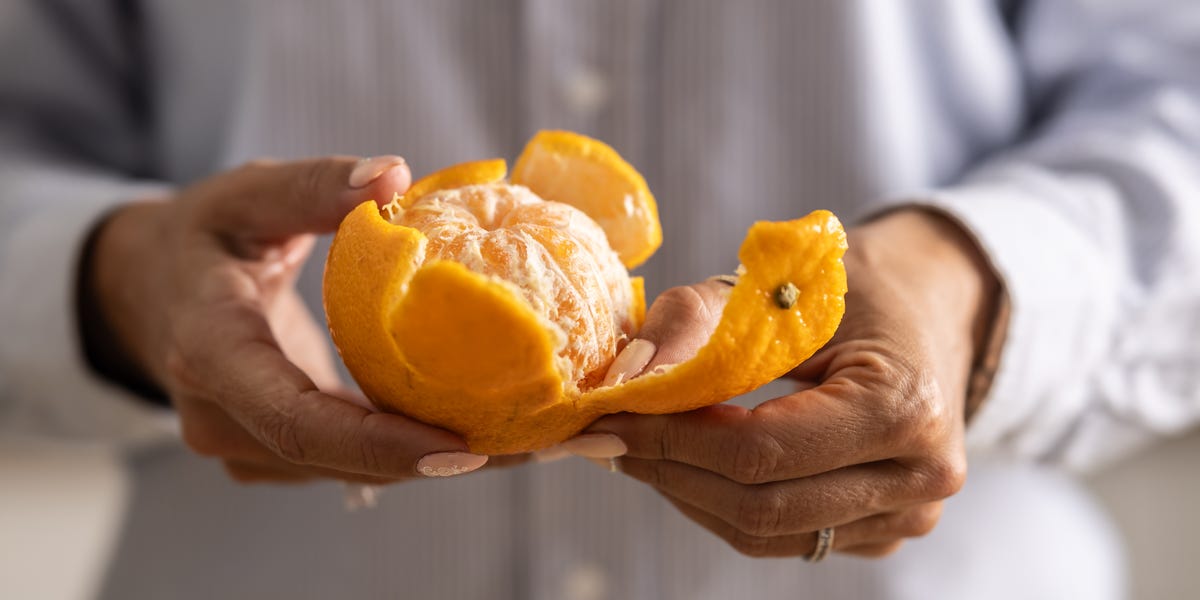
2. Oranges
Citrus fruits like oranges and grapefruit contain vitamin C, folate, and potassium, which have antioxidant and anti-inflammatory properties, Dilley says. These also contain soluble fiber, which can help lower your cholesterol (another stroke risk factor). The vitamin C in citrus is especially important, as data links vitamin C intake to a potential a reduced risk of stroke.
Just be aware that grapefruit can interfere with certain medications, so Angelone warns that it’s best to check in with your healthcare provider to make sure you’re not taking anything that may interact with the fruit.
3. Walnuts
Walnuts have repeatedly been flagged as a food that’s friendly to your cardiovascular system. One study published in the journal Circulation in 2021 found that eating about a ½ cup a day of walnuts for two years lowered levels of LDL (“bad”) cholesterol. (High levels of LDL cholesterol are a risk factor for stroke.)
The big allure of walnuts is their omega-3 fatty acid content. “This may support heart health and reduce inflammation in the body,” says Keri Gans, R.D.N., dietitian and host of The Keri Report podcast.

Add Prevention as a preferred source in your Google search results.
Use your Google account to add this to your settings.

“They are a good source of alpha linolenic acid, a type of omega-3 fatty acid,” Angelone says. “This has been shown to reduce inflammation, improve blood flow, and lower blood pressure.” Walnuts are also packed with antioxidants and other nutrients that are protective for your cardiovascular system, she says.
4. Yogurt
“Yogurt offers calcium, potassium, and probiotics, which contribute to lower blood pressure and better lipid balance, particularly when it replaces processed or sugary snacks,” Keatley says. Data highlights that those who consume more fermented dairy products, like yogurt, have a reduced risk of stroke.
Something else to consider, per Angelone: Yogurt is considered part of the DASH diet, which is also great for stroke prevention. Just aim for low-sugar options, since Dr. Chen points out that added sugar can raise your risk of cardiovascular disease.
5. Oats
Whole grains like oats are packed with magnesium, B-vitamins, and antioxidants to protect your vascular health, Keatley says. “They also contribute fiber that promotes steady blood sugar,” he says.
Whole grains may also help tamp down on bodily inflammation, further lowering your stroke risk, Angelone says.
6. Fatty fish
Fatty fish like salmon, sardines, and mackerel are rich in EPA and DHA, Keatley points out. “These reduce inflammation, stabilize heart rhythm, improve lipid profiles, and make platelets less sticky, thus reducing clot risk,” he says. Data has shown a link between fatty fish intake and reduced stroke risk.
Fatty fish can also help to lower your blood pressure and cholesterol, which are major risk factors for stroke, Angelone says. One more thing to consider, per Dilley: Fatty fish are a lean source of protein, which can help with weight management, and excess weight is linked with a higher risk of stroke.
7. Foods rich in soluble fiber
Soluble fiber retains water and turns into a gel in your GI tract, slowing digestion. Foods rich in soluble fiber lower LDL cholesterol and help manage blood sugar spikes that can damage your blood vessels, Keatley says.
There are many foods that fall into this category, but Dilley says these are some of the best:
- Apples
- Apricots
- Figs
- Pears
- Carrots
- Broccoli
- Sweet potatoes
8. Plant-based protein
While Dr. Chen recommends that his patients have lean proteins, he says he specifically encourages plant-based proteins. Research published in The American Journal of Clinical Nutrition in 2024 found that, compared to people who ate high levels of animal protein, people who ate plant-based protein had a 19% lower risk of cardiovascular disease and a 27% lower risk of coronary heart disease.
“Beans such as black beans and kidney beans are a nutritional powerhouse in that they supply both soluble fiber and a healthy serving of plant-based protein at meals,” Dilley says. “Increasing intake of plant-based proteins allows you to decrease intake of some animal-based foods that may be higher in saturated fat.”
Other foods that may help lower stroke risk
The foods we just mentioned are the biggest ones flagged by dietitians and Dr. Chen, but experts say these are also worth adding to your dietary rotation:
- Coffee. “The chemical compounds in coffee, including trace minerals and phenolic compounds, act as antioxidants and may have a beneficial effect on cholesterol levels, oxidation, and inflammation,” Angelone says. “So, drinking moderate amounts of coffee, including decaf, may help decrease risk for stroke.”
- Beets. “These are also nitrate-rich and support nitric oxide production,” Keatley says.
- Avocados. These fruits “provide potassium and heart-healthy monounsaturated fats,” according to Keatley.
- Green tea. Rich in catechins that reduce oxidative stress, sipping green tea may help lower your stroke risk, Keatley says.
- Legumes. These powerhouse plants “supply plant-based protein and fiber,” Keatley points out.
- Dark chocolate. The flavonoids found in dark chocolate “improve nitric oxide bioavailability and may modestly reduce blood pressure,” Keatley says. (Just eat this in moderation, of course.)
If you’re especially concerned with your stroke risk, Dr. Chen says it’s important to talk to a healthcare provider. They can walk you through your personal risk factors, as well as what you can do to lower your risk.
Read the full article here