

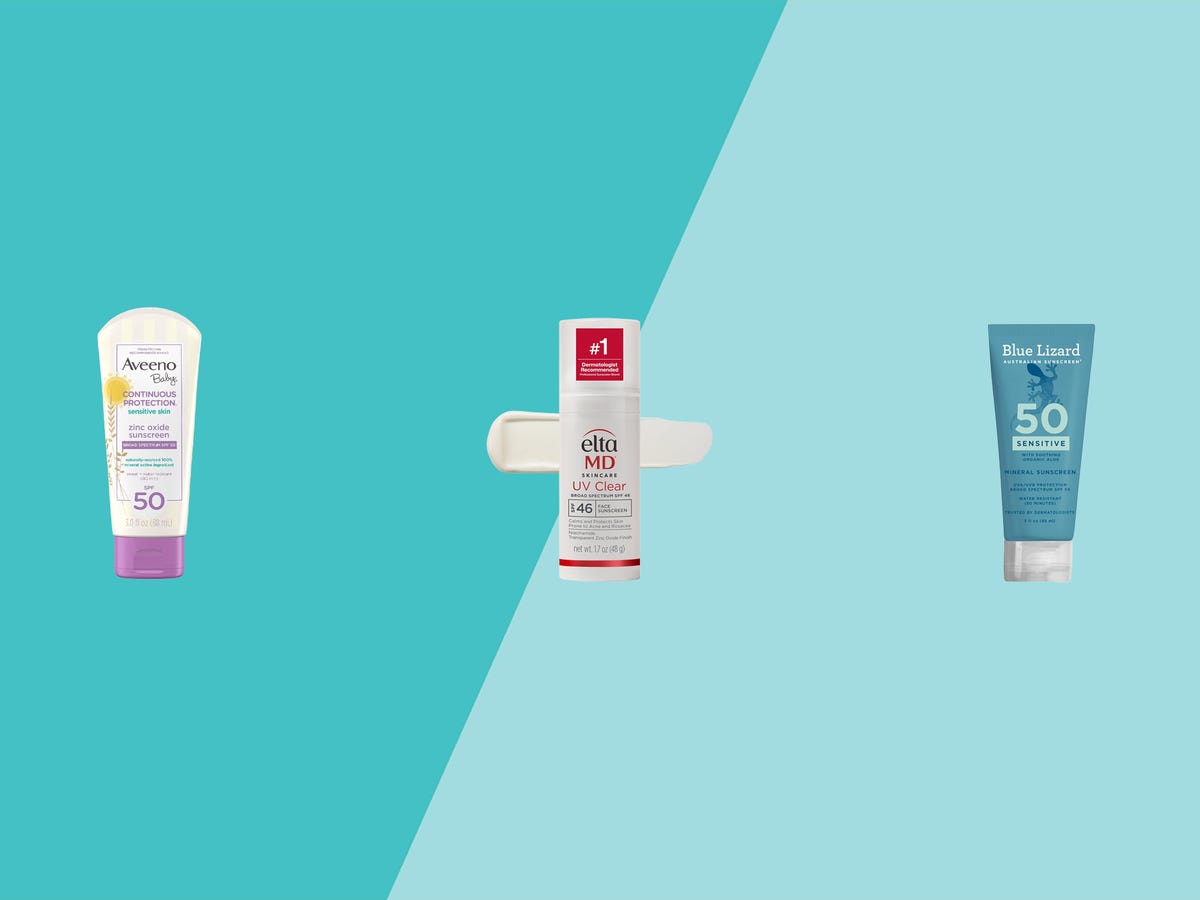
✔️ When in doubt, choose mineral: In general, mineral sunscreens are less likely to cause irritation in sensitive skin compared to chemical sunscreens, according to Dr. Garshick, making them especially ideal for “individuals with conditions such as rosacea, eczema, or generally reactive skin.” You’ll want to look for zinc oxide or titanium dioxide on the label, which “protects by providing a physical shield between the skin and the sun’s harmful rays,” explains Dr. Murphy-Rose. In contrast, chemical filters (such as oxybenzone, avobenzone, octisalate, and homosalate) absorb those UV rays and reduce the amount that penetrates the skin.
✔️ Avoid fragrances: “Some sunscreens may be formulated with certain fragrances to provide a pleasing scent, but this can lead to irritation, redness, and sensitivity for certain people,” says Dr. Garshick. “For this reason, some patients may actually be able to tolerate a chemical filter-containing sunscreen, but not the fragrance or botanical that it is combined with.”
✔️ Go oil-free: Having acne-prone skin is no excuse to skip sunscreen, as blemishes and dark marks that are left behind after a breakout will only get darker and more noticeable with sun exposure, says Dr. Garshick. Instead, try an SPF that is oil-free and noncomedogenic, meaning its formula won’t clog the pores. Pay attention to the consistency, as liquids and gel-like formulas often feel lighter on oily skin.
✔️ Look for hydrators: If you’re on the opposite end of the spectrum and have dry, eczema-prone skin, let your SPF work double duty. “Some of the sunscreens on the market that target sensitive skin contain ingredients like colloidal oatmeal or ceramides to offer the same type of benefits as traditional moisturizers while protecting you from the sun,” says Joshua Zeichner, M.D., a board-certified dermatologist and director of cosmetic and clinical research in dermatology at Mount Sinai Hospital in New York City.
✔️ Patch test the sunscreen: Finally, if you know your skin is finicky, always test a bit of the sunscreen you’d like to try on a separate part of your body before you apply it all over your face. Take a small amount and rub it in on your inner arm, for example. If you don’t have a reaction to it after a day or two, you should be OK to try it. An allergy patch test can also be performed at your dermatologist’s office if you think you’re having a consistent reaction to an ingredient you can’t pin down on your own.
Read the full article here