

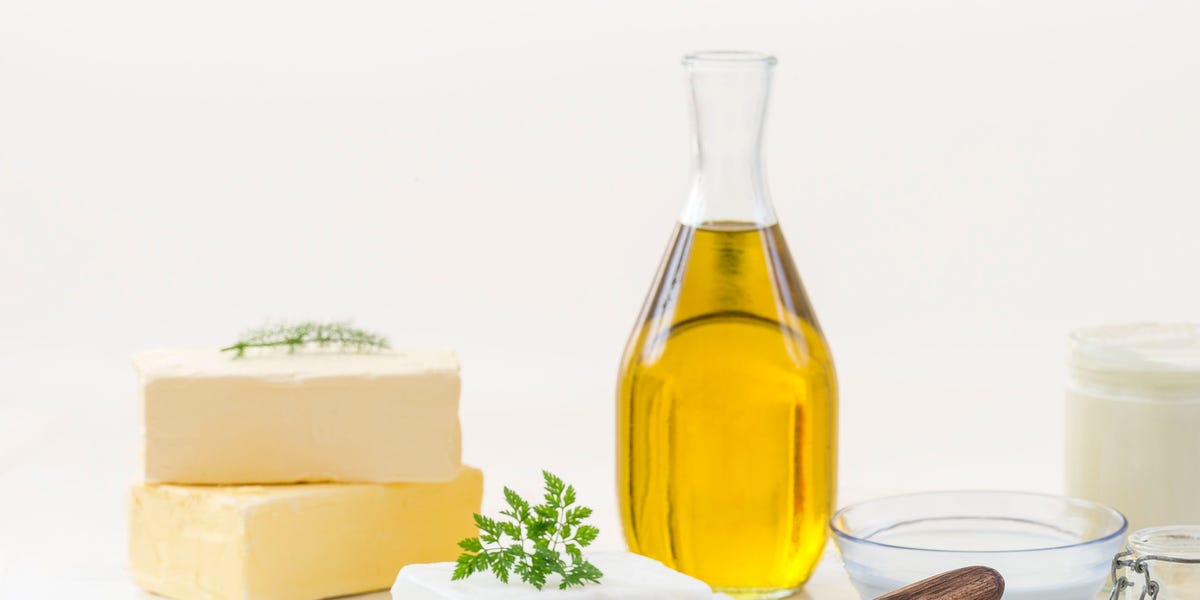
There are plenty of foods that are delicious in their natural state, but almost all can be made tastier with the right cooking techniques and added ingredients. While herbs and spices provide depth of flavor, they can only go so far without the addition of a source of fat. But if it’s butter vs. olive oil, which should you choose?
Meet the experts: Vanessa Imus, M.S., R.D.N., a registered dietitian nutritionist and owner of Integrated Nutrition for Weight Loss in Bothell, WA; Diane Han, M.P.H., R.D., a dietitian based in San Francisco and the founder of Woking Balance Wellness.
Here, dietitians explain what you need to know about the differences between butter and olive oil, from flavors and best uses to the health benefits each can provide.
Butter vs. olive oil: Nutrition
As you likely already know, both butter and olive oil are mostly fat. However, there are some key points to know from a nutrition perspective.
According to the U.S. Department of Agriculture (USDA), one tablespoon of salted butter contains 102 calories and 11.5 grams (g) of fat. Of that, it contains 7 g of saturated fat and 4.5 g of unsaturated fat.
Per the USDA, one tablespoon of olive oil contains 119 calories and 13.5 g of total fat. About 75% of that fat, or just over 10 g, is monounsaturated fat, leaving just 3.5 g of saturated fat.
Benefits of butter
“People love butter for its amazing ability to flavor foods, but we also love it for its health benefits,” says Vanessa Imus, M.S., R.D.N., a registered dietitian nutritionist and owner of Integrated Nutrition for Weight Loss in Bothell, WA. That’s right: Butter does offer some health perks. “Butter contains the short-chain fatty acid butyrate, which is associated with gut health and reduced inflammation,” Imus explains. Research in Clinical Nutrition shows that butyrate, which is also produced by the microbiome, helps maintain and strengthen the gut barrier and lining, lower inflammation, and protect against gastrointestinal illnesses such as inflammatory bowel disease and colon cancer. “Grass-fed butter also contains a type of fat called conjugated linoleic acid (CLA), which may reduce inflammation and improve metabolic health,” Imus adds. Found primarily in dairy products and red meat, research shows that CLA may be helpful in combatting obesity, inflammation, cancer, heart disease, and immune and bone conditions.
“Butter helps the body absorb fat-soluble vitamins, such as vitamins A, D, and K, which play important roles in supporting bone, eye, skin, and immune health,” says Diane Han, M.P.H., R.D., a dietitian based in San Francisco and the founder of Woking Balance Wellness. Without the addition of fat to a meal, the body isn’t able to hold onto these vitamins—butter can provide that fat.
Potential downsides of butter
The biggest drawback of butter is its high saturated fat content. “Saturated fats can raise LDL, or ‘bad,’ cholesterol, increasing the risk of heart disease,” explains Imus. “Because of this, it’s recommended to limit the amount of butter you eat on a daily basis.”
If you’re using butter for cooking, Imus and Han recommend using just enough to coat your pan and not using it every day.
Benefits of olive oil
A key component of the Mediterranean diet, olive oil is known for its health perks. “Olive oil, especially extra virgin olive oil, is rich in healthy fats and antioxidants that help reduce inflammation and may support protection against chronic diseases such as diabetes and heart disease,” says Han. Those healthy fats are the monounsaturated fats mentioned above, which are primarily found in plant foods such as nuts, avocados, and vegetable oils, according to the National Library of Medicine (NLM). “Monounsaturated fats help lower elevated LDL cholesterol levels and raise beneficial HDL cholesterol levels,” explains Imus, which is why they support heart health. Data also shows that olive oil could improve brain and gut health in older adults, potentially improving both cognitive function and gut microbiome diversity.
In addition, olive oil contains polyphenols, powerful plant compounds that research suggests may optimize metabolism and protect against oxidative stress and inflammation. “It’s also rich in bioactive compounds that help boost antioxidant levels after eating,” Imus adds. And as is the case with butter, adding olive oil to foods that contain fat-soluble vitamins can help improve their absorption.
All told, an umbrella review in the journal Foods found that olive oil consumption, especially in the context of the Mediterranean diet, may play a role in reducing the risk of chronic diseases such as cancer, cardiovascular disease, and type 2 diabetes.
Potential downsides of olive oil
Despite the high concentration of good-for-you monounsaturated fats, olive oil is still high in fat and calories. “Consuming it in excess can contribute to weight gain because it is a calorie-dense food,” notes Han. For this reason, it’s smart to use it sparingly. “Use only enough oil to cook the food, leaving no excess after cooking,” Han suggests. The same goes for if you’re using it in salad dressing or coating veggies before roasting.
Butter vs. olive oil: Which is better for you?
Butter does offer some health benefits, which makes it OK to use in moderation, but Han and Imus agree that olive oil is the healthier pick. In fact, a study published in JAMA Internal Medicine found that substituting butter with plant-based oils like olive oil may be beneficial for lowering all-cause mortality risk. And if you’re enjoying olive oil as part of a nutrient-rich diet that includes plenty of fruits, vegetables, fish, legumes, and whole grains, that’s even better.
Read the full article here