

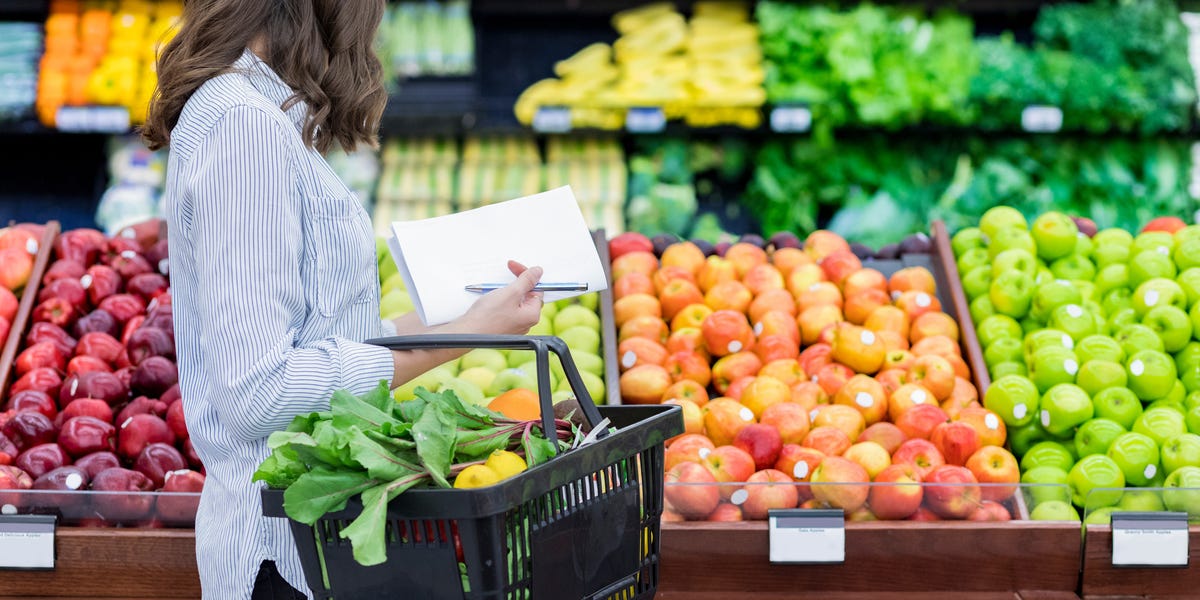
Whether you’re cooking for one or trying to feed a large family, there are some dilemmas that everyone faces when grocery shopping. Grab the salad dressing off the shelf, or get the ingredients to make your own? Stick to home-cooked oatmeal, or pick up a box of cereal? How many frozen pizzas is too many frozen pizzas?
These convenience questions apply to produce, too. Often, there are three different ways to get the same fruit or vegetable—fresh, frozen, or canned—and each comes with a different set of pros and cons. It’s enough to make your head spin—if you hadn’t already lost it back in the cereal aisle.
So, what should you keep in mind when choosing fresh vs. frozen vs. canned produce? Ahead, experts break it down.
Meet the Experts: Yasi Ansari, M.S., R.D.N., senior dietitian at UCLA Health Santa Monica Hospital; Keri Gans, R.D., registered dietitian and author of The Small Change Diet; Debbie Fetter, Ph.D., associate professor in the Department of Nutrition at the University of California, Davis.
What are the benefits of eating fresh produce?
“Fresh produce provides antioxidants, vitamins, and minerals that, when we eat a variety, work together to support health in ways that a single supplement may not,” says Yasi Ansari, M.S., R.D.N., senior dietitian at UCLA Health Santa Monica Hospital. “These benefits range from supporting the brain and heart health to helping reduce our risk of chronic disease.”
Additionally, with many fruits and vegetables, there’s a convenience factor that comes with buying fresh—if you’re planning on enjoying it raw, at least. Rather than heating up frozen or canned veggies, you can take fresh produce directly out of the fridge, give it a quick wash, and chow down.
Are there any potential downsides to eating fresh produce?
While you might think that fresh produce is always the most nutritious option, that’s not always the case. “Some nutrients can decline during storage, so ‘fresh’ doesn’t necessarily mean more nutritious than frozen or canned,” says Keri Gans, R.D., registered dietitian and author of The Small Change Diet.
Recently, there have been reports of foodborne illness linked to fresh produce. “This may relate to the complexity of our food production and distribution systems, along with ongoing challenges in maintaining food safety protocols, such as proper handwashing during handling and preparation,” Ansari says. While this remains rare, it may be worth keeping in mind if there are reports of foodborne illness in your area.
Other potential downsides include a short shelf life, which brings the potential for spoilage and food waste. Then there’s the fact that it can be more expensive than frozen or canned veggies, and, if you are planning on cooking it, it can take more prep work than the other kinds. Finally, “some people may have gut sensitivities to certain fresh fruits and vegetables,” Ansari adds. “For some fruits, the level of ripeness can make a difference, and some people may find cooked vegetables, including vegetables cooked from frozen [produce], easier on their gut.”
How does frozen produce compare to fresh produce?
Frozen produce has all of the nutritional value of fresh produce—with some added benefits. “Because it is typically frozen soon after harvesting, nutrients are preserved, while some nutrients in fresh produce may decline during transport and storage,” Gans explains. So it’s possible you’re getting more nutrients with a bag of frozen stuff.
“The process of freezing slows nutrient loss and preserves nutritional quality over time, which should give consumers confidence that frozen vegetables remain a nutritious choice,” Ansari adds.
Another perk? If you buy frozen, you don’t have to worry about seasonality. “We are able to get some of our favorite fruits and vegetables year-round through frozen produce,” Ansari says. “I personally love frozen fruits and vegetables. I roast them, steam them, boil them, and add them to stews and smoothies.”
And of course, frozen produce lasts much, much longer than fresh produce, allowing for more flexibility and convenience.

Add Prevention as a preferred source in your Google search results.
Use your Google account to add this to your settings.

How does canned produce compare to fresh produce?
Unlike frozen produce, canned frutheir and vegetables can have fewer nutrients than its fresh counterparts. “The canning process involves heat, which can degrade certain nutrients that are susceptible to heat damage (e.g., vitamin C and some B vitamins). Some nutrients can also leach into the canning liquid,” says Debbie Fetter, associate professor in the Department of Nutrition at the University of California, Davis.
However, she adds, “Most nutrients are retained in canned versions, like fat-soluble vitamins and many minerals.” Additionally, heating may make carotenoids like lycopene and beta-carotene more available.
Ultimately, the difference between fresh and canned is negligible, Ansari says: “Canned fruits and vegetables still offer a lot and are also comparable to fresh and frozen produce from a nutritional standpoint.”
Canned produce is arguably the most convenient, as it’s shelf-stable—and affordable, to boot. However, it can have some additives to be aware of: “When choosing canned vegetables, look for no-salt-added or lower-sodium options, and choose fruit packed in water or juice rather than syrup,” Gans says.
Fetter uses a quick trick to reduce the sodium a bit. “I recommend draining the liquid and giving the produce a good rinse to remove extra sodium the item may have been stored with,” she says. “When I buy canned beans I always drain and rinse and then flavor with my own seasonings.”
The bottom line
Ultimately, Gans and Ansari both want to take the pressure off of this choice; fresh, frozen, and canned produce all have something to offer.
“Choosing frozen or canned produce for convenience doesn’t mean sacrificing nutrition. Fresh, frozen, and canned can all provide important nutrients, so choose the options that make it easiest to eat fruits and vegetables regularly,” Gans says. “Ultimately, eating a variety of produce matters more than whether it’s fresh, frozen, or canned.”
“I want consumers to feel confident in their food choices,” Ansari says. “Are frozen and canned produce more accessible to you? Do they make it easier for you to prep food? Do they help you waste less food, and are they more budget-friendly? Then great! You can feel confident they’re providing nutrition and may work better for you than fresh varieties.”
Read the full article here