

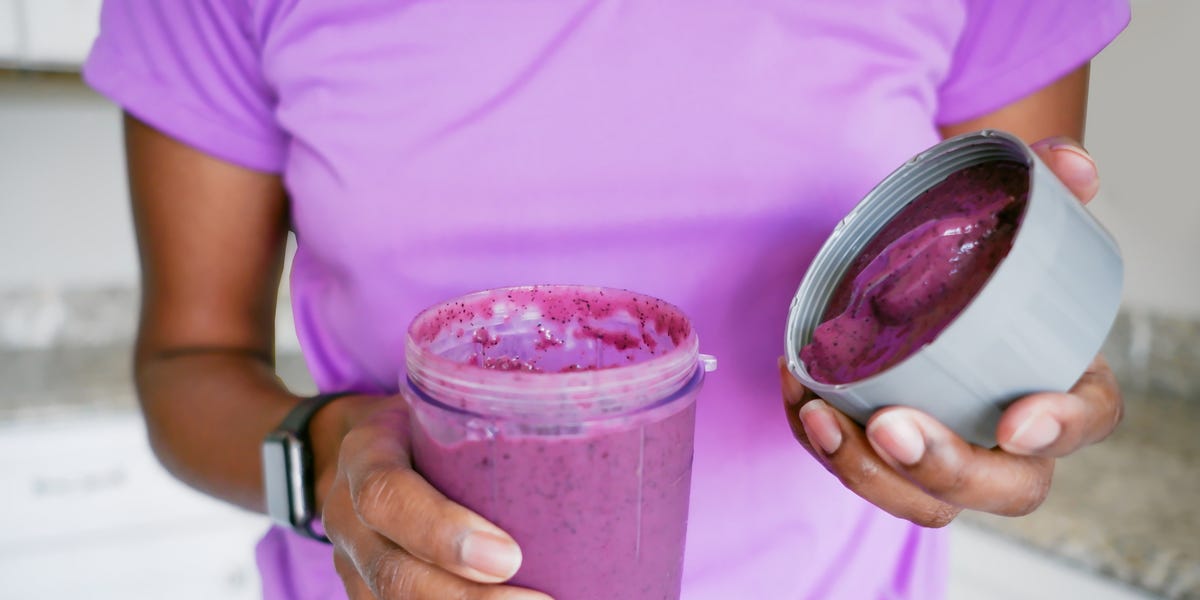
Protein currently holds the title of “most popular nutrient” in the wellness world, and it is certainly deserving of the honor. Hitting your protein goals has all-over benefits, such as aiding with blood sugar control, supporting muscle health, and helping us feel full for longer, which contributes to healthy weight maintenance—just to name a few of the perks.
But as with so many good-for-you pursuits, moderation is key, and you can have too much of a good thing.
“Protein has become a macronutrient star, but the current ‘more is better’ mindset isn’t necessarily the best approach,” says Mackenzie Burgess, R.D.N., a registered dietitian nutritionist and recipe developer at Cheerful Choices.
The protein craze has brought protein to the front of nearly every grocery aisle, popping up in everything from popcorn to chips, sodas, candy bars, and cereal. But because most people can already meet their needs by eating a variety of whole, protein-packed foods (such as meat, fish, eggs, dairy, and plant proteins like beans), it can be easy to exceed your daily protein goals when you bring these boosted products to the table, too. And that can spell trouble if it becomes a trend.
“I’ve seen people become so focused on hitting a protein goal that they unintentionally cut back on foods that provide fiber, vitamins, minerals, and the carbohydrates their bodies need for energy,” says Talia Follador, R.D.N., L.D.N., a Philadelphia-based dietitian.
Here are the top signs that you might be getting too much protein.
Health Benefits of Protein
If you’ve scrolled any social media app or read any wellness news article in the past year, you know you’re supposed to be eating protein. But why?
As a macronutrient built from amino acids, which are often referred to as the building blocks of life, protein influences everything from your satiety levels to your body composition (like how much lean muscle you have) to glucose regulation and immune health.
Here are more specific ways protein supports your health:
Helps You Build and Maintain Muscle
Whether you’re lifting weights at the gym or breaking a sweat during everyday activities, protein is responsible for repairing, building, and maintaining your muscle. “When paired with resistance exercise, protein supports muscle maintenance and growth, which supports your metabolism, as well as overall functionality as you age,” says Sarah Anzlovar, M.S., R.D.N., L.D.N., a registered dietitian and owner of Sarah Gold Nutrition.
Supports Blood Sugar and Energy Levels
While carbohydrates are your body’s preferred source of energy, protein helps slow their digestion and absorption, reducing blood sugar spikes and supporting longer-lasting energy.
Helps You Feel Fuller
As your body begins to digest protein, a cascade of reactions occurs that increases the release of satiety hormones, helping you feel fuller more quickly than you would with the same amount of calories from carbohydrates or fat.
Follador regularly sees the effects of this in her practice. “When my clients consistently eat enough protein throughout the day, they experience fewer cravings and feel more in control around food,” she says.
Keeps Your Immune System Strong
While many factors impact how well your immune system fights off infection and inflammation, it can’t do its best work without enough protein. “Protein provides the building blocks necessary for the body’s immune system,” explains Katie Schimmelpfenning, R.D., a registered dietitian and swim coach at Eat Swim Win. These building blocks, or amino acids, help build, signal, and stimulate the hormones, enzymes, and antibodies that make up your immune system.
Signs You’re Eating Too Much Protein
Just because protein is good for you doesn’t mean more is always better. Unfortunately, your body can’t tell you exactly how much protein it needs each day, so even if you’re hitting a goal you’ve set for yourself, it’s possible to get too much. If you regularly eat more protein than you need, your body may start to show these signs.
You’re Constipated
One unpleasant side effect of eating too much protein may have you feeling a little backed up. While protein isn’t necessarily the direct cause of constipation, filling up on high-protein foods may leave less room for the foods that support healthy digestion. “Many high-protein diets are also low in fiber because they replace fruits, vegetables, beans, and whole grains with more animal protein,” says Follador.

Add Prevention as a preferred source in your Google search results.
Use your Google account to add this to your settings.

If you’re following a high-protein, low-carbohydrate diet, you may be at a higher risk of constipation than those who take a more balanced approach. To support healthy digestion while hitting your protein goals, consider eating more plant-based protein sources that also provide fiber, such as beans, lentils, nuts, seeds, and whole grains.
You’re Urinating More Than Usual
While there are many reasons you may feel an increased need to hit the restroom, this could be a sign that you’re eating more protein than your body needs (especially if you started noticing a change after increasing your protein intake).
“Very high protein intake increases urea and other nitrogen waste that the kidneys must excrete, which can increase urine volume and fluid needs,” says Johannah Katz, M.A., R.D., a registered dietitian specializing in proactive health, weight management, and performance nutrition.
Because eating more protein increases how much you urinate, you’ll need to pay close attention to your hydration and adjust your fluid intake to prevent dehydration, which can cause symptoms such as excessive thirst, fatigue, dizziness, lightheadedness, and confusion. Keep on top of water bottle refills and load up on fruits, which naturally boost hydration and contain electrolytes to support optimal hydration.
You Feel Sluggish or Tired
If you’ve ramped up your protein intake and feel tired, sluggish, and weaker while exercising, you’re likely eating too much protein and too few carbohydrates. “When protein replaces essential carbohydrates, you may feel fatigued or experience sluggish workouts,” explains Anzlovar. After all, carbs are energy.
Severely limiting or cutting out carbohydrates to fit more protein into your meals reduces the amount of glucose your body can access for energy throughout the day, especially during exercise.
A better strategy is to pair your protein with carbohydrates, which helps slow glucose absorption and provides a steady stream of energy over time. “While protein is important for building and repairing muscle, carbohydrates are what fuel your workouts and allow protein to be used for muscle recovery,” says Follador.
You Crave Sweets
Or, you find yourself reaching for them more often than usual. Although protein improves satiety and can reduce cravings, eating too much protein can have the opposite effect. “As people focus on eating more protein, they often end up eating fewer carbohydrates without realizing it,” says Follador. “This can leave the body looking for a quick source of energy, leading to stronger sugar and carbohydrate cravings.”
You may find this especially true on days when you’re more active or when you’ve intentionally cut carbohydrates from your diet to make room for more protein. Low-carbohydrate diets are associated with higher rates of food cravings, binge eating, and a preoccupation with food.
You’ve Gained a Little Weight
While many people turn to high-protein diets to lose weight, protein still contains calories and can easily have the opposite effect if you eat too much without adjusting what else is on your plate. Katz explains that this is especially true when protein bars, shakes, and fortified foods are eaten on top of your usual diet.
To increase your protein without also increasing your calorie intake, consider swapping lower-protein foods with higher-protein options, or adjusting your portions. If you’re using supplements, shakes, or bars, use them to replace a snack or meal that’s lower in protein, rather than adding them to what you’re already eating.
How to Get the Right Amount of Protein
It’s a great idea to talk with your doctor or dietitian to come up with a personalized protein goal based on your lifestyle and health history. But if you’re a healthy adult, you can find your ballpark goal number with a simple math equation. “The new U.S. Dietary Guidelines recommend a general target of 1.2 to 1.6 grams per kilogram of body weight per day,” says Katz.
To find your weight in kilograms, just divide your weight in pounds by 2.2. Then multiply that number by 1.2 and again by 1.6 to find your protein goal range. If you’re sedentary or minimally active, you may need the lower number, while older adults and those who are more active or regularly strength train may require the upper end, explains Katz.
For example, a protein goal for a 150-pound adult may fall in the range of 81 to 110 grams per day.
If you’re working toward specific goals, have any health conditions, a highly active job, or participate in intense training or sports, working with a registered dietitian and your healthcare provider is the most accurate and safest way to estimate your needs.
Bottom Line
You do need adequate protein to support overall health, but you can also have too much. If your diet becomes unbalanced by eating too much protein, you may experience constipation, increased cravings, low energy, weight gain, or an increased risk of dehydration.
Including a balance of nutrients, including carbs, and a variety of whole foods in your diet, including plant-based protein sources, can help you get enough protein as well as the other nutrients your body needs. When in doubt, working with your healthcare provider and a dietitian can help you create a plan specific to your needs.
Read the full article here