

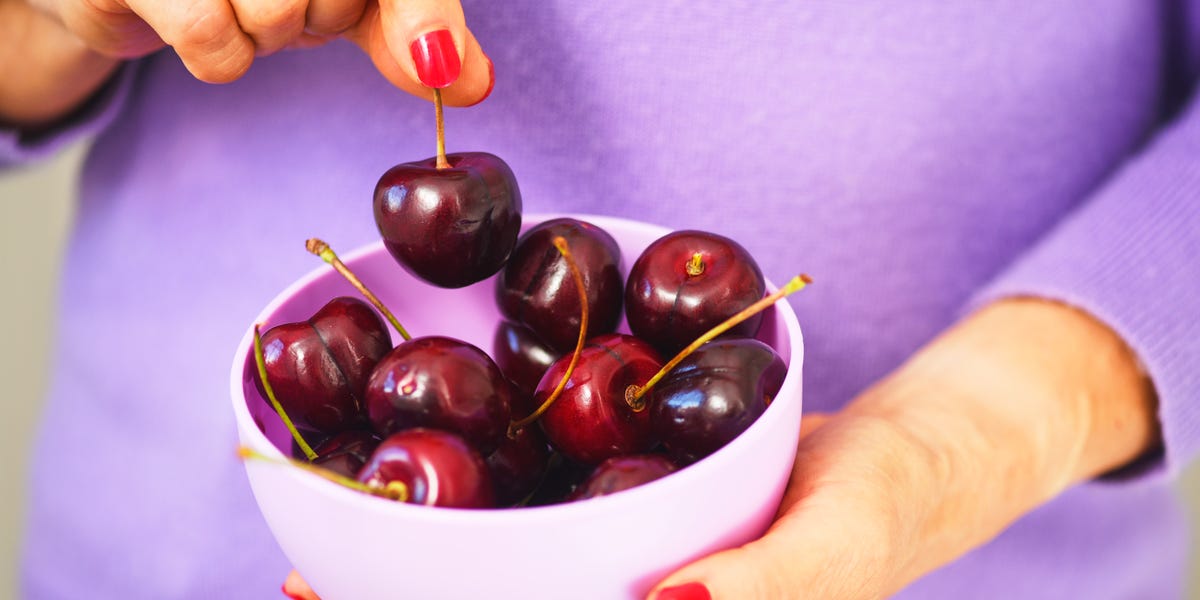
There’s a short window every summer when cherries hit their peak: deeply red, cold from the fridge, and sweet enough to eat by the handful. So when my editor asked me to report on what happened when I ate cherries every day for a week, right in the middle of that perfect cherry season, I was thrilled. As a dietitian, I’m already a fan of cherries for their nutrition profile. But even I was curious: would one week of daily cherries actually feel profound, or would I just end up with very stained fingers and a slightly lighter fruit bowl?
I decided to stick with sweet cherries. A few months ago, I took on the challenge of drinking tart cherry juice every day for a week, and tart cherries have their own distinct qualities worth exploring separately. Sweet cherries, though, are a different fruit with their own nutritional story, so I wanted to see what it was like to eat them every day in their simplest form. No juice, no dried fruit, no supplements. Instead, I decided to lean on ripe, in-season sweet cherries as a daily snack (with one day of enjoying them pre-pitted and frozen). Here’s what happened.
What happened when I ate cherries every day for a week?
The first thing I noticed was how easy it was. A cup of sweet cherries is genuinely satisfying, and reaching for them instead of my usual afternoon snack felt effortless. They’re portable, naturally sweet, and require zero prep beyond a quick rinse—no chopping, no measuring, no fuss.
By midweek, I found myself craving them the way you crave anything cold and juicy in the heat. I ate them straight from the bowl, tossed a handful over Greek yogurt, and even added a few to a salad. That sweet-tart flavor kept things interesting all week. And on days when I didn’t feel like dealing with the pits, I reached for pitted frozen cherries instead, which is a refreshingly icy option that keeps the same nutrition as fresh, since freezing preserves most of the fruit’s nutrients.
Now for the honest part. When it came to my health, one week of cherries didn’t produce dramatic changes, and as a dietitian, I didn’t expect it to. I didn’t suddenly sleep better or feel like a new person. What I noticed was subtler: I felt satisfied after my snacks, my sweet tooth was easier to manage, and I generally felt good about the habit. It’s fair to say a single week is a short window, so I can’t tell you what a longer stretch would do, only that this one felt easy to keep up. And yes, my fingertips carried a faint red tinge the entire time.
Cherry nutrition facts
Here’s what you’ll find in about one cup of raw sweet cherries (roughly 150 grams), according to the United States Department of Agriculture (USDA):
- Calories: 90
- Carbohydrates: 22 grams
- Fiber: 3 grams
- Sugars: naturally occurring, around 18 grams
- Protein: 1.5 grams
- Fat: near zero
- Calcium: 15.8 mg
- Vitamin C: 14.6 mg
- Potassium: 322 mg
- Water: cherries are roughly 80% water
Beyond the basics, sweet cherries also deliver plant compounds worth knowing about. They contain polyphenols, including anthocyanins, the pigments responsible for their deep red color, as well as flavonols and hydroxycinnamic acids. These are studied for their antioxidant and anti-inflammatory properties, which is a big reason cherries get so much attention in nutrition research.
Benefits of eating cherries
Antioxidant and anti-inflammatory support
Sweet cherries are rich in antioxidant compounds, especially anthocyanins and other polyphenols. These compounds help counter oxidative stress, a process linked to aging and several chronic conditions. Sweet cherries have been shown to scavenge free radicals, and their antioxidant capacity is tied largely to that anthocyanin content.
In one study, adults who ate sweet cherries daily for several weeks showed reductions in certain markers of inflammation, such as C-reactive protein. It’s worth noting these were small studies, so while the direction is promising, it’s not the final word. Still, adding a naturally antioxidant-rich fruit to your plate is a sensible, low-risk habit.
Heart health
Diets rich in fruits and vegetables are consistently linked to lower cardiovascular risk, and sweet cherries fit neatly into that pattern. They’re low in fat, contain fiber and potassium, and provide polyphenols that have been studied for effects on blood pressure and cholesterol.
For sweet cherries specifically, data has found that a sweet cherry drink significantly reduced systolic blood pressure in adults with obesity, with the most notable effect in those with a higher body mass index (BMI).
Blood sugar and metabolic health
Sweet cherries have a relatively low glycemic index compared to many other fruits, which is largely attributed to their fiber content. Soluble fiber can slow sugar absorption, which supports steadier blood sugar levels. For anyone paying attention to how their snacks affect energy and blood sugar, that’s a genuinely useful feature.

Add Prevention as a preferred source in your Google search results.
Use your Google account to add this to your settings.

There’s also early research on sweet cherry compounds and glucose metabolism, including lab-based data suggesting anthocyanins (those plant compounds responsible for giving cherries that gorgeous red color) may support insulin activity and that chlorogenic acid (another plant compound) may influence enzymes involved in carbohydrate digestion.
In everyday terms, a cup of cherries is a fiber-containing, whole-food way to satisfy a sweet craving.
Gut health and digestion
Sweet cherries are a good source of fiber (about 3 grams per cup), and fiber is one of the most consistently supported nutrients for digestive health. It adds bulk, supports regularity, and helps feed the beneficial bacteria that live in your gut. That’s not a flashy claim, but it’s a meaningful one, especially for a fruit most people are eating as a snack.
There’s also some early research suggesting that the polyphenols in sweet cherries may support the gut microbiome beyond just fiber alone, interacting with beneficial bacteria in ways that could have broader digestive benefits. These findings are preliminary, so I’d keep expectations grounded. But paired with their fiber content, sweet cherries offer a straightforward, whole-food way to support your gut without any complicated additions to your routine.
Should anyone avoid eating cherries?
For most people, cherries are a healthy, low-risk food. But a few groups may want to be mindful. Cherries contain natural sugars and carbohydrates, so if you’re managing diabetes, it’s smart to discuss how cherries can fit into your overall diet with your healthcare provider.
Cherries also contain sorbitol, a sugar alcohol that can cause gas, bloating, or digestive upset in sensitive people, especially if you eat a large amount at once. If you have a known cherry or stone fruit allergy, you’ll obviously want to avoid them. And as always, if you have a specific medical condition or dietary restriction, check with your own healthcare provider before making big changes.
The bottom line
Eating sweet cherries every day for a week didn’t overhaul my health, and I wouldn’t expect it to. But it was an easy, enjoyable habit that added fiber, potassium, vitamin C, and beneficial plant compounds like anthocyanins to my day, all from a fruit that’s at its peak right now and utterly satisfying for a sweet tooth like mine.
The research on sweet cherries is promising, particularly around antioxidants, inflammation, and heart health, though much of it is still early. My dietitian take: sweet cherries are genuinely nutritious, and right now, they also happen to be at their best. That combination doesn’t come around often. Eat them for the fiber, the anthocyanins, the potassium, or just because they’re delicious and it’s summer. Either way, it’s a habit worth building while you can. Or if you decide to take on a cherry-eating habit post-summer, there’s nothing wrong with enjoying them frozen!
Read the full article here