

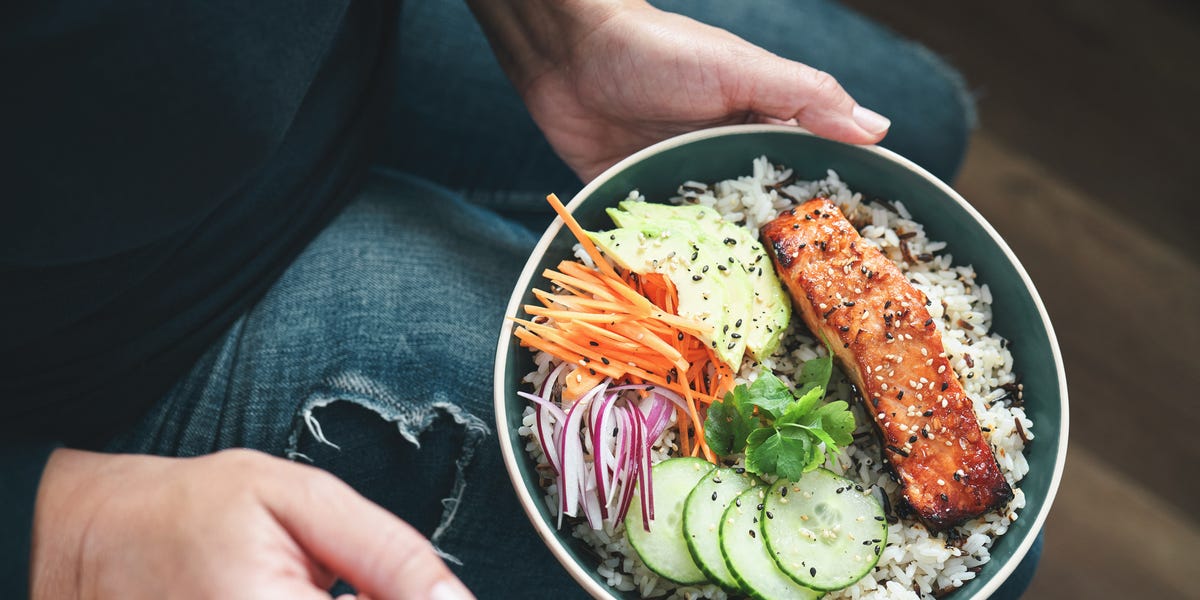
Salmon might be one of the smartest foods you can put on your plate. As a high-protein pick, it’s filling, versatile, and packed with anti-inflammatory omega-3 fatty acids—making it a big supporter of heart, brain, eye, immune, and overall health.
There’s been a lot of buzz about the difference between wild-caught and farm-raised salmon, and rumblings that one (wild) reigns supreme over the other (farmed) when it comes to health. Some of the questions are valid, but one of my biggest gripes as a dietitian is that despite all of the benefits of seafood like salmon, most of us don’t eat nearly enough of it. In fact, the American Heart Association (AHA) recommends eating about two servings of fish a week, yet the average American still falls short, and many people don’t eat fish at all in a given week, according to the Centers for Disease Control and Prevention (CDC).
Let’s fix that! The logical first step: Decide to eat more salmon. But you may get to the seafood aisle and end up puzzled with all of the options—namely, whether you should choose wild-caught salmon vs. farm-raised salmon, and whether one is healthier than the other.
Here’s what the experts say about whether wild-caught salmon or farm-raised salmon is better for your health.
Meet the expert: Lauren Manaker, MS, RDN, LD
Wild Salmon vs. Farmed Salmon Nutrition
Both types of salmon are a smart source of protein and are one of the few foods with more omega-3s than fish—but factors such as what it’s fed, where it’s raised or caught, and the specific species can slightly change the nutritional profile of salmon.
Wild-Caught Salmon Nutrition
According to the United States Department of Agriculture (USDA), a 3-ounce serving of wild-caught Atlantic salmon provides:
- Calories: 155
- Protein: 21.6 grams
- Total fat: 7 grams
- Carbohydrates: 0 grams
- Calcium: 12.8 milligrams
- Selenium: 39.8 micrograms
- Vitamin B12: 2.59 micrograms
It also provides 0.35 grams of eicosapentaenoic acid (EPA) and 1.22 grams of docosahexaenoic acid (DHA), which are the two main types of omega-3 fatty acids you get from oily fish.
Farm-Raised Salmon Nutrition
According to the USDA, a 3-ounce serving of farmed Atlantic salmon provides:
- Calories: 175
- Protein: 18.8 grams
- Total fat: 11 grams
- Carbohydrates: 0 grams
- Calcium: 12.8 milligrams
- Selenium: 35.2 micrograms
- Vitamin B12: 2.38 micrograms
It also provides 0.59 grams of EPA and 1.24 grams of DHA (two types of omega-3s).

Add Prevention as a preferred source in your Google search results.
Use your Google account to add this to your settings.

Wild Salmon vs. Farmed Salmon: Which Is Better for Your Health?
Here’s how both types of salmon stack up when it comes to common questions surrounding whether wild-caught versus farmed salmon is healthier.
Fat Content
Wild-caught salmon often tends to be leaner and has less total fat than farmed salmon. This can make the wild version a better option if someone is monitoring their fat intake or prioritizing super lean protein sources. Farmed salmon eats a prepared feed, which has shifted over the years toward more plant-based oils—and that changes the fat balance a little compared to wild fish (farmed fish is still a nutritious food, though).
Omega-3 Levels
Some data also suggests that wild salmon has a more favorable omega-3-to-omega-6 balance, which other research shows may be particularly heart-protective. Omega-3 fatty acids play a role in good heart health by supporting healthy triglyceride levels and balanced blood pressure.
Flesh Color
Wild salmon gets its pink color from carotenoid pigments found in foods that are part of its natural diet. Farmed salmon gets the same type of pigment through supplemented feed, which helps give the fish its characteristic pink color—so it isn’t “dyed” in the way people often mean, though its color may look slightly different from that of wild salmon.
Potential Contaminants
Many types of foods contain certain levels of contaminants that are generally considered safe. You may think that it would make sense that wild-caught salmon would win on the purity scale, but that’s not necessarily the case, as research shows that contaminants can be present in both types and vary by source.
The Bottom Line
If there’s one thing worth taking from all of this, it’s that the wild-versus-farmed debate may matter less than many people think. Yes, there are differences between the two, and depending on your priorities, those differences may influence what you choose. But nutritionally, both types of salmon can offer meaningful benefits, and neither deserves the kind of black-and-white thinking that often surrounds this conversation. For instance, both types of salmon deliver protein and other important nutrients for good heart health, overall health (such as omega-3s), and healthy aging.
To choose the most sustainable or “best” type of salmon, whether that’s wild-caught or farm-raised, looking for certification emblems on the label can help. When buying wild-caught salmon, the MSC (Marine Stewardship Council) ecolabel indicates the wild salmon is caught from sustainable fisheries. If you’re buying farmed salmon, look for a certification label such as the Aquaculture Stewardship Council (ASC), which means the farm where your fish is coming from has been evaluated against standards for things like feed sourcing, water quality, fish health, antibiotic use, and environmental impact.
Read the full article here